Policing the Halls: Why Officers Don’t Belong in Ontario Schools

The integration of police officers into Ontario schools, primarily through School Resource Officer (SRO) programs, has been a contentious issue for decades. Initially introduced in the early 1990s, these programs aimed to foster positive relationships between students and law enforcement, deter criminal behavior, and enhance school safety. Over time, however, concerns about their effectiveness and impact on marginalized communities have led to widespread reevaluation and, in many cases, the termination of such programs.

One of the most comprehensive evaluations of an SRO program in Ontario was conducted by Carleton University, focusing on Peel Region’s initiative. The study reported several benefits, including reduced crime and bullying, improved mental health among students, and a significant return on investment, estimating $11.13 in social and economic benefits for every dollar spent. Notably, students who had experienced bullying or violence reported feeling significantly safer after five months of the program. School staff also benefited, spending less time on disciplinary matters due to the support of SROs.  

Despite these findings, the presence of police in schools has faced mounting criticism. Critics argue that SRO programs disproportionately affect racialized and marginalized students, contributing to a school-to-prison pipeline. For instance, the Toronto District School Board (TDSB) implemented its SRO program in 2008, but terminated it in 2017 after a review revealed that some students felt intimidated by the presence of officers, particularly Black students who expressed fear related to armed officers in schools.    

Similarly, the Peel District School Board ended its SRO program in 2020, acknowledging that it had a negative impact on segments of the student population and citing concerns about systemic racism and the disproportionately punitive effects of such programming.  The Ottawa-Carleton District School Board followed suit in 2021, with trustees voting to end participation in the SRO program and issuing a formal apology for any harm experienced by students or community members.   

The Ontario Human Rights Commission (OHRC) has also weighed in, emphasizing the need to consider terminating SRO programs in light of existing research and meaningful community consultation. The OHRC highlighted that while some students may feel safer with police presence, others, particularly those from marginalized communities, may feel unsafe or targeted, which can negatively impact their educational experience.  

Given this historical context, reintroducing police into Ontario schools raises significant concerns. While studies like the one conducted in Peel Region suggest potential benefits, they often fail to adequately address the experiences of marginalized students who may feel alienated or criminalized by police presence. The risk of exacerbating systemic inequalities and undermining the educational environment for these students outweighs the purported advantages. 

Instead of reinstating SRO programs, resources should be allocated to initiatives that promote equity and inclusivity within schools. This includes investing in mental health services, hiring more guidance counselors, and implementing restorative justice practices that address behavioral issues without resorting to punitive measures. By focusing on these alternatives, Ontario can create a safer and more supportive educational environment for all students, particularly those who have historically been marginalized. 

While the intention behind placing police officers in schools may be to enhance safety and build community relations, the evidence suggests that such programs can have detrimental effects on marginalized student populations. Ontario’s educational institutions should prioritize inclusive and supportive measures that address the root causes of behavioral issues without contributing to systemic disparities.

Alberta, the Treaties, and the Illusion of Secession

It is a curious feature of Canadian political discourse that every few years, the spectre of Alberta separatism re-emerges, driven largely by feelings of Western alienation or perceived federal overreach. Yet few of its proponents seem to understand the constitutional, historical, and moral terrain on which they stake their claims.

Most glaringly, the notion that Alberta could legally or legitimately secede from Canada ignores the foundational reality that this province exists entirely upon Indigenous treaty land: Treaties 6, 7, and 8, signed decades before Alberta was even established.

Treaty Obligations: The Legal Bedrock
Treaties 6 (1876), 7 (1877), and 8 (1899) are not quaint relics of the colonial past. These were solemn nation-to-nation agreements made between the British Crown and various Indigenous nations; primarily Cree, Dene, Blackfoot, Saulteaux, Nakota, and others. The Crown, not the provinces, is the party to these treaties. This distinction matters enormously: Alberta, created in 1905, was superimposed upon lands already bound by legal and moral obligations that persist to this day.

Treaty nations agreed to share the land, not to surrender it to a future province. Indigenous consent was given to the Crown, not to the provincial governments that came later. As such, Alberta’s claims to land, resources, and governance are valid only to the extent that they flow through the Crown’s treaty responsibilities, not through any inherent sovereignty.

The Supreme Court Speaks: Secession Is Not a Unilateral Act
This legal landscape was sharply clarified in the Supreme Court of Canada’s landmark Reference re Secession of Quebec (1998). The Court ruled decisively that no province has a unilateral right to secede. Any attempt at secession would require negotiations with the federal government and with other provinces and, crucially, with Indigenous peoples.

The Court emphasized that Indigenous peoples have rights protected under Section 35 of the Constitution Act, 1982, and that their consent is a necessary component of any major constitutional change. As the ruling states:

“The continued existence of Aboriginal peoples, as well as their historical occupancy and participation in the development of Canada, forms an integral part of our constitutional fabric.” (Secession Reference, [1998] 2 S.C.R. 217)

This is not simply a legal technicality. It is a reaffirmation of the reality that Canada is a nation founded not just through British and French settler traditions, but through treaties with Indigenous peoples, treaties that are still very much alive in constitutional law.

Indigenous Sovereignty and the Fallacy of Secession
The idea that Alberta could leave Canada while continuing to govern Indigenous treaty land is untenable. Indigenous peoples were never consulted in the creation of Alberta, and any attempt by the province to secede would, by necessity, face resistance from Indigenous governments asserting their own sovereignty.

During the Quebec referendum in 1995, the Cree and other First Nations asserted that they would remain in Canada regardless of Quebec’s decision. They argued, correctly, that their treaty relationships were with the Crown, not the province of Quebec. The same principle applies here: Treaty First Nations in Alberta are under no obligation to follow a secessionist provincial government. In fact, they would have a powerful legal and moral claim to reject it.

Furthermore, the United Nations Declaration on the Rights of Indigenous Peoples (UNDRIP), which Canada has committed to implement, recognizes the inherent right of Indigenous peoples to self-determination. Any secession that disregards that right would contravene both domestic and international law.

No Secession Without Consent
In short, Alberta cannot separate from Canada without first navigating the constitutional reality of treaties, Indigenous sovereignty, and the Supreme Court’s own binding interpretation of secession. The land on which Alberta stands is not Alberta’s to take into independence. It is treaty land, Indigenous land, shared under solemn agreement with the Crown.

Alberta exists because those treaties allowed Canada to exist in the West. To attempt secession without Indigenous consent is to ignore the very foundations of the province itself.

If separatist advocates wish to have a serious conversation about Alberta’s future, they must first understand its past, and the enduring obligations it entails.

Sources:
Supreme Court of Canada. Reference re Secession of Quebec, [1998] 2 S.C.R. 217
Constitution Act, 1982, Section 35
United Nations Declaration on the Rights of Indigenous Peoples (UNDRIP), 2007
Indigenous and Northern Affairs Canada. “Treaties 6, 7, and 8.”
Royal Commission on Aboriginal Peoples, Volume 1 (1996)
Borrows, John. Recovering Canada: The Resurgence of Indigenous Law (2002)

A Municipal Remedy: Why North Grenville Should Open Its Own Healthcare Centre

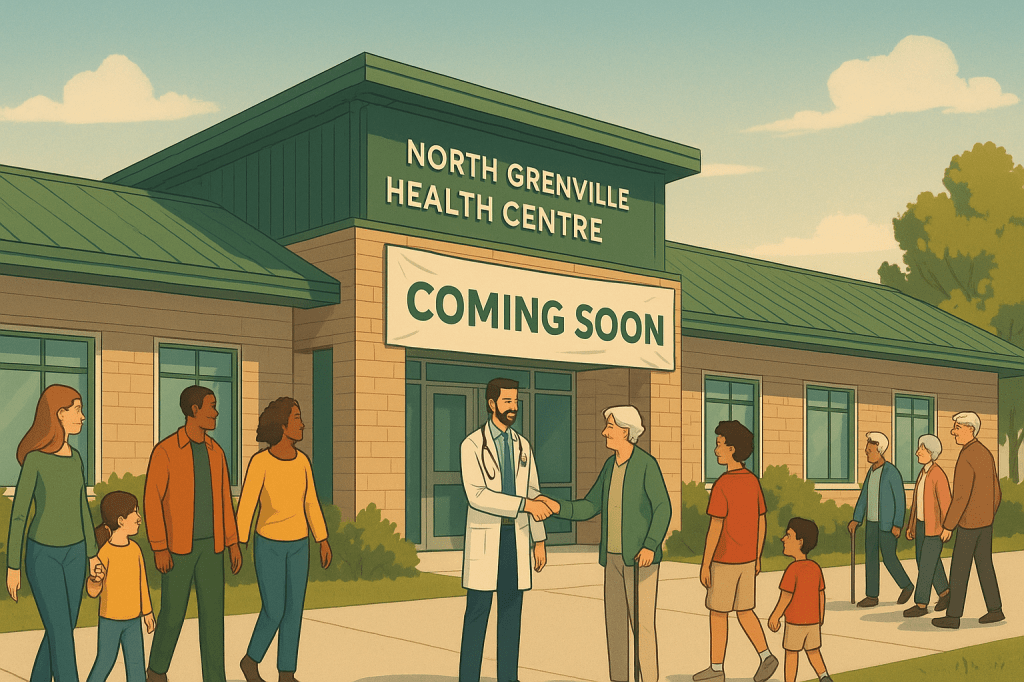
In North Grenville, the demand for primary healthcare has long outpaced the available supply. While the Rideau Crossing Family Health Clinic has served the community admirably, it seems to have reached its physical and staffing capacity. With a growing population, and increasing concerns over access to primary care, it’s time for the Township of North Grenville to consider a bold, but practical move: establish its own municipally-operated healthcare clinic.

This is not an untested idea. Across Canada, municipalities are taking healthcare into their own hands – literally. In Colwood, British Columbia, the city made headlines in 2023 when it became the first in the country to hire family physicians directly as municipal employees. Offering job stability, pensions, and administrative support, Colwood removed many of the barriers that deter physicians from entering or staying in primary care practice. It wasn’t about competing with existing private clinics, it was about ensuring no resident went without a family doctor.

Orillia, Ontario, is exploring a similar strategy. Recognizing that nearly 25% of the region lacks access to a primary care provider, city councillors there are considering opening a municipal clinic and hiring physicians as city staff. Their aim is to enhance, not undermine, the local healthcare network by filling a gap that traditional models are no longer meeting.

In Manitoba, rural communities like Killarney-Turtle Mountain are actively recruiting international physicians and managing their relocation as part of a municipally driven recruitment strategy. These towns have realized that waiting for provincial solutions is no longer viable. Meanwhile, in Huntsville, Ontario, a physician incentive program funded by the town is already yielding results, with new doctors signing on to help address longstanding shortages.

North Grenville has a chance to follow this growing municipal trend. Simply encouraging more physicians to join the private sector won’t be enough, there’s nowhere for them to go within the Township. A municipally-operated clinic, built with a collaborative mindset, and not as competition, can complement existing services while expanding capacity.

Such a clinic could offer a modern team-based care model that includes nurse practitioners, physician assistants, social workers, and administrative staff, all working under the umbrella of the municipality. With support from provincial and federal programs such as Ontario’s primary care transformation funds or the federal Foreign Credential Recognition Program, North Grenville could create a sustainable and forward-looking solution tailored to its own needs.

How to Move Forward: A Practical Path for the Township
To begin, North Grenville’s municipal council could establish a Healthcare Services Task Force to study local demand, identify gaps in coverage, and recommend a viable service delivery model. This task force should include community health experts, residents, and local politicians.

Next, the Township should apply for funding through Ontario Health’s community-based primary care programs, and the federal government’s health human resources strategy. Partnering with the local hospital, regional health teams, and post-secondary institutions could support the recruitment of new healthcare professionals, including recent graduates and internationally trained physicians.

Land acquisition or repurposing of an existing municipal facility could provide a location, with design input ensuring accessibility, environmental sustainability, and integrated team care. North Grenville does have the amazing resource of the Kemptville Campus, with one of its strategic pillars being “Health and Wellness”. The Township could also offer incentives such as relocation grants, housing support, and flexible hours to make municipal employment attractive to prospective staff.

Finally, a clear communications strategy should be launched to explain that the goal is not to replace or compete with existing providers, but to enhance and expand healthcare access in underserved areas and improve outcomes for all residents.

It’s time to stop waiting and start acting. Our citizens deserve timely, reliable healthcare. Let’s build it, right here at home.

Sources
https://tnc.news/2024/12/26/b-c-city-hiring-family-doctors-as-municipal-government-workers
https://barrie.ctvnews.ca/orillia-could-hire-family-doctors-to-create-municipal-clinic-1.7173907
https://www.winnipegfreepress.com/breakingnews/2024/04/19/diagnosis-critical-desperate-manitoba-municipalities-recruiting-doctors-on-their-own
https://barrie.ctvnews.ca/incentive-program-attracts-new-physicians-to-huntsville-to-address-shortage-in-primary-care-1.7093138
https://www.canada.ca/en/employment-social-development/news/2025/03/the-government-of-canada-is-investing-up-to-143-million-to-help-address-labour-shortages-in-the-health-sector.html

Five Things We Learned This Week

Here is the latest edition of “Five Things We Learned This Week” for May 10–16, 2025, spotlighting significant global developments across various sectors.

🧬 1. CERN’s ALICE Experiment Transmutes Lead into Gold

In a groundbreaking achievement, CERN’s ALICE experiment successfully converted lead into gold. This scientific milestone demonstrates the potential of particle physics to manipulate atomic structures, echoing the age-old alchemical quest with modern technology.  

🧠 2. Genetic Links to Obsessive–Compulsive Disorder Identified

A comprehensive study involving over 2 million participants has identified 250 genes associated with obsessive–compulsive disorder (OCD). This discovery offers new insights into the genetic underpinnings of OCD, paving the way for targeted therapies and improved understanding of the condition.  

💰 3. Reserve Bank of India Plans Record Payout to Government

The Reserve Bank of India (RBI) is expected to transfer a record surplus of up to ₹3 lakh crore to the government for the financial year 2024–25. This anticipated payout, nearly 50% higher than the previous year’s, will provide a significant fiscal boost to the government, aiding in budgetary commitments and economic initiatives.  

 4. U.S. Clean Energy Tax Incentives Face Potential Rollback

A Republican-led initiative in the U.S. House of Representatives aims to significantly cut tax credits for clean energy established under the Inflation Reduction Act. The proposed rollback could hinder progress toward reducing carbon emissions and halt the recent surge in clean energy investments, potentially impacting the U.S.’s position in the global clean tech market.   

✈️ 5. Australian Transport Workers Union Threatens Major Industrial Action

The Transport Workers Union (TWU) in Australia has announced plans for a significant industrial campaign that could disrupt the nation’s transport sector, including airline operations. The union aims to coordinate the expiry of over 200 enterprise agreements in 2026 to maximize workers’ bargaining power, targeting major companies such as Qantas, Aldi, Amazon, and Virgin Australia.  

Stay tuned for next week’s edition as we continue to explore pivotal global developments.

A Welcome with Questions: What Dr. Kaur’s Arrival Reveals About North Grenville’s Physician Incentive Strategy

Ontario is facing a growing shortage of primary care physicians, leaving millions of residents without regular access to a family doctor. This crisis is particularly acute in rural and small-town communities, where aging populations and physician retirements have widened care gaps. In response, municipalities across the province are adopting innovative strategies to attract, recruit, and retain doctors. These include financial incentive programs, housing and relocation support, flexible practice models, and community integration initiatives aimed at making smaller communities more appealing.

So, the arrival of a new physician in a small Ontario town is typically a cause for celebration. Access to primary care is under increasing pressure across the province, and communities like North Grenville work diligently to recruit and retain family physicians. Thus, when Mayor Nancy Peckford announced the addition of Dr. Pawandeep Kaur to the Rideau Crossing Family Health Centre in Kemptville, it was a moment of optimism.

However, a closer examination of the circumstances surrounding Dr. Kaur’s recruitment reveals complexities that warrant further scrutiny, particularly concerning the application and effectiveness of North Grenville’s Family Physician Incentive Program.

Dr. Lavitt’s Brief Tenure
Dr. Samantha Lavitt joined the Rideau Crossing Family Health Centre in June 2024 as part of the municipality’s North Grenville Primary Care Incentive Program. Her arrival was heralded as a significant step forward in enhancing primary care access for the community. However, less than a year into her tenure, Dr. Lavitt announced her departure, effective June 1, 2025. The reasons for her short stay have not been publicly disclosed, but her brief tenure raises questions about the program’s ability to retain physicians in the community. 

A Seamless Transition – But Not an Expansion
To ensure continuity of care, Dr. Kaur will begin transitioning into Dr. Lavitt’s practice starting April 16, 2025, with a full handover by June 1. This overlap aligns with the College of Physicians and Surgeons of Ontario (CPSO) guidelines, which mandate that physicians provide appropriate arrangements for patient care continuity upon leaving a practice.

While this transition is commendable from a patient care perspective, it is important to note that Dr. Kaur is not an addition to North Grenville’s physician roster, but a replacement. The total number of family physicians in the community remains unchanged.

The Optics of Growth
Mayor Peckford’s announcement welcomed Dr. Kaur as “another new family doctor,” a phrase that suggests an increase in the local healthcare workforce. However, this characterization is misleading, as Dr. Kaur is filling the vacancy left by Dr. Lavitt. The use of the term “new” in this context may create a perception of growth where there is none.

Furthermore, Dr. Kaur’s recruitment is again tied to the township’s Family Physician Incentive Program. This raises questions about the program’s application. Designed to attract new physicians to underserved areas, the program appears, in this instance, to be used to maintain existing capacity rather than expand it. 

A Stepping Stone, or a Sustainable Solution?
The brief tenure of Dr. Lavitt and the subsequent recruitment of Dr. Kaur under the same incentive program highlight potential vulnerabilities in the program’s design. If physicians view the program as a short-term opportunity or a stepping stone to other positions, the community may face ongoing challenges in maintaining stable, long-term primary care services. Perhaps the program’s retention strategies may need reevaluation to ensure sustainable healthcare delivery in North Grenville? 

Moving Forward with Transparency
While Dr. Kaur’s arrival ensures that existing patients continue to receive care, the situation underscores the need for transparency in how recruitment programs are utilized. It is essential to assess whether these programs are achieving their intended goals of expanding healthcare access, and to consider adjustments that enhance their effectiveness in both attracting and retaining physicians.

As North Grenville continues to navigate the complexities of healthcare provision, clear communication and strategic planning will be key to ensuring that the community’s needs are met not just today, but in the years to come.

Sources
• Rideau Crossing Family Health Centre. “Practice Update.” rideaucrossingfhc.ca
• My Kemptville Now. “North Grenville welcomes newest physician.” mykemptvillenow.com
• North Grenville. “North Grenville Enhances Primary Care Access with Arrival of Dr. Lavitt.” northgrenville.ca
• College of Physicians and Surgeons of Ontario. “Physician Information.” register.cpso.on.ca

The Shifting Dream: White Masculinity and their Receding Grip on North America’s Future

For centuries, the mythology of the “American Dream” (and its Canadian cousin) was powered by the image of the self-made white man; rugged, determined, and in control. From the frontier and the factory floor to the boardroom and ballot box, the narrative of national progress was long centered on white male ambition, but in the 21st century, that dominance is waning. Not because others are taking what doesn’t belong to them, but because they are finally accessing what always should have been shared.

Demographically, socially, and economically, North America is being reshaped by waves of migration, changing gender roles, Indigenous resurgence, and increasing racial and cultural diversity. Women, racialized people, queer folks, and immigrants are not just contributing, they are leading. From startup culture and environmental activism to political office and artistic innovation, the stories being told and the power being wielded are increasingly non-white and non-male.

Yet, as these shifts accelerate, many white men are experiencing something they have rarely encountered at a cultural level: loss of centrality. For generations, society reinforced that whiteness and maleness were the default, everything else was “other.” Now, with those defaults being questioned and dismantled, entitlement is showing its teeth. There is a growing chorus of grievance, often manifesting in reactionary politics, internet subcultures, and movements that call for a return to a mythical past when “men were men” and “America was great.”

The trouble is that entitlement doesn’t vanish when equity rises. Many white men have come to see fairness as persecution, mistaking equality for displacement. They are not just angry at being excluded, they are angry that inclusion requires them to share space, status, and resources. This is especially evident in education, employment, and media representation, where more equitable hiring practices, affirmative action, and inclusive storytelling are viewed not as progress but as threats to traditional dominance.

Some of this backlash is economic. Working-class white men, especially those displaced by globalization and automation, have seen their livelihoods and identities eroded. But the narrative they are often sold isn’t one of class solidarity, it’s one of racial and gender resentment. Politicians and pundits have weaponized their frustration, redirecting legitimate grievances toward scapegoats rather than structural inequity.

Still, the future is not about erasure. It is about redefinition. White men, like everyone else, have the opportunity to take part in a broader, more inclusive vision of what it means to thrive in North America. But it requires humility, self-reflection, and a willingness to let go of inherited privilege. The dream hasn’t died, it’s just no longer theirs alone.

If white men can move from entitlement to empathy, from dominance to solidarity, they can be part of a future that is richer, fairer, and more sustainable. If they cling to the fading illusion of supremacy, they will find themselves shouting from the sidelines of a dream that has moved on without them.

The Language of Care: Why Ontario Needs a Client-Centred Health Model

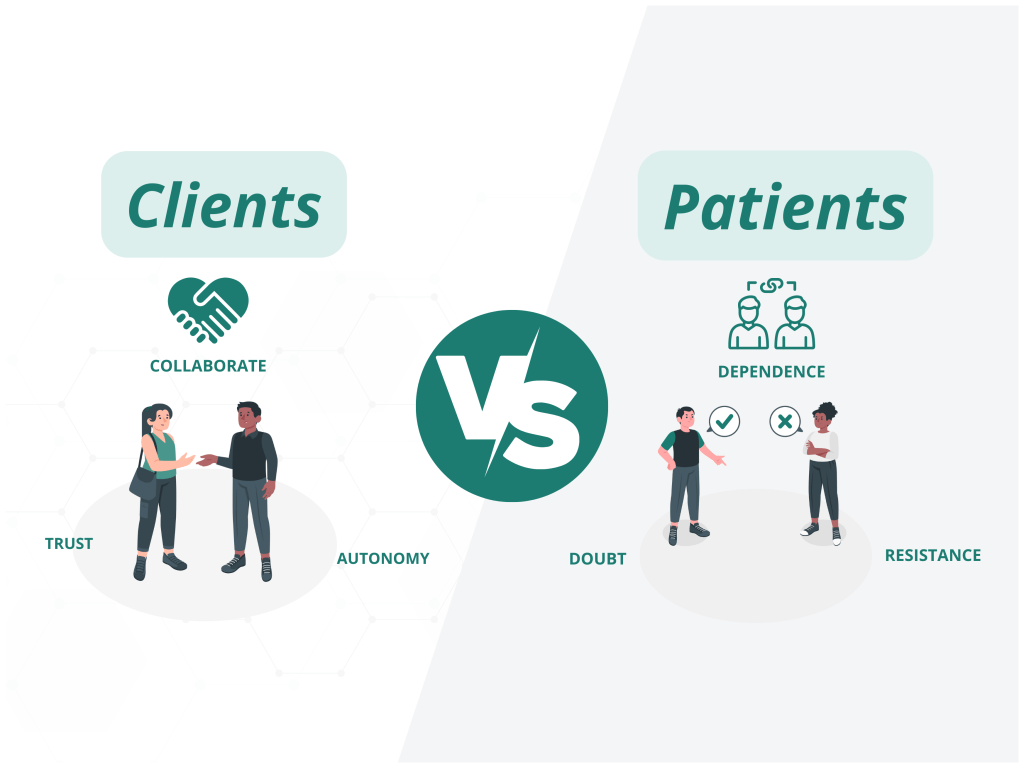
In Ontario, a quiet revolution in healthcare could begin with something as deceptively simple as a change in language. What if, instead of referring to the people they treat as patients, healthcare practitioners embraced the idea that they are working with clients? This shift in terminology is more than cosmetic; it signals a fundamental rethinking of how care is delivered and how relationships between practitioners and the people they serve are structured. Replacing patient with client disrupts the ingrained hierarchy of medicine, and opens the door to a model of care that is more collaborative, respectful, and, ultimately, more effective.

The word patient carries with it centuries of baggage. Rooted in a paternalistic tradition, it positions the healthcare professional as the authority and the person receiving care as a passive recipient. This model might be efficient in a short hospital stay or an emergency room visit, but it often falls short in the real world of chronic illness, mental health, elder care, and preventive services. In these domains, success relies less on technical intervention and more on sustained relationships, shared goals, and mutual trust. Reframing the care recipient as a client changes the dynamic entirely. A client has agency. A client has choices. A client is someone with whom you work, not someone you work on.

This idea is hardly radical in other professions. Lawyers, accountants, architects, and business consultants, all highly educated, tightly regulated professionals serve clients, not patients. These roles are steeped in trust and responsibility, yet they operate from a baseline assumption that the client is an informed actor. Professionals in these fields provide guidance, analysis, and expertise, but they do not presume to make personal decisions on behalf of the people they serve. If such a standard is good enough for legal or financial matters, why should health, arguably the most personal domain of all, be treated differently?

Adopting a client-centred lens has profound implications for healthcare delivery. It reshapes informed consent from a bureaucratic formality into a genuine process of dialogue and understanding. It places a premium on listening, cultural humility, and the social determinants of health. It encourages practitioners to see people not just as carriers of disease or disorder, but as whole individuals navigating complex lives. In Ontario’s increasingly diverse and pluralistic population, this shift is especially urgent. Language, history, trauma, race, and gender identity all influence how people experience healthcare. Treating them as clients creates space for those realities to be acknowledged and respected.

More importantly, research consistently shows that when people are treated as partners in their care, outcomes improve. Chronic disease management, medication adherence, mental health recovery, all benefit from a model in which individuals are active participants rather than passive recipients. Community Health Centres, Nurse Practitioner-Led Clinics, and Indigenous-led health organizations have long embraced this ethos, often with outstanding results. These models recognize that healthcare is not merely about procedures and prescriptions; it’s about relationships and empowerment.

To make this shift from patient to client more than a philosophical exercise, Ontario’s healthcare system must engage in a formal change management process that embeds this transformation into everyday practice. Change at this scale requires more than individual will, it demands structural alignment, leadership buy-in, and sustained cultural development. Medical and nursing schools must be at the forefront, redesigning curricula to emphasize collaborative care, cultural safety, and relational ethics from day one. Teaching hospitals and clinical settings must model this new language and ethos consistently, ensuring that learners observe and internalize client-centred care as the norm, not the exception. Professional colleges, health authorities, and policy-makers need to articulate a unified vision and provide concrete supports; from updated documentation protocols to ongoing professional development. Without a deliberate, system-wide strategy to guide this cultural transition, the risk is that well-meaning practitioners will continue operating in structures that reinforce the very hierarchy we seek to move beyond. True transformation will require education, reinforcement, and accountability across the health system.

Of course, this shift will not be easy. Medical training in Ontario still often reinforces an expert-knows-best mentality. Fee-for-service billing structures reward speed over depth, and systemic pressures, from staffing shortages to rigid bureaucracies, can make relational care feel like a luxury rather than a standard. Some professionals resist the term client, worrying it sounds too commercial or transactional. But in truth, it’s a term of respect. It conveys that the individual has power, and that the practitioner has a duty to serve, not command.

If Ontario is serious about building a more equitable, sustainable, and humane healthcare system, it must begin by reimagining the core relationship between practitioner and person. Words matter. They shape expectations, behaviours, and culture. Shifting from patients to clients could be the first step toward a system that doesn’t just deliver care, but shares it.

First Past Its Prime: Rethinking Canada’s Voting System

It’s not every day a country is offered the chance to fix the structural rot in its democracy, but with frustration mounting across regions and communities, especially in Western and Indigenous Canada, the time for piecemeal reform is over. Canada stands at a crossroads, and the best path forward is the boldest one: comprehensive, simultaneous democratic renewal.

There is a rumour that a new white paper is now circulating among policy wonks, not just another tired commission report, but a blueprint for electoral and parliamentary transformation. It proposes we do four things at once: implement Proportional Representation (PR) in the House of Commons; guarantee Indigenous representation in both the House and Senate; elect our Senators instead of appointing them; and impose term limits across the board.

These are not radical ideas on their own, they’ve each been discussed, and in some cases even promised, by federal governments past. What’s radical, and deeply necessary, is the insistence that these reforms be pursued together. Not piecemeal. Not sequential. Together. Why? Because they reinforce each other, and together they promise a Canadian democracy that finally reflects our values, population, and future.

Let’s start with the cornerstone: Proportional Representation. The problems with first-past-the-post (FPTP) are well known. Governments get majority power with minority support. Voters in large swaths of the country, the Prairies, Northern Ontario, Atlantic Canada, feel their votes don’t count if they aren’t aligned with the winning party. Entire political movements, including Greens and Indigenous-led initiatives, are kept to the margins, not because people don’t support them, but because the system locks them out.

Under PR, the number of seats a party wins would actually reflect the votes it gets. It levels the playing field, encourages cooperation, and disincentivizes the hyper-partisanship we’ve seen grow in recent years. It also makes space for new voices, and that’s where the next reform matters deeply.

Indigenous peoples, who comprise nearly 5% of Canada’s population, are still structurally underrepresented in federal governance. Beyond symbolic appointments, there’s no permanent Indigenous voice in our institutions. That’s not reconciliation. That’s exclusion. The rumoured white paper proposes 10–17 guaranteed Indigenous seats in both the House and Senate, elected by Indigenous voters through systems that reflect their distinct traditions and nationhood. This is a direct response to the Truth and Reconciliation Commission’s call for political inclusion and UNDRIP’s principles of Indigenous self-determination.

Imagine, for a moment, a federal legislature where Indigenous nations hold formal, guaranteed space, not as guests or advisors, but as constitutional partners. That’s what real nation-to-nation dialogue would look like.

Then there’s the Senate, long the source of regional resentment and democratic embarrassment. An institution that holds legislative power, but whose members are appointed for life (until age 75). It’s no wonder people west of the Ottawa River roll their eyes. Reform here is overdue. The proposal calls for elected Senatorsterm limits, and regional balance, meaning each province and territory gets a fair say, regardless of population size. It also insists on something else: guaranteed Indigenous seats in the Senate, a chamber designed in part to protect minority interests and prevent majoritarian overreach.

And finally, term limits. Canadians respect experience, but they’re tired of career politicians clinging to power for decades. Democracy thrives when it breathes, when new leaders emerge, when old ideas are challenged, when public service is temporary and accountable. A 12-year limit for MPs and Senators allows plenty of time for impact, but makes space for renewal. It reduces the likelihood of political entrenchment, encourages succession planning, and invites more diverse participation, especially from younger generations and underrepresented communities.

Now, critics will argue this is too much at once. That we need to tread carefully. That the constitutional path is hard, and it is, but incrementalism is how we got here: decades of broken promises, failed referenda, and half-measures. The public is smarter than our politics. Canadians understand that systems matter, and that systems built in the 19th century can’t solve 21st-century problems.

By tackling PR, Senate reform, Indigenous representation, and term limits together, we don’t just update old institutions. We rebalance power. We rebuild trust. We open the doors to millions of people who have been shut out, by geography, by heritage, by design.

This isn’t about partisan advantage. It’s about democratic legitimacy. Every vote should count. Every region should matter. Every people should be heard.

This is Canada’s moment for democratic reckoning. Let’s not waste it. Let’s do it all at once.

I may/or may not have started the rumour about this so called white paper, and we all know it’s out there. 

Ottawa’s Quiet Revolution: The 15-Minute City and the Rise of Local Commerce on Residential Lots

The City of Ottawa is in the midst of a bold, transformative journey; one that’s reshaping how we live, move, and connect. It’s called the “15-minute neighbourhood,” a simple idea with radical potential.  What if everything you need; groceries, a decent cup of coffee, childcare, your barber, a pharmacy, were just a short walk from your front door? No car required. No long bus rides, just a neighbourhood that works for you.

Ottawa’s New Official Plan, approved in 2021, plants the seeds for this future. At its heart is a commitment to building inclusive, sustainable, and healthy communities. The plan explicitly prioritizes 15-minute neighbourhoods across urban areas, and even pushes for better access to local services in suburban and rural villages. That’s right, this isn’t just a downtown pipe dream. This is city-wide policy.

What’s especially exciting is the quiet, determined push to overhaul the zoning rules that have long governed what can (and can’t) exist in our neighbourhoods. The city is in the thick of writing a new Zoning By-law, and the early drafts reveal a big shift. Residents may soon be able to host small-scale businesses on their own properties. Imagine that, a ground-floor bakery under your neighbour’s apartment, a tiny yoga studio two blocks over, a tailor or vintage shop tucked into a backyard laneway suite. This is no longer just theoretical, it’s in the works.

Ottawa planners are calling these new “Neighbourhood Zones,” and they reflect a sea change in how we think about land use. Rather than rigidly separating residential, commercial, and institutional uses, the city is beginning to embrace a more flexible, mixed-use vision; one that makes space for life to happen more organically. And yes, that means you might be able to open that little business you’ve always dreamed of, without needing to rent expensive storefront space on a commercial strip.

It’s not all roses yet. The first draft of the new by-law has been published, and city staff are collecting public feedback. A second draft is expected in spring 2025, with final council approval tentatively set for fall of the same year. Until then, existing zoning remains in place, but if the final version holds true to its promise, we’ll see the biggest zoning reform Ottawa has seen in decades.

Of course, this kind of change raises questions. Will small businesses in residential zones create noise or traffic? How will parking be handled? Will local character be preserved or diluted? These are fair concerns—and ones the city must address carefully. But the potential benefits are enormous: stronger local economies, reduced car dependency, and vibrant, human-scaled communities.

My regular readers will know that I am a supporter of the 15-minute community. I grew up in NE England where nearly everything we needed on a daily basis was within a 15 min walk, and so I am happy to see that for Ottawa this isn’t just a slogan here, it’s becoming real. And if we get this zoning update right, we may just find ourselves living in a more neighbourly, resilient, and walkable city than we ever imagined.

Ontario’s Healthcare Evolution: From Health Links to Ontario Health Teams

Over the past decade, Ontario’s healthcare system has undergone a quiet, but profound transformation, one that started with a promising pilot, and has grown into a full-scale shift in how care is coordinated and delivered. For those of us watching the system evolve, it’s been a journey from Health Links to Ontario Health Teams (OHTs), with important lessons, growing pains, and renewed hope for more client-centered care.

Back in 2012, the province launched Health Links, a program designed to tackle one of our most pressing challenges: the care of patients with complex, multiple health conditions. These individuals, often seniors, frequently moved between hospitals, doctors’ offices, and community services, repeating their stories at every turn. Health Links aimed to change that by bringing local healthcare providers together to create a single, coordinated care plan for each patient. As part of this program, I co-chaired a Champlain Local Health Integration Network (LHIN) client committee for the region from Arnprior – Ottawa West & South – North Grenville, and we produced a number of strategic presentations, and patient-focused papers that were used to help transform healthcare delivery.  

The Health Links mandate was clear; improve the quality of care, reduce unnecessary hospital use, and make the system more efficient. It worked, at least in part. Coordinated Care Plans (CCPs) helped reduce emergency room visits and made transitions between care settings smoother. Patients reported feeling more supported, and providers began to see the value of collaboration, but as the program grew, so did its limitations. Implementation varied across regions, digital systems didn’t always connect, and Health Links lacked the scale or structure to truly transform the system.

The lessons from Health Links laid the foundation for something bigger. In 2019, Ontario began rolling out Ontario Health Teams, a bold reimagining of how care is delivered. OHTs bring together hospitals, family doctors, long-term care homes, mental health agencies, and other providers under one umbrella. They share budgets, goals, and responsibility for the health of their local populations, and they aim to do what Health Links started, only broader and more sustainably.

As of April 2025, there are 58 OHTs operating across Ontario, each tailored to the needs of its community. Their vision is simple, but ambitious; to offer fully integrated care, where patients don’t fall through the cracks, don’t have to chase paperwork, and don’t have to navigate a fragmented system alone.

Where does Home and Community Care Support Services (HCCSS) fit into all this? As the LHINs were dismantled, their care coordination functions transitioned to HCCSS, which continues to support patients, especially seniors, at home or after hospital discharge. For many, the face of home care hasn’t changed much, and that’s a good thing, as continuity matters.

For Ontarians, especially older adults or those caring for aging loved ones, these changes hold real promise. If your parent is discharged from hospital with a coordinated plan, supported by a team that talks to each other, that’s the system working. If you no longer have to explain your health history to five different providers, that’s integration in action.

Of course, not every region is there yet. Some OHTs are more advanced, some systems still don’t share data well, and some patients are still lost in the shuffle, but the trajectory is promising, and the intent is clear; a more connected, compassionate healthcare experience for everyone.

Ontario has moved from a patchwork of pilot projects, such as the one I was involved with, to a province-wide commitment to collaboration. As we look ahead, the hope is that we not only build on these reforms,but also hold the system accountable to the values that started it all; access, dignity, and care that truly wraps around the patient.