From Vision to Momentum: Alto Enters Its Defining Phase

For years, Canada’s ambitious dream of linking its greatest cities with true high-speed rail has hovered in the realm of feasibility studies and future pipe dreams. Now, in the closing weeks of 2025, that dream has shifted decidedly toward reality; not because steel is yet being laid, but because the Alto high-speed rail initiative has crossed a crucial threshold from concept to concerted preparation and public engagement.

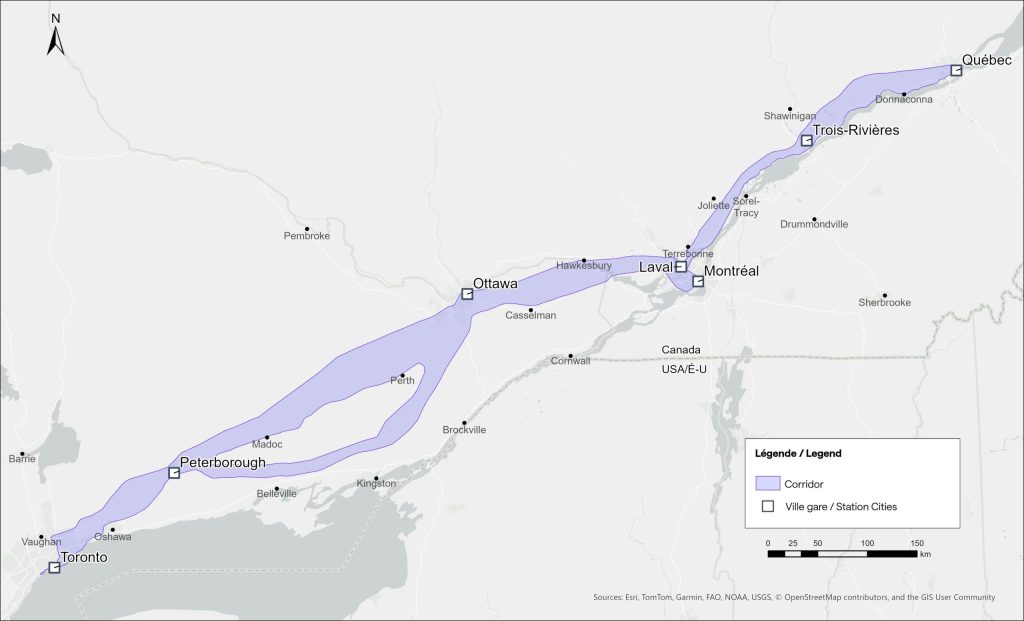
At its core, Alto is a transformative infrastructure vision: a 1,000-kilometre electrified passenger rail network connecting Toronto to Québec City with trains capable of 300 km/h speeds, slicing travel times compared to what today’s intercity rail offers and binding half the nation’s population into a single, rapid mobility corridor. The design phase, backed by a multi-billion-dollar co-development agreement with the Cadence consortium, is well underway, and the federal government has signaled its intent to see this project delivered as one of the largest infrastructure investments in decades.  

The most noteworthy milestone in recent weeks has been a strategic decision about where Alto will begin to take physical shape. On December 12, officials announced that the Ottawa–Montreal segment – roughly 200 km – will be the first portion of the network to advance toward construction, with work slated to begin in 2029. This choice reflects a practical staging strategy: by starting with a shorter, clearly defined corridor that spans two provinces, engineering and construction teams can mobilize simultaneously in Ontario and Québec and begin delivering economic and skills-development benefits sooner rather than later.  

This announcement isn’t just about geography; it marks a shift in Alto’s progression from broad planning to community-level engagement. Beginning in January 2026, Alto will launch a comprehensive three-month consultation process that includes open houses, virtual sessions, and online feedback opportunities for Canadians along the corridor. These sessions will inform critical decisions about alignment, station locations, and mitigation of environmental and community impacts. Indigenous communities, municipalities, and public institutions will be active participants in these discussions as part of Alto’s ongoing commitment to consultation and reconciliation, a recognition that this project’s success hinges not only on engineering prowess, but on thoughtful, inclusive planning.  

Beyond route planning, Alto and Cadence are also turning to Canada’s industrial capacity, particularly the steel sector, to gauge the domestic supply chain’s readiness for what will undeniably be a massive procurement exercise. With thousands of kilometres of rail and related infrastructure components needed, early outreach to the steel industry is intended not just to assess production capacity, but to maximize Canadian content and economic benefit from the outset.  

Yet not every question has a definitive answer. Strategic discussions continue over the optimal location for Alto’s eventual Toronto station, with the CEO publicly acknowledging that a direct connection to Union Station may not be guaranteed; a decision that could shape ridership patterns and integration with existing transit networks across the Greater Toronto Area.  

As the calendar turns toward 2026, the Alto project sits at an inflection point: one foot firmly planted in detailed design and consultation, the other inching closer to the realm of shovels and steel rails. Political support appears robust, and fiscal planning, including major project acceleration initiatives and supportive legislation, has built momentum. Yet, as any transportation planner will tell you, the distance between planning and construction is long, often winding, and frequently subject to political, economic, and community pressures.

Still, for advocates and observers alike, the significance of the latest developments cannot be overstated. Alto has graduated from “what if?” to “when and how,” and that alone marks a major step forward in Canada’s transportation evolution.

The Pie and a Pint Life

There’s a certain romance to the idea of a life lived in fifteen-minute circles. Not a metaphorical fifteen minutes, no, I mean a geography, a rhythm, a practical enchantment where everything one might need for daily sustenance and delight rests just a short stroll or a gentle bike ride away. I call it the “pie and a pint” model of living. The pie represents all the tangible necessities of life: food fresh from the market, clothing that fits just so, perhaps even a bookshop that smells faintly of vanilla and old paper. The pint, meanwhile, is the social lifeblood: laughter, conversation, music, the gentle buzz of humanity swirling around the edges of one’s existence.

It is, I admit, a model born of a lazy idealism, the sort that insists life can be both comfortable and endlessly charming. Imagine leaving home in the morning and, in the span of a quarter-hour, acquiring a warm pastry and a loaf of bread that smells faintly of honey. On the way back, one might linger by the corner café, exchanging pleasantries with a barista who knows your name and your preferred roast. At the market, the butcher waves. The grocer slides a bag of oranges across the counter as though performing a small, daily miracle. Every errand becomes a small ritual, a comforting loop that roots one in the neighborhood and the hours of the day.

The pint, of course, is the flourish to the pie’s sustenance. Perhaps it’s an evening spent in a local pub, the kind where the wooden floors creak with memory, and the beer tastes better because it was poured by someone who knows you, not just your credit card number. Or perhaps it’s a quiet chair in a communal park, a flask of something warming tucked beneath a coat, as the world meanders by. This is the part of life that reminds one why human existence is worth the effort: stories exchanged, music shared, glances that say more than words ever could. The pie fills the stomach, the pint fills the heart.

The beauty of this model is its intimacy. Fifteen minutes, one discovers, is long enough to venture, to explore, but short enough to return. One becomes familiar with the rhythms of place, the subtle shifts in light across a street corner, the seasonal hints in the produce at the market. There is less rush, less constant negotiation with time. A walk to acquire a loaf of bread is also a walk to notice the scarlet leaves tumbling along the sidewalk, to hear a snippet of laughter from a nearby table, to greet a neighbor with a wave and a nod. Life, when framed in such increments, folds into itself, gentle and satisfying.

Of course, one must admit this model is not without whimsy. It presumes a city or town willing to play along, one that fits neatly into the radius of desire. It presumes the world will conspire to place the essential and the pleasurable within reach, and for those willing to walk fifteen minutes, or perhaps pedal gently, the world indeed becomes a smaller, sweeter place. It is a model both humble and audacious: humble in its insistence on simple joys, audacious in its refusal to accept life as a matter of endless commuting and distant errands.

So here it is: the pie and a pint life. A life that honors the mundane and the magical alike, that balances sustenance with delight, that finds happiness not in distant horizons but in the familiar arcs of the day. Fifteen minutes may not sound like much, but in those fifteen minutes, one can hold the universe in the grasp of a warm hand and a warm heart. It is a small radius, yes, but sometimes, the smallest circles hold the greatest magic.

Five Things We Learned This Week

Week of November 29 – December 5, 2025

✈️ 1. India’s IndiGo airline chaos causes airport gridlock

Stricter pilot-fatigue rules triggered a cascade of flight cancellations for IndiGo, India’s largest airline, leaving hundreds stranded across major cities and prompting authorities to cap airfares. The disruption entered a fifth day on Dec 5, affecting travel for thousands nationwide. Source.

Why it matters: The crisis exposed systemic fragility in high-volume air travel and shows how labor and regulatory shifts can ripple quickly through global supply and travel networks, with major economic and social consequences.

🛫 2. Airbus slashes delivery targets after A320-series defects — aviation under pressure

On Dec 5, Airbus revealed that recent cosmic-radiation–linked software glitches and metal panel defects grounded thousands of A320 aircraft and forced the company to drastically cut delivery targets for 2026. Source.

Why it matters: As the A320 is one of the world’s most widely used commercial jets, any large-scale fleet issue creates global consequences for airlines, passengers and supply chains.

🏆 3. 2026 FIFA World Cup draw sets stage — hosts and underdogs get historic matchups

The 2026 World Cup draw, finalized Dec 5, places host nations and underdog teams in matchups that analysts say could disrupt traditional football expectations. Media outlets are calling it a “dream bracket” for the joint hosts Mexico, the United States and Canada. Source.

Why it matters: The draw influences everything from training and tactics to ticket sales and tourism. Major sporting events continue to shape global culture, economics and diplomatic soft power.

🌐 4. IMF to begin high-stakes China economic review amid global uncertainty

The IMF announced its first Article IV review of the Chinese economy since mid-2024, with findings scheduled to be presented in Beijing on Dec 10. The review comes as China faces slowing exports and continued global trade strain. Source.

Why it matters: China remains a central pillar of global economic stability. A cautious or negative IMF assessment could influence markets, trade flows and political decision-making across multiple regions.

🔄 5. Atlantic tuna population review shows mixed recovery

A new multinational marine-biology assessment released this week reports mixed results for several Atlantic tuna populations. While some species show encouraging recovery, others continue a concerning decline linked to overfishing, illegal catch activity and warming waters. Source.

Why it matters: Tuna stocks shape global food security, marine health and economic stability in fishing-dependent countries. This year’s update could influence future quotas and conservation agreements.


Further Reading

Ottawa Amalgamation Failures: A Critical Reassessment  

Bigger is not always beautiful, especially when it comes to communities or, more specifically, municipalities. The 2001 amalgamation of Ottawa and its surrounding municipalities was sold as a transformation: a streamlined government delivering better services, greater efficiency, and lower taxes. In practice the results have been far more ambiguous.

Background: What Was Amalgamated – And What Was Promised
On January 1, 2001, the former municipalities that made up the Regional Municipality of Ottawa–Carleton – 11 lower-tier municipalities plus the former City of Ottawa, were merged into a single-tier municipality: the modern City of Ottawa.  

The rationale was that this consolidation would reduce duplication, unify planning and services, and deliver cost efficiencies through economies of scale. The transition cost was estimated at about $189 million, with the province covering $142 million and the City paying roughly $47 million. The projection for savings from personnel reductions was substantial: roughly $30.7 million in the first year, rising to $84 million by 2003.  

Despite these savings projections, the Transition Board did not promise any tax reductions.  

Mixed Outcomes: Services – Gains, Losses, and Uneven Distribution
One of the primary promises was standardized and enhanced municipal services across the entire new city. In many respects there were improvements, but the benefits have been uneven, and in some rural/suburban zones residents still feel left behind.

What improved
• Services such as recreation programming and library access were expanded. After amalgamation, rural areas enjoyed a jump in activity: for example, by 2007 the rural recreation program catalogue offered 444 programs (up from 62 in 2002).
• The unified municipal structure also enabled coordinated economic development efforts. For example, rural-tourism initiatives (like “Ottawa’s Countryside”) and a “Directional Farm Signage Program” helped rural businesses and agriculture get city-wide support.
• In terms of per-household spending, in its early years the amalgamated city kept overall operating spending roughly on par with a seven-city average of Ontario municipalities; only about 4% higher. And compared with a large city like City of Toronto, Ottawa’s spending was about 30% lower.  

But many promises – Especially in rural and suburban zones, fell short
• Rural residents have repeatedly voiced that core municipal services (road maintenance, snow clearing, local transit, policing) received lower priority compared to urban wards. A longstanding sense of alienation persists among many rural communities toward City Hall.
• The transition diluted local, community-by-community decision-making. Individual municipalities had previously tailored services to local needs; under the amalgamated governance many rural or semi-rural concerns are subsumed under city-wide priorities. This resulted in delays and bureaucratic inefficiencies for issues that once had local responsiveness.
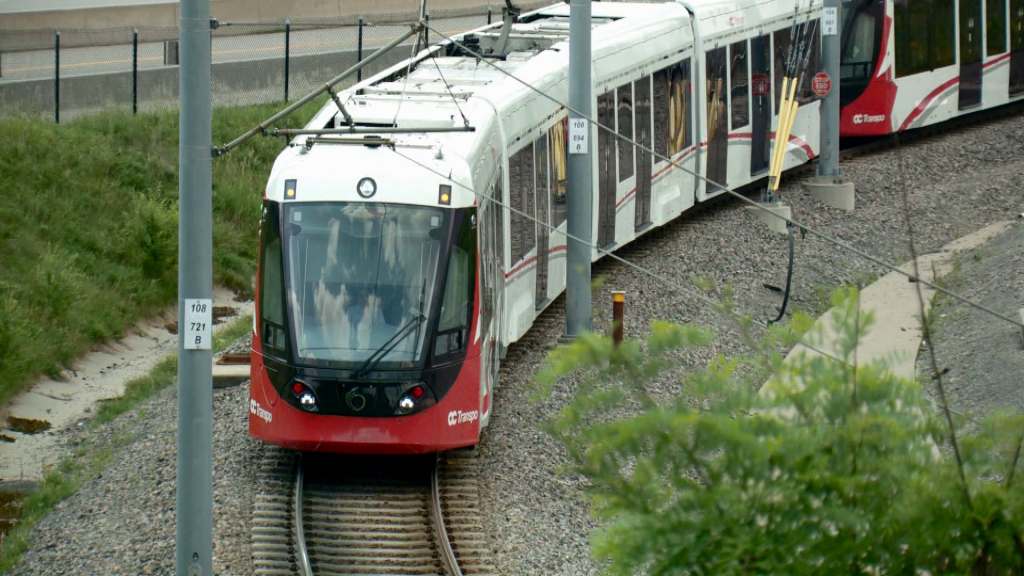
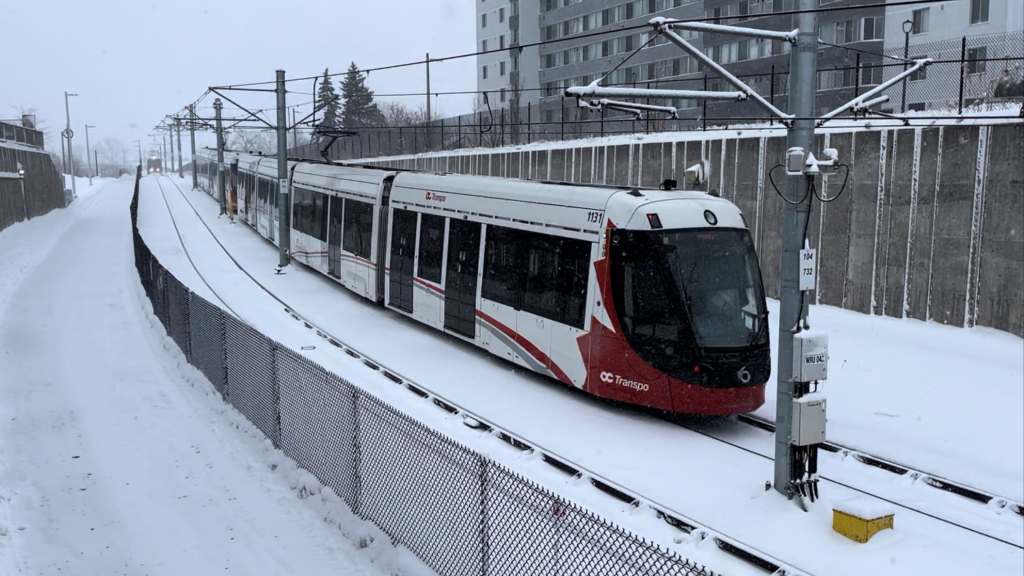
• Perhaps most glaring: the city’s signature transit project, the O‑Train / Ottawa LRT system, has been plagued by cost overruns, operational problems and service reliability issues – undermining its value as a major public-transit asset. A public inquiry’s recent report pointed out serious failures in municipal oversight and transparency around the LRT project.

That failure has broader consequences because many suburban and rural residents rely on a single bus line or intermittent routes, but see a disproportionate share of taxes diverted to an increasingly controversial urban rail system.

Taxes and Finances: Savings Promised – But Higher Costs and New Burdens
One of the largest expectations was that amalgamation would lower costs for taxpayers. That premise has proven questionable.
• Although the transition plan forecast substantial savings from staff reductions, the resulting efficiencies did not translate into widespread tax reductions. None were promised.
• From 2001 to 2005, Ottawa’s property-assessment base grew by 11.1%. Over the same period, education-tax levies on residential properties increased by 33.7%, costing Ottawa homeowners roughly $28 million more than in other Ontario municipalities.
• The uniform tax regime (rather than multiple municipal rates) had disproportionate impacts on suburban and rural homeowners. In many cases they faced tax hikes without corresponding improvements to local services.
• Meanwhile, certain structural costs increased: for instance, the cost share owed to the provincial property-assessment authority (Municipal Property Assessment Corporation or MPAC) rose by 25% since amalgamation, about 5% annually, outpacing inflation and municipal tax increases. That cost is borne by taxpayers.
• In more recent years, the city faces major financial stress. The municipal transit system alone is projected to run an annual operating shortfall of $140 million. Policing, infrastructure maintenance and other capital demands contribute to mounting city-wide debt burdens. As one commentary put it, “there was no tangible, financial benefit from amalgamation.”

These fiscal pressures undercut the core argument for amalgamation — that centralization would lead to stable or lower taxes with better services.

Loss of Local Representation and Identity
Amalgamation replaced dozens of municipal councils and local governance structures with a centralized city council responsible for a vastly larger and more diverse geography and population. That shift came with trade-offs.
• Rural and semi-rural communities lost significant political influence once they became part of a larger ward-based structure. Special “area” or “service” rates were introduced for rural areas, reflecting recognition that service needs differed, but also institutionalizing a two-tier system within the same city.
• Local identity and “small-town” character in villages such as Manotick was diluted. For example, development proposals in Manotick in the mid-2000s (for thousands of new homes) sparked strong concern among local residents that the community’s character would disappear under city-wide policies.
• According to early post-amalgamation polling (2002), many rural respondents rated the new city structure poorly. Among rural residents, 38% said services “need improvement” or rated city performance “terrible,” 43% said “OK,” and only 17% rated things “good” or “excellent.”

The sense of local alienation persists decades later: many rural residents still regard themselves as under-represented and overlooked by City Hall. 

Infrastructure, Planning and Transit: Centralization Meets Complexity – And Breakdown
One of the biggest undertakings after amalgamation has been transit and infrastructure. But the centralized city structure has struggled under the weight of that complexity.
• The O-Train / Ottawa LRT project was to be a flagship symbol of a modernized, unified city-wide transit network. Instead it has become a cautionary tale. A recent public inquiry blamed both the managing company and the city’s leadership for “repeated failures and an abrogation of municipal oversight.”
• Financial burdens from large capital projects like LRT expansion have stressed city budgets. After cost overruns for Stage 1 and 2 of the O-Train project, the burden has fallen heavily on Ottawa taxpayers – unlike comparable projects in the Greater Toronto Area, where provincial or federal funding covers a larger share.
• Meanwhile, suburban sprawl and rural-suburban developments, once under small local municipalities, now stretch the city’s infrastructure capacity. Roads, snow clearing, policing and transit are far more challenging to deliver equitably in a sprawling city than in smaller, more compact municipalities.

The core problem is scale: centralizing everything in a single administration has made it difficult to provide suitable, tailored services across widely different communities, from dense downtown to rural farmland.

Governance and Democratic Legitimacy: Promises of Efficiency at the Cost of Democratic Depth
The transition to a mega-city altered not just service delivery but democratic engagement.
•  Pre-amalgamation, many local decisions:  planning, development, budget priorities were made by small municipal councils familiar with the needs of their residents. Post-amalgamation, those decisions occur within a larger, more remote bureaucracy. Many rural residents feel they no longer have a meaningful political voice.
• The centralization also introduced a complexity of governance that can hamper accountability. As seen with the LRT fiasco, oversight over massive capital projects can become diffuse and abstract, weakening the ability of residents to hold decision-makers to account.
• The uniform tax and service model – despite the wildly different needs of urban, suburban, and rural zones, reflects what critics call “one-size-fits-all governance.” That rarely serves any locality optimally, and often disadvantages those outside the urban core.

A Complicated Legacy – Not an Unqualified Disaster, But Far From the Hopes
It would be unfair to paint the amalgamation as an unmitigated catastrophe. Some benefits have accrued: coordinated planning, a unified transit vision (even if imperfect), expanded recreation and library services, economic development strategies that support rural businesses and agriculture, and, in the early years, per-household spending relatively comparable to peer municipalities.

The long-term trade-offs have been steep: higher taxes (particularly education taxes), rising costs for essential services like property-assessment operations beyond inflation, growing debt burdens, inequitable distribution of services across geography, and a weakened sense of local representation, especially in rural and semi-rural areas.

The classic promise of “efficiency through scale” has often collided with the messy reality of delivering diverse, place-specific services across a vast and varied territory.

Centralization as Compromise
The 2001 amalgamation of Ottawa was a bold gamble: a bet that centralization would bring coherence, cost savings, and improved service delivery. Four decades of experience show that the outcome is deeply mixed.

For some residents the transition delivered real benefits: greater access to recreation, library services, coordinated economic strategies, and the possibility of a unified urban vision. For many others, especially outside the downtown core, it meant increased taxes, loss of local autonomy, and a sense of being perpetually overlooked as part of a sprawling bureaucracy.

In the end, amalgamation delivered some of its promises, but at a cost that, for many, outweighs the benefits. Ultimately the experiment reveals a fundamental truth: size and scale alone do not guarantee better governance. Without careful attention to representation, equity, diverse local needs and transparent oversight, centralization too often becomes a compromise, not a solution.

Etlaq Spaceport: Strategic Ambition on the Arabian Coast

For years the commercial launch landscape has been dominated by a handful of highly visible spaceports in the United States, Europe, and increasingly East Asia. Yet in the background, Oman has been assembling something unusual: a purpose-built, strategically positioned gateway for small- and medium-lift access to orbit. The Etlaq Spaceport, located on Oman’s Al Wusta coast, represents a calculated national investment in the emerging multipolar space economy. Far from being a showpiece, Etlaq is designed as a workhorse facility for rapid, repeatable commercial launch operations in a region previously absent from the global map of operational spaceports.

Etlaq’s development traces back to Oman’s broader attempt to diversify its science and technology sectors. The country recognised early that the Middle East had both the geography and the climate to host a modern launch complex: plentiful open coastline, low population density in potential downrange zones, and political stability that makes long-term planning feasible. The resulting site incorporates modular pads, integrated payload processing halls, and clean transport corridors between facilities to simplify vehicle flow. Unlike older spaceports retrofitted over decades, Etlaq was engineered from its inception around commercial cadence expectations. Operators can move a vehicle through processing, integration, and fueling with minimal pad occupancy time, aligning the port with the market’s shift toward higher launch frequencies.

A major strategic turning point came with the introduction of Oman’s October 2025 regulatory framework, CAD5-01, which modernised licensing, insurance, and environmental requirements for launch providers. While the update appeared technical to the public, it was transformative behind the scenes. CAD5-01 offers a predictable, internationally aligned pathway for operators to certify their missions, mirroring best practices from the United States and Europe while preserving Oman’s flexibility to respond rapidly to commercial timelines. This regulatory clarity is exactly what new space companies look for when selecting a launch site. Combined with Etlaq’s equatorial advantage, CAD5-01 signaled that Oman intends to compete seriously for global launch contracts, not merely serve regional demand.

Etlaq’s ambitions are further reinforced by Oman’s participation in the Global Spaceport Alliance. The Alliance has become the connective tissue of the commercial launch industry, ensuring that spaceports around the world share interoperable standards, safety philosophies, and operational frameworks. For a facility as young as Etlaq, this membership is more than symbolic. It links Oman into a network of regulators, insurers, launch operators, and policy specialists who collectively define the expectations of 21st-century spaceport operations. The effect is twofold: Etlaq gains credibility with international clients and accelerates its own organisational maturity by aligning with procedures used at more established ports. Rather than growing in isolation, it develops in dialogue with the global industry.

What distinguishes Etlaq, however, is not only its integration but its strategic forward posture. As the global launch market becomes increasingly congested, companies are searching for sites that offer reliability, proximity to equatorial orbits, and streamlined regulatory cycles. Oman’s location provides relatively clear trajectories for low-inclination missions while avoiding many of the flight-path restrictions faced by older spaceports. This matters for an industry where minor delays cascade into major scheduling and insurance consequences. Etlaq’s designers have built the facility with the expectation of rapidly expanding demand, planning for additional pads, dedicated line-of-sight telemetry corridors, and expanded infrastructure to support higher-frequency operations.

Taken together, Etlaq is positioning itself as a pragmatic, globally integrated commercial launch node. It benefits from modern regulatory architecture, membership in a coordinating international alliance, and a geographic setting that offers advantages too often overlooked in the Middle East. Oman is not attempting to dominate the launch sector but to host a dependable, commercially attractive platform for the next generation of small-satellite missions, Earth-observation constellations, and responsive launch services.

In an era where the world needs more launch capacity, not less, Etlaq stands out as a quietly strategic entrant. It is the kind of spaceport built not for headlines but for sustained operational relevance, and that may prove more valuable in the long run.

Sources: 
en.wikipedia.org
etlaq.om
muscatdaily.com
thenationalnews.com
copernical.com
rssfeeds.timesofoman.com

A Year in the Wilds of The Rowanwood Chronicles

A reflective essay by the fellow who somehow decided that blogging about politics, climate, gender, and quantum mechanics was a relaxing hobby

I did not set out to become a blogger. No one does. Blogging is something that happens to you when you’ve said “someone should really write about this” one too many times and then realize the someone is you. That was my first year of The Rowanwood Chronicles. A steady accumulation of small irritations, large curiosities, and the occasional planetary existential dread finally pressuring me into a keyboard.

Over the past twelve months I have written about food systems, seismic faults, mononormativity, AI governance, and the demise of centralized social media platforms. This is, I admit, not a tidy list. Most writers pick a lane. I picked several highways, a few dirt roads, and one unmarked trail that led straight into a thicket of gender theory. Some readers have thanked me. Others have quietly backed away like I had started talking about cryptocurrency at a family barbecue. Fair enough.

The funny thing about running a blog with the byline “Conversations That Might Just Matter” is that you end up feeling mildly responsible for the state of the world. Somewhere in the back of my mind I became convinced that if I took one week off, climate policy would collapse, privacy laws would be gutted by corporate lawyers, and Canada would discover a massive geological fault running directly under my house. It is exhausting being the only person preventing civilization from tipping off its axis, but I have bravely carried on.

Along the way, I learned a few things.

First, people really do want long-form writing. They want context. They want to know why their health system is groaning like a Victorian heroine on a staircase. They want someone to explain decentralized social media without sounding like a blockchain evangelist who drinks only powdered mushroom tea. They want nuance rendered in plain language. I can do that. Sometimes even coherently.

Second, writing about politics is like trying to pet a squirrel. You can do it, but you have to keep your hands calm, your movements measured, and be prepared for the possibility that something small and unpredictable will bite you. Every time I published a political piece, I felt like I was tiptoeing across a frozen lake holding a hot cup of tea. Most of the time it held. Some days it cracked.

Third, the world is endlessly, maddeningly fascinating. One moment I was researching drought-related crop instability in the Global South. The next, I was reading government reports about flood plain management. Then I found myself knee-deep in a rabbit hole about the Tintina Fault, which sits there in the Yukon like an unbothered geological time bomb politely waiting its turn. Writing the blog became my excuse to satisfy every curiosity I have ever had. It turns out I have many.

What surprised me most was what readers responded to. Not the posts where I worked terribly hard to sound authoritative. Not the deeply researched pieces where I combed through reports like a librarian possessed. No. What people loved most were the pieces where I sounded like myself. Slightly bemused. Occasionally outraged. Often caffeinated. Always trying to understand the world without pretending to have mastered it.

That was the gift of the year. The realization that a blog does not need to be grand to be meaningful. It simply needs to be honest. Steady. And maybe a little mischievous.

I will admit that I sometimes wondered whether writing about governance, equity, and science from my small corner of Canada made any difference at all. But each time someone wrote to say a post clarified something for them, or started a discussion in their household, or helped them feel less alone in their confusion about the world, I remembered why I started.

I began The Rowanwood Chronicles because I wanted to understand things. I kept writing because I realized other people wanted to understand them too.

So here I am, a year older, slightly better informed, and armed with a list of future topics that spans everything from biodiversity corridors to the psychology of certainty. The world is complicated. My curiosity is incurable. And The Rowanwood Chronicles is still the place where I try to make sense of it all.

If nothing else, this year taught me that even in a noisy world full of predictions and outrage, there is room for thoughtful conversation. There is room for humour. There is room for stubborn optimism. And there is definitely room for one more cup of tea before I press publish.

Britain’s Return to Europe: A Vision Rooted in Purpose, Not Nostalgia

Across the United Kingdom, a quiet reckoning is underway. Eight years after the Brexit referendum, the promise of a bold new chapter outside the European Union lies in tatters. Instead of renewed sovereignty and global resurgence, the country finds itself diminished: economically weaker, diplomatically isolated, and socially fragmented. For many, it is no longer a question of whether we should rejoin the EU, but how, and when.

Yet to speak of rejoining is to confront difficult truths. The journey back will not be quick. It will demand political leadership, public engagement, and diplomatic humility. But for a nation with Britain’s history, talents, and spirit, the path, though long, is both viable and vital. What lies at the end of that path is not simply a restoration of past privileges, but a reclaiming of our rightful place among Europe’s community of nations.

The first step must be political courage. While public opinion is shifting, particularly among younger generations and those long unconvinced by the false dawn of Brexit, the political establishment remains hesitant. The shadow of the 2016 referendum still looms large. Yet true leadership does not bow to ghosts; it charts a course forward. A future government must be willing to speak frankly to the British people: about the costs of Brexit, about the realities of international cooperation, and about the immense benefits of restoring our partnership with Europe.

Equally crucial is the task of restoring trust, both at home and abroad. The manner in which the UK left the EU, marked by bluster and broken commitments, left scars in Brussels and beyond. If Britain is to re-enter the fold, it must do so not as a reluctant exception-seeker, but as a committed and respectful partner. There can be no return to the days of opt-outs and special deals. We must approach accession not with entitlement, but with earnest intent, ready to meet the responsibilities of membership and contribute fully to the shared European project.

Legally and procedurally, rejoining would require a formal application under Article 49 of the Treaty on European Union. This would involve, in principle, a willingness to engage with all facets of membership, including the euro and Schengen, even if transitional arrangements are negotiated. There can be no illusions of a “lite” version of membership. The EU today is not the same bloc we left, it is more integrated, more self-assured. Britain must return on terms of mutual respect, not exception.

But if the process is demanding, the rewards are profound. Economically, the toll of Brexit is undeniable. The Office for Budget Responsibility estimates a 4% permanent reduction in GDP, an astonishing figure that translates into stagnating wages, struggling businesses, and faltering public services. Rejoining the Single Market would ease the friction that now stifles trade; full membership would restore investor confidence, supply chain resilience, and long-term economic momentum.

The argument is not merely about pounds and pence. On the world stage, Britain has not become more powerful post-Brexit, it has become peripheral. While we remain a respected military ally through NATO, our absence from the EU’s decision-making tables has cost us influence on climate policy, digital regulation, and global standards. In an era defined by democratic backsliding and geopolitical rivalry, our values: openness, rule of law, multilateralism, are best defended as part of a European alliance, not apart from it.

There is also a human dimension to this story, one often lost in policy debates. Brexit severed the everyday connections that bound us to our neighbours: the right to study in Paris, to work in Berlin, to fall in love in Lisbon without visas or barriers. Young Britons have had opportunities stripped from them. Scientists and artists find collaboration curtailed. Rejoining is not just an economic necessity, it is a moral obligation to restore the freedoms our citizens once took for granted.

And we cannot overlook the unity of the United Kingdom itself. Brexit has aggravated constitutional fault lines. Scotland and Northern Ireland voted to remain. The subsequent fallout, particularly around the Northern Ireland Protocol, has exposed the fragility of our Union. A return to the EU would not solve every issue, but it would provide a stable framework in which our nations might rediscover common cause, rather than drift further apart.

This journey will take time. It may begin with small, confident steps: rejoining Erasmus, aligning regulatory frameworks, re-entering common programmes. But these must be steps along a clearly signposted road, not gestures to nowhere. The destination, full EU membership, must be embraced not as a retreat to the past, but as a leap toward the future.

Britain belongs in Europe. Not just because of shared geography, but because of shared values: democracy, dignity, justice, and peace. We left on the back of a broken promise. We can return with purpose. And when we do, it will not be as the Britain that left, but as a Britain renewed, ready to lead once more, not from the sidelines, but from the heart of Europe.

Tewin and the Shape of Ottawa’s Future

At the moment, I don’t feel I know enough about this developing issue to take a position, so I plan on monitoring the situation and perhaps look at the bigger picture.  

Four years ago, Ottawa city council voted to expand the urban boundary into lands southeast of the city to create a massive new suburban community called Tewin. The project, a partnership between the Algonquins of Ontario (AOO) and Taggart Group, envisions housing for up to 45,000 people on 445 hectares of land. This expansion was one of the most controversial planning decisions of the last decade, both for its symbolic weight and its long-term implications. Today, councillor Theresa Kavanagh has re-opened the debate, proposing that Tewin be stripped from Ottawa’s Official Plan. Her efforts highlight the difficult choices cities face between growth, climate goals, and Indigenous reconciliation.

The Promise of Tewin
Supporters of Tewin present it as a once-in-a-generation opportunity. For the Algonquins of Ontario, the project represents an unprecedented role in shaping Ottawa’s future. After centuries of dispossession, Tewin offers not only revenue streams and jobs but also visibility in the city’s urban fabric. This symbolic dimension, land not merely ceded or lost, but built upon in partnership, is difficult to dismiss.

Developers and some councillors also argue that Ottawa must accommodate population growth. With Canada’s immigration targets rising, pressure on housing supply is intense. Tewin promises tens of thousands of new homes, potentially designed with modern sustainability standards. Proponents emphasize that large master-planned communities can integrate parks, schools, and infrastructure in ways that piecemeal infill cannot. In this vision, Tewin is not sprawl, but a carefully designed city-within-a-city.

The Cost of Sprawl
Yet the critiques are no less powerful. City staff initially ranked the Tewin lands poorly during their 2020 evaluations, citing soil unsuitability, distance from infrastructure, and limited transit access. Servicing the site: extending water, sewers, and roads will cost nearly $600 million, much of it beyond the city’s 2046 planning horizon. These are funds that could otherwise reinforce existing communities, transit networks, and climate-resilient infrastructure.

Urban sprawl carries environmental and social costs. Tewin sits far from rail lines and job centres, ensuring that most residents will be dependent on cars. This contradicts Ottawa’s stated climate action commitments, which emphasize compact growth and reduced vehicle emissions. Critics also note that adding a massive suburb undermines efforts to intensify existing neighbourhoods, where transit and services are already in place.

Indigenous Voices, Indigenous Divisions
The Indigenous dimension of Tewin complicates the debate. On the one hand, the Algonquins of Ontario have secured a rare position as development partners, advancing reconciliation through economic participation. On the other hand, not all Algonquin communities recognize AOO’s legitimacy, and some argue that consultation has been narrow and exclusionary. The project thus embodies both progress and tension in the city’s relationship with Indigenous peoples. To reject Tewin outright risks appearing to dismiss Indigenous economic aspirations; to proceed with it risks deepening divisions and ignoring long-standing calls for more inclusive engagement.

A City at the Crossroads
Councillor Kavanagh’s push to remove Tewin from the Official Plan is more than a single motion. It reopens a philosophical question: what kind of city does Ottawa wish to become? If it seeks to embody climate leadership, resilient infrastructure, and walkable communities, Tewin appears to be a step backward. If it seeks to honour Indigenous partnership and ensure abundant housing supply, the project has undeniable appeal.

Ultimately, Tewin forces Ottawa to confront a contradiction at the heart of Canadian urbanism. We are a country that has promised climate action, but remains tethered to car-dependent suburbs. We are a nation that aspires to reconciliation, but often struggles to reconcile competing Indigenous voices. To move forward, Ottawa must do more than weigh costs and benefits; it must articulate a vision of growth that is both just and sustainable.

In this sense, Tewin is not merely a development proposal. It is a mirror held up to the city itself, reflecting both its aspirations and its unfinished work.

Sources:
• CTV News Ottawa. “Tewin development project passes latest hurdle but some say it still doesn’t belong.” August 2024. Link
• Ontario Construction News. “Ottawa councillor sparks renewed debate over controversial Tewin development.” April 2025. Link
• CTV News Ottawa. “Councillor withdraws motion to remove 15,000-home development from Ottawa’s Official Plan until after byelection.” April 2025. Link
• Horizon Ottawa. “Stop the Tewin Development.” Accessed October 2025. Link

Lansdowne 2.0: The half-billion-dollar deal that asks Ottawa to trust again

There are moments in a city’s life when the decisions made at council chambers shape not just its skyline, but its soul. The redevelopment of Lansdowne Park has entered such a moment. The City calls it Lansdowne 2.0. Once again we are asked to believe that this time things will finally work out. I am respectfully saying: no thank you.

I support investing in our city’s infrastructure, in affordable housing, and in vibrant community spaces, but I am deeply opposed to the kind of public-private partnership (PPP) model that Ottawa keeps repeating – especially when the affordable housing promise is quietly reduced, when the public carries the risk, and the private partner walks away with much of the upside.

In the case of Lansdowne 2.0, the City and its private partner, Ottawa Sports and Entertainment Group (OSEG), propose to rebuild the north-side stands and arena, build new housing towers, bring retail/condo podiums, and “revitalize” the site. The projected cost is now $419 million, according to City documents. The City’s Auditor General warns the cost could be as much as $74-75 million more and that revenues may fall short by $10-30 million or more. That alone should give us pause, but the real problem goes beyond the balance sheet.

The public-private problem
The idea of PPPs sounds appealing: share risk, leverage private capital, deliver publicly beneficial projects faster. But the repeated pattern in Ottawa is that the public land, public debt and public oversight become the junior partner in the deal. When good times happen, the private side takes the returns; when costs rise or revenues shrink, the City and the taxpayer carry the burden. We know this from Lansdowne 1.0 and from other large projects in the city. The question is not simply “Is this a partnership?” but “Who bears the downside when things go off plan?”

The Auditor General’s review of Lansdowne 2.0 flagged that the City is “responsible for the cost of construction…..and any cost overruns” even though much of the revenue upside depends on later ‘waterfall’ arrivals. If we’re asked to commit hundreds of millions now in the hope of returns later, we must demand transparency, risk caps, guaranteed affordable housing and binding public-benefit commitments. Anything less is not renewal, it’s risk-shifting.

Affordable housing is not optional
At a time when Ottawa faces an acute housing affordability crisis, we are told that “housing towers” are part of the funding model for Lansdowne. But the developer’s track-record of promising affordable units, and then claiming they can’t deliver is worn and familiar. In the updated Lansdowne plan the number of guaranteed affordable units was cut or deferred and shifted toward “air-rights” revenues and condo sales, effectively betting public good on speculative real estate. Affordable housing should not be a line-item to trim when the spreadsheets wobble. It is the social licence that allows private profit on public land. Approving a plan that pares back affordable units yet asks for public exposure is indefensible.

Traffic, transit and neighbourhood liveability
The Lansdowne site sits beside the Rideau Canal, the Glebe and the Bank Street corridor – one of the most traffic-choked corridors in the city. Yet the plan envisions adding 770 new residential units (down from an original 1,200) on top of retail podiums. Meanwhile, the city’s own “Bank Street Active Transportation and Transit Priority Feasibility Study” (June 2024) underlines that Bank Street is already at capacity for cars and buses, that pedestrian and cycling infrastructure is insufficient and that any added vehicle traffic will further degrade mobility.

Without a clear strategy to manage car access, parking, transit loads, cycling/pedestrian safety and construction impacts, this redevelopment risks worsening gridlock and degrading the very neighbourhood livability the project claims to enhance.

Sports tenants and viability
One of the central rationales for Lansdowne 2.0 is that the existing arena and stands are aging and that new facilities will retain sports franchises and major events. Yet the plan, as approved, reduces capacity for hockey to 5,500 seats and concerts to around 6,500 – considerably smaller than many mid-sized arenas. Meanwhile, neighbouring downtown developments such as the proposed new arena for the Ottawa Senators raise questions: what is Lansdowne’s tenant strategy once the major franchise relocates? If the largest anchor tenant leaves, the revenue model collapses. The City is committing hundreds of millions without a transparent long-term sports strategy. Sports teams argue they cannot stay if capacity or amenities shrink. If they depart, the burden falls back on taxpayers.

Commercial podiums and vacant retail
The redevelopment includes a shift from 108,000 square feet of retail to 49,000 square feet; a cut because local business viability was weak in the first phase. Even today many of the commercial units around Lansdowne 1.0 remain vacant because rents are too high for independent businesses and the location’s infrastructure doesn’t support consistent foot traffic outside game days. The plan’s assumption that retail will compensate for public investment is shaky at best. Until we see real evidence of market demand and rental levels that support small business and serve neighbourhoods, not just downtown condo-dwellers, we are betting public money on commercial models that already failed once.

The opportunity cost
Let’s not forget what’s at stake. Nearly half a billion dollars in public exposure. Imagine what that money could do across the city: hundreds of affordable housing units in multiple wards, refurbished community centres, libraries, rinks, park renewal, neighbourhood transit links. Instead, we’re being asked to invest that money in one downtown site, tied to a private partner’s spreadsheet and future real-estate and event-market assumptions. This is a question of equity: do we serve one marquee site or many? Do we favour single big deals or dozens of small, proven community-led investments?

A better path forward
I believe in renewal. I believe Lansdowne and its broader site matter. But I cannot support the current model unless three things change:
1. Full transparency: release the full pro-forma, risk tables, debt-servicing schedules, and waterfall projections.
2. Binding affordable-housing guarantees: not aspirational “10 per cent of air-rights revenue,” but concrete units or legally-binding contributions to affordable-housing stock.
3. An urban-livability strategy: traffic and transit modelling for Bank Street and the Glebe; tenant guarantees for sports franchises; a retail strategy that supports small local business; and a cap on public exposure in cost overruns.

If a deal only works when the public is last in line for returns, when affordable housing is trimmed, when traffic worsens and local business fails, then we shouldn’t do it. That is not civic renewal. It is a subsidy for speculative dysfunction.

Public land, public money, public trust. If those three are not aligned, the right move is not to sign another 40-year partnership and hope for the best. It is to pause, open the books, redesign the deal and ensure the structure serves the city first, not the private partner. Ottawa can build better than this. It just needs to decide whose interests it wants to serve.

Sources:
• CityNews Ottawa: OSEG revamp cost jumps to $419 M.
• City of Ottawa / Engage Ottawa: Lansdowne 2.0 project/funding details.
• Auditor General of Ottawa: cost under-estimation, financial risk.
• Glebe Report: traffic/transportation study on Bank Street.

A Transatlantic Lens: Exploring the Biggest Differences Between Europe and North America

The feedback I have been getting is that readers have been enjoying my serialised essays exploring subject matter to greater depth. This series of posts is for my friends on both sides of the Atlantic who love to debate this topic, often over European old growth wine and Alberta beef steaks.

Living in North America since the early 1990s as a European, I’m constantly struck by the quirks, surprises, and sometimes baffling differences between the continents. Over the next few weeks, I’ll explore ten key contrasts: spanning work, cities, food, and politics, and share what these differences mean in everyday life.

The Ten Differences

1. Social Safety Nets

In Europe, healthcare, pensions, and social support are expected parts of life. In North America, it’s more “your responsibility,” with benefits often tied to your job. It’s a mindset shift—comfort versus risk, security versus self-reliance, and it shapes so much of daily life.

2. Urban Planning and Transport

European cities invite walking, biking, and public transit. North American life often demands a car for everything. That difference affects how people socialize, shop, and spend their days. Suddenly, running errands isn’t quick, it’s a logistical decision.

3. Work-Life Balance

Europeans enjoy generous vacations and shorter workweeks. North Americans often work longer hours with less guaranteed downtime. Life here can feel like a constant race, while in Europe, there’s a stronger sense of living, not just working.

4. Cultural Formality and Etiquette

Europeans prize subtlety, traditions, and social cues. North Americans are casual, direct, and friendly—but sometimes painfully blunt. Adjusting between the two takes awareness: what feels warm here might feel sloppy there, and what feels polite there can seem distant here.

5. Business Practices

European companies lean toward consensus, careful planning, and stability. North American firms move fast, take risks, and chase growth. The difference shows up in meetings, negotiations, and career paths; you quickly learn when to push and when to wait.

6. Education Systems

Europe often offers low-cost or free higher education and emphasizes broad learning. North America favors expensive, specialized programs. The gap affects opportunities, student debt, and the way people approach learning for life versus learning for a career.

7. Food Culture

In Europe, meals are rituals – slow, social, and seasonal. Here, convenience and speed often rule, and portions are huge. That doesn’t just shape diets; it changes how people connect over meals and how they experience daily life.

8. Political Culture

European politics embrace multiple parties, coalitions, and compromise. North America leans on two parties and polarized debates. This difference affects trust, civic engagement, and how people view the government’s role in society.

9. History and Architecture

Europeans live among centuries of history in their streets, buildings, and laws. North America feels newer, faster, and more forward-looking. The environment subtly teaches what matters: continuity versus reinvention, roots versus growth.

10. Attitudes Toward Environment

Europe integrates sustainability into daily life: cycling, recycling, and urban planning. North American approaches vary, often prioritizing convenience or growth over ecology. Cultural attitudes toward responsibility shape everything from transportation to policy priorities.

These ten contrasts are just a glimpse of life across the Atlantic. In the weeks ahead, I’ll dive deeper into each, sharing stories, observations, and reflections. The goal isn’t just comparison, it’s understanding how culture shapes choices, habits, and even identity. Stay tuned for the journey.