Food Security Requires a Canadian Grocery Fairness Act to Break the Supermarket Cartel

Food prices in Canada are now so high that a growing share of households are skipping meals or relying on food banks, yet the country’s dominant grocery chains continue to post record profits. It’s an economic contradiction that Canadians are no longer willing to ignore. After years of voluntary codes, polite meetings with industry leaders, and vague promises of self-regulation, the time has come for Parliament to act. Canada needs a Grocery Fairness and Anti-Cartel Act to restore competition, transparency, and trust in the food supply.

The data are damning. Between 2019 and 2024, grocery prices rose by more than 25 percent, outpacing both wages and overall inflation. Meanwhile, profit margins at the country’s three dominant players, Loblaw, Sobeys’ parent company Empire, and Metro, reached their highest levels in decades. These three corporations control nearly 60 percent of the national grocery market and, in some provinces, more than 75 percent. Despite the removal of gas taxes and a slowdown in supply chain costs, prices have not come down. The explanation is simple: the grocery sector operates as a de facto cartel.

Canadians have seen evidence of this before. In 2018, a major bread price-fixing scandal revealed collusion among suppliers and retailers that spanned more than a decade. The Competition Bureau’s investigation led to fines and admissions of wrongdoing, but no lasting structural change. The same corporate families and alliances continue to dominate shelf space, dictate supplier terms, and shape consumer prices. Voluntary codes have done little to curb their power. When a handful of companies can quietly move in lockstep on pricing, even without explicit collusion, the outcome is the same: higher costs for everyone else.

A Grocery Fairness Act would not be radical. It would simply align Canada with the kind of market safeguards that already exist in other developed economies. The United Kingdom established a Groceries Code Adjudicator in 2013 to oversee fair dealing between supermarkets and suppliers. The European Union enforces strict competition rules that prevent excessive market dominance and punish “tacit collusion.” Canada, by contrast, still relies on a Competition Act designed for a different era, one that assumes the threat to markets comes from explicit conspiracies rather than structural concentration.

The model law proposed by several economists and policy experts would impose a national market-share limit of 15 percent per grocery chain, and 25 percent in any province. Companies that exceed those thresholds would be required to divest stores or brands until the market is more balanced. It would also make the existing Grocery Code of Conduct legally binding rather than voluntary, ensuring that farmers and small suppliers are protected from arbitrary fees, delisting threats, and other coercive practices.

Most importantly, the law would require large grocers to publish detailed pricing and profit data by category, showing whether retail increases are justified by rising costs. If a chain’s margins expand while input costs stay flat, the public deserves to know. Transparency alone would discourage the kind of quiet, parallel pricing behaviour that has become the norm.

Critics will call this “interference in the market,” but the truth is that Canada no longer has a functioning grocery market in the classical sense. When three firms dominate distribution, logistics, and supply contracts, the market’s self-correcting mechanisms are broken. Economists call it “oligopolistic coordination”; ordinary Canadians call it being gouged at the checkout.

Breaking up concentration would also open the door to regional cooperatives, independent grocers, and Indigenous food enterprises that have been squeezed out of distribution networks. Local ownership builds resilience, especially in rural and northern communities where dependence on a single chain often leads to higher costs and poorer food access.

There is also a broader principle at stake: when corporations profit from a basic human necessity, government has a duty to ensure that profit is earned through efficiency, not exploitation. If the banking sector can be regulated for systemic risk and telecommunications companies for fair access, surely food, the most essential of goods, deserves the same scrutiny.

Canada’s political establishment has been slow to move. The federal government has encouraged the large chains to sign a voluntary code, but participation remains partial and unenforced. Provinces have little power to act independently. The result is a cycle of press releases, hearings, and photo opportunities, while the price of a loaf of bread continues to climb.

A Grocery Fairness and Anti-Cartel Act would mark a decisive shift. It would give the Competition Bureau real structural tools rather than case-by-case investigations. It would make transparency mandatory and collusion punishable by substantial fines or even criminal liability for executives. Most importantly, it would restore the principle that essential markets exist to serve citizens, not to enrich monopolies.

Canada prides itself on fairness. Yet fairness in the grocery aisle has become an illusion. If Parliament wants to restore public confidence and make life affordable again, it should begin not with subsidies or rebates, but with the courage to challenge the corporate concentration that underlies the problem. The country needs a real grocery market, competitive, transparent, and accountable. Anything less is a betrayal of every Canadian who still believes that food should be priced by cost, not by cartel.

Sources:
Statistics Canada, Consumer Price Index data 2019–2024;
Competition Bureau of Canada, Bread Price-Fixing Investigation Report (2018);
Office for National Statistics (UK), Groceries Code Adjudicator Review 2023;
European Commission, Competition Regulation 1/2003.
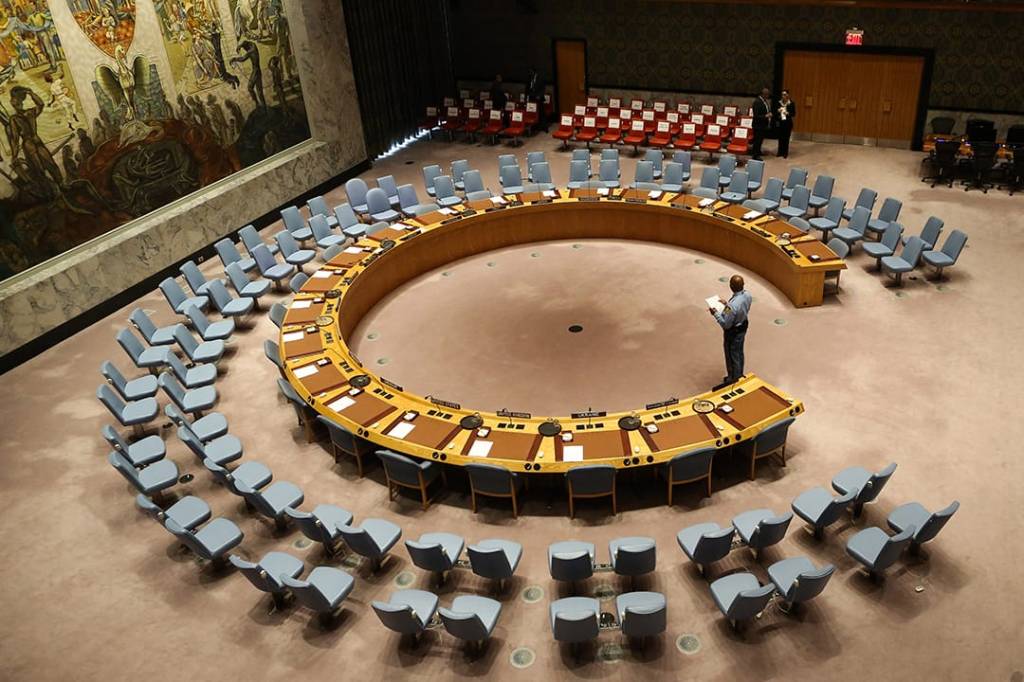
The UN’s Veto Trap: How Superpowers Sabotage Their Own Scapegoat 

The United Nations is often portrayed as the cornerstone of international diplomacy, a forum where nations come together to resolve disputes, prevent wars, and promote human rights. Yet, in practice, the UN is frequently cast as a convenient scapegoat by the very superpowers that designed it. Its structure, particularly the veto power held by the five permanent members of the Security Council, the United States, Russia, China, the United Kingdom, and France, has become a structural bottleneck, ensuring that decisive action is only possible when the interests of these nations align. Until the veto is removed, the UN will remain hamstrung, caught between high expectations and systemic limitations.

The veto was introduced in 1945 as a compromise to secure the participation of the world’s most powerful states. Without it, the founding members feared that superpowers might bypass or abandon the organization altogether. In theory, the veto was a stabilizing mechanism. In practice, it has become a tool for inaction. Consider Syria: during the ongoing civil war, Russia has repeatedly vetoed resolutions condemning the Assad regime and calling for intervention, while China has often supported Russia’s position. As a result, the Security Council has been paralyzed even in the face of clear evidence of atrocities, leaving millions of civilians exposed to violence. Western leaders then criticize the UN for inaction, conveniently ignoring the very vetoes that prevented it from acting.

Other historical examples reinforce this pattern. During the Rwandan genocide in 1994, the Security Council was slow to act, partly due to reluctance from major powers to commit troops or risk entanglement. The UN Assistance Mission in Rwanda (UNAMIR) was critically under-resourced, and resolutions to expand its mandate were delayed or watered down. Later, when Iraq invaded Kuwait in 1990, the Security Council acted decisively, but only because the superpowers’ interests aligned in opposing Saddam Hussein. This selective engagement demonstrates that the UN’s effectiveness is contingent less on law or morality than on the geopolitical priorities of the P5.

Even more recently, the Russian invasion of Ukraine in 2022 exposed the limitations of the UN system. Russia’s veto prevented any meaningful Security Council action, forcing Western nations to rely on unilateral sanctions, NATO coordination, and General Assembly resolutions that carry moral but not binding authority. Russia, in turn, dismissed UN criticism as biased or irrelevant, highlighting the paradox: the UN is invoked when it serves the interests of a superpower, and criticized when it does not. Similarly, the ongoing Israeli-Palestinian conflict shows how the U.S. veto has blocked resolutions condemning settlements or military actions, creating a perception that international law is applied selectively.

These examples illustrate a persistent problem: the UN is used by superpowers as both a tool and a scapegoat. It legitimizes actions when convenient, shields states from criticism, and is blamed for failures beyond its control. The veto allows a single nation to prevent collective action, regardless of the humanitarian or legal merits of a situation. Meanwhile, smaller nations, despite representing the vast majority of UN members, have little real influence. The General Assembly can issue resolutions expressing global consensus, but these are largely symbolic without enforcement mechanisms.

The solution is straightforward: no country should have veto power. The veto institutionalizes inequality and ensures that the UN cannot fulfill its mandate impartially. Proposals have been made to reform the Security Council, including requiring multiple vetoes to block a resolution or eliminating the veto for crimes against humanity, genocide, or aggression. Yet these reforms have stalled because the P5 have no incentive to relinquish privilege. True UN reform requires equalizing the decision-making process, where all nations have a voice and no single state can unilaterally obstruct action. Only then could the UN function as a legitimate arbiter of international law and human rights.

Until veto power is removed, the UN will continue to struggle. It will remain a forum where crises are debated but seldom resolved, where resolutions are celebrated symbolically but ignored in practice, and where superpowers externalize responsibility, casting the organization as weak or ineffectual while maintaining control behind the scenes. The world deserves a UN capable of enforcing its own principles, rather than one whose moral authority is hostage to the interests of a handful of powerful nations. Removing the veto is not just an administrative reform, it is a moral imperative, a prerequisite for a truly effective international system.

One Scale, One Union: Simplifying Federal Compensation for a Modern Public Service

Canada’s federal workforce is a patchwork of pay scales, bargaining units, and special arrangements that often pay employees differently for similar work. This complexity creates inefficiency, confuses managers, and undermines transparency. For decades, the federal government has wrestled with these issues, attempting harmonization through studies and pilot projects, but meaningful reform has never been fully implemented.

Prime Minister Mark Carney has the opportunity to finally address this problem by creating a single pay scale for all new hires and promotions, with a central bargaining agent to represent them. Starting April 1, 2027, this reform would apply to every new employee and to anyone promoted after that date. Over time, as legacy employees retire, the workforce would converge under a single, transparent framework, vastly simplifying management and reducing administrative costs.

The current problem
Federal employees are currently represented by multiple unions, covered under different collective agreements, and paid according to a variety of classification systems. Two employees performing essentially the same job in different departments may have different pay scales, benefits, and promotion paths. This complexity creates friction: managers spend more time navigating pay rules than supervising staff, bargaining is prolonged and repetitive, and HR systems are costly to maintain.

Promotions often compound the problem. Without a unified framework, employees may move between roles under different rules or remain in outdated pay bands indefinitely. This creates inequities and prevents the workforce from operating as a coherent system.

A proven foundation exists
Importantly, Canada has not been starting from scratch. During the 1990s, the federal government explored harmonizing job classifications and pay structures under the Universal Classification Standard (UCS) project. The Treasury Board and Public Service Commission produced extensive documentation, job definitions, and classification guidelines. Additional studies, such as the PS2000 project, analyzed potential efficiencies and pathways for standardization. Much of this work remains relevant today.

By leveraging existing frameworks, the government can implement a single pay scale and central bargaining agent far more quickly than starting from scratch. The definitions, classification structures, and analyses already exist, they need modernization, updating for today’s workforce, and political will to implement.

The proposal: one pay scale, one bargaining agent
The plan is straightforward. Starting April 1, 2027:
1. All new hires enter the federal public service under a single UCS-style pay scale, with clear levels tied to responsibility, experience, and job complexity.
2. Any promotions after this date automatically shift employees to the UCS-style scale and the central bargaining agent, ensuring convergence over time.
3. A single central bargaining agent represents all employees on the UVS scale, whether it is a restructured existing union or a newly created organization.

This approach eliminates the patchwork of bargaining units, reduces negotiation complexity, and ensures equitable pay and promotion practices. Employees understand where they fit in the system, managers can deploy staff more effectively, and the public service as a whole becomes easier to administer.

Benefits for government and taxpayers
A single pay scale reduces administrative overhead, simplifies HR planning, and facilitates mobility between departments. One bargaining agent prevents overlapping negotiations, saving months of time and tens of millions in potential costs. By tying promotions to the UCS system, inequities between legacy and new employees shrink naturally over time.

For taxpayers, the benefits are equally clear. Streamlined payroll systems, reduced HR costs, and more predictable budgeting allow funds to be redirected from administrative complexity into actual service delivery. Employees benefit from transparent, fair, and consistent compensation, while management gains clarity and flexibility.

Building a coherent, modern workforce
Canada’s federal public service is one of the largest in the developed world. To make it efficient, equitable, and responsive, it must operate on clear, uniform principles. A single pay scale and central bargaining agent, applied to new hires and promotions after April 1, 2027, provides exactly that.

This reform is achievable because the groundwork is already laid. The challenge is not designing the system, it is implementing it decisively. By building on past harmonization efforts and committing to a transparent framework, Carney can create a public service that is fairer for employees, easier for managers to oversee, and more accountable to Canadians.

Canada can no longer tolerate a federal workforce fragmented by pay scales, bargaining units, and inconsistent policies. One scale, one union, and a commitment to transparency is the path forward.

Project Ontario and Project 2025: Parallel Conservative Blueprints

The emergence of Project Ontario marks a new phase in Canadian conservative politics. While Premier Doug Ford’s Progressive Conservatives hold a comfortable majority, a group of policy advocates, commentators, and activists argue that his government has strayed too far from conservative principles. Through Project Ontario, they are pressing for a return to fiscal discipline, smaller government, and freer markets. The initiative is not a political party but a policy and advocacy movement aimed at shaping the direction of Ontario’s right. In many ways, it mirrors the role of Project 2025 in the United States: a blueprint designed to realign governance around more ideologically driven goals.

Project Ontario made its debut with a call for an autumn assembly of conservative thinkers, strategists, and policy experts. Its agenda emphasizes cutting red tape, lowering or reforming taxes, encouraging school choice, and tackling Ontario’s lagging productivity. Health care reform and housing affordability also feature heavily, framed through the lens of efficiency and deregulation. The group’s intellectual backbone comes from figures like Ginny Roth, Josh Dehaas, and Adam Zivo, with ties to institutions such as the Macdonald-Laurier Institute and the National Citizens Coalition. While the initiative presents itself as grassroots, it is clearly embedded within conservative policy networks.

Doug Ford has publicly dismissed Project Ontario, branding its supporters as “radical right” and “yahoos.” His sharp rejection underlines the political tension: while Ford governs from a pragmatic, populist center-right position, Project Ontario represents conservatives dissatisfied with compromise, seeking to tighten the ideological screws.

South of the border, Project 2025 represents the same instinct at a far larger scale. Organized by The Heritage Foundation, it is a sweeping plan to prepare a conservative administration for 2025. The nearly 900-page Mandate for Leadership: The Conservative Promise lays out detailed proposals for reshaping the executive branch, replacing civil servants with political loyalists, rolling back climate regulation, and imposing more conservative positions on education, immigration, and social policy. Its ambition is not merely to influence but to structurally reengineer American governance.

Comparing the two reveals important similarities. Both initiatives arise from frustration within conservative ranks, demanding that governments lean harder into free markets, deregulation, and fiscal restraint. Both set out to pre-write the policy script, defining what conservative governance “should” look like. And both blur the line between advocacy and preparation, building networks of people and ideas ready to be deployed when political openings appear.

Yet the differences are just as telling. Project Ontario is provincial, modest, and reformist. It seeks to push an existing government rather than overturn governing structures. Project 2025 is national, well-funded, and radical in scope, proposing changes that critics argue threaten democratic safeguards. Ontario’s conservatives debate incrementalism versus ideology within the safe confines of provincial policy; the U.S. effort aims at wholesale transformation of federal power.

The rise of Project Ontario highlights the pressures facing conservative parties across democracies. Governing requires compromise, but ideological movements demand purity. Whether Project Ontario grows into a defining force or remains a niche critique will depend on how well it mobilizes supporters, attracts funding, and survives Ford’s dismissive pushback. What is clear is that this is only the opening chapter of a story likely to grow louder in Ontario’s political landscape.

Watchlist: What to Track Next
Leadership: Will Project Ontario name formal leaders or remain a loose network of policy advocates?
Funding: Who finances the initiative, and how transparent will it be about its backers?
• Government Response: Will Ford continue to dismiss them, or be forced to absorb parts of their agenda to maintain support on his right flank?
Media Coverage: Do they gain traction in mainstream debate, or stay confined to policy circles?
Public Reception: Will Ontarians respond positively to their calls for fiscal restraint, or view them as too ideological for provincial politics?

The Language of Trust: Decoding the Atreides Battle Tongue

Every culture in Dune speaks a language of power. The Bene Gesserit command with tone, the Fremen bind their tribes with oath and chant, and the Spacing Guild negotiates in silence and shadow. Yet among the great Houses, no language is more intimate, or more revealing of Frank Herbert’s ideas about information and control, than the Atreides battle language. Unlike the grandiose tongues of religion or empire, it is not meant for ceremony or persuasion. It is meant for survival, and for the quiet coordination of people who trust each other enough to speak without words.

Herbert never gives us a full lexicon or grammar. The battle language is not a “constructed language” like Tolkien’s Quenya or the Klingon of Star Trek. Instead, it is a tactical code, a system of micro-communication rooted in the fusion of military discipline and Bene Gesserit precision. It is as much muscle memory as speech. The Atreides use it to share orders under enemy watch, to signal in the dark, to compress entire strategies into a blink or the brush of a hand. Its existence hints at an entire dimension of human language that operates beneath conscious sound: the level of tone, rhythm, and gesture that Herbert, with his background in psychology and semantics, understood as the real field of control.

The first Dune novel treats the battle language like an invisible character. We never hear it directly, but we see its effect: a wordless exchange between Paul and Jessica as they flee into the desert; a silent understanding between Duncan Idaho and his troops in Arrakeen; a private bond between family members that even the Sardaukar cannot crack. Each moment underscores the difference between the Atreides and their enemies. The Harkonnens rely on fear and brute force; the Atreides rely on discipline and trust. Their language becomes the purest expression of that trust; a shared code that only functions when the users believe utterly in each other.

Herbert’s decision not to translate it is what gives the battle language its power. Readers sense that it exists in full but are never allowed to enter it. This mirrors how communication actually works in tight human groups. Soldiers, families, and lovers all develop shorthand that outsiders can’t decode. Herbert turns this natural phenomenon into a literary device: we understand that Paul and Jessica are communicating, but the details stay behind the curtain. The secrecy itself becomes world-building.

It is also a commentary on the politics of language. Dune constantly reminds us that words are weapons. The Bene Gesserit Voice manipulates obedience; the imperial court twists prophecy and bureaucracy into control systems. The Atreides battle language resists that. It is not designed to dominate others, but to coordinate equals. Within it there is no hierarchy, only mutual comprehension. When Jessica and Paul use it, the moment transcends rank; mother and son become co-conspirators in survival. That equality is what makes it dangerous in the feudal universe of Dune.

Modern readers might see parallels to real-world codes: the silent hand signals of special forces, the Navajo code talkers of World War II, or even the private gestures of people who have spent a lifetime together. In information-theory terms, it is a high-efficiency, low-bandwidth communication system; dense with meaning, resistant to interception, optimized for trust rather than volume. Herbert understood long before the digital age that the most powerful communications are not the loudest, but the most exclusive.

There’s also something profoundly spiritual about it. The battle language, like the Bene Gesserit Voice, reveals Herbert’s fascination with consciousness itself. To master it is to master attention, to choose every breath and movement deliberately. In a universe where empires fall to propaganda and faith, the Atreides preserve a private domain of meaning. They speak the language of intent, not ideology. Each signal, each inflection, is a small act of autonomy against the cacophony of the Imperium.

Later novels let the concept fade, but its DNA survives. The God Emperor’s measured speech, the Fremen’s ritual silence, even Leto II’s cryptic pronouncements all echo the idea that communication is the true battlefield. When Leto says, “I am not speaking to you, I am teaching your descendants,” he is still practicing the same philosophy, language as strategy, encoded for a specific audience. The Atreides battle language is simply the most literal form of that philosophy.

Science-fiction often builds worlds through grand architecture and invented vocabularies, but Herbert builds his through silence. The battle language is world-building by omission. We never learn its words because, like any code of loyalty, it only exists between those who earned it. Readers remain outside its circle, and that distance is part of its allure.

To understand the Atreides battle language is to see what Dune is really about. Beneath the sandworms, the spice, and the politics, it is a study of communication; how words, gestures, and even pauses can shape civilizations. The Atreides spoke with efficiency, empathy, and purpose. In a universe addicted to domination, that was their real heresy.

Sources:
Herbert, Frank. Dune. Chilton Books, 1965.
Herbert, Frank. Children of Dune. Putnam, 1976.
Herbert, Brian, and Kevin J. Anderson. Prelude to Dune series. Bantam Spectra, 1999–2001.
Platt, R. “Semiotics of Control in the Dune Universe.” Speculative Linguistics Review, 2017.
“Language and Power in Frank Herbert’s Dune.” Science Fiction Studies, vol. 28, no. 1, 2001.

Five Things We Learned This Week

This week delivered a mix of geopolitics, market jitters, and human stories that matter. Below are five date-checked items from Oct 11 → Oct 17, 2025, each with a short “why it matters” note and source links so you can follow the facts.


🧮 Global growth risk rises as U.S.–China trade tensions flare

On Oct 17, 2025 the IMF warned renewed U.S.–China trade friction — especially around rare-earths and tariffs — could materially dent global growth even as it lifted its 2025 baseline forecast. Why it matters: Trade disruptions between the world’s two largest economies ripple through supply chains, commodity prices and emerging-market outlooks.
Reuters — IMF warns on U.S.–China trade risks (Oct 17)

🤝 Pakistan and Afghanistan extend cease-fire ahead of Doha talks

On Oct 16–17, 2025 officials from Pakistan and Afghanistan agreed to extend a short cease-fire while preparing for peace negotiations in Doha amid recent cross-border clashes. Why it matters: Progress in talks could reduce violence along a volatile frontier and reshape regional security and migration patterns.
Reuters — Pakistan & Afghanistan extend ceasefire (Oct 17)

🕊️ Sharm el-Sheikh summit set to push Gaza ceasefire talks

Between Oct 11–13 Egypt confirmed a summit in Sharm el-Sheikh with more than 20 leaders expected to press for a ceasefire and hostage-release framework in Gaza. The gathering drew high diplomatic attention. Why it matters: A negotiated agreement could reshape the humanitarian and political landscape in the region and set terms for reconstruction and security.
The Guardian — Live coverage of Sharm el-Sheikh summit (Oct 11)

📈 Wall Street’s fear gauge spikes amid trade worries

On Oct 14, 2025 the VIX index rose to a roughly five-month high as investors reacted to renewed U.S.–China trade uncertainty, boosting demand for protective strategies. Why it matters: Higher market volatility often precedes pullbacks and signals investors are re-pricing risk — with implications for portfolios and corporate financing.
Reuters — VIX climbs as trade fears rise (Oct 14)

⚠️ Stampede at Kenyan state funeral injures dozens

On Oct 16–17, 2025 a crowd surge during a state funeral in Nairobi left multiple people hospitalised, highlighting crowd-control and safety challenges at large national events. Why it matters: The incident underscores the public-safety risks of mass gatherings and the importance of planning, medical readiness and infrastructure.
Reuters — Stampede at Kenyan funeral hospitalises people (Oct 17)


Closing thoughts: From trade tangles to fragile peace steps, from market nerves to urgent safety gaps, this week threaded together policy, diplomacy and human vulnerability. Each item here is date-checked to Oct 11–17, 2025 and sourced to primary reporting so you can trace the coverage.

Sources

The Last Whales of Marineland: Law, Ethics, and the Only Path Forward

Marineland sits on the edge of Niagara Falls, a relic of a different era when families came to gape at orcas and belugas performing tricks. Today, the park is closed to the public, its lights dimmed, its tanks mostly empty. Yet the whales remain, silent witnesses to decades of human fascination and exploitation. Among them, the belugas are the last of a long line of captive cetaceans in Canada, and their plight is both a moral and legal reckoning.

For decades, Marineland claimed it brought education and awareness of marine life to Canadians and tourists alike. The reality, as revealed over the last ten years, is more troubling. Since 2019, more than a dozen beluga whales have died at the facility under circumstances that have raised concern among veterinarians, animal welfare groups, and the public. Many were young, far from what should have been a full lifespan, and the explanations provided, while sometimes citing medical causes, fail to address the broader pattern. Photographs and drone footage of barren tanks, water quality issues, and the whales’ unusual behaviors suggest chronic stress and confinement that no educational benefit can justify. The deaths, taken in context, reveal not isolated accidents but the systemic consequences of keeping large, intelligent marine mammals in tanks.

Canada responded to such practices in 2019 by passing the Ending the Captivity of Whales and Dolphins Act. The law bans the breeding, acquisition, import, and export of cetaceans for entertainment. Existing captive animals were “grandfathered” under certain conditions, but new acquisitions or transfers for display are prohibited. In short, sale or export of the remaining belugas from Marineland is illegal. When Marineland recently applied to send its whales to an aquarium in China, the federal government denied the request. The law is unambiguous: the only permissible outcome is relocation to a sanctuary, not further captivity for human amusement.

Legal clarity, however, does not erase the ethical responsibility. These belugas were born or captured for human entertainment. They did not choose this life, and society now bears responsibility for their welfare. Ethics demand that we consider not only physical health but also psychological well-being. Belugas are social, intelligent, and sentient. Repeated confinement, environmental monotony, and loss of companions cause suffering that is both preventable and morally unacceptable. Our laws protect them from further exploitation, but ethical obligation compels us to act now to repair the harm already done.

The only credible path forward lies in the Nova Scotia Whale Sanctuary, being developed by the Whale Sanctuary Project in Port Hilford. This facility is designed as a coastal enclosure, allowing belugas and orcas to live in natural water while receiving veterinary care and human supervision. The sanctuary is not fully operational yet, and relocating large marine mammals is a complex, expensive, and logistically challenging process. Still, this project represents the only legal, ethical, and practical solution for Marineland’s remaining whales. No other facility in Canada can legally or humanely accommodate them, and any alternative that returns them to captivity or commercial display is prohibited under law and would violate ethical principles.

The urgency of the situation cannot be overstated. Marineland is closed to the public and financially strained. Without immediate support, the welfare of these whales is at risk. Government funding and oversight are essential to ensure the whales remain healthy during the transition period. Independent veterinarians and cetacean welfare experts must assess each animal, monitor conditions, and guide care until sanctuary relocation is possible. These steps are not optional; they are necessary to prevent further suffering and to ensure that the legal and ethical framework guiding this process is actually implemented.

Longer-term, the whales’ relocation to Nova Scotia should be accompanied by permanent decommissioning of Marineland’s marine mammal facilities. This is not merely about ending an era; it is about acknowledging responsibility. Marineland profited for decades from holding these whales in suboptimal conditions. It should bear the costs of relocation, long-term care, and veterinary support. Society, in turn, must recognize that the attraction of seeing whales perform tricks is no longer a justification for their suffering.

For the public, the story of Marineland is instructive. It is a reminder that what we once accepted as entertainment can be morally indefensible in retrospect. The law now codifies that view, but ethics demand we go further. The whales’ continued captivity is a human failure, and the only way to right it is through care, sanctuary, and accountability. The Nova Scotia project is more than a refuge; it is a statement that humans are capable of taking responsibility for the consequences of their curiosity, their amusement, and their commerce.

In the end, the last whales of Marineland are a test of our society’s commitment to justice for nonhuman animals. There is no alternative that is lawful, humane, and morally defensible. Relocation to the sanctuary, guided by expert care and public accountability, is the only path that respects both the law and the ethical duty we owe to these sentient creatures. In that effort, we find not only a solution but a measure of ourselves: the ability to act responsibly for those who cannot choose their own fate. For the belugas, the sanctuary is not a luxury – it is justice.

Ending Ottawa’s Shadow Economy: Why Internal Cost Recovery Has to Go

One of the least visible, but most wasteful features of the federal government is something few Canadians ever hear about: internal cost recovery. It sounds harmless, even sensible. In practice, it is a bureaucratic shadow economy; departments billing each other for services, shuffling money back and forth across the federal ledger, and employing armies of staff to process transactions that produce no benefit for the public.

Prime Minister Mark Carney has spoken about making government smaller, smarter, and more accountable. Ending internal cost recovery would be one of the most powerful first steps in that direction.

What is internal cost recovery?
In theory, cost recovery ensures that when one department provides a service to another, the costs are borne by the recipient. For example, the Department of Justice bills departments for legal services. Shared Services Canada invoices other agencies for IT support. Administrative services, from payroll to translation to communications, are often cross-billed.

The intent was to make departments more aware of their costs, encouraging efficiency. In reality, it has created a closed-loop billing system that ties up thousands of public servants in paperwork and accounting exercises that add no value to taxpayers. Money flows from one government pocket to another, with staff tracking, reconciling, and auditing every movement.

Why it fails
The problem is that federal departments do not operate like businesses. There is no competition to drive down prices, no customer base to discipline quality, and no profit incentive to innovate. Cost recovery becomes an elaborate exercise in bookkeeping without the benefits of market discipline. Worse, it creates incentives for departments to prioritize revenue generation over service.

Take Justice Canada. Its “clients” are other departments. The more billable hours it can record, the more revenue it pulls in. Yet this revenue is not real, it is funded by taxpayers in the first place, laundered through another department’s budget. The system distorts priorities and consumes time that should be spent on delivering legal clarity, not chasing internal invoices.

Shared Services Canada provides another case. It was created to streamline IT across government, but its billing model has forced agencies into a vendor-client relationship with an entity that cannot be avoided. Agencies complain, invoices circulate, disputes arise, and the system groans under its own artificial complexity.

The hidden cost of staff time
Every invoice issued, processed, and reconciled requires public servants to handle it. Treasury Board has to monitor flows, departmental finance units have to manage transfers, and auditors have to verify them. Entire teams are employed in these transactions. None of this work would be necessary if departments were simply budgeted to deliver their services directly, as they should be.

Ending internal cost recovery could free thousands of hours of staff time each year. That time could be redirected to real work: drafting better policies, improving service delivery, or responding more quickly to citizens. In a public service already stretched for talent, reducing waste should be a top priority.

What should replace it?
The solution is straightforward. Departments should receive direct appropriations for the services they provide, based on realistic needs and demand forecasts. Justice should be funded to provide legal advice across government. Shared Services should be funded to deliver IT. Translation services should be budgeted to serve the entire public service.

Instead of charging their “clients,” these organizations should be judged on outcomes: timeliness, quality, and responsiveness. Treasury Board can hold them accountable through performance reviews, not through a maze of invoices.

The political case for reform
Ending cost recovery would not only save money; it would simplify government in a way Canadians could understand. Imagine explaining to the public that their tax dollars currently pay for one department to send an invoice to another, then pay again for that invoice to be processed, then pay once more for it to be reconciled, all for money that never leaves the federal accounts. Most Canadians would rightly ask: why not just stop?

This is low-hanging fruit in government reform. It does not involve painful layoffs or dramatic structural upheavals. It simply requires the courage to admit a failed system and replace it with something simpler and better.

A smarter Ottawa
Ending internal cost recovery will not solve every problem in Ottawa. But it is a symbol of the kind of reform Canadians expect: eliminating waste, cutting bureaucracy, and focusing staff time on serving the public. It sends a signal that government exists to deliver value to citizens, not to maintain pointless internal economies.

Prime Minister Carney has spoken about building a leaner and more effective government. Ending cost recovery is the perfect starting point. It demonstrates seriousness about reform, frees capacity across departments, and sets the tone for larger changes to follow.

Canadians are ready for a government that respects their time and their money. The shadow economy of cost recovery has run its course. It is time to end it.

High School Forever? Why Americans Stay Stuck in Teen Mode While Brits Move On

Growing up in a working-class British comprehensive school and later helping raise kids in the U.S. and Canada, I noticed something odd; Americans treat high school as the definitive chapter of their lives. Prom queens cling to their tiaras on Instagram, and class clowns still crack the same jokes at reunions. Across the pond, however, Brits shrug off their teen years like an old school uniform. What gives?

Let’s dive into why Americans cling to their high school glory days while Brits are happy to leave theirs in the past.

America: High School as the Eternal Highlight Reel
For Americans, high school isn’t just a phase – it’s a cultural obsession. Hollywood has built an empire glorifying those years as either a glorious peak or a source of lifelong scars.

Take Napoleon Dynamite. Uncle Rico spends his days reliving a missed shot at football fame, his identity frozen in that one moment. Or Romy and Michele’s High School Reunion, where the main characters reinvent themselves to impress former classmates, only to realize high school wasn’t all that.

Even in uplifting tales like Grease, high school reigns supreme. Danny Zuko and Sandy Olsson’s love story unfolds against a backdrop of drag races, pep rallies, and leather jackets. Meanwhile, The Breakfast Club reminds us that social cliques define who we are, or at least who we think we are, during those years of detention and cafeteria drama.

Why this fixation? High school in America is a “mini-society,” complete with rites of passage like prom, homecoming, and sports rivalries. It’s not just about grades; it’s where you win (or lose) popularity contests, fall in love, and experience your first public humiliation.

The British Take: Awkward, Cringe, and Happily Forgotten
In Britain, adolescence is less “crowning achievement” and more “let’s never speak of this again.” British media portrays school as an awkward stepping stone rather than the main event.

Take The Inbetweeners. This comedy revels in the cringe-worthy antics of four painfully average lads. The goal isn’t to chase glory but to survive. By the end, they’re thrilled to leave it all behind.

Even British dramas sideline the school experience. At Hogwarts, the stakes in Harry Potter are life-and-death battles against dark wizards, not who’s taking whom to the Yule Ball. And in Billy Elliot, a boy’s love for ballet overshadows any schoolyard drama. Compare that to Footloose, where an entire American town’s angst revolves around high school kids’ right to dance.

Why the Difference?
For Americans, adulthood can feel like a letdown. Bills, jobs, and responsibilities often pale in comparison to the glory days of pep rallies and yearbooks. In the UK, adulthood is treated as a welcome reprieve from teenage awkwardness. Shows like Fleabag and The Office (UK) poke fun at adult life without constantly revisiting the schoolyard.

The school systems also play a role. American high schools are all-encompassing, blending academics, sports, and social life. British secondary schools are more segmented, with sports and extracurriculars often happening outside school. Without the glitz of prom or homecoming, there’s simply less to romanticize.

Pop Culture’s Verdict: America Stuck, Britain Moving On
In Hollywood, high school nostalgia reigns supreme. From Clueless to Superbadto Eighth Grade, the American teen years are endlessly rehashed. British films, by contrast, rarely dwell on adolescence. Even when they do, as in Skins, the focus is on complex issues rather than glorifying the teen experience.

While American characters like Cher in Clueless continue acting like queen bees into adulthood, British stories are more likely to explore adult challenges, whether it’s romance in Love Actually or workplace drama in The Office (UK).

A Tale of Two School Systems
For Americans, high school is a cultural anchor, equal parts triumph, trauma, and identity. Brits, on the other hand, happily lock those years in the attic, only to laugh about them over a pint decades later.

Perhaps the lesson is this: while it’s fine to glance back at your teenage years, there’s a reason the yearbook closes.

A Comparative Analysis of Global Space Technology Capabilities 

The space sector has changed dramatically in recent decades, with nations advancing human exploration, satellite technology, and commercial ventures beyond Earth. As more players enter this evolving arena, it is helpful to look at the capabilities of different countries to see how their strengths, challenges, and ambitions shape the future of space. This overview offers a comparative look at several leading spacefaring nations, highlighting their key achievements and ongoing projects.

United States: A Leader in Innovation and Commercialization
The United States remains a dominant force in space technology, driven by the synergy between governmental and private sector endeavors. NASA, the nation’s flagship space agency, has historically led human space exploration, most notably with the Apollo program that landed astronauts on the Moon. Today, NASA’s Artemis program aims to return humans to the lunar surface and eventually establish a sustainable lunar presence. Furthermore, NASA’s ongoing Mars missions, including the Perseverance rover and the upcoming sample return initiative, are paving the way for future human exploration of the Red Planet.

However, it is the rise of private companies like SpaceX and Blue Origin that has revolutionized U.S. space capabilities. SpaceX, with its reusable Falcon rockets and ambitious Starship program, has drastically reduced launch costs and increased mission cadence, while also contributing to global satellite broadband via the Starlink constellation. Blue Origin, although more focused on suborbital space tourism and future lunar exploration, is also playing a key role in shaping the future of space. The integration of private players into the space ecosystem has created a competitive environment that fosters innovation, with an eye on deep space exploration, asteroid mining, and even space tourism.

Despite its successes, the U.S. faces significant challenges in terms of cost and over-reliance on private entities for crewed space missions, a gap that is being gradually filled by NASA’s own projects and partnerships. The balance between government-funded exploration and private sector innovation will define the future of U.S. space ambitions.

China: A Rising Space Power with Ambitious Goals
China has emerged as a major player in the space domain, with the China National Space Administration (CNSA) spearheading the country’s space ambitions. Unlike the United States, China’s space program is largely state-driven, with a clear, long-term vision focused on becoming a dominant spacefaring nation. One of China’s most notable achievements has been its successful lunar exploration programs. The Chang’e missions, including the first-ever soft landing on the far side of the Moon and the recent lunar sample return, demonstrate China’s growing expertise in deep space exploration.

China has also made significant strides in human spaceflight, with the establishment of the Tiangong space station, which serves as a platform for long-term orbital missions and scientific research. The country’s Mars exploration capabilities were proven with the Tianwen-1 mission, which included the successful deployment of the Zhurong rover on the Martian surface. These achievements are indicative of China’s ability to master complex space technologies and execute large-scale missions.

On the military front, China has developed advanced space surveillance systems and anti-satellite capabilities, which highlight the strategic importance of space in national defense. Looking forward, China is planning ambitious missions, including Mars sample return, the construction of a lunar base, and the exploration of asteroids. However, China’s space program is also hindered by its relative isolation from international collaboration due to geopolitical tensions, limiting its ability to share and exchange knowledge with other spacefaring nations.

Russia: A Storied Legacy with Modern Challenges
Russia, as the inheritor of the Soviet Union’s space legacy, remains an important player in global space technology. The Russian space agency, Roscosmos, is renowned for its expertise in human spaceflight, dating back to the launch of Sputnik, the first artificial satellite, and the first human spaceflight by Yuri Gagarin. Today, Russia continues to provide critical crewed spaceflight capabilities to the International Space Station (ISS) through its Soyuz program, which remains a workhorse for transporting astronauts to and from orbit.

Russia’s space program also emphasizes military applications, with advanced satellite systems for navigation, reconnaissance, and surveillance. Despite this, Russia faces several challenges, including aging infrastructure, a shrinking budget, and increasing competition from private companies and international partners. While the country remains a key participant in the ISS, it is increasingly at risk of being overshadowed by more technologically advanced nations.

Looking to the future, Russia has outlined plans for lunar exploration, including its Luna 25 mission, and continues to develop advanced space propulsion systems. However, for Russia to maintain its standing as a space power, it will need to modernize its space technologies and address the structural inefficiencies that have plagued its space industry in recent years.

European Union: Collaborative Strength and Scientific Prowess
The European Space Agency (ESA) represents a collaborative effort between multiple European nations, and this collaboration is one of its greatest strengths. The ESA has made significant contributions to global space efforts, particularly in satellite technology and space science. The Ariane family of rockets has been a reliable workhorse for launching satellites into orbit, while the Galileo satellite constellation is Europe’s answer to the U.S. Global Positioning System (GPS), providing high-precision navigation services to users around the world.

The ESA has also played a pivotal role in scientific exploration, collaborating on high-profile projects such as the James Webb Space Telescope and the Rosetta comet mission. Through these efforts, European scientists have contributed to major discoveries in space science, deepening our understanding of the cosmos.

Despite its many achievements, Europe faces challenges, particularly in human spaceflight. While the ESA has been an integral partner in the ISS program, it is still dependent on the United States and Russia for crewed missions. Future plans include greater involvement in the Artemis lunar program, advanced space telescopes, and participation in deep-space exploration, but Europe will need to further develop its own crewed space capabilities to fully compete on the global stage.

India: Cost-Effective Innovation and Expanding Capabilities
India, through its space agency ISRO, has made significant strides in space exploration, often achieving impressive feats with a fraction of the budget of other spacefaring nations. India’s Mars Orbiter Mission (Mangalyaan) made history as the first Asian nation to reach Mars orbit, and it did so with a remarkably low-cost mission. Similarly, the Chandrayaan missions have contributed to our understanding of the Moon, with Chandrayaan-2’s orbiter continuing to provide valuable data.

ISRO’s cost-effective approach has also made it a key player in the commercial launch sector, with its Polar Satellite Launch Vehicle (PSLV) known for its reliability and affordability. India’s growing focus on space-based applications—such as satellite navigation, weather forecasting, and rural connectivity—demonstrates the country’s commitment to leveraging space technology for societal benefit.

Looking ahead, India has ambitious plans, including the Gaganyaan crewed mission, reusable rocket technologies, and deep-space exploration missions. However, the country still faces challenges in terms of budget constraints and technological limitations compared to global leaders. Despite these challenges, ISRO’s successes in low-cost, high-impact missions have made it a model for emerging space nations.

Japan: Precision Engineering and Collaborative Excellence
Japan’s space agency, JAXA, is known for its precision engineering and innovative approach to space exploration. One of Japan’s most notable achievements is its Hayabusa mission, which successfully returned samples from the asteroid Itokawa, and the subsequent Hayabusa2 mission, which collected samples from the asteroid Ryugu. These missions have placed Japan at the forefront of asteroid exploration, providing valuable insights into the origins of the solar system.

JAXA also plays an important role in international collaborations, contributing to the ISS and working on future lunar missions in partnership with NASA. Japan’s space technology is particularly focused on robotics, with the development of autonomous systems for space exploration and satellite servicing.

While Japan excels in scientific exploration and technological development, it faces challenges in scaling its space ambitions beyond its current focus on research and development. Japan’s private sector has not yet reached the scale of space commercialization seen in the United States, but the country’s ongoing advancements in space science and engineering position it as a key player in the global space arena.

Emerging Space Nations: Niche Players with Growing Influence
In addition to the major space powers, a growing number of emerging nations are making significant strides in space technology. The United Arab Emirates (UAE), for example, successfully launched its Mars mission, Hope, in 2020, marking a historic achievement for the Arab world. South Korea is also making progress with its lunar missions, while Israel’s Beresheet lander, though unsuccessful, demonstrated the country’s determination to establish a presence in space.

These emerging spacefaring nations are focusing on niche areas such as planetary exploration, small satellite development, and indigenous launch capabilities. While they face challenges such as limited funding and technological dependencies, their growing interest in space technology will likely contribute to the diversification of the global space landscape in the coming years.

A Global Space Race with Diverse Players
The global space race is no longer defined solely by the superpowers of the past; it is now a diverse and competitive landscape where nations of all sizes are making their mark. The United States, China, Russia, and Europe remain at the forefront of human exploration and satellite technology, while emerging nations like India, Japan, and the UAE are increasingly contributing to scientific discovery and space commercialization. As technological advancements continue and the boundaries of space exploration expand, the future of space will be shaped by the unique capabilities and ambitions of these diverse players.