When Confederation Feels Like Confrontation: Ontario and Quebec’s Alberta Dilemma

As I write in my Ottawa living room, and although my sympathies stretch eastward into Quebec and the Martimes, I am watching Alberta events on the evening news as if viewing a distant cousin gone rogue. From here, in Central Canada, we’ve built our identity on a tapestry of industrial dynamism, social progressiveness, and an uneasy, yet genuine, devotion to national unity. So when Alberta thunders about “owning” its oil sands, rails under federal pipeline delays, and threatens separatism with a bravado more suited to Texas than to the spirit of Confederation, it feels less like a debate among equals, and more like a family spat escalating into road rage.

The Great Divide
Central Canada’s frustration begins with a simple question: Why can’t Alberta appreciate that its prosperity rides on Canada’s backbone? We know well the clang of steel from Lake Ontario factories, the laboratories of McGill and U of T, the commuter trains of the GTA carrying workers into offices that fuel innovation, culture, and trade. We see our tax dollars flow westward into infrastructure grants and environmental clean‑ups, yet all we hear back is how Ottawa is strangling Alberta’s lifeblood. In boardrooms and bistros alike, we exchange incredulous glances. “Is that really how they see us?”

In Ontario’s legislature or Quebec City’s cafés, the lament is the same. Alberta’s insistence on unfettered resource development, against carbon pricing, against pipeline regulations, against the minimal environmental guardrails that we accept as part of modern governance, strikes us as not only shortsighted, but tone‑deaf. After all, we’re the ones negotiating trade deals abroad, keeping Canada’s credit rating intact, and answering to the world for our climate commitments. When Alberta rips up its federal‑provincial agreements, and paints itself as a victim, it risks making the rest of us look like oppressors.

When Conservatives Moved the Needle
It wasn’t a personal chemistry with any one leader that mattered so much as policy alignment. Under Conservative governments, particularly during the years following 2006, Ottawa embraced free‑market principles that resonated deeply in Alberta: lower corporate taxes, streamlined approvals, and a lighter regulatory touch on energy projects. This wasn’t about nostalgia for a single prime minister, but about a political philosophy that saw energy as an engine of growth, not a problem to be managed.

From Alberta’s perspective, deregulated markets and balanced budgets felt like recognition of its core economic values. In Central Canada, we may have questioned some of those choices, but we accepted that a spectrum of economic approaches made Canada stronger. The result was a pragmatic détente: pipelines moved forward, investment flowed, and while we debated environmental trade‑offs, there was at least mutual respect for each region’s priorities.

When Regionalism Becomes Roadblock
Today, the rhetoric out west often sounds like, “Build the pipeline, or we’ll build our own exit ramp.” Yet Central Canada knows unequivocally that there is no exit ramp. Our factories, hospitals, and schools depend on the interprovincial movement of people, goods, and capital. The same pipelines Alberta demands are the conduits that keep our cars running, and our manufacturing humming. When Alberta complains that Ottawa’s carbon tax is an “Ottawa cash grab,” it ignores that those funds have helped pay for the recent transit expansions in Edmonton and Calgary, along with the wastewater infrastructure upgrades in Lethbridge.

Even more galling is the separatist thunder: poll after poll invites alarm with one in three Albertans saying they might consider leaving Canada under a Liberal government, feels like a hostage‑negotiation tactic, rather than a legitimate policy platform. Central Canada hears the echoes of Texas secession talk, fireworks and flags, bravado and bluster, but we see the policy vacuum behind the spectacle. We wonder: can they name a single agreement on the global stage that would willingly recognize a 4.4 million‑person “Republic of Alberta”? Or do they really believe they can simply flip a switch and declare independence?

Progressive Values Under Siege
For all our differences, Central Canada prides itself on progressive values: public healthcare that is universal, environmental targets that align with global science, and social policies that aim to reduce inequality. We do not see these as luxuries, but as imperatives for a 21st century nation. So when Alberta snarls at any shift toward renewable energy or regulatory tightening, we perceive a rejection, not only of policy, but of shared national values. It’s as if Alberta believes that “progressive” is a dirty word, an urban‑elitist dictate, rather than a democratic choice.

The result is a mutual distrust. We view Alberta as obstinate, and uncooperative; they view us as meddlesome and judgmental. And somewhere in the commotion, Canada the country begins to feel less like “one nation” and more like warring fiefdoms.

Pathways to Reconciliation
Even as Central Canadians exhale in frustration, we still cling to the idea that this can be repaired. We remember that the Constitution, our shared contract, grants Alberta ownership of its resources (Section 92A), but also vests Ottawa with authority over interprovincial trade, environmental standards, and national unity. Those overlapping jurisdictions are not battlegrounds to be won; they are negotiation tables to be inhabited with respect.

Here’s what we in the centre would propose:
1. Joint Stewardship Councils
Permanent federal‑provincial bodies—one on energy and one on climate—co‑chaired by ministers from Ottawa and Edmonton, with rotating seats for other provinces. Their mandate: to align pipelines, carbon policy, and regional development in a single coherent plan.
2. Mutual Accountability Reporting
Instead of one‑way complaints, require quarterly reports on how federal actions affect provincial economies and vice versa, published publicly so Albertans and Ontarians alike can see the trade‑offs.
3. Shared Diversification Funds
A federally matched investment fund for Alberta to channel resource revenues into hydrogen, critical minerals, and technology hubs—mirroring grants Ontario and Quebec receive for their own diversification.
4. Cultural Exchange Programs
Scholarships and internships pairing Alberta students with agencies in Ottawa, and Central Canadians with energy‑sector positions in Calgary and Fort McMurray, because trust grows when people move across the lines, not when walls go up.

Towards a True Confederation
As I look east from Ontario or west from Quebec, I still see Alberta as part of Canada’s grand promise, a province of immense resources, entrepreneurial spirit, and resilient people. But a promise requires reciprocity. If Alberta wants the benefits of the Canadian federation, it must share responsibility for national projects, ideals, and compromises. And if Central Canada wants Alberta to feel at home in Confederation, we must speak not with condescension, but with open hands and honest trade‑offs.

In the end, Texas doesn’t have to be our model, and neither does Paris or Beijing. We can be distinctly Canadian: united not in uniformity, but in a federalism that accepts our regional flavors and binds them together in mutual respect. Only then will Alberta’s roar feel like a proud Canadian voice, rather than an echo of someone shouting from outside our walls.


Five Things We Learned This Week

Week of October 25–31, 2025

A week of extreme weather, big geopolitical tests, market moves and wrenching human stories. Here are five items you should know from Oct 25 – 31, 2025.

🌪️ Hurricane Melissa devastates parts of the Caribbean (Oct 28–30)

Hurricane Melissa slammed Jamaica and battered Cuba and Haiti, becoming Jamaica’s strongest-ever recorded storm and causing dozens of deaths, widespread flooding and tens of thousands displaced. Recovery and humanitarian relief are now the immediate priorities.

Why it matters: The storm’s intensity underscores how warming seas are amplifying disaster risk for island nations.

Source: Reuters Caribbean Service, BBC Weather Centre (Oct 28–30 2025).

💱 U.S. raises tariffs on Canada by 10% (Oct 25)

In a surprise move on Oct 25 the U.S. announced a 10% tariff increase on many Canadian goods — a sharp escalation in trade friction between the two neighbours and one likely to reverberate across supply chains and markets.

Why it matters: Trade spats between major partners affect jobs, currency values and consumer prices across North America.

Source: Bloomberg Markets, Globe and Mail Business (Oct 25 2025).

🔬 Russia says it tested a new nuclear-powered cruise missile (Oct 26)

Moscow reported a successful test of its nuclear-powered Burevestnik cruise missile on Oct 26, a claim that, if true, carries major implications for strategic stability and arms-control debates.

Why it matters: Such weapons could bypass existing defence systems and complicate future nuclear treaty negotiations.

Source: BBC World Service, Al Jazeera Defense Desk (Oct 26 2025).

📉 Fed cuts rates but Powell warns December is not guaranteed (Oct 29)

On Oct 29 the Federal Reserve cut its policy rate by 25 basis points; Chair Jerome Powell cautioned markets that another cut in December was not assured, a comment that pushed volatility and trimmed some of the initial market rally.

Why it matters: Interest-rate signals guide global credit flows and influence currencies and investment strategy worldwide.

Source: Reuters Finance, Wall Street Journal (Oct 29 2025).

⚖️ Red Cross hands over body of a deceased hostage from Gaza (Oct 27)

The International Committee of the Red Cross transferred the body of a deceased hostage from Gaza to Israeli authorities on Oct 27, a grim and sensitive development in the ongoing aftermath of the conflict and hostage exchanges.

Why it matters: Humanitarian operations in conflict zones require trust and neutrality — both fragile but essential qualities for any future peace process.

Source: Associated Press, Haaretz, ICRC statement (Oct 27 2025).

Closing thoughts: This week juxtaposed planetary fury and planetary politics: a rapidly intensifying hurricane underlines climate vulnerability while tariffs, weapons tests and uneasy ceasefire aftermaths show how geopolitics and economics can shift quickly. All events have been verified to fall inside Oct 25 – 31 2025.

Full Relationship Contracts: Love on Purpose, Not by Default

In a world where relationships are evolving faster than the institutions meant to contain them, more people are questioning the traditional model of marriage. Rather than rejecting commitment, they are seeking to redefine it on their own terms. One increasingly popular alternative is the full relationship contract: a comprehensive, negotiated agreement that replaces the assumptions of marriage with intentional choices, clear expectations, and built-in flexibility.

The appeal of a relationship contract lies in its transparency. Unlike marriage, which bundles legal, emotional, financial, and social expectations into one culturally loaded package, a contract allows two or more people to shape their connection deliberately. It invites discussion of what the relationship is for, whether romantic partnership, cohabitation, co-parenting, a D/s dynamic, companionship, or some combination, and what each party wants to give and receive. Far from being clinical, this process can be intimate, even profound. At its heart, it is about building trust through clarity, not obligation.

A full relationship contract typically covers a broad set of topics: emotional and sexual boundaries, communication norms, shared responsibilities, conflict resolution, and the length and terms of the agreement itself. Some people choose a fixed term, six months, a year, or five, at which point the contract is reviewed, renewed, or completed. Others prefer an open-ended agreement with periodic check-ins to assess satisfaction and adjust terms. The idea is not to place love on a timer, but to honour that people grow and change, and that relationships must adapt to survive.

One area where these contracts prove especially valuable is in addressing the question of children. In traditional marriage, parenthood is often assumed as a natural progression, but in non-traditional partnerships, the subject can be more complex. A well-structured agreement considers whether children are desired, what values will guide parenting, and how responsibilities will be shared. Even when the intention is not to have children, many choose to include contingency clauses outlining what will happen if a pregnancy occurs: who makes decisions, how support is offered, and what kind of relationship, if any, continues afterward. While not legally binding in all respects, these clauses create a framework for compassion and responsibility in high-stakes situations.

Flexibility is one of the most empowering features of this approach. Relationship contracts do not imply permanence; rather, they support conscious ongoing consent. When a contract reaches its end or no longer serves those involved, the parties are free to walk away, not with bitterness or blame, but with mutual recognition that the connection has run its course. Some include rituals for closing a relationship respectfully, such as a final shared dinner, a letter exchange, or even a mediated conversation to express gratitude and say goodbye with care. This emphasis on closure helps prevent the chaos and pain often associated with sudden or unresolved breakups.

Critics sometimes argue that this kind of negotiated relating is too calculated, that it takes the magic out of love. But real intimacy isn’t built on spontaneity alone. In fact, many of the most painful relationship experiences come from unspoken assumptions and unmet expectations. A relationship contract does not prevent emotion; it simply creates a container sturdy enough to hold it. Rather than making love conditional, it makes it conscious. It encourages people to enter into relationships with eyes open, hearts engaged, and agreements in place to protect the dignity and well-being of everyone involved.

This model resonates strongly in communities where traditional structures have failed to offer security or legitimacy. Polyamorous and queer relationships, for example, often do not fit within the legal and cultural framework of marriage. Neurodivergent individuals may benefit from clearly defined expectations. People who engage in alternative dynamics, such as D/s, often require negotiated boundaries around autonomy and authority. Even monogamous couples are beginning to see the value in choosing their commitments actively rather than inheriting them from outdated scripts.

As the nature of family and partnership continues to shift, full relationship contracts offer a compelling alternative. They are not meant to replace marriage for everyone, nor do they guarantee harmony. But they represent a move toward relational maturity, a way of saying that commitment need not be blind, and that love does not require self-abandonment to endure. In place of vague promises, they offer grounded conversation. In place of rigid roles, they offer flexibility and co-creation. And in place of state-enforced permanence, they offer mutual freedom, responsibility, and the chance to begin again, better.

Results Over Bureaucracy: Transforming Federal Management and Workforce Planning

Canada’s federal government employs hundreds of thousands of people, yet far too often, success is measured by inputs rather than results. Hours worked, meetings attended, or forms completed dominate performance metrics, while citizens experience delays, inconsistent service, and bureaucratic frustration. Prime Minister Mark Carney has an opportunity to change this by embracing outcomes-based management and coupling it with a planned reduction of the federal workforce—a strategy that improves efficiency without undermining service delivery.

The case for outcomes-based management
Currently, federal management emphasizes process compliance over actual impact. Staff are assessed on whether they followed procedures, logged sufficient hours, or completed internal forms. While accountability is important, focusing on inputs rather than outputs fosters risk aversion, discourages initiative, and prioritizes process over public value.

Outcomes-based management flips this paradigm. Departments and employees are held accountable for tangible results: timeliness, accuracy, citizen satisfaction, and measurable program goals. Performance evaluation becomes tied to impact rather than paperwork. Managers are empowered to allocate resources strategically, encourage innovation, and remove obstacles that slow delivery. Employees gain clarity on expectations, flexibility in execution, and motivation to improve services.

This approach is widely recognized internationally as best practice in public administration. Governments that adopt outcomes-focused management report faster service delivery, higher citizen satisfaction, and better use of limited resources. It is a tool for effectiveness as much as efficiency.

Planned workforce reduction: 5% annually
Outcomes-based management alone does not shrink government, but it creates the environment to do so responsibly. With clearer accountability for results, the government can reduce headcount without impairing services. A planned 5% annual reduction over five years, achieved through retirements, attrition, and more selective hiring, offers a predictable, sustainable path to a smaller, more focused public service.

No mass layoffs are necessary. Instead, positions are left unfilled where feasible, and recruitment is limited to essential roles. Over five years, the workforce contracts by approximately 23%, freeing funds for high-priority programs while maintaining core services. At the end of the cycle, a full review assesses outcomes: delivery quality, service metrics, and costs. Adjustments can be made if reductions have inadvertently affected citizens’ experience.

Synergy with the other reforms
This plan works hand-in-hand with the other two reforms proposed: eliminating internal cost recovery and adopting a single pay scale with one bargaining agent. With fewer staff and a streamlined compensation system, management gains greater clarity and control. Removing internal billing and administrative overhead frees staff to focus on outcomes, while a unified pay scale ensures fair and consistent compensation as the workforce shrinks. Together, these reforms create a coherent, accountable, and modern public service.

Benefits for Canadians
Outcomes-based management and planned workforce reduction offer multiple benefits:
1. Efficiency gains: Staff focus on work that delivers measurable results rather than administrative juggling.
2. Cost savings: Attrition-based reductions lower salary and benefits expenditures without disruptive layoffs.
3. Transparency: Clear metrics demonstrate value to taxpayers, building public trust.
4. Resilience and innovation: Departments adapt faster, encouraging problem-solving and continuous improvement.

Political and administrative feasibility
Canada has successfully experimented with elements of outcomes-based management in programs such as the Treasury Board’s Results-Based Management Framework and departmental performance agreements. These initiatives demonstrate that the federal bureaucracy can shift focus from inputs to results if given clear mandates and strong leadership. Coupled with a predictable downsizing plan, the government can modernize staffing while maintaining accountability and service quality.

A smarter, results-driven public service
Prime Minister Carney has the opportunity to reshape Ottawa’s culture. Moving from input-focused bureaucracy to outcomes-based management, and pairing it with a responsible workforce reduction, creates a public service that delivers more for less. Citizens experience faster, more reliable services; employees understand expectations and have clarity in their roles; and the government maximizes value from every dollar spent.

Together with eliminating internal cost recovery and adopting a single pay scale, this reform completes a trio of policies that make the federal government smaller, smarter, and more accountable. Canadians deserve a public service focused not on paperwork, but on results that matter. This is the path to a modern, efficient, and effective Ottawa.

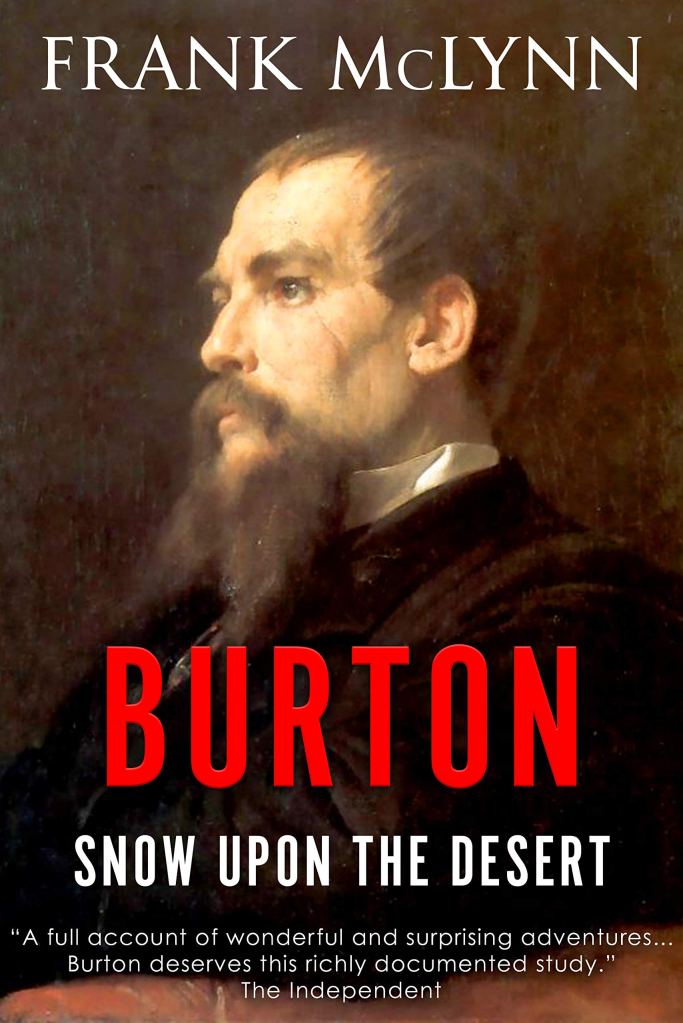
Frank McLynn: A Biographer Who Talks Back to History

“History is not a static record, and truth is not a simple story. It is a conversation, sometimes a quarrel, and always an argument well made.”

If you haven’t yet fallen into the work of Frank McLynn, consider this a gentle warning: once you do, history will never look quite the same. McLynn isn’t merely a writer of biographies; he is a thinker about biography itself, a historian who insists on a conversation with his peers even as he recounts the lives of figures long departed. His work is a masterclass in the art of writing history that is simultaneously rigorous, readable, and refreshingly candid.

Engaging with History, Not Just Telling It
Take his monumental work on Richard Francis Burton. Most biographers, in approaching a figure like Burton: the explorer, linguist, orientalist, and provocateur would pick a path of reverence, sensationalism, or straightforward chronology. McLynn does none of these exclusively. Instead, he immerses himself in the entire scholarly conversation on Burton, dissecting assumptions, noting disagreements, and then calmly explaining why his own interpretation diverges. He doesn’t dismiss other historians; he engages with them, highlighting blind spots, overlooked evidence, or interpretive errors. The result is not just a biography, but a kind of intellectual conversation that readers can follow and participate in.

Version 1.0.0

This dialogic approach is rare in modern biography. Many writers simply present their research, leaving the reader to assume that their conclusions are self-evident. McLynn, by contrast, shows the intellectual gears turning behind the narrative: why he favors one interpretation over another, why certain sources carry more weight, and why some claims advanced by previous historians are problematic. In doing so, he educates as he narrates, giving readers insight into the historian’s craft as well as the subject’s life.

The Challenge of Burton’s Lost Papers
McLynn’s work on Burton becomes even more remarkable when one considers the obstacles he faced. Much of Burton’s personal material: letters, diaries, manuscripts was deliberately destroyed by his wife, Isabel, after his death. Earlier biographers often treated this loss as a barrier too high to surmount, leaving gaps in the narrative or filling them with speculation that blurred the line between evidence and invention.

McLynn confronts these gaps head-on. He does not pretend they do not exist, nor does he indulge in imaginative reconstruction disguised as fact. Instead, he reconstructs Burton’s world with meticulous care, using surviving letters, published works, contemporary accounts, and even indirect references to piece together a life both vivid and credible. The result is a biography that is as rigorous as it is lively, a rare balance in historical writing, especially given the fragmentary nature of the surviving sources.

What stands out is McLynn’s ethical sensitivity. He demonstrates that historical gaps do not justify careless inference. Rather, he shows how one can be faithful to the evidence while still producing an engaging narrative. Readers gain not only a sense of Burton himself, but also an appreciation for how historians navigate the tension between curiosity and respect, interpretation and invention.

The Ethics and Craft of Biography
This transparency is one of McLynn’s defining traits. He models intellectual honesty in every chapter, reminding readers that biography is as much about interpretation as it is about fact. He acknowledges the limits of sources, the biases of previous scholars, and the moral ambiguity of his subjects. By doing so, he invites readers to think critically, weigh evidence, and arrive at their own conclusions.

McLynn’s biographies are, in a sense, lessons in historiography. Through his work, we see how historical interpretation evolves, how scholars argue across time, and how personal and cultural biases shape the telling of any life. He makes these debates accessible, without ever oversimplifying them, allowing readers to witness the historian’s reasoning in action.

Themes Across McLynn’s Work
Across his wide-ranging oeuvre, from Napoleon Bonaparte to Genghis Khan, from Carl Jung to Marcus Aurelius, McLynn’s approach is consistent. He is drawn to figures who are morally complex, intellectually audacious, or too misunderstood to be captured by conventional narratives. He eschews hagiography and sensationalism alike, favoring instead a careful, nuanced exploration of character and context.

Another hallmark is his attention to cultural and historical environment. McLynn situates his subjects within the broader currents of their times, showing how context shapes decisions, ambitions, and legacies. In Genghis Khan: The Man Who Conquered the World, for example, he paints a rich picture of the Mongol steppe and tribal politics, helping readers understand the extraordinary achievements of a man often caricatured in previous accounts. Similarly, in his Napoleon biography, he balances the public image with the private complexities of the man, providing both strategic analysis and human insight.

Why McLynn Matters
For readers, engaging with McLynn is thrilling. You are not merely absorbing facts; you are witnessing a historian navigate a maze of interpretation, weighing evidence, and arguing with the ghosts of scholarship past. His biographies are immersive, yet intellectually rigorous, blending narrative excitement with careful reasoning.

In a publishing world awash with hagiography, sensationalism, and truncated life sketches, McLynn reminds us why biography matters. He shows that history is a living dialogue, shaped by questions as much as answers. And in every book, quietly but insistently, he is the biographer who talks back, both to his subjects, and to the historians who have preceded him.

“He writes not to canonize or condemn, but to illuminate, and in doing so, he reveals something equally compelling about the practice of history itself.”

For those willing to read closely, McLynn’s footnotes, source critiques, and occasional asides provide a secondary narrative: a conversation about scholarship itself. In this sense, reading McLynn is not just a journey through the lives of extraordinary figures; it is a lesson in how history is written, interpreted, and understood.

Lansdowne 2.0: The half-billion-dollar deal that asks Ottawa to trust again

There are moments in a city’s life when the decisions made at council chambers shape not just its skyline, but its soul. The redevelopment of Lansdowne Park has entered such a moment. The City calls it Lansdowne 2.0. Once again we are asked to believe that this time things will finally work out. I am respectfully saying: no thank you.

I support investing in our city’s infrastructure, in affordable housing, and in vibrant community spaces, but I am deeply opposed to the kind of public-private partnership (PPP) model that Ottawa keeps repeating – especially when the affordable housing promise is quietly reduced, when the public carries the risk, and the private partner walks away with much of the upside.

In the case of Lansdowne 2.0, the City and its private partner, Ottawa Sports and Entertainment Group (OSEG), propose to rebuild the north-side stands and arena, build new housing towers, bring retail/condo podiums, and “revitalize” the site. The projected cost is now $419 million, according to City documents. The City’s Auditor General warns the cost could be as much as $74-75 million more and that revenues may fall short by $10-30 million or more. That alone should give us pause, but the real problem goes beyond the balance sheet.

The public-private problem
The idea of PPPs sounds appealing: share risk, leverage private capital, deliver publicly beneficial projects faster. But the repeated pattern in Ottawa is that the public land, public debt and public oversight become the junior partner in the deal. When good times happen, the private side takes the returns; when costs rise or revenues shrink, the City and the taxpayer carry the burden. We know this from Lansdowne 1.0 and from other large projects in the city. The question is not simply “Is this a partnership?” but “Who bears the downside when things go off plan?”

The Auditor General’s review of Lansdowne 2.0 flagged that the City is “responsible for the cost of construction…..and any cost overruns” even though much of the revenue upside depends on later ‘waterfall’ arrivals. If we’re asked to commit hundreds of millions now in the hope of returns later, we must demand transparency, risk caps, guaranteed affordable housing and binding public-benefit commitments. Anything less is not renewal, it’s risk-shifting.

Affordable housing is not optional
At a time when Ottawa faces an acute housing affordability crisis, we are told that “housing towers” are part of the funding model for Lansdowne. But the developer’s track-record of promising affordable units, and then claiming they can’t deliver is worn and familiar. In the updated Lansdowne plan the number of guaranteed affordable units was cut or deferred and shifted toward “air-rights” revenues and condo sales, effectively betting public good on speculative real estate. Affordable housing should not be a line-item to trim when the spreadsheets wobble. It is the social licence that allows private profit on public land. Approving a plan that pares back affordable units yet asks for public exposure is indefensible.

Traffic, transit and neighbourhood liveability
The Lansdowne site sits beside the Rideau Canal, the Glebe and the Bank Street corridor – one of the most traffic-choked corridors in the city. Yet the plan envisions adding 770 new residential units (down from an original 1,200) on top of retail podiums. Meanwhile, the city’s own “Bank Street Active Transportation and Transit Priority Feasibility Study” (June 2024) underlines that Bank Street is already at capacity for cars and buses, that pedestrian and cycling infrastructure is insufficient and that any added vehicle traffic will further degrade mobility.

Without a clear strategy to manage car access, parking, transit loads, cycling/pedestrian safety and construction impacts, this redevelopment risks worsening gridlock and degrading the very neighbourhood livability the project claims to enhance.

Sports tenants and viability
One of the central rationales for Lansdowne 2.0 is that the existing arena and stands are aging and that new facilities will retain sports franchises and major events. Yet the plan, as approved, reduces capacity for hockey to 5,500 seats and concerts to around 6,500 – considerably smaller than many mid-sized arenas. Meanwhile, neighbouring downtown developments such as the proposed new arena for the Ottawa Senators raise questions: what is Lansdowne’s tenant strategy once the major franchise relocates? If the largest anchor tenant leaves, the revenue model collapses. The City is committing hundreds of millions without a transparent long-term sports strategy. Sports teams argue they cannot stay if capacity or amenities shrink. If they depart, the burden falls back on taxpayers.

Commercial podiums and vacant retail
The redevelopment includes a shift from 108,000 square feet of retail to 49,000 square feet; a cut because local business viability was weak in the first phase. Even today many of the commercial units around Lansdowne 1.0 remain vacant because rents are too high for independent businesses and the location’s infrastructure doesn’t support consistent foot traffic outside game days. The plan’s assumption that retail will compensate for public investment is shaky at best. Until we see real evidence of market demand and rental levels that support small business and serve neighbourhoods, not just downtown condo-dwellers, we are betting public money on commercial models that already failed once.

The opportunity cost
Let’s not forget what’s at stake. Nearly half a billion dollars in public exposure. Imagine what that money could do across the city: hundreds of affordable housing units in multiple wards, refurbished community centres, libraries, rinks, park renewal, neighbourhood transit links. Instead, we’re being asked to invest that money in one downtown site, tied to a private partner’s spreadsheet and future real-estate and event-market assumptions. This is a question of equity: do we serve one marquee site or many? Do we favour single big deals or dozens of small, proven community-led investments?

A better path forward
I believe in renewal. I believe Lansdowne and its broader site matter. But I cannot support the current model unless three things change:
1. Full transparency: release the full pro-forma, risk tables, debt-servicing schedules, and waterfall projections.
2. Binding affordable-housing guarantees: not aspirational “10 per cent of air-rights revenue,” but concrete units or legally-binding contributions to affordable-housing stock.
3. An urban-livability strategy: traffic and transit modelling for Bank Street and the Glebe; tenant guarantees for sports franchises; a retail strategy that supports small local business; and a cap on public exposure in cost overruns.

If a deal only works when the public is last in line for returns, when affordable housing is trimmed, when traffic worsens and local business fails, then we shouldn’t do it. That is not civic renewal. It is a subsidy for speculative dysfunction.

Public land, public money, public trust. If those three are not aligned, the right move is not to sign another 40-year partnership and hope for the best. It is to pause, open the books, redesign the deal and ensure the structure serves the city first, not the private partner. Ottawa can build better than this. It just needs to decide whose interests it wants to serve.

Sources:
• CityNews Ottawa: OSEG revamp cost jumps to $419 M.
• City of Ottawa / Engage Ottawa: Lansdowne 2.0 project/funding details.
• Auditor General of Ottawa: cost under-estimation, financial risk.
• Glebe Report: traffic/transportation study on Bank Street.

Good Cop, Bad Cop, and the Ghost of Ronald Reagan

The latest Canada-U.S. flare-up could almost be mistaken for political theatre. On one side of the stage, Ontario Premier Doug Ford channels a hard-nosed populist energy that plays perfectly to American conservative media. On the other, Prime Minister Mark Carney performs the part of the calm, worldly statesman who reassures allies that Canada still wants dialogue. Together they have turned a difficult trade moment with Donald Trump into something that looks suspiciously like a good-cop, bad-cop routine.

The flashpoint came when Ford’s government released an advertisement in mid-October quoting Ronald Reagan’s 1987 radio address on free trade. Using Reagan’s own words, “Over the long run, such trade barriers hurt every American worker and consumer. High tariffs inevitably lead to retaliation by foreign countries.” The ad struck a nerve south of the border. Ford’s communications team framed the clip as a warning to Trump not to reignite trade wars that would hurt both economies. The Reagan Foundation objected, calling it a misrepresentation and claiming no permission had been granted to edit the footage, but the real explosion came from Trump himself.

Within hours, Trump denounced the video as “fake,” accused Canada of using “fraudulent propaganda,” and declared that “all trade negotiations with Canada are hereby terminated.” The social-media fireworks were vintage Trump – equal parts bluster and strategy. Yet the Canadian side, particularly Carney, appeared unruffled. His office reiterated that Canada remained open to dialogue and emphasized the importance of “mutual respect.” It was classic de-escalation language, signalling steadiness in the face of chaos.

Ford, meanwhile, looked quite comfortable being the villain of the week in Washington. His supporters at home applauded the move as patriotic spine, and conservative talk shows in the U.S. replayed the Reagan clip endlessly. For Ford, this was not just about Ottawa’s trade posture, it was also domestic optics. Standing up to Trump sells well in parts of Ontario, but so does invoking Reagan, a hero to many small-c conservatives. The ad’s provocation was almost certainly deliberate.

Carney’s response complemented Ford’s aggression in a way that looked suspiciously coordinated. While Ford’s office blasted American protectionism, Carney quietly engaged in back-channel diplomacy. Reports from Washington described him as “measured but firm,” assuring Trump that Canada sought cooperation but could not accept one-sided terms. The effect was to let Ford raise the temperature so Carney could later cool it down, extracting concessions or at least opening a channel for reason.

For all its drama, the episode underscored a larger point about Canadian strategy. With Trump back in the White House and America’s politics as volatile as ever, Canada seems to be experimenting with pressure and persuasion in tandem. Ford’s bluster makes Carney’s calm look even more statesmanlike, while Carney’s civility makes Ford’s fury appear authentic rather than reckless. It is a risky dance, but one that may keep Trump guessing and Canada’s interests protected.

Whether the Reagan ad was a blunder or a calculated feint, it has achieved something no memo ever could: it reminded Washington that Canada can still play hardball, and that even ghosts from the Gipper’s era can be drafted into the game.

Finally, as a side note, perhaps Ford is double dipping a little bit, by using the Bad Cop routine to catalyze a run at the federal Conservative leadership. 

Sources:
Business Insider,
Politico,
AP News,
The Independent,
Reuters.

Five Things We Learned This Week

Week of October 18–24, 2025

This week mixed mass protest, big diplomacy, security planning and political theater. Here are five items that mattered between Oct 18 and Oct 24, 2025.

✊ No Kings — mass protests against Trump draw huge crowds (Oct 18–19)

Thousands of people joined “No Kings” rallies across U.S. cities and internationally on Oct 18–19, denouncing perceived autocratic moves by President Trump. Organizers reported millions taking part in thousands of marches; coverage described largely peaceful, high-energy demonstrations.

Why it matters: The scale shows sustained, organized civic resistance and will shape political messaging and mobilization ahead of coming months.

Sources: Multiple international outlets including Reuters, BBC, and AP reporting (Oct 18–19 2025).

🏛️ “Coalition of the willing” forms in London as Starmer, Zelenskyy pledge tougher action on Russian oil (Oct 24)

At a high-profile London meeting on Oct 24, UK Prime Minister Keir Starmer and Ukraine’s Volodymyr Zelenskyy joined European partners to pledge steps aimed at choking off Russian oil revenues and accelerating use of frozen Russian assets to support Ukraine. Leaders signaled coordinated action before year-end.

Why it matters: Targeting energy revenues would hit a major funding source for Russia’s war effort and represents a faster, coordinated European policy shift.

Source: The Guardian, BBC News, Politico Europe (Oct 24 2025).

🕊️ U.S. plots international stabilisation force and logistics hub to support Gaza ceasefire (Oct 24)

Reporting this week detailed U.S. plans to create an international force and bolster cargo/logistics hubs — centred on Egypt and neighbouring ports — to support stabilization and aid delivery in Gaza if a ceasefire deal advances. The effort aims to address security and humanitarian flow challenges.

Why it matters: If implemented, an international stabilisation and logistics architecture could materially improve humanitarian access and enforce ceasefire terms.

Source: The Washington Post, Al Jazeera, Haaretz (Oct 24 2025).

🌏 China’s Xi to visit South Korea for APEC (announced Oct 24)

China announced President Xi Jinping will travel to South Korea for the APEC summit (Oct 30–Nov 1) — a high-visibility regional trip that may include bilateral talks and signals China’s diplomatic calendar ahead of a likely US-China meeting.

Why it matters: Xi’s attendance sharpens the diplomatic spotlight on Asia-Pacific trade and could set the stage for high-stakes U.S.–China engagements.

Source: South China Morning Post, Reuters Asia, Yonhap News (Oct 24 2025).

🗣️ Senator Jeff Merkley delivers marathon speech opposing administration agenda (Oct 22)

On Oct 22 Senator Jeff Merkley completed a prolonged floor speech criticizing aspects of the President’s agenda and administration actions — a sustained act of Senate opposition during a fraught political period.

Why it matters: High-profile parliamentary pressure like this can slow or spotlight policy moves and energize public debate.

Source: C-SPAN, The Hill, New York Times (Oct 22 2025).

Closing thoughts: This week showed civic energy (mass demonstrations), diplomatic gearing (coalitions and summit visits), and practical planning for wartime stabilization and humanitarian delivery. Each story — whether in the streets or at summit tables — could change policy levers and public sentiment in the weeks ahead. All events were verified to have occurred between Oct 18 and Oct 24 2025.

The Mirage of Intimacy: Online Relationships and the Illusion of Closeness

In the digital age, relationships often begin, or even flourish, online. A message pings at midnight, and suddenly a conversation feels urgent, intimate, and deeply personal. The hours slip by as we reveal our thoughts, secrets, and vulnerabilities to someone whose physical presence we may never experience. Online connections have a remarkable capacity to feel profoundly close, sometimes more so than our in-person friendships. Yet, beneath this apparent closeness lies a subtle paradox: what feels intimate is often a carefully curated illusion, a projection of our desire for connection rather than a fully realized relational reality.

One of the most striking aspects of online communication is how quickly intimacy can develop. Psychological research identifies the “online disinhibition effect,” where people disclose personal thoughts, fears, and fantasies faster than they would in face-to-face interactions. Late-night chats, shared memes, and deep confessions create a sense of continuous access and emotional availability. In polyamorous or kink communities, this effect is amplified: the vulnerability required in these spaces: sharing desires, boundaries, and experiences, naturally fosters trust, even across screens. The result can be a rapid acceleration of closeness, sometimes outpacing the organic development of real-world relationships.

Yet, this intimacy is often an illusion. Online, we present curated versions of ourselves. We choose our words, images, and emojis carefully, emphasizing the aspects we hope will resonate. Likewise, the person on the other end is also performing a curated self, revealing only fragments of their life. This selective visibility can create a perception of depth that exceeds reality. We feel we know someone profoundly, when in truth, we are engaging with a projection of their identity shaped by context, desire, and expectation. The mind naturally fills in gaps, constructing a narrative of connection that may be more reflective of our own needs than the other person’s reality.

The challenges of this illusion are particularly pronounced in communities where trust and vulnerability are central. In kink or poly contexts, emotional intimacy can feel heightened through shared fantasies, discussions of boundaries, and the negotiation of desire. Yet these interactions, while genuine, exist in a digital space that strips away many grounding elements of relational reality. Physical cues, timing, and shared daily experiences – all critical for building resilient intimacy – are often absent. The result is a relationship that feels complete in our minds but is incomplete in practice.

This is not to suggest that online intimacy is inherently false. Many long-distance partnerships, mentorships, and friendships thrive entirely in digital form, creating meaningful and enduring bonds. The difference lies in grounding. Healthy online intimacy balances emotional openness with an awareness of the limitations inherent in digital interaction. It requires reflection, patience, and, when possible, opportunities for embodied connection that anchor the relationship in shared experience.

When this balance is absent, online relationships can become a double-edged sword. Misaligned expectations, idealization, and the absence of tangible reality can lead to disappointment, heartache, and confusion. We might overestimate the closeness we share, projecting onto the other person qualities or commitments that exist only in our own imagination. In extreme cases, this can strain in-person relationships, particularly in polyamorous or kink communities where multiple layers of connection must be navigated simultaneously.

The key is not to reject digital intimacy but to engage with it critically and consciously. Online relationships are powerful, evocative, and often transformative, but they are not replacements for embodied connection. They are a mirror, reflecting both the depth we feel and the gaps we cannot see. Recognizing this duality allows us to embrace the richness of online relationships while remaining attuned to the boundaries between perception and reality.

In the end, the lesson is subtle yet vital: intimacy is both real and illusory. The digital world magnifies our desire for connection, offering an immediacy and intensity that can feel intoxicating. Yet the most enduring relationships, whether online or offline, are those grounded in a balance of openness and discernment, imagination and reality. Understanding the mirage of digital closeness allows us to cherish the connection we feel while remaining aware of the distance it conceals. Only then can we navigate the fascinating, complex, and often intoxicating terrain of online intimacy with clarity, care, and compassion.

Not All Great Players Make Great Managers

In football, and I mean real football, a curious paradox persists: the world’s most dazzling players, those who commanded the pitch with poise and brilliance, often falter when tasked with leading a team from the dugout. While their on-field exploits are the stuff of legend, management requires an entirely different skill set; one that transcends talent and demands vision, communication, and an almost psychological finesse.

One of the most striking examples of this is Diego Maradona. Revered as perhaps the greatest footballer of all time, Maradona’s exploits for Argentina and Napoli were transcendent. Yet his stints as a manager were tumultuous at best. His tenure with the Argentinian national team, highlighted by an erratic 2010 World Cup campaign, was marked more by passion and unpredictability than tactical acumen. Argentina’s heavy 4-0 defeat to Germany in the quarter-finals underscored his limitations in preparing and organising a team.

Similarly, Thierry Henry’s managerial struggles stand in stark contrast to his glittering playing career. As a player, Henry was elegance personified, a prolific striker who terrified defenders and mesmerised fans. But his time as head coach of AS Monaco in 2018-19 was a sobering reminder that tactical genius on the field doesn’t automatically translate to success in the technical area. Monaco languished under his stewardship, and he was dismissed after just 20 matches.

Closer to home, England’s own Wayne Rooney serves as a more contemporary example of this phenomenon. Rooney’s playing career was a marvel: Manchester United’s all-time leading goalscorer, a talisman for England, and one of the most gifted players of his generation. Yet his foray into management has been fraught with challenges. After a difficult spell at Birmingham City, Rooney took the helm at Plymouth Argyle in May 2024. However, his tenure was short-lived; after just over seven months, he departed by mutual consent following a nine-game winless streak that left Plymouth at the bottom of the Championship table, having conceded a record 51 goals in 23 games. 

Frank Lampard is another case in point. A midfield maestro with Chelsea and one of England’s finest players, Lampard’s managerial career has been defined by inconsistency. While his tenure at Derby County was promising, his time at Chelsea, despite an initial spark, ended in disappointment, and his stint with Everton saw the club embroiled in a relegation battle. Lampard’s managerial journey highlights the difficulty of translating individual brilliance into sustained team success.

By contrast, it is often the unheralded players who shine in management. José Mourinho, for instance, never played professional football at a notable level. Yet his grasp of tactics, psychology, and man-management propelled him to the pinnacle of the sport, with Champions League triumphs and league titles across Europe. Similarly, Arsène Wenger’s unremarkable playing career belied a revolutionary approach to management that transformed Arsenal and English football as a whole.

The reasons for this discrepancy are manifold. Great players often rely on instinct and natural ability, traits that can’t be easily taught or replicated. When tasked with coaching, they may struggle to communicate effectively with players who don’t share their innate understanding of the game. By contrast, those with modest playing careers often spend years studying tactics, learning how to motivate diverse personalities, and honing a more methodical approach.

This is not to say that no great player can transition successfully into management. Zinedine Zidane’s tenure at Real Madrid, with three consecutive Champions League titles, is a glowing exception. Similarly, Pep Guardiola, whose playing career was respectable if not legendary, has become one of the most innovative managers of all time. These examples, however, remain rarities.

Ultimately, football is a game of nuances, and while the touch of genius can light up the pitch, success in the dugout requires a completely different form of brilliance. It is a reminder that in football, as in life, talent alone is rarely enough.