Rebooting the Net: Building a User-First Internet for All Canadians

Canada stands at a pivotal moment in its digital evolution. As underscored by a recent CBC Radio exploration of internet policy and trade, the current digital ecosystem often prioritizes commercial and regulatory players, rather than everyday users. To truly serve all Canadians, we must shift to an intentionally user‑centric internet; one that delivers equitable access, intuitive public services, meaningful privacy, and digital confidence.

Closing the Digital Divide: Beyond Access
While Infrastructure Canada reports 93 % national broadband availability at 50/10 Mbps, rural, Northern and Indigenous communities continue to face significant shortfalls. Just 62 % of rural households enjoy such speeds vs. 91 % of urban dwellers.   Additionally, cost remains a barrier, Canadians pay among the highest broadband prices in the OECD, exacerbated by data caps and limited competition.

Recent federal investments in the Universal Broadband Fund (C$3.2 B) and provincial connectivity strategies have shown gains: 2 million more Canadians connected by mid‑2024, with a 23 % increase in rural speed‑test results. Yet, hardware, affordability, and “last mile” digital inclusion remain hurdles. LEO satellites, advancements already underway with Telesat and others, offer cost-effective backhaul solutions for remote regions.

To be truly user‑focused, Canada must pair infrastructure rollout with subsidized hardware, low-cost data plans, and community Wi‑Fi in public spaces, mirroring what CAP once offered, and should reinvigorate .

Prioritizing Digital Literacy & Inclusion
Access means little if users lack confidence or fluency. Statistics Canada places 24 % of Canadians in “basic” or non‑user categories, with seniors especially vulnerable (62 % in 2018, down to 48 % by 2020). Further, Toronto-based research reveals that while 98 % of households are nominally connected, only precarious skill levels and siloed services keep Canada from being digitally inclusive.

We must emulate Ontario’s inclusive design principle: “When we design for the edges, we design for everyone”. Programs like CAP and modern iterations in schools, libraries, community centres, and First Nations-led deployments (e.g., First Mile initiatives) must be expanded to offer digital mentorship, lifelong e‑skills training, and device recycling initiatives with security support. 

Transforming Public Services with Co‑Design
The Government of Canada’s “Digital Ambition” (2024‑25) enshrines user‑centric, trusted, accessible services as its primary outcome. Yet progress relies on embedding authentic user input. Success stories from Code for Canada highlight the power of embedding designers and technologists into service teams, co‑creating solutions that resonate with citizen realities.  

Additionally, inclusive design guru Jutta Treviranus points out that systems built for users with disabilities naturally benefit all, promoting scenarios that anticipate diverse needs from launch.   Government adoption of accessible UX components, like Canada’s WET toolkit aligned with WCAG 2.0 AA, is commendable, but needs continuous testing by diverse users.

Preserving Openness and Trust
Canada’s 1993 Telecommunications Act prohibits ISPs from prioritizing or throttling traffic, anchoring net neutrality in law. Public support remains high, two‑thirds of internet users back open access. Upholding this principle ensures that small businesses, divisive news outlets, and marginalized voices aren’t silenced by commercial gatekeepers.

Meanwhile, Freedom House still rates Canada among the most open digital nations, though concerns persist about surveillance laws and rural cost differentials. Privacy trust can be further solidified through transparency mandates, public Wi‑Fi privacy guarantees, and clear data‑minimization standards where user data isn’t exploited post‑consent.

Cultivating a Better Digital Ecosystem
While Canada’s Connectivity Strategy unites government, civil society, and industry, meaningful alignment on digital policy remains uneven.   We need a human‑centred policy playbook: treat emerging tech (AI, broadband, fintech) as programmable infrastructure tied to inclusive economic goals. 

Local governments and Indigenous groups must be empowered as co‑designers, with funding and regulation responsive to community‑level priorities. Lessons from rural digital inclusion show collaborative successes when demand‑side (training, digital culture) and supply‑side (infrastructure, affordability) converge.

Canada’s digital future must be anchored in the user experience. That means:
• Universal access backed by public hardware, affordable plans, and modern connectivity technologies like LEO satellite
• Sustained digital literacy programs, especially for low‑income, elderly, newcomer, and Indigenous populations
• Public service design led by users and accessibility standards
• Firm protection of net neutrality and strengthened privacy regulations
• Bottom‑up: including Indigenous and local, participation in digital policy and infrastructure planning

This is not merely a public service agenda, it’s a growth imperative. By centering users, Canada can build a digital ecosystem that’s trustworthy, inclusive, and innovation-ready. That future depends on federal action, community engagement, and sustained investment, but the reward is a true digital renaissance that serves every Canadian.
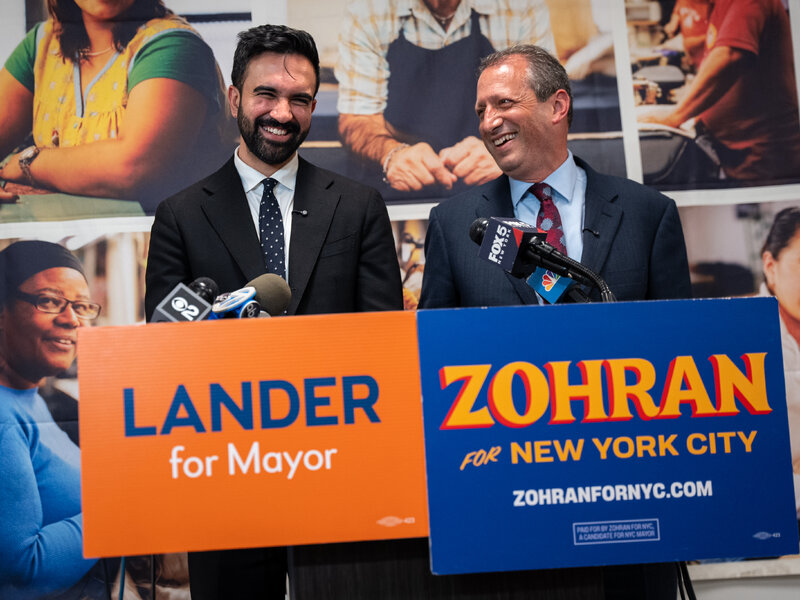
New York Awakens: The Rise of Mamdani and a Progressive Shift

Zohran Mamdani’s victory in the Democratic primary for New York City mayor represents a seismic shift in the city’s political landscape, one that carries reverberations far beyond municipal governance. At just 33 years old, the Queens-born state assemblyman and self-described democratic socialist toppled former Governor Andrew Cuomo, the establishment favorite, signaling a generational and ideological realignment within the Democratic Party. 

Grassroots Power vs. Establishment Legacy
Cuomo entered the race with formidable credentials: a deep political network, endorsements from figures like Bill Clinton and Michael Bloomberg, and at least $25 million in Super PAC funding. Yet, despite this financial and institutional advantage, his campaign floundered. Critics pointed to a lackluster message, lingering baggage from his 2021 resignation amid sexual harassment allegations, and a scared reluctance to engage broader audiences.

In contrast, Mamdani surged from near anonymity (0–1% in early polling) to command 43.5% of first-choice votes on primary night, an astonishing ascent driven by a youth-led, grassroots coalition. Supported by endorsements from Bernie Sanders and Alexandria Ocasio‑Cortez, his campaign tapped into the deep well of dissatisfaction over rising housing costs, stagnant wages, and a city increasingly and wildly unaffordable.

Policy Vision: Progressive Ambition or Overreach?
Mamdani’s policy platform, ambitious in scope, centers on affordability and public service transformation. Proposals include a rent freeze for stabilized units, fare-free buses, universal childcare, and municipal grocery stores, all paid for through new taxes on corporations and high-income earners. 

While appealing to a generation struggling with inflation and economic precarity, these ideas have drawn scrutiny over execution feasibility, budget implications, and economic impact.  Wall Street and real estate interests have voiced concern, warning of tax burdens and regulatory uncertainty. 

The Ranked-Choice Factor and Cross-Endorsements
New York’s ranked-choice voting system played a decisive role. Mamdani strategically formed cross-endorsements, most notably with Brad Lander, who garnered around 11% of the vote, to position himself as a second-choice favorite. Analysts widely agree this will likely cement his victory once second-round, and later votes are redistributed. 

Navigating Controversy: Israel, Palestine, and Identity
Despite the momentum, Mamdani’s campaign has not been immune to controversy. His outspoken criticisms of Israeli policies, including references to the “globalization of the Intifada” and support for Boycott, Divestment, Sanctions (BDS) a Palestinian-led movement for freedom, justice and equality, have drawn accusations of antisemitism, particularly in a city with one of the largest Jewish populations outside Israel. He has sought to clarify his statements, asserting his opposition to hate and his commitment to civil rights. The controversy may crystallize how future general election opponents choose to attack, while also spotlighting internal tensions within urban progressive politics.

Cuomo’s Concession, so What Comes Next? 
On primary night, Cuomo recognized that the narrow path to victory was irrevocably closed, conceding to Mamdani, and acknowledging the campaign’s resonance with younger voters. Notably, he left open the possibility of running in the general election on an independent ballot line, a move that could fracture the Democratic vote and complicate the race.

The Broader Implications for the Democratic Party
Mamdani’s emergence marks a broader ideological turning point within the Democratic Party. It highlights the growing influence of progressive, youth-driven politics willing to challenge entrenched power. His candidacy echoes similar movements in other U.S. cities where left-leaning candidates have flipped local offices, redefining policy scopes on housing, climate, social services, and racial justice. 

For Democrats nationally, New York is a critical test case: can a bold progressive agenda resonate with urban voters in a general election? And can party unity be maintained while platform demands intensify?

November Showdown: A Crowded Field
If Mamdani completes the nomination, he heads into a three‑way fall election against the independent incumbent Eric Adams, whose legal troubles and declining approval ratings have damaged his standing, and Republican Curtis Sliwa. The contest’s contours are stark: progressive change vs status quo, left coalition vs fractured moderate support, and a referendum on policy versus personality.

A Turning Point in Urban Governance
The Democratic primary in New York City was more than a local race, it was a referendum on the future direction of American progressive politics. Mamdani’s success, powered by grassroots strategy, ranked-choice prowess, and a sweeping vision for economic justice, exposes the vulnerabilities of establishment politics and signals a generational handoff within the party. As ranked ballots are fully tallied, and the fight shifts to November, New Yorkers and national observers will be watching closely. Is this the beginning of a progressive resurgence, or a fleeting moment in a cyclical political saga?

By-Elections Signal Alberta’s Political Crossroads

The results of Alberta’s three provincial by-elections on June 23, 2025, offer more than simple electoral bookkeeping, they reflect shifting political winds across urban and rural divides, growing challenges for the governing United Conservative Party (UCP), and the solidifying leadership of Alberta NDP Leader Naheed Nenshi. While each race had its own dynamics, taken together, they sketch the early contours of the province’s next political chapter.

In Edmonton-StrathconaNaheed Nenshi secured a commanding victory, winning approximately 82% of the vote. This was no surprise, Strathcona has long been an NDP stronghold, but the size of the margin reaffirmed Nenshi’s appeal among urban progressives. More importantly, it granted the former Calgary mayor a seat in the legislature, allowing him to move from campaign trail rhetoric to legislative combat. For the NDP, this is a strategic milestone. Having a leader with Nenshi’s profile and cross-city recognition seated in the Assembly provides the party with both visibility and gravitas as it prepares to challenge Danielle Smith’s UCP in the next general election.

Meanwhile, Edmonton-Ellerslie delivered a more muted result for the NDP. While Gurtej Singh Brar held the seat for the party, the margin narrowed noticeably compared to previous elections. The UCP candidate, Naresh Bhardwaj, ran a stronger-than-expected campaign, capturing a significant share of the vote. This tightening suggests that even in NDP-leaning urban ridings, voter allegiance cannot be taken for granted. It also indicates that the UCP’s message still resonates with parts of the city’s electorate, particularly among working-class and immigrant communities whose support is increasingly contested territory.

The race in Olds-Didsbury-Three Hills played out very differently. As expected, the UCP retained this rural seat, with Tara Sawyer taking over from long-time MLA Nathan Cooper. However, the UCP’s vote share dropped markedly from the 75% it earned in the 2023 general election to around 61%. More striking was the performance of the Republican Party of Alberta (RPA), whose candidate Cameron Davies captured nearly 20% of the vote. The NDP surprisingly edged out the RPA for second place, though rural Alberta remains largely out of reach for them. The RPA’s strong showing, however, is cause for concern within the UCP’s rural flank. Separatist and hard-right discontent, once marginal, is becoming a disruptive force capable of peeling away conservative votes.

Together, these results underline a growing polarization in Alberta politics. The urban-rural split is hardening, with Edmonton increasingly dominated by the NDP and rural ridings remaining UCP strongholds, though now with visible fractures. The UCP retains power, but the by-elections exposed soft spots, especially in its ability to hold urban constituencies and suppress internal dissent from the right. Nenshi’s formal arrival in the legislature sets the stage for a more dynamic opposition, with a leader who brings both charisma and executive experience. His challenge now will be expanding the NDP’s base beyond its urban comfort zone while navigating the complex economic and cultural anxieties shaping Alberta’s electorate.

The by-elections may not have changed the balance of power in the legislature, but they altered the strategic terrain. What was once a contest between entrenched camps now feels more fluid, volatile, and competitive. That should make both major parties pause, and prepare.

Sources
CTV News Edmonton: https://www.ctvnews.ca/edmonton/article/alberta-ndp-leader-nenshi-wins-seat-in-one-of-three-byelections
The Albertan: https://www.thealbertan.com/olds-news/tara-sawyer-wins-olds-didsbury-three-hills-byelection-10853458
The Hub: https://thehub.ca/2025/06/24/a-win-a-warning-and-a-wobble-in-albertas-byelection-results

Why the West Applies a Double Standard on Israel

In international relations, consistency is often sacrificed at the altar of strategic interest. Nowhere is this more glaring than in the West’s treatment of Israel. While Western leaders are quick to condemn human rights violations, breaches of international law, and military aggression in most parts of the world, Israel remains a conspicuous exception. The recent conflicts in Gaza, the continued expansion of settlements in the West Bank, and the killing of civilians have drawn sharp criticism from human rights organizations, yet Western governments offer little more than qualified support, often couched in the language of “self-defence.”

Were any other nation to behave in a similar manner, bombing dense civilian areas under the claim of rooting out terrorism, occupying territory for over half a century, or engaging in collective punishment, the outcry from Washington, London, Ottawa, or Berlin would be swift and uncompromising. Yet, in Israel’s case, the pattern is predictable: diplomatic shielding, media reframing, and a reflexive invocation of antisemitism to deflect criticism.

This moral dissonance is not accidental. It is the result of historical, strategic, and political factors that have entrenched Israel’s exceptional status in the Western imagination. Foremost among these is the enduring legacy of the Holocaust. The genocide of six million Jews in Europe left a deep scar on the conscience of Western democracies, particularly Germany and the United States. In the aftermath of World War II, support for the establishment of a Jewish homeland was seen not only as a matter of justice, but of redemption. That sense of obligation persists, even when it conflicts with the principles of international law and universal human rights.

Israel has also embedded itself as a crucial strategic ally in Greater West Asia (GWA). It is a technologically advanced, militarily powerful, and politically stable partner in a region that has long been plagued by authoritarianism and volatility. Intelligence cooperation, arms development, and a shared interest in containing Iran have bound Israel and Western states, especially the United States, into a tightly knit alliance. This alliance, while often described in ideological terms as a partnership of democracies, is grounded in hard power and realpolitik.

Domestic western politics further reinforce this bond. In the United States, support for Israel transcends party lines, bolstered by a powerful pro-Israel lobby led by organizations such as AIPAC. Members of Congress routinely pledge unwavering support, while criticism of Israel can be politically perilous. In Canada, the U.K., and Australia, similar dynamics play out, albeit on a smaller scale. Politicians who speak out against Israeli policies risk being labelled antisemitic or accused of enabling terrorism. This silencing effect extends into media and academia, where critiques of Israeli actions are often met with institutional resistance.

Media framing plays a pivotal role in sustaining public support. Western coverage of conflicts involving Israel is often shaped by narratives of defence and victimhood. Rockets fired by Hamas are headline news; the destruction of entire apartment blocks in Gaza tends to be relegated to the fine print. Palestinian voices are underrepresented or presented through a security lens. When civilian casualties occur, they are regrettable but justifiable; when Israeli lives are lost, they are a tragedy and a rallying cry. This asymmetry in storytelling has a powerful effect on public perception and, by extension, policy.

Underlying all of this is the West’s enduring habit of applying different standards to allies and adversaries. Russia’s invasion of Ukraine has rightly been condemned as a violation of sovereignty, and a threat to international order. Iran’s domestic repression and regional aggression are frequently highlighted in official communiqués. Yet when Israel imposes a blockade on Gaza, builds illegal settlements, or enacts policies that human rights organizations have labeled apartheid, the West remains largely silent. The principle of international law becomes selectively invoked, its moral force diluted by political convenience.

This selective morality undermines the credibility of Western foreign policy. It sends a clear message to the world: rules apply, but not to everyone. For countries in the Global South, this hypocrisy is not lost. It fuels resentment, breeds cynicism, and erodes the legitimacy of institutions meant to uphold international norms. It also weakens the West’s ability to advocate for human rights elsewhere, as its own inconsistencies become fodder for authoritarian propaganda.

None of this is to deny Israel’s right to exist or to defend its citizens from violence, but rights come with responsibilities. The consistent failure of Western governments to hold Israel accountable when it breaches international standards does neither Israel nor the broader international community any favours. In fact, it encourages impunity, hardens divisions, and prolongs a conflict that desperately needs resolution.

A rules-based order cannot survive on exceptions. If the West truly believes in human rights, international law, and the dignity of all peoples, then it must apply those standards universally, without fear, favour, or exception.

References:

  • Human Rights Watch. (2021). A Threshold Crossed: Israeli Authorities and the Crimes of Apartheid and Persecution. https://www.hrw.org/report/2021/04/27/threshold-crossed
  • Amnesty International. (2022). Israel’s apartheid against Palestinians: a cruel system of domination and a crime against humanity. https://www.amnesty.org/en/documents/mde15/5141/2022/en/
  • Mearsheimer, J. & Walt, S. (2007). The Israel Lobby and U.S. Foreign Policy. Farrar, Straus and Giroux.
  • Finkelstein, N. (2003). The Holocaust Industry. Verso.
  • Pappé, I. (2006). The Ethnic Cleansing of Palestine. Oneworld.

Backroom Ontario: How the Ford Government Governs in the Shadows

The Ford government’s recent actions paint a troubling portrait of a leadership increasingly comfortable with obfuscation, procedural shortcuts, and performative consultation. Across multiple files, from environmental policy to Indigenous relations, Queen’s Park has displayed a consistent pattern of backhanded governance, marked by secrecy, evasion, and a disregard for both democratic norms and legal obligations.

The Greenbelt scandal exemplifies this tendency in sharp relief. Ontario’s Information and Privacy Commissioner recently condemned the Ford government for deliberately making it difficult to track internal decision-making on land development. Staff used code words such as “GB,” “special project,” and most egregiously, “G*” in email subject lines, deliberately sabotaging searchability within the government’s own filing systems. Coupled with the use of private email accounts and a notable absence of meeting minutes or documentation, the evidence suggests not mere carelessness, but a concerted effort to obscure deliberations over one of the province’s most politically explosive issues.

This level of secrecy isn’t just bureaucratic mismanagement, it’s political damage control in real time. The government’s reversal of Greenbelt development plans did little to reassure the public, especially in the absence of any credible explanation or documentation as to how those decisions were made in the first place. When even watchdogs with statutory authority can’t access the paper trail, public accountability becomes a hollow phrase.

Meanwhile, Bill 5, part of the so-called “Unleashing the Economy Act”, reveals an equally unsettling willingness to bypass consultation and oversight in the name of economic development. This omnibus legislation fast-tracks industrial and mining projects across northern Ontario, including the ecologically sensitive Ring of Fire region, by reducing or eliminating requirements for municipal and environmental approvals. Most critically, it sidelines the constitutional duty to consult Indigenous communities.

First Nations leaders, particularly in Treaty 9 territory, were quick to denounce the bill. Chiefs burned environmental documents in protest and staged rallies in Thunder Bay, accusing the province of engaging in “consultation theatre”, informing communities of decisions only after they were made. Even a last-minute amendment to include optional post-passage consultations did little to mollify concerns. The government’s approach sends a clear message: consultation is something to be endured, not engaged.

What ties the Greenbelt and Bill 5 controversies together is not just their shared disregard for transparency and inclusion, but the mechanisms used to enforce that disregard. Whether through technical manipulation of record-keeping systems, suppression of documentation, or legislative sleight-of-hand, the government repeatedly avoids open debate and sidesteps legal and ethical responsibilities. It’s a governance style rooted in control, not collaboration.

These are not isolated incidents. The Ford administration has shown a consistent pattern of centralizing power through Minister’s Zoning Orders (MZOs), a tool meant for rare and urgent cases. Since 2019, the Premier has issued MZOs at an unprecedented rate, frequently overriding municipal decisions, and benefiting well-connected developers. Auditor General reports have raised red flags, and opposition parties have warned that such orders erode local democracy and set dangerous precedents. Still, the pattern continues, unimpeded.

Other examples confirm the trend. In 2018, the Ford government launched a controversial “snitch line” encouraging parents to report teachers who used an updated sex-ed curriculum, a move widely condemned as punitive and authoritarian. In 2019, sudden changes to autism services blindsided thousands of families, leading to mass protests and eventual policy reversals. Yet, even in those reversals, the government refused to acknowledge fault, framing retreats as “adjustments” rather than admissions of flawed policy-making.

This is politics by backchannel, a deliberate erosion of democratic norms dressed in the language of efficiency. Public engagement is reduced to afterthought; opposition voices are ignored or demonized; and when watchdogs raise the alarm, they are met with silence or spin. In each case, the common denominator is the Ford government’s willingness to weaponize the machinery of governance against transparency.

The implications are serious. Trust in institutions erodes when those in power show contempt for the very mechanisms designed to hold them accountable. The duty to consult Indigenous communities is not an optional courtesy, it is a constitutional requirement. Environmental stewardship and municipal autonomy are not bureaucratic hurdles, they are democratic protections. To dismiss them is not just arrogant, but reckless.

Unless reined in, this mode of governance threatens to become normalized. The lesson emerging from Queen’s Park is clear: when political expedience trumps process, communities lose their voice, environmental safeguards are gutted, and Indigenous sovereignty is sidelined. This should alarm all Ontarians, regardless of political stripe.

The Ford government’s backhanded approach may win short-term headlines or developer applause, but the long-term costs, to transparency, legitimacy, and public trust, are steep. If Ontario is to retain even the appearance of responsible government, it must reject this cynical model and restore meaningful consultation, clear record-keeping, and respect for constitutional obligations as non-negotiable principles of provincial governance. Anything less is a betrayal of public service.

Albertans Choose Stability Over Separation: What the Pension Rejection Really Means

When the Alberta government finally released the long-awaited results of a commissioned survey on the Alberta Pension Plan (APP), the findings spoke volumes. Nearly two-thirds of Albertans (63%), rejected the idea of replacing the Canada Pension Plan with a provincial version. The number supporting an APP? Just 10%. That’s not just a policy rejection; it’s a political reality check.

For all the heated rhetoric around Alberta’s place in Confederation, this result reinforces what many longtime observers have suspected: Albertans may be frustrated, but they’re not fools. They know a good thing when they see it, and the CPP, with its portability, investment scale, and intergenerational reliability, is exactly that. The pensions issue cuts across partisan lines and ideological bluster. It’s not about Trudeau or equalization. It’s about people’s futures, and the people have spoken.

What’s more striking is how this undercuts the oxygen feeding Alberta separatism. The idea of a provincial pension plan was floated not just as fiscal policy, but as a marker of provincial autonomy, even sovereignty. It was pitched as a way to “keep Alberta’s money in Alberta.” Yet, when the chips were down, Albertans didn’t bite. The same population that occasionally flirts with separation talk has no appetite for tearing up foundational institutions like the CPP.

Even Premier Danielle Smith, no stranger to courting Alberta-first narratives, quickly distanced herself from the APP following the release of the data. There’s no referendum planned, no legislative push, just a quiet shelving of an unpopular idea. It’s a clear sign that even among the UCP leadership, there’s recognition that the political capital required to pursue this agenda simply doesn’t exist.

The APP result also aligns with a broader trend we’re seeing in regional sentiment polling. Despite pockets of separatist energy, especially in reaction to federal climate policy, most Albertans prefer reform within Canada to rupture. A recent Angus Reid survey found that only 19% of Albertans would “definitely” vote to leave Canada, while three-quarters believed a referendum would fail. The rhetoric is louder than the resolve.

This doesn’t mean western alienation is a myth. Far from it. Economic frustrations, federal-provincial disputes, and the sense of being politically outvoted still resonate deeply in Alberta. But the reaction isn’t revolution, it’s recalibration. What Albertans appear to want is a stronger voice in a better Canada, not a lonely march toward the exits.

There’s a deeper lesson here, too. Identity politics and economic nationalism may be good for stirring the base, but when policies collide with kitchen-table concerns, like pensions, voters choose the pragmatic over the symbolic. Separatism, in Alberta’s case, has become less of a movement and more of a mood. And moods change when the numbers hit home.

At its core, the rejection of the APP is a reaffirmation of Canadian federalism. Not the perfect, polished version dreamed of in civics classes, but the messy, functional, deeply embedded version that shows up in every paycheque and retirement plan. That version still has teeth. And Albertans, whatever else they may say about Ottawa, just voted to keep it.

Five Things We Learned This Week

Here’s the fresh edition of “Five Things We Learned This Week” for June 14–20, 2025, featuring entirely new events—no repeats from earlier editions:

🕊️ 1. Israel‑Iran Exchanges Calm Markets, Not Conflict

• Despite new strikes and missile exchanges during the week of June 14‑20, Reuters reports that markets showed cautious optimism, with volatility easing amid hope for de-escalation  .

• The Federal Reserve maintained a hawkish stance, while the Swiss National Bank cut rates to zero, and the Bank of Japan adopted a dovish tone  .

🦶 2. Ancient New Mexico Footprints Confirm Earlier Human Arrival

• Radiocarbon dating of sediments around the White Sands fossil footprints confirms they are between 20,700–22,400 years old  .

• This consolidates evidence that humans were present in North America well before the previously estimated timelines.

🇺🇸 3. Mass ICE Raids Trigger Protests, National Guard Deploys in LA

• On June 6–9, mass ICE operations in Los Angeles spurred protests and unrest. California activated over 4,100 National Guard troops plus federal forces in response   .

• Over 575 arrests, injuries among police/officers, and journalists were reported, spotlighting tensions around deportation enforcement .

🇹🇭 4. Thai Coalition Government Cracks in Political Crisis

• As of June 18, Thailand’s 8‑minister Bhumjaithai Party exited the ruling coalition, citing scandal and a leaked call—threatening PM Shinawatra’s government  .

• This marks a sharp political shift and potential for early elections amid instability.

💡 5. AI-Driven Tech Fights Mosquito‑Borne Diseases

• Researchers at the University of South Florida unveiled an AI-enabled mosquito trap that identifies and targets disease‑carrying mosquitoes in real time, reported on June 11   .

• The innovation offers a promising, focused approach to reduce transmission of illnesses like Zika and dengue.

These five items—spanning geopolitics, archaeology, civil unrest, national politics, and health tech—are all within June 14–20 and entirely new to this series. Let me know if you’d like full article links or expanded analysis!

Rethinking the “Middle East”: Why Greater West Asia Works Best

The term Middle East has long been used in Western discourse to refer to the region spanning from Egypt and Turkey through to Iran and the Arabian Peninsula. This label is neither geographically accurate nor politically neutral. As calls grow for more inclusive and less Eurocentric terminology, there is a strong case for renaming the region altogether. A number of alternatives have been proposed, each with merits and limitations, but Greater West Asia emerges as the most appropriate and equitable option.

The Problems with “Middle East”

Eurocentrism

The label “Middle East” reflects a 19th-century British imperial perspective. From London, it was east of Europe, but west of British India—hence “middle.” It is not a term rooted in the cultures or languages of the people it describes, but in the navigation maps and strategic concerns of empires.

Vagueness and Inconsistency

The boundaries of the “Middle East” shift depending on context. Does it include North Africa? Is Afghanistan in or out? Turkey? This imprecision reduces its utility and fosters confusion.

Cultural Baggage

The term is often associated with conflict, terrorism, and religious strife in Western media, reinforcing stereotypes rather than offering a neutral geographic description.

Possible Alternatives

West Asia

This term corrects the geographic problem, situating the region accurately within the continent of Asia, but it has not gained widespread traction. Some critics argue it may be too narrow, excluding North Africa and the Caucasus.

Southwest Asia and North Africa (SWANA)

A politically motivated term intended to center Indigenous and decolonial perspectives. It explicitly includes North Africa and parts of Asia, but its complexity and unfamiliarity outside activist and academic circles limit its uptake.

MENA (Middle East and North Africa)

Common in policy and development discourse, but it retains the problematic “Middle East” and is more of a bureaucratic construct than a corrective.

Arab World / Muslim World

These terms are culturally specific and exclude non-Arab and non-Muslim populations in the region such as Persians, Jews, Christians, Kurds, Druze, and others. They entrench religious or ethnic majoritarian narratives.

Why Greater West Asia Works Best

Geographically Accurate

“West Asia” correctly places the region within the Asian landmass, and “Greater” allows for a broader scope including the Levant, Anatolia, the Arabian Peninsula, the Iranian Plateau, and parts of the Caucasus and even North Africa, if contextually needed.

Free of Cultural, Religious, or Ethnic Ties

The term avoids privileging one group over another: Arab, Persian, Turkish, Jewish, Kurdish, or otherwise. This neutrality is vital in a region that is home to dozens of languages, religions, and ethnic identities.

De-centres the West

Using “Greater West Asia” acknowledges the geographic reality from a global, not Eurocentric, perspective. It also strips away the legacy of colonial nomenclature imposed by British and French cartographers and strategists.

Scalability and Clarity

The prefix “Greater” allows for flexible boundaries while “West Asia” provides the core anchor. This mirrors successful regional terms like “Greater Europe” or “Greater Southeast Asia.”

Conclusion

Renaming the “Middle East” is more than a semantic exercise; it’s about decolonizing our geographic imagination. Of the alternatives, Greater West Asia is the most inclusive, descriptive, and politically neutral. It offers a clean break from imperial labels and better reflects the region’s complexity and humanity, without reducing it to a cultural monolith or geopolitical battleground. It’s time we updated our vocabulary accordingly.

When Stillness Meets Flow

When the masculine rests in awareness, and the feminine moves in devotion – the universe finds its perfect geometry”

This quote by Kaivalyapadama is a poetic distillation of ancient tantric and yogic philosophy, weaving together the metaphysical, psychological, and relational dimensions of existence.

Archetypal Masculine and Feminine Energies

This isn’t about gender, but about principles found in all beings and in all systems:

  • The Masculine symbolizes stillness, presence, consciousness, structure, and witnessing. It is the container.
  • The Feminine symbolizes movement, feeling, intuition, energy, creation, and love. It is the flow within the container.

In tantric traditions (Shiva-Shakti, for example), Shiva (masculine) is pure consciousness — unmoving, eternal — while Shakti (feminine) is the energy that dances creation into being. Without awareness, devotion flails. Without devotion, awareness stagnates.

“Rests in Awareness” – The Role of the Masculine

To rest in awareness is not to dominate, judge, or fix — but to simply be. It is radical presence. In individuals, this is the quiet, centered part of the self that holds space for chaos, change, and emotion without becoming reactive.

In relationships, the masculine partner who embodies awareness becomes a sanctuary — their stillness creates trust, safety, and depth. In society, a culture rooted in awareness promotes wisdom over reaction, and long-term vision over short-term gain.

“Moves in Devotion” – The Role of the Feminine

To move in devotion is to surrender into flow with love, beauty, and purpose. The feminine principle here is not passive, but deeply powerful — dancing, birthing, transforming. Devotion doesn’t mean subservience, but alignment: the feminine energy knows that movement without love becomes frenzy, while love without movement becomes longing.

In a person, when your emotions, desires, and creative forces move from a place of devotion — to truth, to a cause, to spirit — they become transformational rather than chaotic.

“The Universe Finds Its Perfect Geometry”

Geometry, especially in spiritual traditions, signifies order, balance, symmetry, and harmony. Sacred geometry underpins everything from atomic structure to the golden ratio in sunflowers to cathedral design.

So when these energies align:

  • Awareness holds space,
  • Devotion flows through it,
  • The resulting dance is not random, but exquisitely structured — a mandala of being.

This is not just esoteric metaphor: many relational therapists, somatic practitioners, and spiritual teachers use this lens. It’s evident in sexual polarity dynamics, in leadership and support systems, in artistic creation, even in neural science where calm awareness (prefrontal cortex) holds space for emotional movement (limbic system).

Application and Practice

This quote calls us toward balance:

  • In ourselves: Can I cultivate still presence and loving movement?
  • In our relationships: Do we create dynamics where one can witness, and the other can offer energy?
  • In society: Are we building systems that balance structure with flow, logic with empathy, clarity with creativity?

Meditation (awareness) and prayer (devotion) are often seen as two wings of the same bird. Stillness invites movement; movement is anchored by stillness.

Conclusion

This quote is less a prescription than a profound invitation — to align the inner masculine and feminine, to dance with our own nature, and to trust that when these polarities are rightly placed, life doesn’t just function — it harmonizes. Geometry isn’t merely about lines and angles; it’s about relationships — and when awareness and devotion relate well, the pattern they create is nothing less than sacred.

Why Logic Only Wins When Your Opponent Feels Secure

In business, politics, leadership, and high-stakes negotiations, we often fall into the trap of believing that logic and competence are all that’s needed to win arguments and drive outcomes. After all, facts are facts, right? Yet, anyone who’s been in the room when a pitch falls flat or a strategy session derails knows better. The hard truth is this: logic only persuades when the person you’re speaking to feels emotionally secure, and, without that, even the most elegant argument can be perceived as a threat.

People, leaders included, don’t operate in purely rational mode. They operate in identity mode. When someone is secure in their role, confident in their own intelligence, and grounded in their self-worth, they can listen to a strong counterargument without flinching. They can say, “I hadn’t thought of it that way,” or “Let’s explore that.” That kind of openness is the hallmark of true professional maturity.

Insecurity changes the playing field. When someone feels uncertain about their competence, status, or place in the organization or society, even a well-intentioned challenge can land like a personal attack. You may be bringing insight and value to the table, but what they hear is, “You’re not smart enough. You’re not in control.” Once you trigger that kind of emotional threat response, logic goes out the window. Now you’re not having a conversation – you’re in a turf war.

I’ve seen this in boardrooms, in project teams, in conflict mediation. A junior consultant presents data that contradicts the assumptions of a senior manager. The numbers are rock-solid. But the response isn’t curiosity – it’s defensiveness. Dismissal. Or worse, undermining. Why? Because accepting the analysis would require the leader to admit a blind spot, and for some, that’s psychologically intolerable.

In politics, particularly in the polarized landscapes of North America and parts of Europe, the same dynamic plays out on a much larger scale: the political left often leans on data, logic, and evidence-based policy proposals, assuming these will persuade. For many on the political right, especially in populist circles, political identity is rooted not in reasoned analysis, but in emotional belonging, cultural defense, and distrust of intellectualism. Logical arguments about climate change, public health, or wealth inequality frequently fail not because they’re weak, but because they challenge the very narratives that insecure political identities cling to for meaning and safety. Until the left acknowledges that logic only works when the listener feels secure enough to engage with it, their arguments, however sound, will continue to bounce off hardened ideological shields.

This is why so many skilled communicators emphasize emotional intelligence alongside analytical sharpness. It’s not enough to be right, you have to be received. If you want your logic to land, you need to create a container of safety. That means pacing before leading. Asking questions before offering answers. Establishing rapport before pointing out gaps. It means checking your tone, your timing, and your audience’s readiness.

There’s also a counterintuitive insight here for those who are confident in their own competence; dial it down sometimes. Over-projecting brilliance can make insecure colleagues feel smaller, and smaller people don’t collaborate well. They retreat, they sabotage, or they lash out. The best leaders aren’t just smart, they’re smart enough to know when not to show it all at once.

Winning with logic is a strategic act, not just an intellectual one. You have to play the long game. It’s not about proving someone wrong, it’s about making them feel safe enough to explore the possibility that they might be. Only then do real insights emerge, and only then can collaboration thrive. So next time you’ve got the facts on your side, pause. Ask yourself: does my audience feel secure enough to hear the truth?

Because if they don’t, even the truth won’t save you.