AUKUS: Australia’s Submarine Mirage and the Real Estate Windfall for the US and UK

This is the third in a series of posts discussing U.S. military strategic overreach. 

By any sober assessment, the AUKUS agreement is fast revealing itself not as a bold leap forward for Australian sovereignty or security, but rather as a strategic sleight of hand that gifts the United States and United Kingdom a plum prize: a deep-water Pacific base on a silver platter, without any credible assurance that Australia will ever take possession of a single operational nuclear-powered submarine.

At the heart of the matter is the glaring asymmetry in commitments. Australia is shoveling billions of taxpayer dollars, $4.6 billion and counting, into American shipyards and infrastructure while simultaneously preparing HMAS Stirling to host a rotating force of U.S. and British attack submarines as early as 2027. This “Submarine Rotational Force West” isn’t a sovereign fleet, it’s a permanent allied presence on Australian soil, marketed as “partnership,” but shaped overwhelmingly to suit U.S. Pacific ambitions.

Meanwhile, the so-called promise that Australia will receive at least three Virginia-class submarines from the United States remains riddled with legal escape hatches. Congressional legislation passed in 2023 mandates that the U.S. President must provide certification, a full nine months in advance of any transfer, that the move won’t compromise American naval readiness or foreign policy interests. Let’s be clear: this is not a contractual obligation; it’s a political permission slip, one that can be revoked, postponed, or buried under the weight of domestic American priorities at any time. With the U.S. submarine industrial base already overstretched and multiple U.S. senators flagging their concern that sending boats to Australia would weaken the American fleet, the odds are increasingly stacked against Canberra ever seeing these vessels.

Even former Australian Prime Minister Malcolm Turnbull has voiced sharp criticism of the deal, warning that it hands over operational control and strategic autonomy without receiving tangible capability in return. He’s right. As it stands, Australia’s “fleet of the future” is a geopolitical ghost, plausible on paper, dependent on Washington’s whim, and potentially decades away from delivery, if ever.

What Australia is getting, whether it asked for it or not, is an expanding foreign military footprint. The infrastructure being developed in Western Australia will support not Australian submarines, but American and British ones. It’s a curious form of defense procurement when the hardware arrives with foreign flags, foreign crews, and foreign command structures.

And let’s not forget the strategic optics: the U.S. has long wanted a more secure western Pacific presence, particularly as tensions with China escalate. With AUKUS, Washington gets a fortified naval hub in the Indian Ocean gateway without needing to build one from scratch or navigate the domestic pushback that would come with establishing such a base on U.S. territory.

In effect, Australia is underwriting the expansion of U.S. power projection in the Indo-Pacific while receiving, in return, little more than a handshake and a set of talking points about “interoperability” and “shared values.” This is not sovereign defense policy, it’s strategic dependency by design.

Until firm, non-revocable delivery timelines and control guarantees are put in place, AUKUS remains a masterclass in one-sided alliance politics. And unless Canberra wakes up to the hard truths of this arrangement, we may look back on this as the moment Australia paid handsomely to give away a base and got nothing but promises in return.

Sources
• ABC News Australia. “AUKUS legislation passes US Congress.” https://www.abc.net.au/news/2023-12-15/aukus-legislation-passes-us-congress-house-senate/103232048
• PS News. “US Congress approves AUKUS submarine technology transfer.” https://psnews.com.au/us-congress-approves-transfer-of-aukus-submarine-technology-to-australia/124954
• Sky News. “US Senators warn AUKUS deal is zero-sum game for US Navy.” https://www.skynews.com.au/world-news/us-senators-warn-joe-biden-that-submarine-aukus-deal-is-zerosum-game-for-us-navy/news-story/d74767e519b13602bc35d5a0717f2704
• Reuters. “US starts to build submarine presence on strategic Australian coast.” https://www.reuters.com/business/aerospace-defense/us-starts-build-submarine-presence-strategic-australian-coast-under-aukus-2025-03-16/
• News.com.au. “Malcolm Turnbull’s savage AUKUS takedown.” https://www.news.com.au/national/politics/former-prime-minister-malcolm-turnbull-says-aukus-deal-unfair-to-australia/news-story/6c3dcce602bb751fece0f8e4ef856054

How a 15-Acre Hobby Farm Near Ottawa Is Helping To Save the World

Tucked into the gently rolling landscape near Ottawa, where Canadian Hardiness Zone 5 cradles forests through cold winters and warm, green summers, a 15-acre hobby farm hums with quiet purpose. At first glance, it seems like a peaceful retreat, 11 acres of mixed forest, 4 acres of open land, but beneath the stillness lies a powerful, invisible engine of climate action.

This isn’t just a hobby farm. It’s a carbon sink, a micro-forest sanctuary, and a quietly defiant response to the global climate crisis.

The land is a mosaic of native species, maple, black cherry, beech, oak, and poplar stand shoulder to shoulder with pine, fir, and spruce. Half the forest is allowed to run wild, a dense tangle of trees and undergrowth where time and nature make their own rules. The other half is gently managed with selective thinning and nurturing to promote health and resilience. Together, they form a thriving biome that plays a vital role in absorbing and storing carbon dioxide from the atmosphere.

In a world scrambling to limit greenhouse gas emissions, this modest forest is making a real difference.

Tree Math: Carbon Accounting for a Better Future
According to forest carbon research by Natural Resources Canada and other experts, mixed temperate forests like this one can sequester between 2.5 and 6.0 tonnes of CO₂ per acre per year, depending on age, species, and management.

Here, the forest has been evaluated more precisely:
• The 5.5 acres of managed forest, with its encouraged regrowth and carefully tended canopy, sequesters an estimated 5.5 tonnes of CO₂ per acre per year.
• The 5.5 acres of wild, dense forest, with its thick stands of aging trees and self-regulating ecosystems, sequesters a more modest, but still powerful 3.5 tonnes of CO₂ per acre.

Together, that means this forest is pulling approximately 49.5 tonnes of CO₂ out of the atmosphere every year. That’s not just a number – it’s a force.

It’s the equivalent of:
• Offsetting the annual carbon emissions of 10 passenger vehicles
• Neutralizing the electricity use of about 7 Canadian homes
• Canceling out the emissions of nearly 250 propane BBQ tanks or over 110,000 smartphone charges

Each year, the trees breathe in carbon, storing it in wood, roots, and soil. They do this without fanfare. They don’t ask for credit, but they are doing the slow, essential work of saving the planet – tree by tree.

Rooted in Regeneration: Permaculture and Agroforestry
Beyond the forest, the remaining four acres of the property form a living laboratory for regenerative land use, guided by the principles of permacultureand agroforestry.

Here, perennial fruit and vegetable beds are woven through flowering hedgerows and small windbreaks of nut and berry trees. Apple, plum, and pear trees grow beside hardy perennial crops like rhubarb, asparagus, and sun chokes. Herbs spiral outward in patterns that mimic natural ecosystems, encouraging pollinators and providing continuous yield with minimal intervention.

This is no ordinary garden, it’s a climate-positive food forest in the making. Carefully designed guilds of plants mimic the structure of natural woodland ecologies. Deep-rooted plants draw nutrients from the subsoil. Groundcovers protect against erosion. Legumes fix nitrogen. Every element supports another. Even fallen branches and leaf mulch are repurposed into hugelkultur mounds, which retain water and build soil carbon over time.

Together, the forest and farm create a system that captures carbon, regenerates soil, and produces food, not in spite of nature, but in deep collaboration with it.

A Local Action With Global Implications
Climate action often feels like something that happens elsewhere, in government chambers, UN conferences, or corporate boardrooms. But on this hobby farm, the frontlines are right here, in bark and branches, under loamy soil and perennial cover. While politicians debate net-zero goals and global emissions caps, these 15 acres are already doing their part.

And the story doesn’t end with sequestration. The whole property becomes a model, not of scale, but of intentionality. It proves that one person, on one piece of land, can be part of the solution.

A Blueprint for the Future
If every small landowner in Ontario set aside just part of their land for forest preservation, regenerative farming, or agroecological food production, the collective carbon sink would grow exponentially. The 49.5 tonnes of CO₂ absorbed here could be multiplied by thousands of similar efforts. This hobby farm is not just saving the world, it’s showing others how to do it too.

So next time someone says the climate crisis is too big for individuals to affect, point them to this patch of trees and garden beds outside Ottawa. Tell them about the forest that quietly pulls nearly 50 tonnes of CO₂ from the sky every year. Tell them about the permaculture orchard that feeds people and soil alike. Tell them about the hobby farm that’s making a difference.

Because real change doesn’t always look like a protest march or a giant wind turbine. Sometimes, it looks like a sapling taking root in Zone 5, and being given the time and space to grow.

The Shifting Dream: White Masculinity and their Receding Grip on North America’s Future

For centuries, the mythology of the “American Dream” (and its Canadian cousin) was powered by the image of the self-made white man; rugged, determined, and in control. From the frontier and the factory floor to the boardroom and ballot box, the narrative of national progress was long centered on white male ambition, but in the 21st century, that dominance is waning. Not because others are taking what doesn’t belong to them, but because they are finally accessing what always should have been shared.

Demographically, socially, and economically, North America is being reshaped by waves of migration, changing gender roles, Indigenous resurgence, and increasing racial and cultural diversity. Women, racialized people, queer folks, and immigrants are not just contributing, they are leading. From startup culture and environmental activism to political office and artistic innovation, the stories being told and the power being wielded are increasingly non-white and non-male.

Yet, as these shifts accelerate, many white men are experiencing something they have rarely encountered at a cultural level: loss of centrality. For generations, society reinforced that whiteness and maleness were the default, everything else was “other.” Now, with those defaults being questioned and dismantled, entitlement is showing its teeth. There is a growing chorus of grievance, often manifesting in reactionary politics, internet subcultures, and movements that call for a return to a mythical past when “men were men” and “America was great.”

The trouble is that entitlement doesn’t vanish when equity rises. Many white men have come to see fairness as persecution, mistaking equality for displacement. They are not just angry at being excluded, they are angry that inclusion requires them to share space, status, and resources. This is especially evident in education, employment, and media representation, where more equitable hiring practices, affirmative action, and inclusive storytelling are viewed not as progress but as threats to traditional dominance.

Some of this backlash is economic. Working-class white men, especially those displaced by globalization and automation, have seen their livelihoods and identities eroded. But the narrative they are often sold isn’t one of class solidarity, it’s one of racial and gender resentment. Politicians and pundits have weaponized their frustration, redirecting legitimate grievances toward scapegoats rather than structural inequity.

Still, the future is not about erasure. It is about redefinition. White men, like everyone else, have the opportunity to take part in a broader, more inclusive vision of what it means to thrive in North America. But it requires humility, self-reflection, and a willingness to let go of inherited privilege. The dream hasn’t died, it’s just no longer theirs alone.

If white men can move from entitlement to empathy, from dominance to solidarity, they can be part of a future that is richer, fairer, and more sustainable. If they cling to the fading illusion of supremacy, they will find themselves shouting from the sidelines of a dream that has moved on without them.

Unforced Errors: How the Conservatives Undermined Their Own Campaign

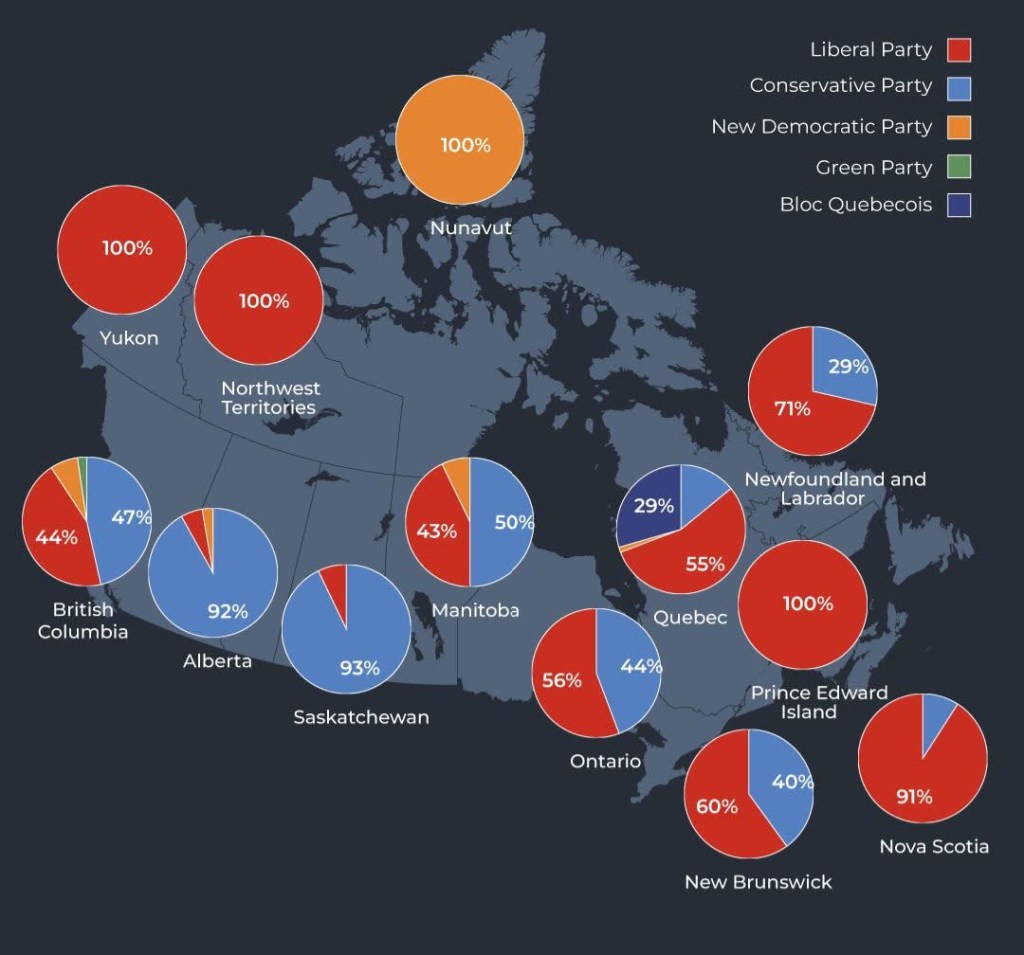
The Conservative Party of Canada (CPC) faced a significant defeat in the 2025 federal election, despite early leads in the polls. Several factors related to their platform and campaign strategy contributed to this outcome.

Ideological Ambiguity and Policy Reversals
Under Pierre Poilievre’s leadership, the CPC attempted to broaden its appeal by moderating positions on key issues. This included adopting a more serious stance on climate change and proposing policies aimed at working-class Canadians. However, these shifts led to confusion among voters about the party’s core principles. The rapid policy changes, especially during the short campaign period, made the party appear opportunistic and inconsistent.  

Alienation of the Conservative Base
The CPC’s move towards the center alienated a portion of its traditional base. This disaffection contributed to the rise of the People’s Party of Canada (PPC), which saw its vote share increase significantly. Many former CPC supporters shifted to the PPC, attracted by its clear stance on issues like vaccine mandates and opposition to carbon taxes. This vote splitting weakened the CPC’s position in several ridings.    

Controversial Associations and Rhetoric
Poilievre’s perceived alignment with hard-right elements and reluctance to distance himself from controversial figures, including former U.S. President Donald Trump, raised concerns among moderate voters. Trump’s antagonistic stance towards Canada, including economic threats and inflammatory rhetoric, made the election a referendum on Canadian sovereignty for many voters, pushing them towards the Liberals.   

Ineffective Communication and Messaging
The CPC’s campaign suffered from inconsistent messaging. While initially focusing on pressing issues like housing, the campaign later shifted to a more negative tone, attacking Liberal policies without offering clear alternatives. This lack of a cohesive and positive message failed to inspire confidence among undecided voters.  

Structural and Demographic Challenges
The CPC continued to struggle with regional disparities, particularly between conservative-leaning western provinces and liberal-dominated urban centers in the east. The party’s inability to appeal to urban and suburban voters, coupled with changing demographics, hindered its ability to secure a national majority.  

Foreign Interference Concerns
Post-election analyses indicated that foreign interference, particularly from Chinese government-linked entities, may have influenced the election outcome. Disinformation campaigns targeted CPC candidates, especially in ridings with significant Chinese-Canadian populations, potentially costing the party several seats.  

The CPC’s defeat in the 2025 federal election can be attributed to a combination of ideological shifts that alienated core supporters, associations with controversial figures, inconsistent messaging, structural challenges, and external interference. These factors undermined the party’s ability to present a compelling and cohesive alternative to the electorate.

The Language of Care: Why Ontario Needs a Client-Centred Health Model

In Ontario, a quiet revolution in healthcare could begin with something as deceptively simple as a change in language. What if, instead of referring to the people they treat as patients, healthcare practitioners embraced the idea that they are working with clients? This shift in terminology is more than cosmetic; it signals a fundamental rethinking of how care is delivered and how relationships between practitioners and the people they serve are structured. Replacing patient with client disrupts the ingrained hierarchy of medicine, and opens the door to a model of care that is more collaborative, respectful, and, ultimately, more effective.

The word patient carries with it centuries of baggage. Rooted in a paternalistic tradition, it positions the healthcare professional as the authority and the person receiving care as a passive recipient. This model might be efficient in a short hospital stay or an emergency room visit, but it often falls short in the real world of chronic illness, mental health, elder care, and preventive services. In these domains, success relies less on technical intervention and more on sustained relationships, shared goals, and mutual trust. Reframing the care recipient as a client changes the dynamic entirely. A client has agency. A client has choices. A client is someone with whom you work, not someone you work on.

This idea is hardly radical in other professions. Lawyers, accountants, architects, and business consultants, all highly educated, tightly regulated professionals serve clients, not patients. These roles are steeped in trust and responsibility, yet they operate from a baseline assumption that the client is an informed actor. Professionals in these fields provide guidance, analysis, and expertise, but they do not presume to make personal decisions on behalf of the people they serve. If such a standard is good enough for legal or financial matters, why should health, arguably the most personal domain of all, be treated differently?

Adopting a client-centred lens has profound implications for healthcare delivery. It reshapes informed consent from a bureaucratic formality into a genuine process of dialogue and understanding. It places a premium on listening, cultural humility, and the social determinants of health. It encourages practitioners to see people not just as carriers of disease or disorder, but as whole individuals navigating complex lives. In Ontario’s increasingly diverse and pluralistic population, this shift is especially urgent. Language, history, trauma, race, and gender identity all influence how people experience healthcare. Treating them as clients creates space for those realities to be acknowledged and respected.

More importantly, research consistently shows that when people are treated as partners in their care, outcomes improve. Chronic disease management, medication adherence, mental health recovery, all benefit from a model in which individuals are active participants rather than passive recipients. Community Health Centres, Nurse Practitioner-Led Clinics, and Indigenous-led health organizations have long embraced this ethos, often with outstanding results. These models recognize that healthcare is not merely about procedures and prescriptions; it’s about relationships and empowerment.

To make this shift from patient to client more than a philosophical exercise, Ontario’s healthcare system must engage in a formal change management process that embeds this transformation into everyday practice. Change at this scale requires more than individual will, it demands structural alignment, leadership buy-in, and sustained cultural development. Medical and nursing schools must be at the forefront, redesigning curricula to emphasize collaborative care, cultural safety, and relational ethics from day one. Teaching hospitals and clinical settings must model this new language and ethos consistently, ensuring that learners observe and internalize client-centred care as the norm, not the exception. Professional colleges, health authorities, and policy-makers need to articulate a unified vision and provide concrete supports; from updated documentation protocols to ongoing professional development. Without a deliberate, system-wide strategy to guide this cultural transition, the risk is that well-meaning practitioners will continue operating in structures that reinforce the very hierarchy we seek to move beyond. True transformation will require education, reinforcement, and accountability across the health system.

Of course, this shift will not be easy. Medical training in Ontario still often reinforces an expert-knows-best mentality. Fee-for-service billing structures reward speed over depth, and systemic pressures, from staffing shortages to rigid bureaucracies, can make relational care feel like a luxury rather than a standard. Some professionals resist the term client, worrying it sounds too commercial or transactional. But in truth, it’s a term of respect. It conveys that the individual has power, and that the practitioner has a duty to serve, not command.

If Ontario is serious about building a more equitable, sustainable, and humane healthcare system, it must begin by reimagining the core relationship between practitioner and person. Words matter. They shape expectations, behaviours, and culture. Shifting from patients to clients could be the first step toward a system that doesn’t just deliver care, but shares it.

Resetting the Relationship: A Vision for a True Indigenous Partnership

As the dust settles from the recent election, there’s a palpable sense that the Liberal Party has been handed not just another mandate, but a historic opportunity; to begin building a new Canadian future rooted in respect, renewal, and real partnership with Indigenous peoples.

This isn’t merely an electoral moment. It’s a constitutional and moral one, and with the planned visit of King Charles III, it’s time to reset the relationship. 

The last decade saw growing national awareness around reconciliation, but also hard truths: court rulings reminding us of Canada’s obligations, tragedies like unmarked graves that brought history into the present, and persistent gaps in housing, healthcare, and infrastructure that continue to shape the daily lives of Indigenous families. The incoming government must now shift the conversation from acknowledgment to architecture. From reconciliation as sentiment to reconciliation as structure.

And that starts with one fundamental premise: Indigenous peoples are not stakeholders. They are nations, governments, and partners. That means our approach must be built not on program delivery, but on rights recognition, not on federal paternalism, but on Indigenous self-determination.

At the core of the Liberal government’s first steps should be a legislative framework for implementing the United Nations Declaration on the Rights of Indigenous Peoples (UNDRIP). While Bill C-15 laid important groundwork, it must now be operationalized across the federal system, with Indigenous consent and co-development embedded in environmental regulation, resource management, and national law. A new generation of legal pluralism is needed, one that supports Indigenous legal systems in areas like child welfare and justice, alongside Canadian institutions.

Health care is another frontline. The federal government has made strides, but now must go further by supporting the creation of a fully Indigenous-governed national health authority. The British Columbia model has shown us what’s possible. Culturally grounded, community-run care is not a luxury, it’s a human right. This includes mental health programs rooted in ceremony and land-based healing, supported through sustained federal investment.

Education is likewise a transformative space. Indigenous-run schools, immersion language programs, and universal post-secondary supports aren’t just policies, they are acts of resurgence. They offer a way forward not just for Indigenous youth, but for Canada itself, by rebuilding cultural foundations dismantled through generations of colonial education.

Meanwhile, the housing and infrastructure crisis in Indigenous communities must be treated with the urgency of a national emergency. No government can speak of reconciliation while children live in overcrowded homes, and communities boil their water for decades. The incoming government must move quickly to fund 25,000 new homes and eliminate every long-term boil water advisory, with planning and implementation led by Indigenous governments themselves.

Yet, reconciliation isn’t only rural. More than half of Indigenous people now live in urban centres. Yet their voices are often excluded from nation-to-nation dialogues. That has to change. The new Liberal government should support Indigenous-led urban governance models, recognizing urban Indigenous peoples not as dislocated citizens but as rightful partners in policy design and delivery.

The question of representation also looms large. If we’re serious about nation-to-nation relationships, then Indigenous peoples must have permanent seats at the table, literally. That could mean Indigenous representation in Parliament or the establishment of a Council of Indigenous Nations with the authority to review federal legislation. Either way, the message must be clear: the age of unilateralism is over. Perhaps a dedicated number of seats in the House of Commons and Senate, similar to the New Zealand system, might see Indigenous voices heard in the legislative process? 

This is the path toward a new Canadian approach, one that accepts the truth of the past but refuses to be limited by it. The Liberal Party has long seen itself as a nation-building force. Reconciliation must be at the center of that vision now. Not as a political issue, not as a file on a minister’s desk, but as the defining project of a generation.

We have the ideas. We have the frameworks. What we need now is the political will to turn commitments into laws, pilot projects into national systems, and partnerships into power-sharing. If we get this right, Canada will not only be more just, it will be stronger, more resilient, and more united than ever before.

Louisiana: A Tapestry of Cultures and Clashing Politics

Thinking about how the Trump administration targeted Quebec, it’s language and cultural protection laws as a trade issue, makes me wonder about other unique cultures to be found in North America, and how they must be protected and supported so that can thrive. 

Louisiana is one of the most culturally and politically diverse states in the U.S., shaped by centuries of colonization, migration, and social upheaval. Its identity is a fusion of Indigenous heritage, French and Spanish rule, African influence, and waves of immigrant communities, each leaving an indelible mark on the state’s music, food, language, and traditions. While Louisiana’s reputation often conjures images of jazz-filled streets and spicy Creole dishes, its cultural complexity goes far beyond the postcard version. The same holds true for its politics, which remain as layered and contradictory as the people who call it home.

At the heart of Louisiana’s cultural richness is its history of colonization. Long before Europeans arrived, Indigenous tribes such as the Houma, Chitimacha, and Caddo lived along the state’s bayous and forests, cultivating their own traditions that persist to this day. The arrival of French explorers in the late 17th century set the stage for Louisiana’s deep Francophone roots, later reinforced by Spanish rule and the eventual return to French governance before Napoleon sold the territory to the United States. Unlike other parts of the American South, Louisiana retained much of its European colonial heritage, from its legal system, still based on Napoleonic civil law, to the Catholicism that remains a cultural and religious cornerstone, particularly in the southern part of the state.

The distinct identities of Louisiana’s Creole and Cajun populations further enrich its cultural landscape. The term “Creole” originally referred to people of European descent born in the colony, but over time it expanded to include people of mixed French, Spanish, African, and Indigenous ancestry. Creole culture is inseparable from the rhythms of zydeco music, the spice-laden flavors of gumbo and étouffée, and the linguistic blend of French, Spanish, and West African dialects that still echo in Louisiana Creole speech. Cajuns, on the other hand, descend from Acadian exiles forced out of Canada by the British in the 18th century. They settled in the swamps and prairies of south Louisiana, where they developed a fiercely independent identity rooted in their own dialect of French, fiddle-driven music, and a cuisine that, while similar to Creole food, leans more heavily on rustic ingredients like smoked sausage and crawfish.

The African influence on Louisiana’s culture is profound. Under both French and Spanish rule, enslaved Africans were a critical part of Louisiana’s economy and society, bringing agricultural expertise and spiritual traditions that persist in the region’s religious practices, including voodoo. Unlike in much of the American South, enslaved people in Louisiana had a higher rate of manumission under Spanish rule, leading to a large and influential population of free people of color who contributed to the state’s art, music, and business world. This legacy is most famously seen in New Orleans, where jazz was born in the late 19th century, blending African rhythms, blues structures, and European brass instrumentation into what would become America’s greatest musical export.

Beyond its historic communities, Louisiana continues to be a place of immigration and cultural blending. In the aftermath of the Vietnam War, thousands of Vietnamese refugees settled along the Gulf Coast, where they became an integral part of the seafood industry and introduced new flavors and traditions to the region. Today, their influence is visible in everything from Vietnamese-Cajun crawfish boils to the bustling pho restaurants of New Orleans and Baton Rouge. Other immigrant groups, including Hondurans, Italians, and Croatians, have also left their mark, particularly in Louisiana’s fishing and food industries.

Just as Louisiana’s culture defies easy categorization, so does its politics. Historically, the state was a Democratic stronghold, shaped by its Catholic, agrarian roots, and the populist legacy of figures like Huey Long, who built his career on promises of wealth redistribution, infrastructure development, and defiance of the political elite. Long’s legacy remains deeply embedded in Louisiana’s political DNA, with many politicians still invoking his populist rhetoric even as the state has shifted toward Republican dominance.

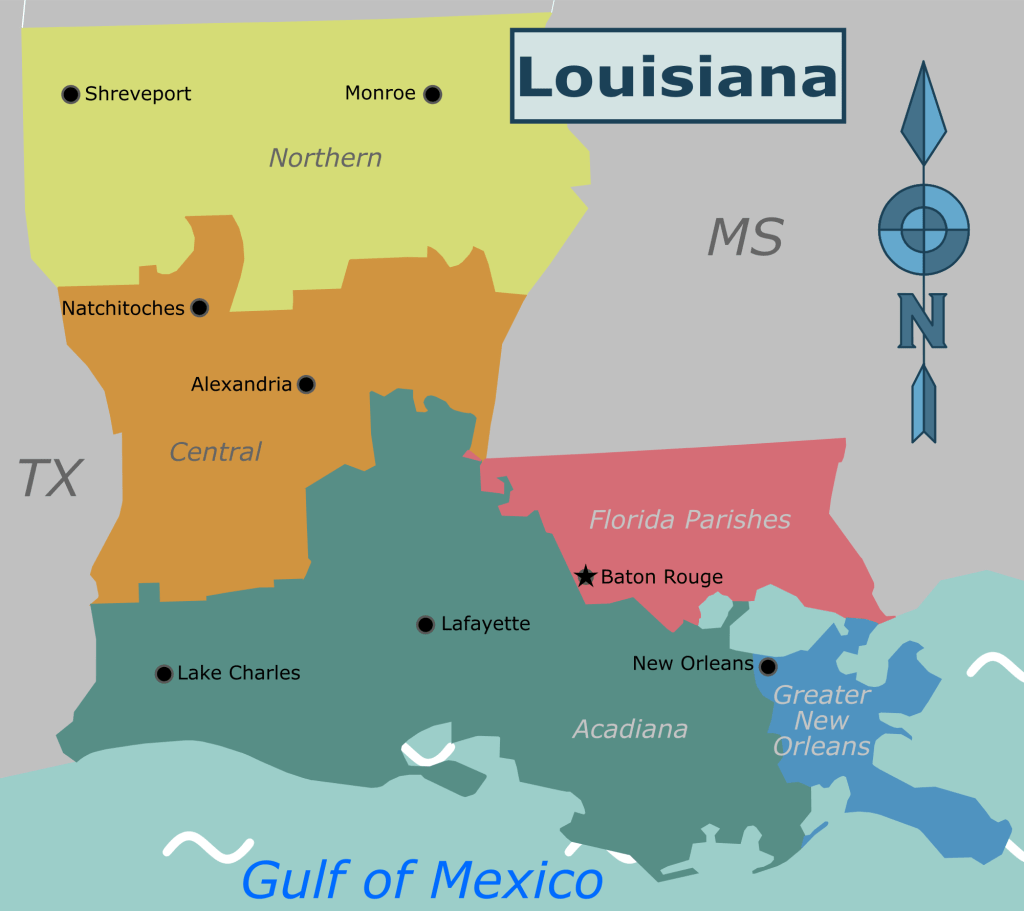
Today, Louisiana’s political landscape is sharply divided by geography and demographics. Urban centers like New Orleans and Baton Rouge lean liberal, with strong Black and progressive voting blocs advocating for criminal justice reform, environmental protections, and expanded social programs. In contrast, rural Louisiana, particularly in the north, aligns more closely with the Deep South—socially conservative, evangelical Protestant, and deeply Republican. The Acadiana region, home to the Cajun population, has long maintained a distinct political identity. While once a bastion of working-class Democratic politics, it has increasingly moved to the right, particularly on social issues, though economic populism remains a common theme in local elections.

Louisiana’s racial history continues to shape its political discourse in ways that are often contentious. The long struggle for civil rights, from the desegregation battles of the 1960s to ongoing debates over voting rights and police reform, remains a central issue. Meanwhile, the state’s economic reliance on oil, gas, and fishing means that environmental politics are often fraught, as coastal communities grapple with rising seas and frequent hurricanes while also depending on industries that contribute to these very problems.

Perhaps the most defining feature of Louisiana politics is its enduring embrace of colorful, often scandal-ridden leadership. Corruption has long been a fact of life in the state’s political world, with governors, legislators, and city officials frequently making headlines for bribery, fraud, and backroom deals. Yet, rather than diminish voter engagement, this history has fostered a kind of cynical but amused pragmatism among Louisiana’s residents. People expect their politicians to be flawed, but they also expect them to deliver; whether that means rebuilding roads, cutting through bureaucratic red tape, or simply keeping the good times rolling.

In many ways, Louisiana is a place of contradictions. It is at once fiercely traditional and wildly innovative, politically conservative yet home to some of the most progressive cultural movements in the country. It reveres its past but is constantly reshaped by new influences. This complexity is what makes Louisiana so compelling; a state where history is always present, culture is never static, and politics, for better or worse, is never boring.

Reinforcing Mononormativity at Women’s Expense

Jennyfer Jay’s writing and social media presence offer an intimate, often vulnerable look into her personal experiences navigating contemporary womanhood. Her reflections on casual dating, relationships, and emotional growth resonate with many women grappling with a world that seems increasingly disconnected and transactional. However, despite the sincerity of her storytelling, her work implicitly reinforces mononormative narratives, those that assume monogamy as the only valid or fulfilling form of romantic relationship. This framing not only limits the imagination of what relationships can look like, but paradoxically sets women up for failure in the very dynamics she critiques.

Jay’s essays frequently center on the emotional toll of casual sex and emotionally unavailable men. While these are valid themes, her framing often implies that the natural arc of a woman’s life, and healing, is toward securing emotional commitment from one man. This reinforces the mononormative ideal that stability, validation, and maturity are achieved through exclusive partnership. In her work, men who avoid commitment are treated as broken or selfish, while women who desire commitment are portrayed as evolved or emotionally ready. This binary undercuts the possibility that diverse relationship structures, such as ethical non-monogamy, relationship anarchy, or solo polyamory, might also offer meaningful paths toward emotional growth, security, and connection.

What Jay’s narratives tend to overlook is the systemic nature of the mononormative trap. By valorizing monogamous commitment as the end goal, she leaves little room for women to explore other models of love and companionship without shame. Her reflections, while emotionally resonant, often risk pathologizing women’s unhappiness as stemming from men’s refusal to play their part in the monogamous script, rather than from the script itself. In this way, Jay participates in a cultural feedback loop where women are socialized to desire a particular kind of relationship, and then blamed, or encouraged to blame men, when it fails.

This dynamic is particularly evident in her TikTok content, where Jay sometimes uses the confessional format to speak to younger women about “knowing their worth” or “not settling for less.” While empowering on the surface, the subtext implies that true worth is ultimately validated by a partner who chooses exclusivity. This undermines women who find satisfaction in non-exclusive relationships, or who define emotional success on different terms. Furthermore, it shifts the burden of relational success onto women’s ability to “choose better,” rather than questioning the limiting structures themselves.

To be clear, Jennyfer Jay’s work has value: it opens important conversations, validates emotional experiences, and challenges harmful behaviour, but it is also crucial to interrogate the assumptions it upholds. A deeper, more liberatory feminist approach would challenge the centrality of monogamy altogether, recognizing that love, commitment, and emotional fulfillment need not conform to normative ideals. Without this lens, Jay’s content risks entrenching the very narratives it seeks to critique, leaving women emotionally entangled in systems that do not serve them.

Sources:
• Jennyfer Jay on Medium: https://medium.com/@JennyferJay
• Jennyfer Jay on TikTok: https://www.tiktok.com/@jennyferjay
• Pieper, M. (2020). Mononormativity and Its Discontents. Journal of Contemporary Social Theory.
• Barker, M. (2013). Rewriting the Rules: An Integrative Guide to Love, Sex and Relationships. Routledge.

The Hidden Cost of the F-35: Sovereignty on a Leash

This is the second in a series of posts discussing U.S. military strategic overreach. 

By any reasonable metric, the F-35 fighter is an impressive piece of military engineering. It boasts stealth capabilities, sensor fusion, and interoperable systems that promise to keep Canada in the front ranks of allied air power. Yet, beneath the glossy marketing and Lockheed Martin hype lies a truth so quietly alarming that it should give every Canadian policymaker pause: Canada does not fully control its own F-35s, not even the spare parts sitting on its own soil.

A recent Ottawa Citizen article revealed a startling fact: all spare parts for Canada’s F-35 fleet remain the legal property of the United States government until they are installed into an aircraft. Even parts that Canada has paid for, warehoused, and stored at Canadian bases are subject to U.S. control. The implications for sovereignty are both profound and disturbing.

This is not a bug in the system, it is a feature. The F-35 program operates under a U.S.-controlled global logistics system, originally known as ALIS (Autonomic Logistics Information System) and now being transitioned to ODIN (Operational Data Integrated Network). This system governs not only parts distribution, but also mission data, performance diagnostics, and maintenance schedules. In short, Canada cannot operate or maintain its F-35s without ongoing U.S. authorization.

What does this mean in practice? It means that in any scenario, be it a geopolitical crisis, a domestic emergency, or even a diplomatic spat, Canada’s operational readiness is beholden to U.S. goodwill. If Ottawa wanted to deploy its F-35s in a mission that Washington disapproved of, access to critical spare parts could be curtailed or denied. Even worse, Canada wouldn’t have a legal leg to stand on. That’s not interoperability, that’s dependency.

The Trudeau government, and now the Department of National Defence under Minister Bill Blair, has justified the F-35 purchase on the grounds of performance and alliance coherence, but this latest revelation should force a hard rethink. The fighter itself may fly, but Canadian sovereignty is grounded every time we accept conditions that limit our own use of military equipment.

This is not just a theoretical concern. Recent U.S. behaviour, whether through protectionist trade moves, political instability, or withholding of military assistance to allies, underscores the risk of over-reliance on a single partner, even one as historically close as the United States.

To be clear, this is not an anti-American stance. Cooperation with the U.S. remains vital to Canada’s defense posture. But there is a stark difference between cooperation and concession of control. The F-35 deal, as it stands, crosses that line.

Ottawa should demand contractual clarity and sovereign guarantees, including ownership and full control of spare parts. If that’s not possible within the F-35 framework, then we must have the courage to explore alternatives, however inconvenient or politically difficult they may be.

Because no matter how advanced the aircraft, a fighter jet that can’t be flown without permission isn’t a tool of national defence, it’s a symbol of diminished independence.

Sources
Ottawa Citizen F-35 fighter jet spare parts remain U.S. property until installed in Canadian aircraft https://ottawacitizen.com/public-service/defence-watch/f-35-fighter-jet-spare-parts-u-s-canada

Five Things We Learned This Week

Here is the latest edition of “Five Things We Learned This Week” for May 3–9, 2025, highlighting significant global developments across various sectors.

🌋 1. Volcanic Eruption in Iceland Disrupts Tourism

The Sundhnúkur volcanic system in Iceland erupted this week, leading to increased seismic activity near Grindavík. The Icelandic Meteorological Office reported the eruption and registered accompanying earthquakes. As a precaution, popular tourist destinations like the Blue Lagoon were evacuated, impacting the country’s tourism sector.  

💰 2. India’s Forex Reserves Decline After Eight Weeks of Gains

India’s foreign exchange reserves fell by $2.07 billion to $686.06 billion as of May 2, 2025, ending an eight-week streak of gains. The decline was primarily due to a decrease in gold reserves, which dropped from $84.37 billion to $81.82 billion. During the same week, the Indian rupee experienced volatility, appreciating by about 1% due to increased foreign inflows and optimism surrounding a potential U.S.-India trade agreement, but later depreciated by 0.9% amid geopolitical tensions between India and Pakistan.  

🧪 3. Scientists Develop Method to Generate Electricity from Rainwater

Researchers have reported a new method of generating electricity from falling rainwater using plug flow in vertical tubes. This technique converts over 10% of the water’s energy into electricity, producing enough power to light 12 LEDs. The innovation holds promise for sustainable energy solutions, especially in regions with high rainfall.  

📉 4. Consumer Goods Prices Expected to Rise Amid Tariff Pressures

Following President Trump’s introduction of steep tariffs on imports, notably a 145% tariff on Chinese goods, major consumer goods companies like Procter & Gamble, Nestlé, and Unilever anticipate raising prices. These increases add to consumer strain after three years of inflation and declining confidence, especially in the U.S., where shoppers face job uncertainty and potential recession. While some companies are attempting to pass costs to consumers, retailers and supermarkets are pushing back, warning that consumers are reaching their financial limits.  

⚔️ 5. Escalation in South China Sea Territorial Disputes

China has seized the disputed Sandy Cay Reef in the Spratly Islands of the South China Sea, intensifying territorial disputes in the region. The move has raised concerns among neighboring countries and the international community about escalating tensions and the potential for conflict in the strategically important area.  

Stay tuned for next week’s edition as we continue to explore pivotal global developments.