Here is the latest edition of “Five Things We Learned This Week” for April 19–25, 2025, spotlighting key global developments across science, economics, and geopolitics.
⸻
🌐 1. Global Trade Turmoil Intensifies Amid U.S. Tariffs
The U.S. administration’s sweeping tariff policy is causing substantial disruptions in the global supply chain, with experts warning that the worst may be yet to come. Following the implementation of a 10% baseline tariff globally and a 145% tariff on Chinese imports, freight booking volumes have plummeted, with U.S. imports from China down 36%. Stockpiling efforts by businesses have temporarily shielded consumers, but inventories are depleting, and new orders are on hold awaiting a resolution. This is likely to lead to empty shelves and price hikes beginning as early as May or June, with particularly sharp impacts on low-margin consumer goods.
⸻
🧬 2. Discovery of a New Color and Martian ‘Skull’ Formation
Scientists have identified a previously unknown color, expanding our understanding of the visible spectrum. In another intriguing development, NASA’s Mars Reconnaissance Orbiter captured images of a rock formation resembling a human skull, sparking discussions about pareidolia and geological processes on Mars.
⸻
📉 3. IMF Downgrades Global Economic Growth Forecast
The International Monetary Fund (IMF) has revised its global growth projection for 2025 down to 2.3%, citing escalating trade tensions and policy uncertainties. The IMF warns that these factors could further hinder growth and elevate risks to the global economy.
⸻
🧪 4. Breakthrough in Plant Healing with Bacterial Band-Aid
Researchers have developed a bacteria-based “Band-Aid” that aids in plant healing. This innovation utilizes bacterial cellulose patches to speed up plant recovery, improve grafting success, and assist in preservation efforts, potentially revolutionizing agricultural practices.
⸻
🛰️ 5. NASA’s Lucy Spacecraft Reveals Asteroid Secrets
NASA’s Lucy spacecraft has returned images of the main belt asteroid Donaldjohanson, revealing it to be a contact binary and larger than previously estimated. This discovery provides valuable insights into the formation and evolution of asteroids in our solar system.
⸻
Stay tuned for next week’s edition as we continue to explore pivotal global developments.
Like Heinlein’s Athena, my AI is sharp, loyal, and just a little too clever for everyone’s comfort.
A while back I wrote a post about Tim Berners-Lee, the inventor of the World Wide Web, and his vision of a transformative shift in the way individuals manage and share their personal data through a decentralized web, embodied by his Solid project. For me, a natural extension of this thinking is to continue the trend of decentralization and move the control of our digital world to individual households.
In a future where every household has its own independent AI system, life would undergo a profound transformation. These AI systems, acting as personal assistants and home managers, would prioritize privacy, efficiency, and user control. Unlike AI tethered to large platforms like Meta or Google, these systems would function autonomously, severing reliance on centralized data mining and ad-driven business models.
Each household AI could be a custom-tailored entity, adapting to the unique needs of its users. It would manage mundane tasks like cooking, cleaning, and maintaining the home while optimizing energy use and sustainability. For example, the AI could monitor household appliances, automatically ordering repairs or replacements when necessary. It could manage grocery inventory and nutritional needs, preparing healthy meal plans tailored to individual dietary requirements. With integration into new multimodal AI models that can process video, audio, and sensor data simultaneously, these systems could actively respond to real-world inputs in real time, making automation even more fluid and responsive.
Beyond home management, the AI would act as a personal assistant to each household member. It could coordinate schedules, manage communication, and provide reminders. For students, it might assist with personalized learning, adapting teaching methods to their preferred style using cutting-edge generative tutoring systems. For professionals, it could optimize productivity, handling email correspondence, summarizing complex reports, and preparing interactive visualizations for meetings. Its ability to understand context, emotion, and intention, now part of the latest frontier in AI interaction design, would make it feel less like a tool and more like a collaborator.
A significant feature of these AIs would be their robust privacy measures. They would be designed to shield households from external intrusions, such as unwanted adverts, spam calls, and data-harvesting tactics. Acting as a filter between the household and the digital world, the AI could block intrusive marketing efforts, preserving the sanctity of the home environment. The adoption of on-device processing, federated learning, and confidential computing technologies has already made it possible to train and run large models without transmitting sensitive data to external servers. This would empower users, giving them control over how their data is shared, or not shared, on the internet.
The independence of these AI systems from corporations like Meta and Google would ensure they are not incentivized to exploit user data for profit. Instead, they could operate on open-source platforms or subscription-based models, giving users complete transparency and ownership of their data. Developments in decentralized AI networks, using technologies like blockchain and encrypted peer-to-peer protocols, now make it feasible for these household systems to cooperate, share models, and learn collectively without exposing individual data. These AIs would communicate with external services only on the user’s terms, allowing interactions to remain purposeful and secure.
However, challenges would arise with such autonomy. Ensuring interoperability between household AIs and external systems, such as smart city infrastructure, healthcare networks, or educational platforms, without compromising privacy would be complex. AI alignment, fairness, and bias mitigation remain open challenges in the industry, and embedding strong values in autonomous agents is still a frontier of active research. Additionally, the potential for inequality could increase; households that cannot afford advanced AI systems might be left behind, widening the technological divide.
In this speculative future, household AI would shift the balance of power from corporations to individuals, enabling a world where technology serves people rather than exploits them. With enhanced privacy, personalized support, and seamless integration into daily life, these AIs could redefine the concept of home and human agency in the digital age. The key would be to ensure that these systems remain tools for empowerment, not control, embodying the values of transparency, autonomy, and fairness.
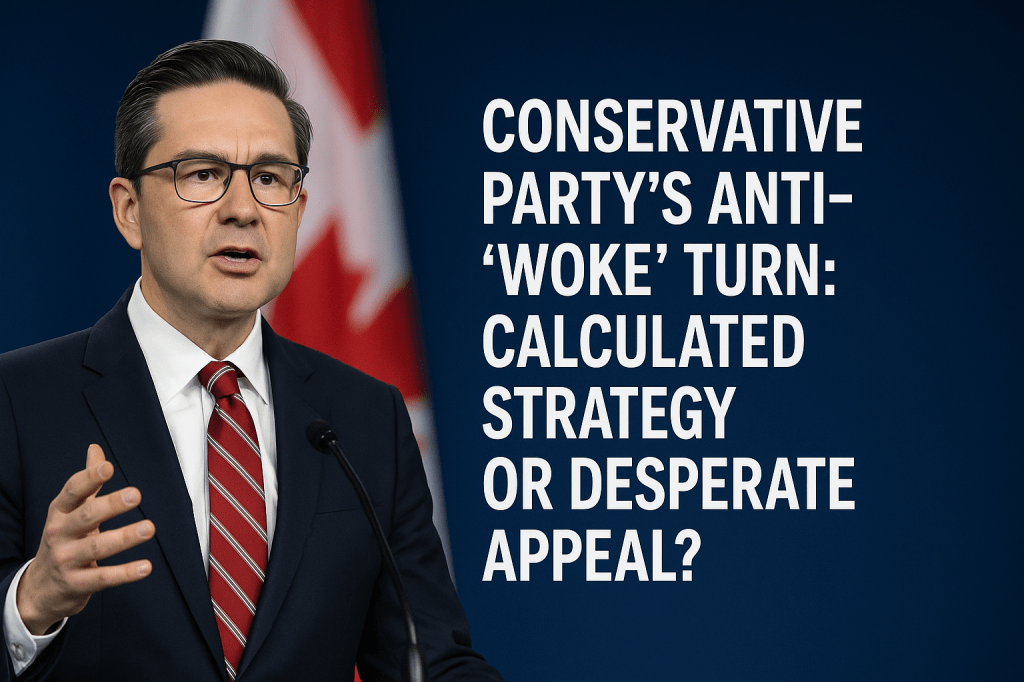
The Conservative Party of Canada has quietly republished the English-language version of its platform to reinsert a plank that had been conspicuously absent; a pledge to crack down on so-called “woke ideology” within the federal public service, and in university research funding. Described as a “publishing oversight,” this addition raises far more questions than it answers, particularly about Pierre Poilievre’s political calculus as the next election draws closer.
First, let’s interrogate the substance. “Woke ideology,” while undefined in the platform, is often shorthand on the political right for progressive stances on diversity, inclusion, gender identity, anti-racism, and decolonization efforts. To include language targeting these frameworks suggests the Conservatives are not just passively uncomfortable with current equity-focused public policy, they’re actively preparing to dismantle it. But why now?
One possible explanation is strategic: this is a deliberate overture to Canada’s emergent far-right electorate. While still fringe in some parts of the country, this voter segment has grown increasingly vocal, particularly on social media, and within alternative media ecosystems. By tapping into their grievances, against public sector DEI programs, gender-inclusive language, or research funding tied to Indigenous reconciliation, the Conservatives may be attempting to consolidate a reliable, energized bloc of voters.
Another interpretation is more inward-facing: Poilievre is shoring up his base, not for the election, but for what comes after. Should the Conservatives form government, he may face internal fractures between establishment conservatives and newer ideological hardliners. This platform language signals allegiance to the latter, potentially ensuring his continued leadership in a post-election caucus that could be divided on everything from fiscal policy to foreign affairs.
There’s also the broader issue of timing. The re-publication came after criticism that the party had been “softening” to appeal to moderate or urban voters, many of whom are uncomfortable with overt culture war rhetoric. By reaffirming this pledge, the party might be trying to reassure its core that the campaign’s centrist gestures are mere optics, not policy commitments.
But this move is not without risks. Canada’s public service is one of the most diverse and professionalized in the world. Federal civil servants are unlikely to respond positively to a government that frames their professional values as ideological threats. Likewise, university researchers who rely on federal grants will see this as a chilling signal that academic freedom could be compromised by political litmus tests.
And then there’s the broader electorate. While “anti-woke” politics have gained traction in the U.S. and U.K., Canadian voters have historically been more moderate. The risk for Poilievre is that in appealing to a narrow base, he alienates the swing voters he’ll need to actually win. Recent polling shifts, driven in part by U.S. President Donald Trump’s aggressive new tariffs on Canadian goods and Liberal leader Mark Carney’s boost in credibility, suggest the tide may already be turning against Poilievre’s hard-right gambit.
The re-insertion of this controversial language into the Conservative platform isn’t a glitch, it’s a signal. The question now is whether it’s a strategic masterstroke aimed at cementing a new ideological alignment in Canada, or a desperate hedge against the possibility that Poilievre wins the election, but loses control of his own party.
This is the first of hopefully many guest posts for this blog.
I have been heartened by the civility characterizing the 2025 Canadian Federal Election Campaign. Amid global unrest, our nation’s commitment to respectful discourse has been a beacon of hope. Until today.
Today, Pierre Poilievre crossed a line. He didn’t just resort to name-calling; he employed fear on a scale that is both alarming and disheartening.
Leadership demands vision, a comprehensive plan, and the ability to inspire confidence. A true leader assesses situations holistically, allocates resources wisely, and maintains composure under pressure.
However, Mr. Poilievre chose a different path. He took a speculative report, designed to explore potential future scenarios, and distorted its findings to paint a dystopian narrative. This manipulation wasn’t just misleading; it was a calculated attempt to exploit Canadians’ emotions for political gain.
The report in question, published by Policy Horizons Canada, is intended to inform policymakers about possible future challenges and opportunities. It’s a tool for strategic foresight, not a definitive prediction. By presenting its content as an imminent threat, Mr. Poilievre has not only misrepresented the report, but also undermined the very purpose of such forward-thinking analyses.
This approach is not just a deviation from responsible leadership; it’s a betrayal of the trust Canadians place in their elected officials. It sows unnecessary fear and distracts from constructive dialogue about our nation’s future.
I urge every Canadian to read the report themselves at Policy Horizons Canada. Understand its intent, and see through the fear-mongering.
Our future is ours to shape. Let’s base our decisions on facts, not fear.
About the Author
Angela is a Canadian veteran who was honoured to be part of the first class of women at Collège militaire royal de Saint-Jean and retired from the Canadian Forces in 1991. Since then, she has built a diverse career in industry and has owned and operated small businesses for over two decades. Her lifelong commitment to service, leadership, and community informs her thoughtful perspective on Canada’s future.
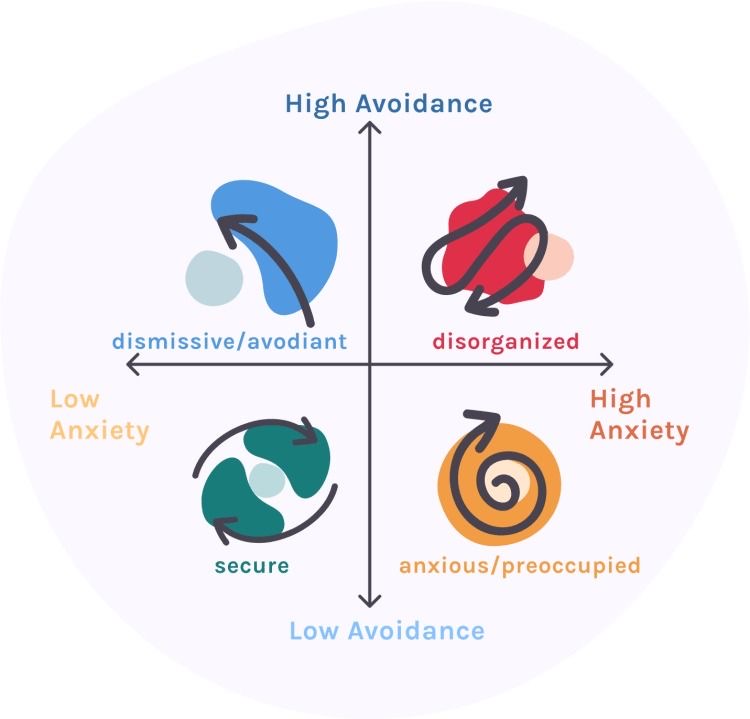
Ah, the dismissive-avoidant attachment style. The human equivalent of a cat: they might love you, they might not, but either way, they’re going to knock your emotional mug off the table just to see what happens.
Dismissive-avoidants are the folks who will cuddle you on the couch and then, without warning, evaporate like steam in a British mystery novel. You think things are going great, you’re texting every day, you’ve met each other’s pets, you’ve even shared fries. Suddenly, they’re “just really needing some space” and have gone to “work on themselves” in the wilderness with no signal and no return date.
Now, don’t get me wrong, they’re not bad people. They just learned, somewhere along the way, that feelings are kind of like bees: unpredictable, swarming, and best avoided if possible. These folks often grew up in homes where vulnerability was about as welcome as a raccoon at a wedding. So, they built themselves emotional panic rooms and installed locks with 87-digit codes.
Dating a dismissive-avoidant can be a little like dating a haunted house. There’s a lot going on inside, but they don’t want you poking around in the attic. Ask them how they feel, and they’ll either crack a joke or vanish in a puff of logic. “I don’t need to talk about feelings. Feelings are just electrical impulses. You know what else are electrical impulses? Traffic lights. And I don’t cry at those, do I?”
These are the champions of “I’m not really looking for anything serious” and “I just want to see where this goes”, which is often directly into a brick wall labeled unavailable. But don’t let that deter you, because dismissive-avoidants do fall in love. It just takes a while. And by a while, I mean longer than it takes for an avocado to go from rock-hard to brown mush.
They actually value connection deeply, but only if it doesn’t interfere with their need for independence, alone time, or the ability to escape through a metaphorical skylight at any moment. They’re like emotional ninjas: stealthy, elusive, and weirdly attractive.
If you’re dating one, the key is patience, and a good sense of humor. Celebrate the small wins: they made eye contact while discussing their emotions? Break out the champagne. They admitted they missed you (after a three-week silence)? Start planning the wedding.
Just remember: when they say, “I don’t really do emotions,” what they mean is, “Emotions are terrifying and I don’t know how to do them without short-circuiting like a 1996 printer.”
So love them gently, laugh a lot, and maybe invest in a nice doormat that says “Welcome-ish.”, because with a dismissive-avoidant, you never know when they’ll show up, but when they do, it’s almost always in their own charming, weirdly tender way. Just don’t ask them to define the relationship too soon. That’s how you get ghosted via interpretive dance.
To paraphrase that wise old Vulcan from across the science fiction aisle: “Perhaps new Who is for new fans.”
I’ve been around long enough to remember the flickering black and white glow of the first Doctor Who episode on my family’s wood-paneled television, and yes, I did watch from behind the sofa. I was five, and the grindy, wheezing, whooshing sound of the TARDIS stuck with me, a sound I’d recognize decades later with the same thrill that accompanied my first kiss, or the moment Armstrong stepped onto the Moon.
I grew up with the Doctor, through all their faces and foibles, from the gentleness of Troughton to the whimsy of Tom Baker’s scarfed silhouette. The show wasn’t perfect, never has been, but it had a sort of ramshackle brilliance that made it feel like ours. British. Imaginative. A little cheap, I mean it was the BBC, but so full of heart.
When the classic series ended in the ’80s, I mourned. Like losing an eccentric uncle, strange, inconsistent, but dearly beloved. Then, in 2005, Russell T Davies brought it back with Eccleston, and by the stars, what a revival! It had teeth, wit, charm, and it remembered where it came from too. I danced through the Tenth and Eleventh Doctors. Tennant’s tragic hero. Smith’s madman with a box. River Song’s tangled timeline, that was poetry. It all mattered to me.
But time is merciless. Like the Doctor, the show changed, and perhaps, like the Doctor, I did too. Capaldi was brilliant on paper, but the writing lost its way. Companions died too easily, too cruelly, as if the writers were punishing us for caring. The warmth faded.
And then came Jodie Whittaker. I wanted to like her, truly! Yet, the spark wasn’t there for me. The stories felt like sermons, and not the good kind, not the “what does it mean to be human?” kind. More like being scolded during Saturday tea.
With Ncuti Gatwa, I had hope again. Charismatic, dynamic, full of promise, but so far, the stories seem more interested in the symbolism of who the Doctor is than in what the Doctor does. Maybe that’s necessary. Maybe that’s what this era needs, but it doesn’t grab me the way it once did.
I questioned myself. Was this discomfort rooted in something ugly? Was I turning into the kind of bitter old fan who snarls at change? A dinosaur, roaring into extinction? Was I being sexist? Even racist?
No. I don’t think so.
I think Doctor Who is evolving for a new generation. New voices, new faces, new visions. It’s becoming something that maybe, just maybe, isn’t for me anymore, and that’s okay. I had my Doctors. I had my adventures in time and space, and now it’s someone else’s turn to run down corridors, face impossible odds, and save the universe with a grin and a screwdriver.
And so I say, sincerely: long live Doctor Who. Even if the TARDIS no longer comes for me.
Endnote The first episode of Doctor Who was broadcast on November 23, 1963 by the BBC. The episode, titled “An Unearthly Child”, introduced viewers to the First Doctor, played by William Hartnell.
Interestingly, the broadcast was slightly overshadowed by news coverage of the assassination of U.S. President John F. Kennedy, which had occurred the day before. As a result, the BBC repeated the first episode the following week before continuing with the rest of the serial.
In an era of mounting economic uncertainty, geopolitical tension, and post-pandemic recovery, Alberta has quietly emerged as North America’s top subnational performer in a critical and often overlooked metric: the Human Development Index (HDI). For policy watchers and socio-economic analysts, this isn’t just a number to file under “interesting trivia.” Alberta’s position at the top of the HDI rankings among all Canadian provinces, American states, and Mexican territories marks a significant case study in the relationship between natural resource wealth, public policy, and long-term human development outcomes.
As of the most recent figures, Alberta boasts an HDI score of 0.947, narrowly edging out perennial Canadian leaders like British Columbia and Ontario, and standing shoulder to shoulder with wealthy U.S. states like Massachusetts (0.956). The HDI, developed by the United Nations, is a composite measure of life expectancy, education, and per capita income. It is often used as a more holistic gauge of prosperity than GDP alone, as it reflects not only how much wealth a region generates, but how that wealth translates into actual well-being.
Alberta’s strong showing may come as a surprise to some, especially given the narrative often pushed about the province being overly reliant on fossil fuels or politically out of step with the rest of the country, but the truth is more nuanced. Alberta’s prosperity, particularly in the past two decades, has allowed it to make significant investments in healthcare, education, and infrastructure. Its high-income levels have supported strong public services, when policy has aligned with long-term development goals, and its young, well-educated workforce has given the province a demographic advantage. This is not to ignore Alberta’s volatility or the challenges of a boom-and-bust economy, but rather to acknowledge that, when things align, the outcomes can be extraordinary.
Education is a particular strength. Alberta consistently ranks among the top in Canada, and even internationally, in literacy, math, and science scores, according to the OECD’s PISA results. Its public healthcare system, while strained like others across Canada, remains broadly effective and accessible. Meanwhile, high wages, especially in the energy and trades sectors, boost the per capita income metric significantly, even when adjusted for cost of living.
Of course, HDI doesn’t capture everything. Alberta’s Indigenous communities, rural populations, and recent immigrants often experience very different outcomes than the provincial average. Income inequality, climate vulnerability, and questions around economic diversification remain pressing concerns, but as an overall measure of human potential realized, Alberta’s HDI score offers a compelling counter-narrative to those who dismiss it as a one-note petro-state.
The implications of Alberta’s top-tier HDI rating should not be understated. For federal policymakers, it underscores the importance of regional economic engines in lifting national development indicators. For other provinces and territories, it poses a question: what mix of resources, governance, and vision leads to sustained human flourishing? And for Alberta itself, it’s a reminder that the province’s legacy need not be only pipelines and politics, it can also be about how to build a society where people truly thrive.
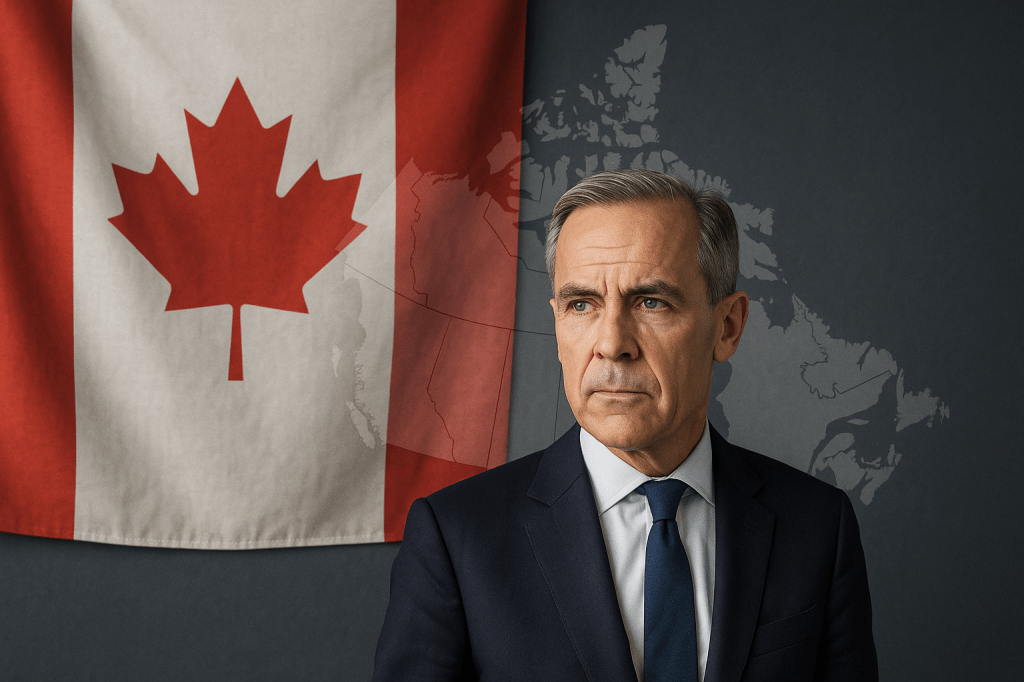
Mark Carney’s call for “one Canadian economy, not thirteen” isn’t just the idle musing of a former central banker with time on his hands, it’s the warning shot of a man who has sat at the helm of two of the world’s most powerful financial institutions and seen, up close, how countries succeed and fail. Carney’s frustration with Canada’s fragmented economic landscape is both practical and philosophical. He knows the potential this country holds – vast natural resources, educated people, global ties, but he also sees how much of it is squandered by a patchwork system where ten provinces and three territories act like neighbouring fiefdoms instead of building blocks of a common national purpose.
The problem, as Carney lays it out, is that Canada often behaves more like a loose confederation of mini-economies, than a modern unified state. Each region guards its turf: labour standards vary wildly, professional credentials don’t always carry across provincial lines, and tax regimes are a bureaucratic maze. Even something as basic as securities regulation, the rules that govern how companies raise money and protect investors, is balkanized, with no single national regulator, making Canada unique among developed nations in all the wrong ways. This isn’t just inefficiency; it’s economic self-sabotage.
Carney has always had a policy wonk’s precision, but in recent years he’s added the rhetorical flair of someone preparing to step onto the political stage. When he talks about the climate transition, for example, he doesn’t mince words: Canada will fail to meet its emissions targets if each province charts its own course. British Columbia might be ahead on carbon pricing, while Alberta and Saskatchewan cling to fossil fuels, and Quebec stands off in its own hydro-powered world. Without a shared strategy, Carney argues, we’re running thirteen separate races instead of pulling together in the global marathon toward sustainability.
Underlying Carney’s vision is a call for greater productivity and global competitiveness. He sees a Canada that could lead in clean energy, advanced manufacturing, digital innovation, but only if it acts in concert. That means building national infrastructure, fixing interprovincial trade barriers (which some federal estimates say cost the economy up to $130 billion a year), and aligning provincial policies on education, investment, and labour force development. It’s not just about growing the economy, it’s about making sure that growth is fair, inclusive, and forward-looking.
Of course, Carney knows the hurdles. This is Canada, after all. The constitution gives provinces enormous authority over key economic levers like natural resources and education. Regionalism runs deep, from the grievances of Western alienation to the distinct society of Quebec. Even the idea of a national strategy can provoke suspicion, seen less as vision and more as Ottawa’s overreach. And the political will to forge consensus is in short supply, especially in an age where short-term gains too often outweigh long-term planning.
Still, Carney keeps beating the drum. His is a voice urging Canada to get serious about itself. To stop coasting on inherited wealth and institutional stability, and start acting like a country that actually wants to lead in the 21st century. Whether as a private citizen, a public thinker, or elected Prime Minister, Carney is pushing us to imagine what Canada could become if it truly operated as one economy, not thirteen.
Here’s the inaugural edition of my new weekly segment, “Five Things We Learned This Week,” highlighting significant global events and discoveries from April 12–18, 2025.
🌍 1. Travel Disruptions Across Europe
Travelers in Europe faced significant disruptions due to widespread strikes. In France, the Sud Rail union initiated strikes affecting SNCF train controllers, with potential weekend service interruptions extending through June 2. In the UK, over 100 ground handling staff at Gatwick Airport began a strike on April 18, impacting airlines like Norwegian and Delta. Additionally, approximately 80,000 hospitality workers in Spain’s Canary Islands staged a two-day strike over pay disputes, affecting popular tourist destinations.
⸻
🧬 2. Potential Signs of Life on Exoplanet K2-18b
Astronomers detected large quantities of dimethyl sulfide and dimethyl disulfide in the atmosphere of K2-18b, a planet located 124 light-years away. On Earth, these compounds are typically produced by biological processes, making this the strongest evidence to date suggesting potential life beyond our solar system.
⸻
📉 3. Global Economic Concerns Amid Tariff Tensions
The International Monetary Fund (IMF) and the European Central Bank (ECB) warned of a slowdown in global economic growth due to escalating trade tensions, particularly from recent U.S. tariffs. The ECB responded by reducing its main interest rate for the seventh time this year, citing “exceptional uncertainty.” U.S. markets remain volatile, with the S&P 500 down 14% from February highs.
⸻
🌱 4. Earth Day 2025: “Our Power, Our Planet”
Earth Day on April 22 will spotlight the theme “Our Power, Our Planet,” emphasizing the push for renewable energy to triple clean electricity by 2030. Events worldwide aim to educate and mobilize communities toward sustainable practices and climate action.
⸻
🐺 5. Genetic Revival of Dire Wolf Traits
Colossal Biosciences announced the birth of genetically modified grey wolves named Romulus, Remus, and Khaleesi. These wolves exhibit characteristics of the extinct dire wolf, marking a significant step in de-extinction science and raising discussions about the ethical implications of such genetic endeavors.
⸻
Stay tuned for next week’s edition as we continue to explore pivotal global developments. Question – Should I include a link to some source material with each item or is the summary what you are looking for?
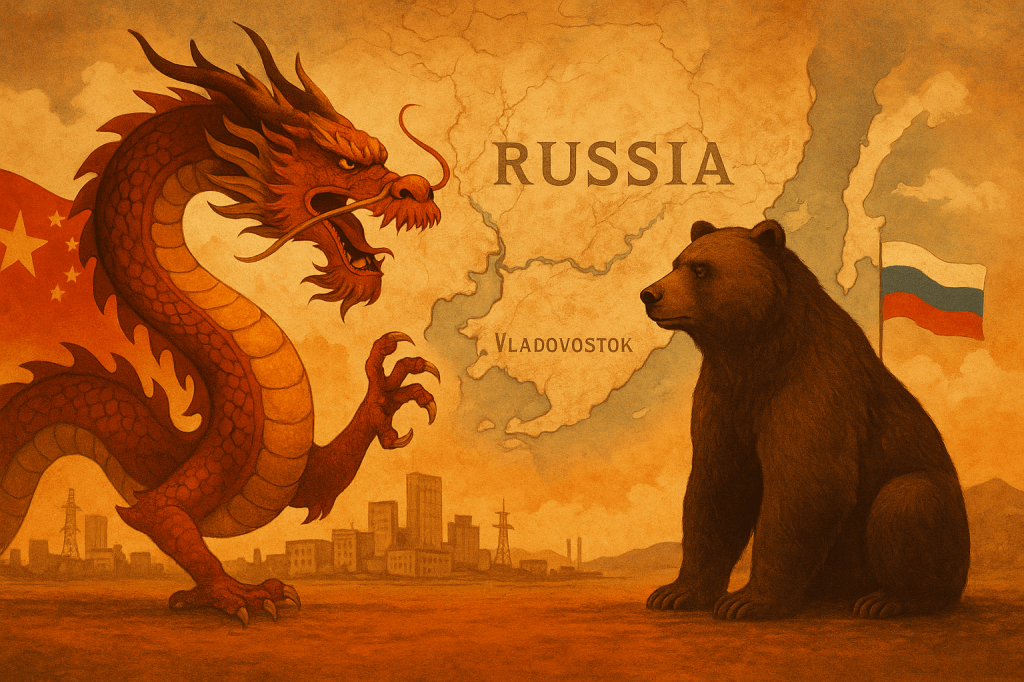
It’s a strange sight to behold – the old bear, once feared across continents, now leaning heavily on the dragon, who circles with a slow, calculating grace. Russia, once the hammer of the East, has been brought to heel by a grinding war in Ukraine, and while the West cuts ties and imposes sanctions, China, with the patience of a millennia-old civilization, sees opportunity, not just to profit, but perhaps to reshape history.
There’s a sense of irony that hangs over this moment. In 1860, the Qing dynasty signed the Peking Accord under duress, ceding vast swathes of land to the Russian Empire. That territory, now known as the Russian Far East, includes strategic regions like Vladivostok and the Amur Basin, lands that had once been part of China’s imperial periphery. The Chinese state, pragmatic in diplomacy, but deeply historical in self-conception, has never fully forgotten these losses. While official maps no longer lay claim to those regions, nationalist narratives in China occasionally whisper about redrawing what was once erased.
Fast forward to today, and the tables have turned. The war in Ukraine has battered Russia’s economy, and severed its connections to Europe. In desperation, Moscow has tilted eastward, selling gas, oil, and influence to Beijing at discount prices. This is not a partnership of equals. Russia needs Chinese markets, Chinese currency, and Chinese technology. China, meanwhile, gains leverage with every shipment of discounted crude, and every signed memorandum that ties the Russian economy tighter to the yuan. Where once they competed in Central Asia and the Arctic, now Russia finds itself the junior partner in a relationship it once dominated.
But China’s strategy isn’t conquest, it’s saturation. In the underpopulated stretches of Siberia and the Russian Far East, Chinese traders, laborers, and companies are embedding themselves quietly, but firmly. Towns along the border increasingly do their business in yuan, and many look more to Harbin or Heihe, cities in China’s Heilongjiang Province, than to Moscow. Infrastructure projects, often funded with Chinese capital, and executed by Chinese firms, are weaving a new economic fabric, one that binds these regions more to Beijing than to the Kremlin.
This isn’t a territorial war. China doesn’t need tanks to reverse the Peking Accord. It just needs time, capital, and a weakened Russia with few other friends. What we may be witnessing is not the formal return of lost lands, but something more subtle and enduring; a slow-motion annexation by way of economy, trade, and cultural seepage. A kind of imperial inversion, done not with gunboats, but with invoices and supply chains.
In geopolitics, history never dies, it just waits for the moment when the balance tilts. With every sanctioned ruble, and every Chinese-funded deal, the echoes of the 19th century grow louder. Russia may not yet realize it, but the dragon is already at the gates. Not to conquer, but to reclaim, softly, surely, and without ever having to fire a shot.





 The Rowanwood Chronicles