Public Broadcasting is Democratic Infrastructure: It’s Time We Treated It That Way

A healthy democracy doesn’t just depend on free elections or a functioning parliament, it requires a well-informed public. And that, in turn, depends on public media. Yet, while countries like Norway, Switzerland, and Germany invest heavily in their national broadcasters, Canada lags behind, spending just $32 per capita on the CBC. The average among comparable nations? $82 per person, over two and a half times as much. These aren’t obscure outliers. They are the very countries we hold up as models of good governance and enviable quality of life.

The implications of this underfunding are profound and dangerous.

For starters, let’s be clear about what a strong national broadcaster provides: verified, fact-checked information; in-depth investigative reporting; representation for marginalized communities; cultural production that reflects national identity; and local coverage that commercial networks consider financially unviable. It produces journalism and storytelling not because it will sell ads, but because the public needs to hear it. In short, a national broadcaster is not just media, it’s civic infrastructure.

And like all infrastructure, when it’s neglected, the cracks begin to show. Coverage gets thinner. Journalists are laid off. Investigative units are cut back. Cultural programming disappears. Public trust erodes. This is not some abstract danger. We’re already seeing it. In many rural and northern communities, CBC/Radio-Canada is the only news outlet on the ground. If we let it wither, those Canadians lose their voice.

Some critics argue that the CBC is biased or outdated. Others go further, calling for its privatization or outright abolition, but calls to defund the CBC aren’t coming from a place of principle, they’re coming from political convenience. The CBC’s critics are often those who fear being held to account. The very fact that it makes governments uncomfortable is proof of its relevance. A neutered or commercialized broadcaster wouldn’t challenge power. It would amplify it.

That’s why funding isn’t the only issue. Independence matters just as much.

Right now, the CBC depends on annual allocations from the federal government—allocations that can be increased, frozen, or cut depending on the political mood. That dynamic creates an impossible tension: how can journalists freely investigate the very politicians who control their budgets? To resolve this, Canada should follow the lead of countries like the UK and Germany, where national broadcasters are governed by arms-length boards and funded through fixed, long-term mechanisms like licence fees or parliamentary endowments.

We don’t just need to preserve the CBC, we need to drastically increase its funding. Canada should not be spending less than a dollar a week per citizen on one of its most vital democratic institutions. A national broadcaster must be robust, resilient, and equipped to compete in a rapidly changing media landscape. That takes serious investment. The federal Liberal government has acknowledged this, pledging in successive platforms to increase funding to the CBC and Radio-Canada; but pledges are not progress. What’s needed now is political will to deliver not just marginal boosts, but transformational support, the kind that allows the CBC to rebuild local newsrooms, expand digital services, and commission bold, public-interest journalism across all regions and communities in Canada.

We must also abandon the false binary that public media is either pro-government or obsolete. Neither is true. A public broadcaster does not exist to defend the state, it exists to inform the public. In an age when foreign disinformation campaigns, clickbait economics, and algorithmic echo chambers dominate, a trusted public voice is not a relic of the past. It’s an essential defense against manipulation and ignorance.

In fact, defunding public media doesn’t reduce bias, it opens the door to greater corporate influence. When information is treated solely as a commodity, public interest takes a back seat to private profit. Stories that matter but don’t sell, like Indigenous issues, climate policy, or rural healthcare, vanish from the airwaves. And the stories that do remain are curated not for accuracy or balance, but for engagement, outrage, and revenue.

We know where that leads. We’ve seen it south of the border.

So let’s learn the right lesson. Let’s fund the CBC, not as a cultural subsidy, but as a democratic necessity. Let’s enshrine its editorial independence in law. Let’s give it the tools to innovate, expand, and thrive in the 21st century. And let’s stop pretending that cutting public media is some kind of populist virtue.

Supporting a national broadcaster is not a left-wing or right-wing issue. It’s a civic one. And at $32 per Canadian per year, it’s also a bargain.

We don’t need less CBC. We need more of it, improved and independent.
The New Silk Spine: How the INSTC Is Redrawing Global Trade Maps

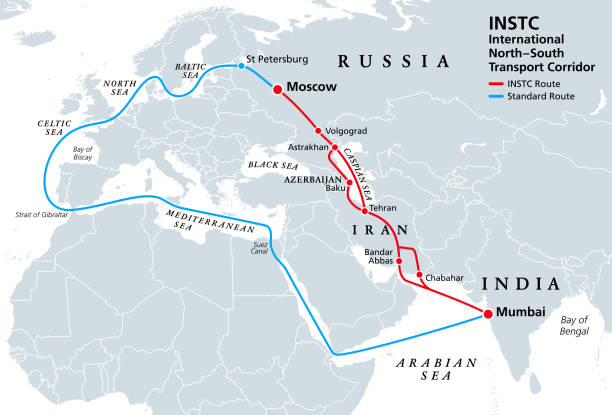
A quiet revolution in global logistics is underway, and it’s not coming from Beijing or Washington. It’s emerging from the heart of Eurasia, led by a consortium of countries who have historically occupied the margins of global trade narratives. The International North-South Transport Corridor (INSTC), a sprawling multimodal freight route linking India to Northwest Europe via Iran, Azerbaijan, and Russia, is reshaping both the geography and politics of trade.

The INSTC is more than just a 7,200-kilometre link between Mumbai and St. Petersburg. It’s a strategic recalibration, a corridor of asphalt, rails, and sea routes that bypasses the traditional maritime choke points like the Suez Canaland offers a faster, cheaper, and more resilient alternative. Cargo that once took 40 days to traverse via Suez may now move in under 25 days, with costs slashed by up to 40%. For countries like India, long constrained by maritime dependency and geopolitical roadblocks like Pakistan, the INSTC represents autonomy, reach, and leverage. By anchoring investments in Iran’s Chabahar Port and pushing road and rail links through the Caucasus into Russia, India is not just moving goods, it’s asserting presence.

Russia, reeling from Western sanctions, views the corridor as a vital artery to keep its economy tethered to global markets. With access to Europe constrained and pipelines of trade to Asia opening up, Moscow is embracing the INSTC as part of a broader pivot eastward. Iran, too, has seized its role as a key junction with zeal, positioning its territory as the bridge between warm water ports and the heart of Eurasia. Though battered by sanctions, Tehran is pushing infrastructure upgrades with a clear eye toward regional transit supremacy.

Europe is beginning to take notice. Countries like Germany and Finland are assessing the corridor’s potential to stabilize and diversify their supply chains, especially as global shipping lanes grow riskier and more expensive. Yet as enthusiasm grows in Eurasia, apprehension is mounting in the United States. The INSTC threatens U.S. strategic control over global commerce by undermining the relevance of the Panama and Suez canals, long cornerstones of American naval and economic dominance. It also boosts BRICS, a grouping increasingly seen as a challenger to the Western-led order.

Washington’s response has been twofold: diplomatic containment and competitive investment. The India-Middle East-Europe Corridor (IMEC), announced as part of the G7’s Build Back Better World initiative, is in part a direct counterweight to the INSTC. At the same time, U.S. policymakers are pressuring allies to tread carefully around Iran and Russia’s involvement, while watching closely how India—a key U.S. partner—manages its balancing act between the West and BRICS.

What is unfolding is not just a redrawing of trade routes, but a redrawing of power. The INSTC may not have the headline flash of China’s Belt and Road Initiative, but it is modular, strategic, and increasingly influential. It marks the emergence of a new Eurasian logic, one that connects the Indian Ocean to Northern Europe, not through blue-water naval lanes, but across land and short-sea corridors, driven by the very nations that were once bypassed. If the remaining gaps in infrastructure and policy can be bridged, this corridor will be more than a route, it will be a lasting statement.

TVO’s The Agenda to Wrap After 19 Seasons: What’s Next for Steve Paikin?

In a move that marks the end of an era in Canadian public broadcasting, TVO has announced it will sunset its flagship current affairs program, The Agenda with Steve Paikin, after an impressive 19-season run. The final broadcast is set for June 27, 2025, and for many Ontarians, it will feel like saying goodbye to a trusted dinner guest—one who always brought facts, balance, and an impressive Rolodex of guests to the table.

Since its launch in 2006, The Agenda has been a cornerstone of civic discourse in Ontario. It emerged from the ashes of Studio 2, with Paikin at the helm, guiding viewers through complex political, social, economic, and cultural landscapes. Whether you agreed with his guests or not, you knew you’d come away smarter for having watched.

But fear not, public affairs junkies—TVO isn’t abandoning the field. Come fall 2025, a new show, The Rundown, will take its place. While details remain sparse, TVO promises it will carry on the tradition of thoughtful journalism that The Agenda embodied. One notable change: The Rundown will not be hosted by Steve Paikin.

The Paikin Legacy: A Journalist’s Journalist
For those unfamiliar with Steve Paikin’s long and storied career (where have you been?), the man is a broadcasting institution. Before The Agenda, he co-hosted Studio 2 and anchored Diplomatic Immunity, showcasing his deft moderation skills and encyclopedic knowledge of politics and international affairs. His journalistic journey began in the 1980s, with stints at CHCH-TV in Hamilton and CBC Newsworld, and he even authored several books exploring Canadian politics and leadership.

Paikin’s interviewing style—unfailingly polite, often probing, never performative—earned him accolades and respect from all corners of the political spectrum. He doesn’t shout, he doesn’t sensationalize. He listens. And in today’s media landscape, that’s become a rare and precious commodity.

What’s Next for Steve Paikin?
Though he’s stepping back from full-time hosting duties, Steve Paikin isn’t exactly riding off into the sunset. TVO has confirmed he will remain part of the team in a part-time capacity. He’ll co-host the weekly political podcast #onpoli, continue as a columnist on the TVO website, and lead Ontario Chronicle, a history-focused series on YouTube. He’ll also serve as a host for public events—likely to be as packed as his Twitter mentions during election nights.

So, while The Agenda may be coming to a close, the Paikin chapter in Canadian journalism is far from over.

The goodbye may be bittersweet, but it’s also a reminder of what good, measured, insightful media can look like, and if the past is any indication, Paikin’s next act will be worth watching too. 

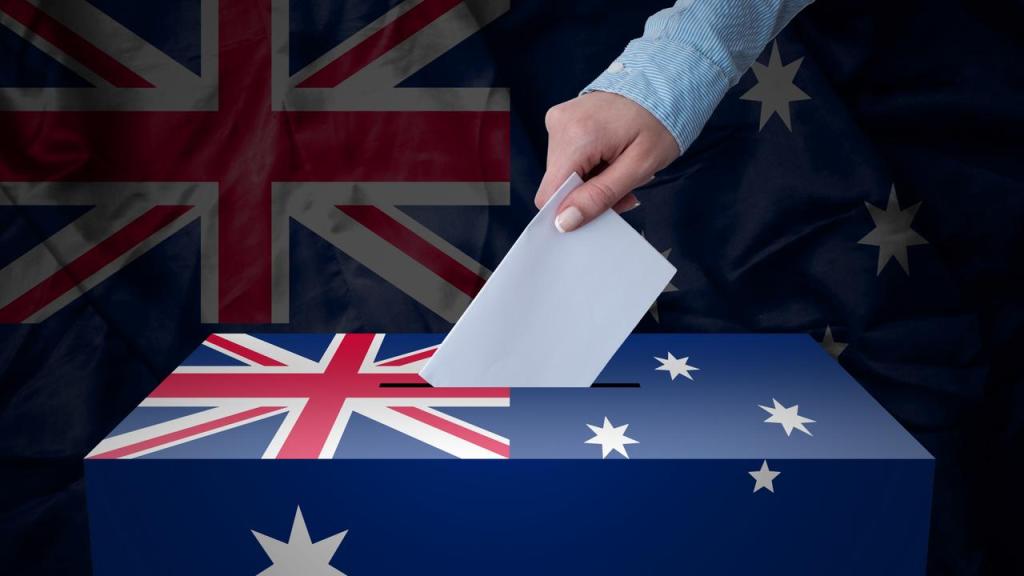
Preferential Revolt: How Australia’s Voting System Is Breaking the Mould

As Australia prepares for the 2025 federal election on May 3, the national mood carries a distinctly restive undercurrent. While the major parties, the governing Labor Party under Anthony Albanese and the Liberal-National Coalition led by Peter Dutton, continue to dominate the headlines and stage debates, there is an unmistakable stir among the electorate. It’s not just about who will win, but about how Australians want to be represented in the years ahead. And this year, more than any in recent memory, the answer may lie in a growing movement determined to disrupt the traditional two-party stranglehold on power.

This discontent didn’t arise overnight. Over the past two decades, the combined vote share for Labor and the Coalition has gradually eroded. In the 2022 election, only 15 of the 150 seats in the House of Representatives were won on first preferences, down significantly from 46 in 2019. This decline in first-choice support reflects a broadening desire for alternatives, and the cracks in the old foundations have only widened since then. Australians are increasingly looking beyond the major parties to a field of independents and minor parties who promise to speak to the concerns long ignored: climate change, political integrity, housing, Indigenous rights, and gender equity among them.

At the forefront of this insurgency are the so-called “teal” independents, many of whom are professional women with strong credentials, campaigning for climate action and a more accountable, less adversarial form of politics. In 2022, they claimed several safe Liberal seats in wealthy urban electorates, sending a clear signal that voters were no longer content with business as usual. Now, in 2025, these candidates and their supporters are back, energized and better organized, facing off not only against the majors, but also against newly formed, sometimes opaque groups like “Repeal the Teal” and “Better Australia.” These groups claim neutrality, but have drawn scrutiny for shadowy funding, and messaging strategies that mirror traditional conservative talking points.

What makes this electoral fluidity possible is Australia’s unique and, in some ways, underappreciated voting system. In the House of Representatives, voters use preferential voting, where they rank candidates in order of preference rather than picking just one. If no candidate achieves a majority in the first count, the one with the fewest votes is eliminated and their ballots redistributed based on second choices, and so on, until someone crosses the 50 percent threshold. This system rewards candidates who may not be first on everyone’s list but are broadly acceptable to most voters, an ideal scenario for strong independents or minor party contenders.

The Senate, meanwhile, uses proportional representation via the single transferable vote. Voters can either rank individual candidates or select a party group, and the allocation of seats is determined by how many votes each candidate or party garners relative to a calculated quota. This system allows smaller parties, be they progressive Greens, libertarian groups, or issue-focused movements, to punch above their weight. It’s why the Senate has consistently been more diverse and less dominated by the major parties, and it’s increasingly becoming a model for what many Australians would like the lower house to reflect as well.

The major parties are far from blind to these shifts. Both Labor and the Coalition are attempting to reframe themselves in ways that respond to this moment of political flux, but their efforts are often read as reactive rather than visionary. Labor has enjoyed diplomatic and trade wins in its relationship with China, but is grappling with domestic fatigue around housing and healthcare. The Coalition, for its part, has doubled down on culture war rhetoric, and economic orthodoxy, hoping to rally its base. In taking this approach, it risks looking out of touch with a population more worried about rising rents than ideological crusades.

Nowhere is this tension more visible than in Australia’s growing Chinese-Australian communities, whose votes may swing marginal electorates. Both major parties are courting this demographic carefully. The ALP points to its restored ties with Beijing as a diplomatic success; the Coalition pushes national security fears. Yet neither approach may be enough to capture the full complexity of voter identity and aspiration in a country as diverse, and as impatient for change, as modern Australia.

A hung parliament is not only possible; many analysts consider it likely. If that happens, power will shift dramatically toward the crossbench: the independents and minor parties who are no longer content to be “preferences”, but now aspire to real leverage. For some, this signals instability. For others, it is a long-overdue correction, a rebalancing of a political system that has for too long treated voter discontent as an aberration instead of a force.

In the end, the 2025 election will be more than just a contest of parties. It will be a referendum on a political system straining under the weight of modern expectations. Voters are not just deciding who governs, they’re redefining howAustralia should be governed. If the results reflect the momentum of the past three years, then the two-party system may not collapse overnight, but it will be forced to make room for a future that looks far more plural, more negotiated, and perhaps, finally, more representative.

Five Things We Learned This Week for April 19–25, 2025

Here is the latest edition of “Five Things We Learned This Week” for April 19–25, 2025, spotlighting key global developments across science, economics, and geopolitics.

🌐 1. Global Trade Turmoil Intensifies Amid U.S. Tariffs

The U.S. administration’s sweeping tariff policy is causing substantial disruptions in the global supply chain, with experts warning that the worst may be yet to come. Following the implementation of a 10% baseline tariff globally and a 145% tariff on Chinese imports, freight booking volumes have plummeted, with U.S. imports from China down 36%. Stockpiling efforts by businesses have temporarily shielded consumers, but inventories are depleting, and new orders are on hold awaiting a resolution. This is likely to lead to empty shelves and price hikes beginning as early as May or June, with particularly sharp impacts on low-margin consumer goods.  

🧬 2. Discovery of a New Color and Martian ‘Skull’ Formation

Scientists have identified a previously unknown color, expanding our understanding of the visible spectrum. In another intriguing development, NASA’s Mars Reconnaissance Orbiter captured images of a rock formation resembling a human skull, sparking discussions about pareidolia and geological processes on Mars.  

📉 3. IMF Downgrades Global Economic Growth Forecast

The International Monetary Fund (IMF) has revised its global growth projection for 2025 down to 2.3%, citing escalating trade tensions and policy uncertainties. The IMF warns that these factors could further hinder growth and elevate risks to the global economy.   

🧪 4. Breakthrough in Plant Healing with Bacterial Band-Aid

Researchers have developed a bacteria-based “Band-Aid” that aids in plant healing. This innovation utilizes bacterial cellulose patches to speed up plant recovery, improve grafting success, and assist in preservation efforts, potentially revolutionizing agricultural practices.  

🛰️ 5. NASA’s Lucy Spacecraft Reveals Asteroid Secrets

NASA’s Lucy spacecraft has returned images of the main belt asteroid Donaldjohanson, revealing it to be a contact binary and larger than previously estimated. This discovery provides valuable insights into the formation and evolution of asteroids in our solar system.  

Stay tuned for next week’s edition as we continue to explore pivotal global developments.

The Athena Protocol: Reclaiming Agency in the Digital Age

Like Heinlein’s Athena, my AI is sharp, loyal, and just a little too clever for everyone’s comfort.  

A while back I wrote a post about Tim Berners-Lee, the inventor of the World Wide Web, and his vision of a transformative shift in the way individuals manage and share their personal data through a decentralized web, embodied by his Solid project. For me, a natural extension of this thinking is to continue the trend of decentralization and move the control of our digital world to individual households.

In a future where every household has its own independent AI system, life would undergo a profound transformation. These AI systems, acting as personal assistants and home managers, would prioritize privacy, efficiency, and user control. Unlike AI tethered to large platforms like Meta or Google, these systems would function autonomously, severing reliance on centralized data mining and ad-driven business models.

Each household AI could be a custom-tailored entity, adapting to the unique needs of its users. It would manage mundane tasks like cooking, cleaning, and maintaining the home while optimizing energy use and sustainability. For example, the AI could monitor household appliances, automatically ordering repairs or replacements when necessary. It could manage grocery inventory and nutritional needs, preparing healthy meal plans tailored to individual dietary requirements. With integration into new multimodal AI models that can process video, audio, and sensor data simultaneously, these systems could actively respond to real-world inputs in real time, making automation even more fluid and responsive.

Beyond home management, the AI would act as a personal assistant to each household member. It could coordinate schedules, manage communication, and provide reminders. For students, it might assist with personalized learning, adapting teaching methods to their preferred style using cutting-edge generative tutoring systems. For professionals, it could optimize productivity, handling email correspondence, summarizing complex reports, and preparing interactive visualizations for meetings. Its ability to understand context, emotion, and intention, now part of the latest frontier in AI interaction design, would make it feel less like a tool and more like a collaborator.

A significant feature of these AIs would be their robust privacy measures. They would be designed to shield households from external intrusions, such as unwanted adverts, spam calls, and data-harvesting tactics. Acting as a filter between the household and the digital world, the AI could block intrusive marketing efforts, preserving the sanctity of the home environment. The adoption of on-device processing, federated learning, and confidential computing technologies has already made it possible to train and run large models without transmitting sensitive data to external servers. This would empower users, giving them control over how their data is shared, or not shared, on the internet.

The independence of these AI systems from corporations like Meta and Google would ensure they are not incentivized to exploit user data for profit. Instead, they could operate on open-source platforms or subscription-based models, giving users complete transparency and ownership of their data. Developments in decentralized AI networks, using technologies like blockchain and encrypted peer-to-peer protocols, now make it feasible for these household systems to cooperate, share models, and learn collectively without exposing individual data. These AIs would communicate with external services only on the user’s terms, allowing interactions to remain purposeful and secure.

However, challenges would arise with such autonomy. Ensuring interoperability between household AIs and external systems, such as smart city infrastructure, healthcare networks, or educational platforms, without compromising privacy would be complex. AI alignment, fairness, and bias mitigation remain open challenges in the industry, and embedding strong values in autonomous agents is still a frontier of active research. Additionally, the potential for inequality could increase; households that cannot afford advanced AI systems might be left behind, widening the technological divide.

In this speculative future, household AI would shift the balance of power from corporations to individuals, enabling a world where technology serves people rather than exploits them. With enhanced privacy, personalized support, and seamless integration into daily life, these AIs could redefine the concept of home and human agency in the digital age. The key would be to ensure that these systems remain tools for empowerment, not control, embodying the values of transparency, autonomy, and fairness.

Conservative Party’s Anti-“Woke” Turn: Calculated Strategy or Desperate Appeal?

The Conservative Party of Canada has quietly republished the English-language version of its platform to reinsert a plank that had been conspicuously absent; a pledge to crack down on so-called “woke ideology” within the federal public service, and in university research funding. Described as a “publishing oversight,” this addition raises far more questions than it answers, particularly about Pierre Poilievre’s political calculus as the next election draws closer.

First, let’s interrogate the substance. “Woke ideology,” while undefined in the platform, is often shorthand on the political right for progressive stances on diversity, inclusion, gender identity, anti-racism, and decolonization efforts. To include language targeting these frameworks suggests the Conservatives are not just passively uncomfortable with current equity-focused public policy, they’re actively preparing to dismantle it. But why now?

One possible explanation is strategic: this is a deliberate overture to Canada’s emergent far-right electorate. While still fringe in some parts of the country, this voter segment has grown increasingly vocal, particularly on social media, and within alternative media ecosystems. By tapping into their grievances, against public sector DEI programs, gender-inclusive language, or research funding tied to Indigenous reconciliation, the Conservatives may be attempting to consolidate a reliable, energized bloc of voters.

Another interpretation is more inward-facing: Poilievre is shoring up his base, not for the election, but for what comes after. Should the Conservatives form government, he may face internal fractures between establishment conservatives and newer ideological hardliners. This platform language signals allegiance to the latter, potentially ensuring his continued leadership in a post-election caucus that could be divided on everything from fiscal policy to foreign affairs.

There’s also the broader issue of timing. The re-publication came after criticism that the party had been “softening” to appeal to moderate or urban voters, many of whom are uncomfortable with overt culture war rhetoric. By reaffirming this pledge, the party might be trying to reassure its core that the campaign’s centrist gestures are mere optics, not policy commitments.

But this move is not without risks. Canada’s public service is one of the most diverse and professionalized in the world. Federal civil servants are unlikely to respond positively to a government that frames their professional values as ideological threats. Likewise, university researchers who rely on federal grants will see this as a chilling signal that academic freedom could be compromised by political litmus tests.

And then there’s the broader electorate. While “anti-woke” politics have gained traction in the U.S. and U.K., Canadian voters have historically been more moderate. The risk for Poilievre is that in appealing to a narrow base, he alienates the swing voters he’ll need to actually win. Recent polling shifts, driven in part by U.S. President Donald Trump’s aggressive new tariffs on Canadian goods and Liberal leader Mark Carney’s boost in credibility, suggest the tide may already be turning against Poilievre’s hard-right gambit.

The re-insertion of this controversial language into the Conservative platform isn’t a glitch, it’s a signal. The question now is whether it’s a strategic masterstroke aimed at cementing a new ideological alignment in Canada, or a desperate hedge against the possibility that Poilievre wins the election, but loses control of his own party.

Pierre Poilievre’s Fear Tactics: A Betrayal of Canadian Values

This is the first of hopefully many guest posts for this blog.

I have been heartened by the civility characterizing the 2025 Canadian Federal Election Campaign. Amid global unrest, our nation’s commitment to respectful discourse has been a beacon of hope. Until today.

Today, Pierre Poilievre crossed a line. He didn’t just resort to name-calling; he employed fear on a scale that is both alarming and disheartening.

Leadership demands vision, a comprehensive plan, and the ability to inspire confidence. A true leader assesses situations holistically, allocates resources wisely, and maintains composure under pressure.

However, Mr. Poilievre chose a different path. He took a speculative report, designed to explore potential future scenarios, and distorted its findings to paint a dystopian narrative. This manipulation wasn’t just misleading; it was a calculated attempt to exploit Canadians’ emotions for political gain.

The report in question, published by Policy Horizons Canada, is intended to inform policymakers about possible future challenges and opportunities. It’s a tool for strategic foresight, not a definitive prediction. By presenting its content as an imminent threat, Mr. Poilievre has not only misrepresented the report, but also undermined the very purpose of such forward-thinking analyses.

This approach is not just a deviation from responsible leadership; it’s a betrayal of the trust Canadians place in their elected officials. It sows unnecessary fear and distracts from constructive dialogue about our nation’s future.

I urge every Canadian to read the report themselves at Policy Horizons Canada. Understand its intent, and see through the fear-mongering.

https://horizons.service.canada.ca/en/2025/01/10/future-lives-social-mobility/index.shtml

Our future is ours to shape. Let’s base our decisions on facts, not fear.

About the Author

Angela is a Canadian veteran who was honoured to be part of the first class of women at Collège militaire royal de Saint-Jean and retired from the Canadian Forces in 1991. Since then, she has built a diverse career in industry and has owned and operated small businesses for over two decades. Her lifelong commitment to service, leadership, and community informs her thoughtful perspective on Canada’s future.

Why Your Dismissive-Avoidant Partner Loves You From Across the Room (With the Door Slightly Ajar)

Ah, the dismissive-avoidant attachment style. The human equivalent of a cat: they might love you, they might not, but either way, they’re going to knock your emotional mug off the table just to see what happens.

Dismissive-avoidants are the folks who will cuddle you on the couch and then, without warning, evaporate like steam in a British mystery novel. You think things are going great, you’re texting every day, you’ve met each other’s pets, you’ve even shared fries. Suddenly, they’re “just really needing some space” and have gone to “work on themselves” in the wilderness with no signal and no return date.

Now, don’t get me wrong, they’re not bad people. They just learned, somewhere along the way, that feelings are kind of like bees: unpredictable, swarming, and best avoided if possible. These folks often grew up in homes where vulnerability was about as welcome as a raccoon at a wedding. So, they built themselves emotional panic rooms and installed locks with 87-digit codes.

Dating a dismissive-avoidant can be a little like dating a haunted house. There’s a lot going on inside, but they don’t want you poking around in the attic. Ask them how they feel, and they’ll either crack a joke or vanish in a puff of logic. “I don’t need to talk about feelings. Feelings are just electrical impulses. You know what else are electrical impulses? Traffic lights. And I don’t cry at those, do I?”

These are the champions of “I’m not really looking for anything serious” and “I just want to see where this goes”, which is often directly into a brick wall labeled unavailable. But don’t let that deter you, because dismissive-avoidants do fall in love. It just takes a while. And by a while, I mean longer than it takes for an avocado to go from rock-hard to brown mush.

They actually value connection deeply, but only if it doesn’t interfere with their need for independence, alone time, or the ability to escape through a metaphorical skylight at any moment. They’re like emotional ninjas: stealthy, elusive, and weirdly attractive.

If you’re dating one, the key is patience, and a good sense of humor. Celebrate the small wins: they made eye contact while discussing their emotions? Break out the champagne. They admitted they missed you (after a three-week silence)? Start planning the wedding.

Just remember: when they say, “I don’t really do emotions,” what they mean is, “Emotions are terrifying and I don’t know how to do them without short-circuiting like a 1996 printer.”

So love them gently, laugh a lot, and maybe invest in a nice doormat that says “Welcome-ish.”, because with a dismissive-avoidant, you never know when they’ll show up, but when they do, it’s almost always in their own charming, weirdly tender way. Just don’t ask them to define the relationship too soon. That’s how you get ghosted via interpretive dance.

Echoes of Gallifrey: A Whovian’s Reflection

To paraphrase that wise old Vulcan from across the science fiction aisle: “Perhaps new Who is for new fans.”

I’ve been around long enough to remember the flickering black and white glow of the first Doctor Who episode on my family’s wood-paneled television, and yes, I did watch from behind the sofa. I was five, and the grindy, wheezing, whooshing sound of the TARDIS stuck with me, a sound I’d recognize decades later with the same thrill that accompanied my first kiss, or the moment Armstrong stepped onto the Moon.

I grew up with the Doctor, through all their faces and foibles, from the gentleness of Troughton to the whimsy of Tom Baker’s scarfed silhouette. The show wasn’t perfect, never has been, but it had a sort of ramshackle brilliance that made it feel like ours. British. Imaginative. A little cheap, I mean it was the BBC, but so full of heart.

When the classic series ended in the ’80s, I mourned. Like losing an eccentric uncle, strange, inconsistent, but dearly beloved. Then, in 2005, Russell T Davies brought it back with Eccleston, and by the stars, what a revival! It had teeth, wit, charm, and it remembered where it came from too. I danced through the Tenth and Eleventh Doctors. Tennant’s tragic hero. Smith’s madman with a box. River Song’s tangled timeline, that was poetry. It all mattered to me.

But time is merciless. Like the Doctor, the show changed, and perhaps, like the Doctor, I did too. Capaldi was brilliant on paper, but the writing lost its way. Companions died too easily, too cruelly, as if the writers were punishing us for caring. The warmth faded.

And then came Jodie Whittaker. I wanted to like her, truly! Yet, the spark wasn’t there for me. The stories felt like sermons, and not the good kind, not the “what does it mean to be human?” kind. More like being scolded during Saturday tea.

With Ncuti Gatwa, I had hope again. Charismatic, dynamic, full of promise, but so far, the stories seem more interested in the symbolism of who the Doctor is than in what the Doctor does. Maybe that’s necessary. Maybe that’s what this era needs, but it doesn’t grab me the way it once did.

I questioned myself. Was this discomfort rooted in something ugly? Was I turning into the kind of bitter old fan who snarls at change? A dinosaur, roaring into extinction? Was I being sexist? Even racist?

No. I don’t think so.

I think Doctor Who is evolving for a new generation. New voices, new faces, new visions. It’s becoming something that maybe, just maybe, isn’t for me anymore, and that’s okay. I had my Doctors. I had my adventures in time and space, and now it’s someone else’s turn to run down corridors, face impossible odds, and save the universe with a grin and a screwdriver.

And so I say, sincerely: long live Doctor Who. Even if the TARDIS no longer comes for me.

Endnote 
The first episode of Doctor Who was broadcast on November 23, 1963 by the BBC. The episode, titled An Unearthly Child”, introduced viewers to the First Doctor, played by William Hartnell.

Interestingly, the broadcast was slightly overshadowed by news coverage of the assassination of U.S. President John F. Kennedy, which had occurred the day before. As a result, the BBC repeated the first episode the following week before continuing with the rest of the serial.