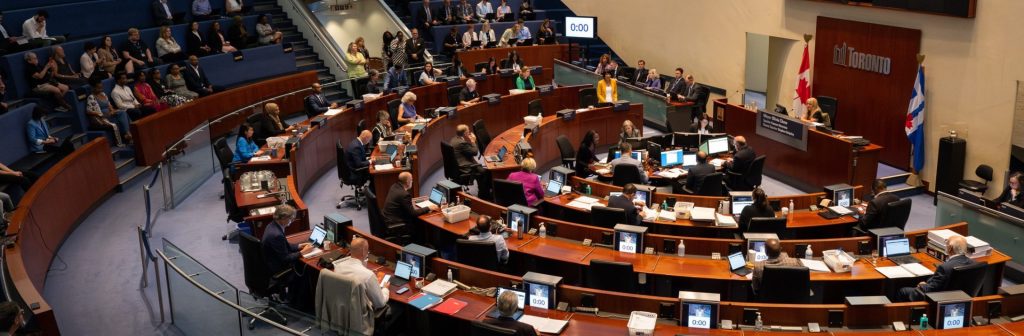
Toronto politicians are completely out of touch with reality. At a time when the city is drowning in unaffordable rents, soaring food prices, and a crumbling public transit system, these councillors have the audacity to debate giving themselves a 24% pay raise—a jaw-dropping $33,000 increase—while ordinary Torontonians struggle to make ends meet.
This isn’t just tone-deaf; it’s selfish, unthinking stupidity. People across the city are losing their homes, skipping meals, and watching their quality of life deteriorate, but instead of focusing on fixing the city, these politicians are focused on fixing their own bank accounts. They already make $137,537 a year—more than enough to live comfortably—but apparently, that’s not enough for them. They want to pad their pockets while the people they’re supposed to serve scrape by.
And their excuse? That they haven’t had a significant raise since 2006? Cry me a river. Most workers in this city haven’t seen real wage growth in years, and many are stuck in precarious jobs with no benefits, yet councillors think now—in the middle of an affordability crisis—is the right time to fatten their wallets? It’s disgraceful.
If these politicians had even an ounce of integrity, they’d reject this outrageous raise outright. Instead, they’re actually debating it, proving once again that they are more concerned with their own wealth than with the suffering of the people they claim to represent.
Fans of Mill Street Brewery are in shock after Labatt announced it was shutting down the North York brewery, and shifting production to its industrial-scale facility in London, Ontario. Thirty-nine workers will lose their jobs, and it’s unclear if many of Mill Street’s small-batch beers will survive. The three remaining brewpubs—in Toronto, Ottawa, and Pearson Airport—will continue to operate, but anyone who’s followed the beer industry knows what’s coming next. This is just another chapter in a long and predictable story.
When Labatt, itself owned by global behemoth AB InBev, acquired Mill Street a decade ago, craft beer lovers were divided. Some saw it as an opportunity for Mill Street to grow with the backing of a major player. Others saw it for what it really was: the beginning of the end. This wasn’t a rescue mission—it was an extraction.
We’ve seen this play out before. Lakeport Brewing, once a Hamilton-based success story built on discount beer, was scooped up by Labatt in 2007 for $201 million. Just three years later, Labatt shut down the brewery, put 143 people out of work, and moved production to London. More tellingly, when potential buyers showed interest in taking over the plant, and keeping it running, Labatt refused. The brewing equipment was dismantled, ensuring that no one else could compete.
Sapporo’s 2006 acquisition of Sleeman Breweries led to a similar fate for Sleeman’s Halifax operation, which was shuttered in 2013. The difference? Unlike Labatt, Sapporo allowed the equipment to be sold off, helping fuel the rise of Collective Arts Brewing in Hamilton, but the lesson remains the same: when a craft brewery is acquired by a major player, it’s no longer a craft brewery – It’s a brand.
Mill Street was never going to be an exception. It started with real craft credentials—a small brewery in Toronto’s Distillery District, a reputation for eco-conscious brewing, and flagship beers like Tankhouse Ale and Organic Lager that set it apart in the early 2000s. By the time Labatt took over, it had already expanded significantly, adding brewpubs and scaling up production. That growth made it an attractive acquisition target, but it also meant Mill Street was now operating in the corporate world, where efficiencies trump tradition and scale wins over local identity.
Now, as production consolidates in London, the brewery’s original spirit is all but gone. Sure, the remaining brewpubs will still pour Mill Street beer, just as other corporate-owned brewpubs do with “craft” labels that are little more than marketing exercises. But the North York brewery’s closure isn’t just about job losses—it’s the final confirmation that Mill Street, as craft beer fans knew it, no longer exists.
If you’re surprised, you weren’t paying attention. Once an independent brewery sells to a major corporation, it’s only a matter of time before the “craft” part disappears. This isn’t a betrayal—it’s just business as usual.
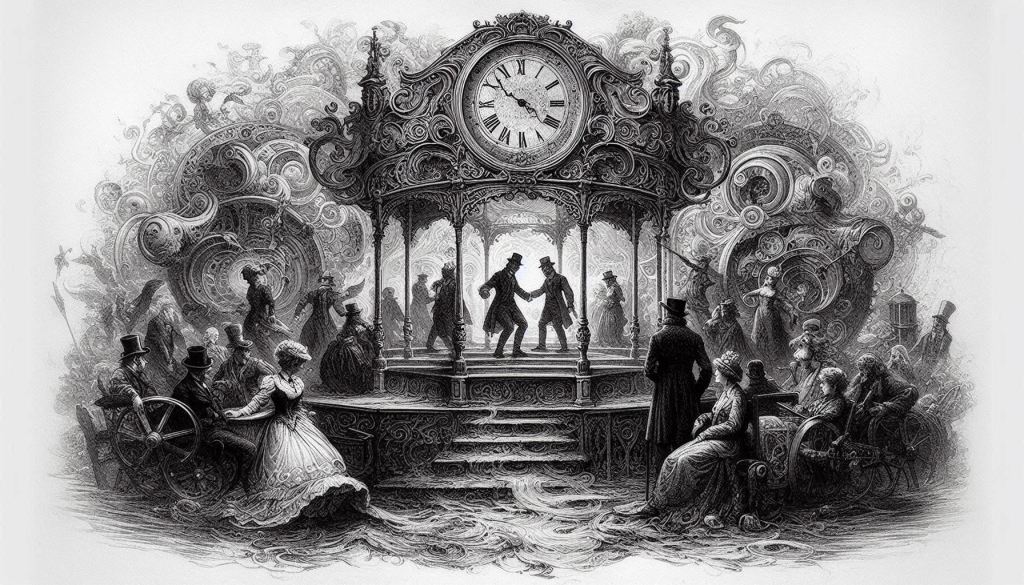
If time were to happen all at once – where past, present, and future coexisted simultaneously – it would upend our understanding of reality, causality, and even consciousness itself. Our perception of time as a flowing sequence of events is deeply ingrained in both our experience and our scientific models, but what if that flow was an illusion? What if every moment simply existed, with no distinction between before and after?
One of the most immediate consequences of such a reality would be the breakdown of cause and effect. Our world operates on the principle that actions have consequences, that the past influences the present, which in turn shapes the future. If time were simultaneous, there would be no before or after – everything would simply be. In such a reality, would it even make sense to speak of events “happening”? Without sequence, there is no causality, and without causality, the entire structure of our decision-making and agency becomes questionable. Could free will exist in a reality where all choices have already unfolded in every possible way?
Our perception of time is not just a philosophical construct, but a deeply embedded feature of human consciousness. We process the world sequentially because our brains are wired to do so. If time were happening all at once, would we experience our entire lives simultaneously? Would we be both a newborn and an elderly person at the same time, fully aware of every moment we have ever lived? If that were the case, then identity itself might become meaningless, dissolving into an incomprehensible blur of every possible experience. Alternatively, it is possible that our consciousness would still only access one “slice” at a time, navigating an eternal landscape without truly perceiving its timeless nature.
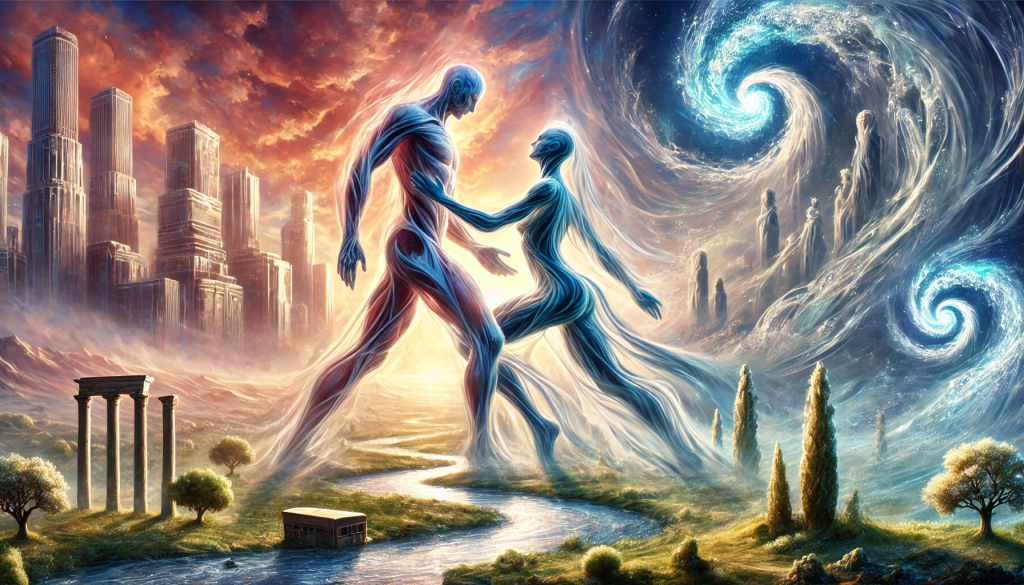
This idea is not entirely foreign to physics. The “block universe” model in relativity suggests that time is a fixed, four-dimensional structure where the past, present, and future all exist equally. In this view, time does not “flow”; rather, it is a static dimension much like space, with our perception of movement through it being an emergent phenomenon. If this were true, the notion of “now” would be subjective, merely a point of reference chosen by an observer rather than a fundamental feature of the universe. This model sounds similar to how the fictional wormhole aliens in Star Trek: Deep Space 9 live, as they have no understanding of linear time, and the concept of consequences.
Another major implication of a timeless reality is how it would affect the laws of physics themselves. Much of modern science relies on the assumption that time allows for entropy, the increase of disorder in a system. This principle explains why we remember the past but not the future and why systems evolve rather than remaining frozen in place. If time did not progress, but instead existed as a complete whole, then entropy might be an illusion, or at the very least, an incomplete way of understanding change. Could it be that what we perceive as time’s passage is simply our consciousness moving through an already-existent structure?
If time truly happened all at once, it would redefine the very nature of reality. Perhaps we are already living in such a universe but are unable to perceive its full nature due to the limitations of human cognition. What we call “the present” might just be a thin veil over a vast, timeless structure, one that we are only beginning to understand.
For years, many of us outside the ivory tower have watched economists confidently explain the world using tidy models that don’t quite match reality. Now, it seems even the experts are starting to wake up. Nobel laureate Angus Deaton, a man who has spent over five decades shaping economic thought, recently admitted that he’s rethinking much of what he once believed. In his essay, Rethinking My Economics, he acknowledges something the rest of us have known for a long time; economics, as it has been practiced, has ignored some fundamental truths about power, fairness, and the actual lives of working people.
One of his biggest realizations is that power—not just free markets or technological change—determines wages, prices, and opportunities. The old economic story said that workers got paid what they were worth, and if wages were low, it was because of “supply and demand.” Deaton now recognizes that corporate power has a much bigger role than economists have admitted. Employers dictate pay, not some invisible hand. This is what workers and unions have been saying for generations.
Speaking of unions, Deaton now regrets his past views on them. Like many economists, he once saw unions as a drag on efficiency. Now he sees them as a necessary counterbalance to corporate power. He even links their decline to some of today’s biggest problems—like stagnant wages and the rise of populism. Those of us who watched good union jobs disappear over the decades could have told him that.
Deaton also revisits the supposed wonders of free trade and globalization. He used to believe they were unquestionably good for everyone, lifting millions out of poverty worldwide, and now he wonders if the benefits of global trade have been overstated, especially for North American workers. It turns out that shipping jobs overseas and gutting local industries does have consequences. Again, not news to the factory workers and small-town business owners who saw their livelihoods disappear.
Even on immigration, Deaton has had a rethink. While he still sees its benefits, he admits he hadn’t fully considered its effects on low-wage workers. Many working-class folks—especially in industries like construction and manufacturing—have long argued that an influx of labor can drive down wages. For decades, economists dismissed these concerns as uninformed or even xenophobic. Now, Deaton is realizing that, actually, those workers had a point.
One of the biggest flaws in modern economics, Deaton argues, is its obsession with efficiency. The field has spent too much time focusing on what is “optimal” in theoretical terms while ignoring what is fair. Efficiency is great if you’re a CEO looking at profit margins, but for ordinary people trying to build stable lives, fairness matters just as much—if not more.
Perhaps most importantly, Deaton now believes that economics needs to learn from other disciplines. Historians, sociologists, and philosophers have long been tackling questions about inequality, power, and justice that economists are only now beginning to take seriously. Maybe if more economists had paid attention to those fields earlier, we wouldn’t be in such a mess now.
Which brings us to Mark Carney. Once the golden boy of central banking, Carney is now stepping into the political arena with the Canadian Federal Liberals, promising policies that sound progressive, but still carry the scent of Bay Street. The big question is: will his economic approach reflect the real-world reckoning that Deaton and others are finally having, or will it be more of the same old technocratic tinkering? Carney has talked a lot about inclusive growth and climate action, but will he acknowledge—like Deaton now does—that power imbalances, corporate dominance, and the decline of unions are at the heart of inequality? Will he push policies that actually shift power back to workers, or just dress up neoliberal economics with a few social programs? If Carney truly embraces Deaton’s new thinking, we might see a real departure from the old economic playbook, but if he sticks to the well-worn path of market-friendly “solutions,” it’ll just be another round of the same policies that got us here in the first place.
It’s refreshing to see someone like Deaton openly question his own past beliefs. It’s a rare thing for a leading economist to admit they’ve been wrong, but for those of us who have lived through the consequences of these flawed economic theories, starting with the years of Reagan and Thatcher, the real question is: Why did it take them so long to figure this out? And now that they have—will the politicians actually do anything about it?
Sean Baker’s Anora may have won over the Oscars, but let’s be honest, this movie is a mess wrapped in neon lights and misplaced enthusiasm. It felt like something Baker wrote during his first year in film school fulfilling his teenage fantasies, and it’s the cinematic equivalent of a dive bar that looks fun from the outside, but reeks of stale beer and regret the moment you step in. Sure, it aims for a gritty, heartfelt take on sex work and the human condition, but what we get instead is a meandering, self-indulgent hormonal dream that confuses excess for artistry.
Let’s start with the so-called plot. Actually, scratch that, let’s start by asking if there even is a plot. The film meanders like a lost tourist on the Vegas Strip, lurching from scene to scene with no clear purpose. Ani, our protagonist, is introduced as a stripper with big dreams and zero depth, and we’re supposed to care about her whirlwind relationship with a clueless Russian heir; but instead of a gripping character study, we get a series of chaotic encounters that amount to little more than an overlong, R-rated sitcom episode where the jokes don’t land and the stakes feel artificial. There is a lack of real violence that we might expect from the henchmen, perhaps to maintain sympathy for both sides of the conflict, but Ani seem to either ignorant of the danger she is in, or a much hardened character than we are led to believe.
Speaking of artificial, the film’s depiction of sex work is about as grounded as a reality show. While Baker clearly wants to paint a raw, unfiltered portrait, he ends up romanticizing and sanitizing it in a way that feels both naive and irresponsible. The whole thing plays like someone’s edgy fantasy of what the industry might be like rather than a film that has anything meaningful to say. It’s not exactly Pretty Woman, but it’s also nowhere near as insightful as it thinks it is; and it’s certainly nowhere near as nuanced as Wayne Wang’s The Centre of the World.
Then there’s the pacing, or rather, the complete lack of it. The movie swings wildly between frantic, high-energy sequences and long, drawn-out moments of supposed introspection. Instead of tension, we get tedium. Instead of depth, we get characters staring off into the distance like they’ve just realized they left the oven on. Sean Baker’s direction, usually sharp and compelling, feels strangely unfocused here, as if he’s trying to recreate the chaotic energy of the Safdie brothers, but forgot to include a sense of purpose.
And let’s not forget the so-called humor. The film has been described as a dark comedy, but the laughs are as rare as a taxi in a rainstorm. What we get instead are awkward, uncomfortable moments that don’t quite land, sometimes because they’re too crude, sometimes because they’re just not funny. It’s like watching someone tell an inside joke to a room full of confused strangers.
By the time the credits roll, Anora feels less like a bold, provocative piece of filmmaking, and more like an experiment that spiraled out of control. The characters are thin, the story is scatterbrained, and the attempts at social commentary barely scratch the surface. It’s a movie that wants to be raw and unflinching, but ends up feeling hollow, like an expensive neon sign with a burnt-out bulb. Sure, some will call it daring, but there’s a fine line between bold and bloated, and Anora trips right over it.
At the core of every human interaction lies a subtle dance of power and vulnerability – a dynamic of dominance and submission. This concept, while often misunderstood or dismissed, is deeply embedded in the way we connect with one another, influencing everything from romantic relationships to professional interactions and even friendships. It’s not always about control or acquiescence in the traditional sense, but about the ebb and flow of influence, support, and leadership.
The Universal Nature of Power Dynamics Power dynamics exist on a spectrum, manifesting in ways both explicit and implicit. In romantic partnerships, for instance, one partner might naturally take the lead in decision-making or planning, while the other might shine in nurturing emotional intimacy. Neither role is inherently superior – both are essential to a healthy balance. This interplay isn’t about domination in a harsh sense; it’s about trust. Submission, in this context, is a choice to yield or follow, often driven by respect for the other’s strengths.
Even in friendships, these dynamics are present. Think about your closest friends: Is there someone who often initiates plans or provides guidance when you’re struggling? Conversely, is there someone who seeks comfort or advice from you? These roles might shift over time or depend on the situation, but the dynamic persists.
Why Dominance and Submission Are Not Always About Control Dominance often carries a negative connotation, evoking images of manipulation or authoritarian behavior. But in healthy dynamics, dominance is less about control and more about leadership, confidence, or decisiveness. Similarly, submission isn’t about weakness—it’s about trust, vulnerability, and the willingness to let someone else take the reins when appropriate.
Consider a workplace setting. A manager might take on the dominant role by providing direction, while employees adopt a submissive role by following that direction to achieve shared goals. However, a good manager also knows when to step back and listen, showing that dominance and submission are situational and reciprocal.
The Fluidity of These Roles The most successful relationships – romantic, platonic, or professional – are those where dominance and submission flow naturally and aren’t rigidly fixed. A romantic partner who typically leads financially might lean on their counterpart for emotional stability. A friend who usually gives advice might need a shoulder to cry on. Recognizing this fluidity allows for deeper, more authentic connections because each person feels valued for their unique contributions.
The Pitfalls of Imbalance Problems arise when one person perpetually dominates or perpetually submits, leaving no room for reciprocity. An overly dominant person may come across as controlling or dismissive, while an overly submissive person may lose their sense of self or feel unfulfilled. Healthy dynamics require mutual respect, clear communication, and a willingness to adapt to each other’s needs.
Embracing the Dynamic Recognizing the Dominance/submission dynamic in your relationships doesn’t mean you need to label or overanalyze every interaction. Instead, it’s an opportunity to better understand yourself and the people around you. Who tends to take charge, and in what situations? When do you feel most comfortable leading, and when do you find strength in stepping back?
Ultimately, this dynamic is not about power for its own sake – it’s about balance. Every human connection thrives on give-and-take, on moments of leadership and surrender. Embracing this truth can help you build deeper, more meaningful relationships grounded in trust, respect, and mutual support.
In what areas of your life do you see this dynamic at play?
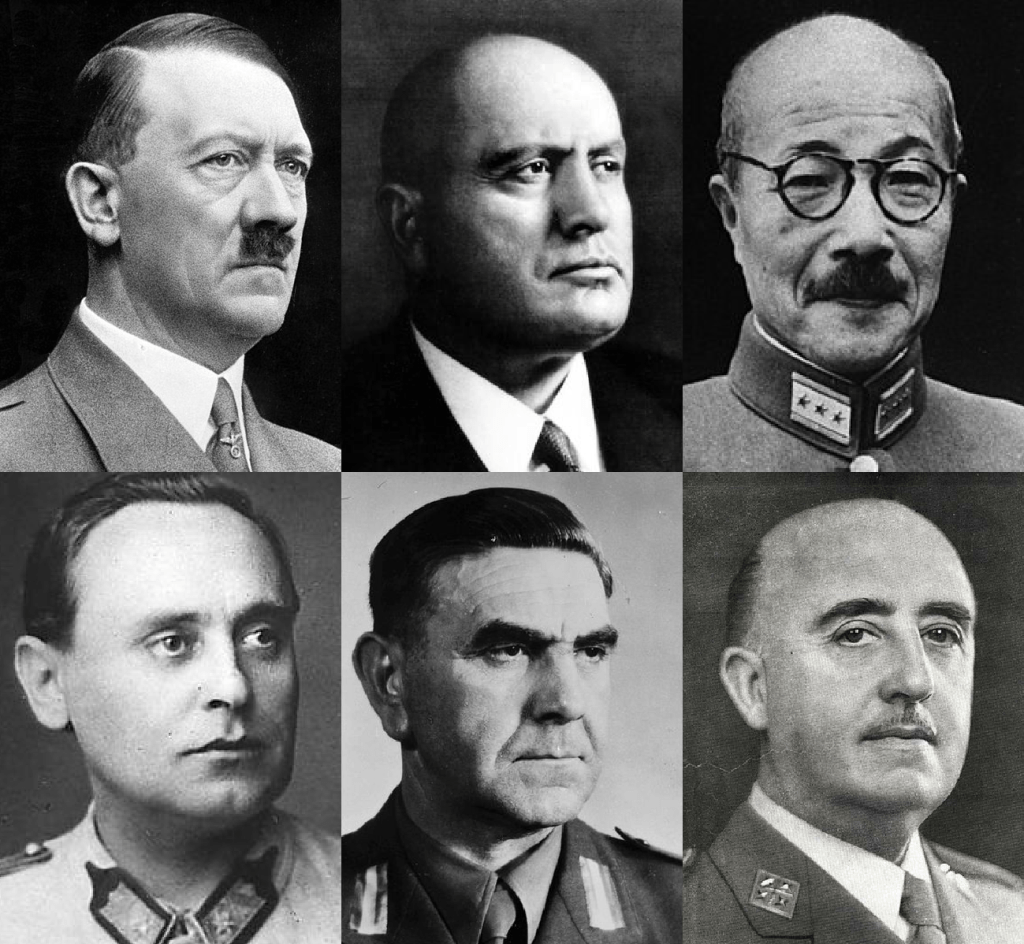
Fascist and authoritarian leaders rarely see themselves as doomed figures in history. On the contrary, they often believe they are exceptional – capable of bending the course of history to their will. Whether through the cult of personality, the rewriting of historical narratives, or sheer force, they assume they can control how they will be remembered. This delusion has led many to catastrophic ends, yet new generations of authoritarians seem undeterred, convinced that they will be the ones to succeed where others failed. Trump and his allies fit squarely into this pattern, refusing to believe that history might judge them harshly or that their actions could lead to their own downfall.
Mussolini provides one of the most vivid examples of this phenomenon. He envisioned himself as a modern-day Caesar, reviving the grandeur of the Roman Empire through Fascism. His brutal repression of dissent, his alliance with Hitler, and his reckless military ambitions ultimately led to disaster. When the tide of World War II turned, Mussolini found himself abandoned, hunted, and finally executed by his own people; his corpse hung upside down in Milan as a stark rejection of his once-grandiose vision. And yet, to the very end, he believed he was the victim of betrayal rather than the architect of his own demise.
Hitler, too, was utterly convinced of his historical greatness. He meticulously curated his own image, producing propaganda that cast him as Germany’s savior. Even as the Third Reich collapsed around him, he ranted in his bunker about how the German people had failed him rather than the other way around. His ultimate act, suicide rather than surrender, was an attempt to control his narrative, ensuring he would never be paraded as a prisoner. But history did not grant him the legacy he sought. Instead of being remembered as a visionary, he became the ultimate symbol of genocidal tyranny.
The pattern continued into the later 20th century. Nicolae Ceaușescu, the Romanian dictator, had convinced himself that his people adored him. He built extravagant palaces while his citizens starved, crushed opposition, and developed a personality cult that portrayed him as a paternal figure of national strength. When the moment of reckoning arrived in 1989, he seemed genuinely shocked that the crowd in Bucharest turned on him. Within days, he and his wife were tried and executed by firing squad, their supposed invincibility revealed as an illusion.
Even those who manage to hold onto power longer do not always escape history’s judgment. Augusto Pinochet ruled Chile through terror for nearly two decades, believing that his iron grip would secure him a revered place in history. But his crimes – torture, executions, forced disappearances eventually caught up with him. Though he escaped trial for most of his life, his reputation was destroyed. His legacy became one of shame rather than strength.
Trump, like these figures, operates in a world where loyalty and spectacle take precedence over reality. He dismisses mainstream historians as biased, preferring the adulation of his base over any broader judgment. He likely assumes that as long as he can retain power, whether through elections, legal battles, or intimidation, he can dictate how history views him. But history has a way of rendering its own verdict. Those who believe they can shape their own myth while trampling on democratic institutions, rule of law, and public trust often find themselves remembered not as saviors, but as cautionary tales.
In recent years, artificial intelligence has made its mark on many industries, from healthcare to finance, but one of the most striking developments is its encroachment on the world of creative writing. As AI systems like ChatGPT become more advanced, the boundaries between human and machine-generated content blur. We’re left wondering, are we witnessing the dawn of a new creative era, or are we simply setting ourselves up for an intellectual shortcut that could undermine the craft of storytelling?
The impact of AI on literature, journalism, and speculative fiction is already apparent. Authors are using AI as a tool to assist with everything from generating ideas to drafting full-length novels. While this opens up exciting possibilities for writers who may struggle with writer’s block, it also raises a host of questions about authenticity. Can a machine, devoid of lived experience, truly capture the nuances of human emotion or the subtleties of cultural context? AI may be adept at mimicking patterns of language, but does it understand the story it tells? And even more importantly, does it feel the story?
Journalism, a field traditionally built on human insight and investigative rigor, is also seeing a dramatic shift. AI-driven tools can now write articles with stunning speed, churning out copy on everything from politics to sports. The convenience is undeniable. Newsrooms, under pressure from tight deadlines and dwindling resources, find AI a helpful ally in meeting the demand for continuous content. But there’s a worrying undercurrent here: Can we trust a machine to provide the nuanced, ethical, and context-rich reporting that we need in an increasingly complex world? The thought of an algorithm determining what’s “newsworthy” is chilling, particularly when considering how data-driven models often fail to detect or represent bias, or how they may inadvertently amplify misinformation.
Perhaps the most exciting, and also the most concerning, role AI is playing is in speculative fiction. Writers have long used the genre to explore what might happen in the future, and with AI capable of generating entire worlds and characters in minutes, the scope for innovation is limitless. But there’s a risk that AI-generated speculative fiction will end up being more formulaic than fantastic. If every story is based on pre-existing patterns or data sets, will we lose the very essence of speculative fiction – the wild, unexpected ideas that challenge our assumptions about the world? The creative chaos that makes the genre so thrilling could give way to an artificial predictability that lacks true human imagination.
At the heart of these concerns is the broader issue of creativity itself. Writing, like all art, is a deeply personal expression. It reflects the writer’s experiences, their worldview, their struggles. Can an AI, which operates purely on patterns and algorithms, truly replicate this? Even if it can produce a perfectly structured story, does it have the soul that comes from a human hand? There is something to be said for the imperfections in art – the missed commas, the stray metaphors, the oddities that make it feel real. AI, by its very nature, smooths out those edges.
At this point I should perhaps clarify my own use of AI tools. I am a storyteller by nature, and this blog is only one of many creative outlets. I tend to use AI in a consistent manner – for researching a topic when I feel I need more information, and then to edit my first rough draft. I always edit/rewrite my published work as I find AI to have questionable grammar and horrible punctuation. If this changes, I will write a piece about it, and mention my new process in the About section.
So, as we hurtle toward this AI-infused future, we must ask ourselves, what is the value of a story? Is it the perfect sentence, the perfect insight, or is it the unique perspective of the person telling it? AI is undoubtedly changing the landscape of creative writing, but whether it enriches or diminishes the craft remains to be seen. As writers, readers, and cultural observers, it’s essential that we hold onto the human essence of storytelling – because once we lose that, we may never get it back.
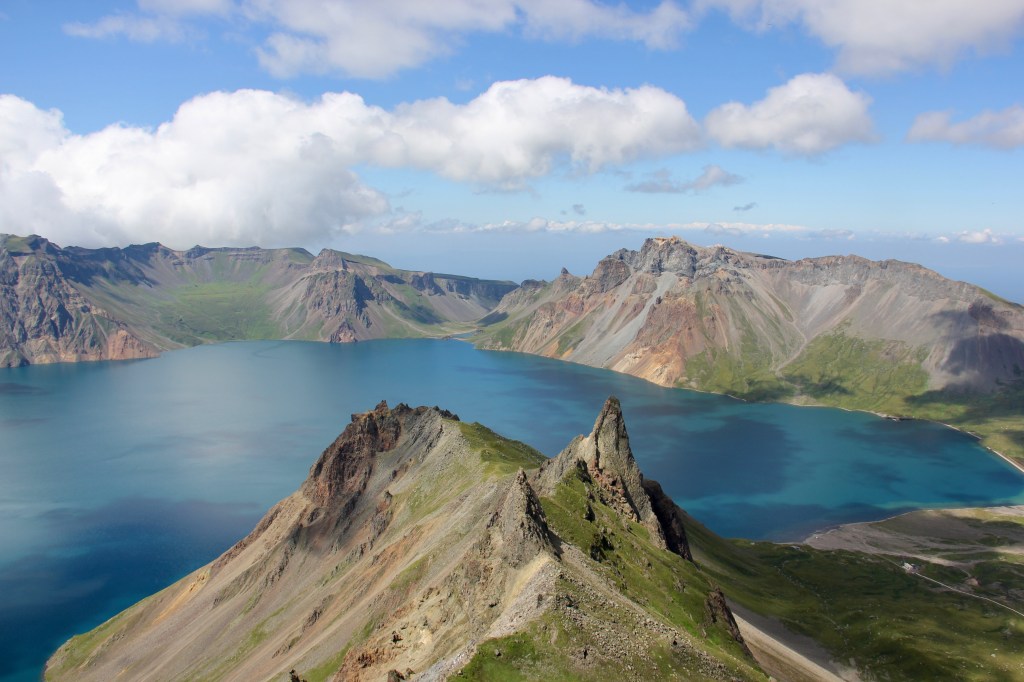
Mount Paektu, also known as Changbai Mountain in China, is an awe-inspiring stratovolcano straddling the border between North Korea and China. Towering at 2,744 meters (9,003 feet), it is the highest peak on the Korean Peninsula and holds profound cultural and historical significance. Revered in Korean and Manchu mythology, it is considered the mythical birthplace of the Korean people and an important symbol of national identity. However, beyond its legendary status lies a geological powerhouse with a history of catastrophic eruptions, the most infamous of which – known as the Millennium Eruption – ranks among the most extreme volcanic events of the past two millennia.
The Millennium Eruption of 946 CE was a cataclysmic event that ejected an estimated 100 cubic kilometers of pyroclastic material into the atmosphere. The eruption is thought to have been comparable in magnitude to the 1815 Tambora eruption, which triggered a global “year without a summer.” Ash from Paektu has been discovered in sediment cores as far away as Japan and even Greenland, underscoring the immense dispersal of volcanic material. This eruption reshaped the summit, forming the massive crater that now cradles Heaven Lake, a pristine but ominous caldera lake over two kilometers in diameter. The Millennium Eruption’s impact on regional populations remains the subject of archaeological and historical inquiry, with evidence suggesting widespread agricultural disruption and social upheaval in Korea, China, and Japan.
Despite its apparent dormancy, Mount Paektu is anything, but extinct. The volcano remains active, with geophysical studies indicating the presence of a sizable magma reservoir beneath its surface. Since its last recorded eruption in 1903, Mount Paektu has experienced episodic unrest. Between 2002 and 2005, significant seismic activity was detected in the region, accompanied by signs of crustal deformation and anomalous gas emissions. These indicators suggest that magma movement beneath the volcano is ongoing, increasing the likelihood of future eruptions. However, since that period, there have been no significant signs indicating an imminent eruption. As of early 2025, there are no reports of current eruptions or lava flows, and monitoring data has not shown any drastic changes in volcanic activity. Nonetheless, the volcano’s unpredictable nature means that continued vigilance is essential.
One of the primary concerns for volcanologists is the inflation of the underlying magma chamber. Ground deformation data, obtained through satellite radar and GPS measurements, suggest that pressure is gradually accumulating within the system. Additionally, increased concentrations of sulfur dioxide and carbon dioxide have been detected in the region, indicative of magma degassing at depth. Periodic low-magnitude earthquakes beneath the volcano further suggest that the subsurface magmatic system remains dynamic. Such activity is reminiscent of the precursory signals observed at other caldera-forming volcanoes, raising the possibility of a future eruption, though the timeline remains uncertain.
The prospect of a major eruption from Mount Paektu carries profound implications, both geologically and geopolitically. Given the volcano’s location along the North Korea-China border, coordinated scientific research and disaster preparedness efforts are challenging. North Korea’s political isolation severely restricts the ability of international researchers to conduct comprehensive studies, though limited collaborations have occurred, notably with the United Kingdom’s Cambridge University in the early 2010s. Despite these efforts, much remains unknown about the full extent of the magma system and the probability of a large-scale eruption.
A future eruption, particularly one on the scale of the Millennium Eruption, would have dire consequences for the region. Volcanic ashfall could devastate agriculture in northeastern China and the Korean Peninsula, leading to food shortages. Lahars and pyroclastic flows would pose immediate threats to settlements and infrastructure in the surrounding area. Air travel across East Asia would be severely disrupted, particularly if an eruption injected significant quantities of ash into the stratosphere. Furthermore, a high-volume ejection of sulfur dioxide could lead to temporary global cooling, disrupting weather patterns and monsoonal systems that are critical to agriculture in Asia.
Despite these risks, active monitoring efforts remain limited. While China operates seismic and gas monitoring stations on its side of the border, North Korea’s capabilities are largely unknown. Given the potential for widespread devastation, increased international cooperation in volcanic research and early warning systems is crucial. Mount Paektu is a sleeping giant, and while it may remain quiescent for decades or even centuries, history has shown that its eruptions can be both sudden and catastrophic. The scientific community must remain vigilant, ensuring that when the mountain awakens once more, humanity is as prepared as possible.
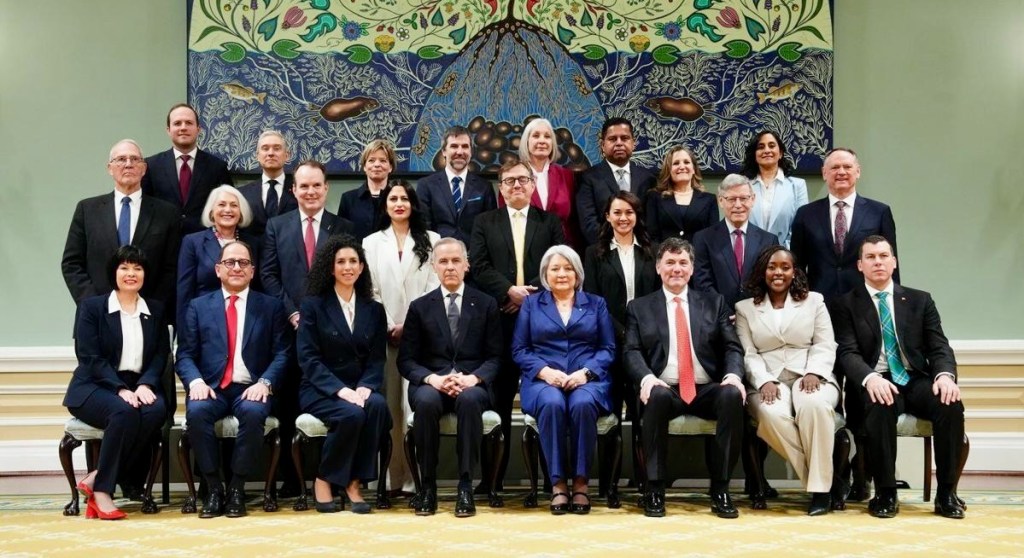
Mark Carney was sworn in as Canada’s 24th Prime Minister during March 2025, taking over from Justin Trudeau at a time of economic uncertainty, and escalating trade tensions with the United States. Carney, the former governor of both the Bank of Canada and the Bank of England, is widely seen as a steady hand in financial matters. His first major move as leader was to restructure the Liberal cabinet, streamlining its size and refocusing its priorities to address the most pressing issues facing the country.
One of the defining characteristics of Carney’s new government is efficiency. The cabinet has been reduced in size, reflecting longstanding calls within the Liberal Party for a more effective governance structure. With no more than 20 ministers, the streamlined approach is meant to improve coordination and decision-making. A key figure in this reshaped cabinet is Dominic LeBlanc, who takes on the powerful role of Minister of International Trade and Intergovernmental Affairs, while also serving as President of the King’s Privy Council. His extensive political experience positions him as a central player in both trade negotiations and federal-provincial relations, two areas where stability will be crucial.
Mélanie Joly retains her role as Minister of Foreign Affairs, but with an expanded focus on international development. At a time of growing global instability, Canada’s diplomatic relationships will be under close scrutiny, particularly as tensions with the United States continue to simmer. Meanwhile, François-Philippe Champagne steps into the critical position of Minister of Finance. His background in trade and innovation makes him well suited to tackle Canada’s economic challenges, especially as the government navigates the fallout of trade disputes, and seeks to bolster domestic investment.
Another notable appointment is Anita Anand, who assumes the role of Minister of Innovation, Science, and Industry. With Canada needing a competitive edge in technology and research, her portfolio will play a key role in shaping the country’s economic future. Bill Blair moves into National Defence, bringing his experience in emergency preparedness and public safety to an increasingly complex security environment. With global conflicts intensifying and Canada’s military commitments under review, Blair’s role will be one of the most closely watched in the new cabinet.
On the domestic front, Carney has signaled a renewed emphasis on Indigenous relations and social equity. Patty Hajdu remains in charge of Indigenous Services, reinforcing the government’s commitment to reconciliation and improved support for Indigenous communities. Jonathan Wilkinson, whose portfolio has been expanded to include both Energy and Natural Resources, will be tasked with balancing Canada’s economic interests with environmental sustainability—a challenge that has long been a point of contention in federal politics.
Chrystia Freeland, one of the government’s most experienced ministers, has taken on the role of Minister of Transport and Internal Trade. Her ability to manage complex negotiations will be key as the government looks to strengthen internal trade and infrastructure development. Meanwhile, Steven Guilbeault has been given a new role overseeing Canadian culture, heritage, and national parks. His appointment suggests a renewed effort to promote national identity and environmental conservation as part of the government’s broader agenda.
Overall, Carney’s cabinet reshuffle reflects a clear strategy: economic resilience, strengthened trade relationships, national security preparedness, social equity, and environmental sustainability. By bringing together experienced political veterans and streamlining decision-making, the new Liberal government is positioning itself to navigate both domestic and global challenges with a renewed sense of purpose. Whether this strategy will prove effective remains to be seen, but for now, Carney’s government appears focused and ready to tackle the road ahead.





 The Rowanwood Chronicles