Fascist and authoritarian leaders rarely see themselves as doomed figures in history. On the contrary, they often believe they are exceptional – capable of bending the course of history to their will. Whether through the cult of personality, the rewriting of historical narratives, or sheer force, they assume they can control how they will be remembered. This delusion has led many to catastrophic ends, yet new generations of authoritarians seem undeterred, convinced that they will be the ones to succeed where others failed. Trump and his allies fit squarely into this pattern, refusing to believe that history might judge them harshly or that their actions could lead to their own downfall.
Mussolini provides one of the most vivid examples of this phenomenon. He envisioned himself as a modern-day Caesar, reviving the grandeur of the Roman Empire through Fascism. His brutal repression of dissent, his alliance with Hitler, and his reckless military ambitions ultimately led to disaster. When the tide of World War II turned, Mussolini found himself abandoned, hunted, and finally executed by his own people; his corpse hung upside down in Milan as a stark rejection of his once-grandiose vision. And yet, to the very end, he believed he was the victim of betrayal rather than the architect of his own demise.
Hitler, too, was utterly convinced of his historical greatness. He meticulously curated his own image, producing propaganda that cast him as Germany’s savior. Even as the Third Reich collapsed around him, he ranted in his bunker about how the German people had failed him rather than the other way around. His ultimate act, suicide rather than surrender, was an attempt to control his narrative, ensuring he would never be paraded as a prisoner. But history did not grant him the legacy he sought. Instead of being remembered as a visionary, he became the ultimate symbol of genocidal tyranny.
The pattern continued into the later 20th century. Nicolae Ceaușescu, the Romanian dictator, had convinced himself that his people adored him. He built extravagant palaces while his citizens starved, crushed opposition, and developed a personality cult that portrayed him as a paternal figure of national strength. When the moment of reckoning arrived in 1989, he seemed genuinely shocked that the crowd in Bucharest turned on him. Within days, he and his wife were tried and executed by firing squad, their supposed invincibility revealed as an illusion.
Even those who manage to hold onto power longer do not always escape history’s judgment. Augusto Pinochet ruled Chile through terror for nearly two decades, believing that his iron grip would secure him a revered place in history. But his crimes – torture, executions, forced disappearances eventually caught up with him. Though he escaped trial for most of his life, his reputation was destroyed. His legacy became one of shame rather than strength.
Trump, like these figures, operates in a world where loyalty and spectacle take precedence over reality. He dismisses mainstream historians as biased, preferring the adulation of his base over any broader judgment. He likely assumes that as long as he can retain power, whether through elections, legal battles, or intimidation, he can dictate how history views him. But history has a way of rendering its own verdict. Those who believe they can shape their own myth while trampling on democratic institutions, rule of law, and public trust often find themselves remembered not as saviors, but as cautionary tales.
In recent years, artificial intelligence has made its mark on many industries, from healthcare to finance, but one of the most striking developments is its encroachment on the world of creative writing. As AI systems like ChatGPT become more advanced, the boundaries between human and machine-generated content blur. We’re left wondering, are we witnessing the dawn of a new creative era, or are we simply setting ourselves up for an intellectual shortcut that could undermine the craft of storytelling?
The impact of AI on literature, journalism, and speculative fiction is already apparent. Authors are using AI as a tool to assist with everything from generating ideas to drafting full-length novels. While this opens up exciting possibilities for writers who may struggle with writer’s block, it also raises a host of questions about authenticity. Can a machine, devoid of lived experience, truly capture the nuances of human emotion or the subtleties of cultural context? AI may be adept at mimicking patterns of language, but does it understand the story it tells? And even more importantly, does it feel the story?
Journalism, a field traditionally built on human insight and investigative rigor, is also seeing a dramatic shift. AI-driven tools can now write articles with stunning speed, churning out copy on everything from politics to sports. The convenience is undeniable. Newsrooms, under pressure from tight deadlines and dwindling resources, find AI a helpful ally in meeting the demand for continuous content. But there’s a worrying undercurrent here: Can we trust a machine to provide the nuanced, ethical, and context-rich reporting that we need in an increasingly complex world? The thought of an algorithm determining what’s “newsworthy” is chilling, particularly when considering how data-driven models often fail to detect or represent bias, or how they may inadvertently amplify misinformation.
Perhaps the most exciting, and also the most concerning, role AI is playing is in speculative fiction. Writers have long used the genre to explore what might happen in the future, and with AI capable of generating entire worlds and characters in minutes, the scope for innovation is limitless. But there’s a risk that AI-generated speculative fiction will end up being more formulaic than fantastic. If every story is based on pre-existing patterns or data sets, will we lose the very essence of speculative fiction – the wild, unexpected ideas that challenge our assumptions about the world? The creative chaos that makes the genre so thrilling could give way to an artificial predictability that lacks true human imagination.
At the heart of these concerns is the broader issue of creativity itself. Writing, like all art, is a deeply personal expression. It reflects the writer’s experiences, their worldview, their struggles. Can an AI, which operates purely on patterns and algorithms, truly replicate this? Even if it can produce a perfectly structured story, does it have the soul that comes from a human hand? There is something to be said for the imperfections in art – the missed commas, the stray metaphors, the oddities that make it feel real. AI, by its very nature, smooths out those edges.
At this point I should perhaps clarify my own use of AI tools. I am a storyteller by nature, and this blog is only one of many creative outlets. I tend to use AI in a consistent manner – for researching a topic when I feel I need more information, and then to edit my first rough draft. I always edit/rewrite my published work as I find AI to have questionable grammar and horrible punctuation. If this changes, I will write a piece about it, and mention my new process in the About section.
So, as we hurtle toward this AI-infused future, we must ask ourselves, what is the value of a story? Is it the perfect sentence, the perfect insight, or is it the unique perspective of the person telling it? AI is undoubtedly changing the landscape of creative writing, but whether it enriches or diminishes the craft remains to be seen. As writers, readers, and cultural observers, it’s essential that we hold onto the human essence of storytelling – because once we lose that, we may never get it back.
Mount Paektu, also known as Changbai Mountain in China, is an awe-inspiring stratovolcano straddling the border between North Korea and China. Towering at 2,744 meters (9,003 feet), it is the highest peak on the Korean Peninsula and holds profound cultural and historical significance. Revered in Korean and Manchu mythology, it is considered the mythical birthplace of the Korean people and an important symbol of national identity. However, beyond its legendary status lies a geological powerhouse with a history of catastrophic eruptions, the most infamous of which – known as the Millennium Eruption – ranks among the most extreme volcanic events of the past two millennia.
The Millennium Eruption of 946 CE was a cataclysmic event that ejected an estimated 100 cubic kilometers of pyroclastic material into the atmosphere. The eruption is thought to have been comparable in magnitude to the 1815 Tambora eruption, which triggered a global “year without a summer.” Ash from Paektu has been discovered in sediment cores as far away as Japan and even Greenland, underscoring the immense dispersal of volcanic material. This eruption reshaped the summit, forming the massive crater that now cradles Heaven Lake, a pristine but ominous caldera lake over two kilometers in diameter. The Millennium Eruption’s impact on regional populations remains the subject of archaeological and historical inquiry, with evidence suggesting widespread agricultural disruption and social upheaval in Korea, China, and Japan.
Despite its apparent dormancy, Mount Paektu is anything, but extinct. The volcano remains active, with geophysical studies indicating the presence of a sizable magma reservoir beneath its surface. Since its last recorded eruption in 1903, Mount Paektu has experienced episodic unrest. Between 2002 and 2005, significant seismic activity was detected in the region, accompanied by signs of crustal deformation and anomalous gas emissions. These indicators suggest that magma movement beneath the volcano is ongoing, increasing the likelihood of future eruptions. However, since that period, there have been no significant signs indicating an imminent eruption. As of early 2025, there are no reports of current eruptions or lava flows, and monitoring data has not shown any drastic changes in volcanic activity. Nonetheless, the volcano’s unpredictable nature means that continued vigilance is essential.
One of the primary concerns for volcanologists is the inflation of the underlying magma chamber. Ground deformation data, obtained through satellite radar and GPS measurements, suggest that pressure is gradually accumulating within the system. Additionally, increased concentrations of sulfur dioxide and carbon dioxide have been detected in the region, indicative of magma degassing at depth. Periodic low-magnitude earthquakes beneath the volcano further suggest that the subsurface magmatic system remains dynamic. Such activity is reminiscent of the precursory signals observed at other caldera-forming volcanoes, raising the possibility of a future eruption, though the timeline remains uncertain.
The prospect of a major eruption from Mount Paektu carries profound implications, both geologically and geopolitically. Given the volcano’s location along the North Korea-China border, coordinated scientific research and disaster preparedness efforts are challenging. North Korea’s political isolation severely restricts the ability of international researchers to conduct comprehensive studies, though limited collaborations have occurred, notably with the United Kingdom’s Cambridge University in the early 2010s. Despite these efforts, much remains unknown about the full extent of the magma system and the probability of a large-scale eruption.
A future eruption, particularly one on the scale of the Millennium Eruption, would have dire consequences for the region. Volcanic ashfall could devastate agriculture in northeastern China and the Korean Peninsula, leading to food shortages. Lahars and pyroclastic flows would pose immediate threats to settlements and infrastructure in the surrounding area. Air travel across East Asia would be severely disrupted, particularly if an eruption injected significant quantities of ash into the stratosphere. Furthermore, a high-volume ejection of sulfur dioxide could lead to temporary global cooling, disrupting weather patterns and monsoonal systems that are critical to agriculture in Asia.
Despite these risks, active monitoring efforts remain limited. While China operates seismic and gas monitoring stations on its side of the border, North Korea’s capabilities are largely unknown. Given the potential for widespread devastation, increased international cooperation in volcanic research and early warning systems is crucial. Mount Paektu is a sleeping giant, and while it may remain quiescent for decades or even centuries, history has shown that its eruptions can be both sudden and catastrophic. The scientific community must remain vigilant, ensuring that when the mountain awakens once more, humanity is as prepared as possible.
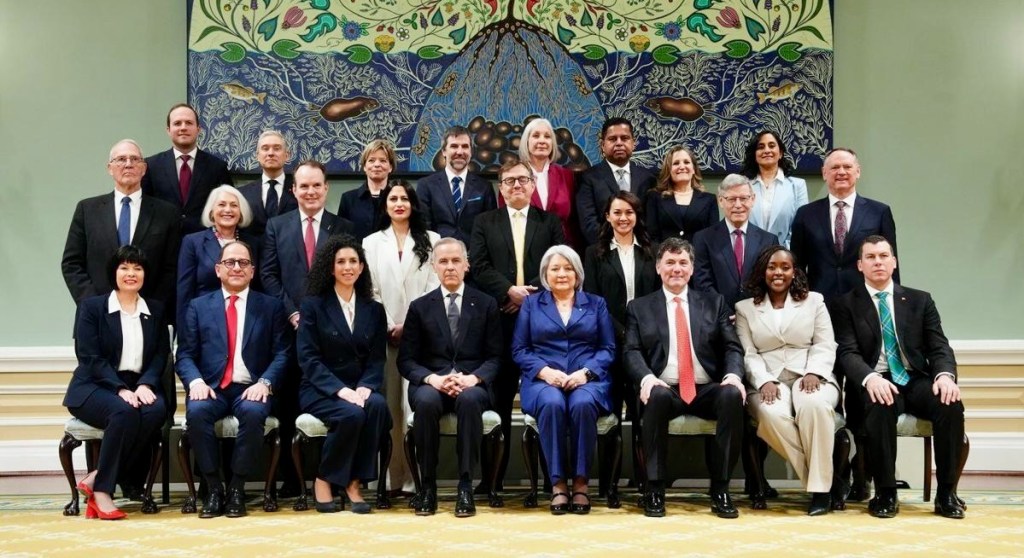
Mark Carney was sworn in as Canada’s 24th Prime Minister during March 2025, taking over from Justin Trudeau at a time of economic uncertainty, and escalating trade tensions with the United States. Carney, the former governor of both the Bank of Canada and the Bank of England, is widely seen as a steady hand in financial matters. His first major move as leader was to restructure the Liberal cabinet, streamlining its size and refocusing its priorities to address the most pressing issues facing the country.
One of the defining characteristics of Carney’s new government is efficiency. The cabinet has been reduced in size, reflecting longstanding calls within the Liberal Party for a more effective governance structure. With no more than 20 ministers, the streamlined approach is meant to improve coordination and decision-making. A key figure in this reshaped cabinet is Dominic LeBlanc, who takes on the powerful role of Minister of International Trade and Intergovernmental Affairs, while also serving as President of the King’s Privy Council. His extensive political experience positions him as a central player in both trade negotiations and federal-provincial relations, two areas where stability will be crucial.
Mélanie Joly retains her role as Minister of Foreign Affairs, but with an expanded focus on international development. At a time of growing global instability, Canada’s diplomatic relationships will be under close scrutiny, particularly as tensions with the United States continue to simmer. Meanwhile, François-Philippe Champagne steps into the critical position of Minister of Finance. His background in trade and innovation makes him well suited to tackle Canada’s economic challenges, especially as the government navigates the fallout of trade disputes, and seeks to bolster domestic investment.
Another notable appointment is Anita Anand, who assumes the role of Minister of Innovation, Science, and Industry. With Canada needing a competitive edge in technology and research, her portfolio will play a key role in shaping the country’s economic future. Bill Blair moves into National Defence, bringing his experience in emergency preparedness and public safety to an increasingly complex security environment. With global conflicts intensifying and Canada’s military commitments under review, Blair’s role will be one of the most closely watched in the new cabinet.
On the domestic front, Carney has signaled a renewed emphasis on Indigenous relations and social equity. Patty Hajdu remains in charge of Indigenous Services, reinforcing the government’s commitment to reconciliation and improved support for Indigenous communities. Jonathan Wilkinson, whose portfolio has been expanded to include both Energy and Natural Resources, will be tasked with balancing Canada’s economic interests with environmental sustainability—a challenge that has long been a point of contention in federal politics.
Chrystia Freeland, one of the government’s most experienced ministers, has taken on the role of Minister of Transport and Internal Trade. Her ability to manage complex negotiations will be key as the government looks to strengthen internal trade and infrastructure development. Meanwhile, Steven Guilbeault has been given a new role overseeing Canadian culture, heritage, and national parks. His appointment suggests a renewed effort to promote national identity and environmental conservation as part of the government’s broader agenda.
Overall, Carney’s cabinet reshuffle reflects a clear strategy: economic resilience, strengthened trade relationships, national security preparedness, social equity, and environmental sustainability. By bringing together experienced political veterans and streamlining decision-making, the new Liberal government is positioning itself to navigate both domestic and global challenges with a renewed sense of purpose. Whether this strategy will prove effective remains to be seen, but for now, Carney’s government appears focused and ready to tackle the road ahead.
While I am extremely fortunate to live on a small hobby farm, I started learning about growing my own food as a pre-teen living in an apartment with a concrete yard using containers. My grandparents lived on a half acre with a greenhouse and cold frames, and this expanded my learning opportunities until I could get my own space. Wherever I have settled in the world, I have grow some level of my food, whether it’s been window sill herb gardens, raised beds on a small city lot, or a few acres of orchards, perennial fruit and veg, with rows of annual harvests.
There was a time when backyard gardening was seen as a hobby, something for retirees with time on their hands, or for children learning about where their food comes from, but in recent years, urban agriculture has become much more than a pastime. As food prices continue to rise and supply chains face disruptions, more people are turning whatever outdoor space they have – balconies, patios, backyards, and even front lawns – into productive gardens. The shift isn’t just about saving money; it’s about taking control of food security in an increasingly uncertain world.
The past few years have revealed vulnerabilities in the global food system. The pandemic exposed just how fragile supply chains can be, with empty grocery store shelves becoming a common sight. At the same time, extreme weather events linked to climate change have devastated farmland, reducing crop yields and further driving up prices. For many families, fresh, nutritious food has become harder to afford. The solution, in part, lies closer to home. Urban agriculture, even on a small scale, can help reduce dependence on imported produce while ensuring access to healthy food.
One of the biggest misconceptions about growing food is that it requires a large plot of land. In reality, a surprising amount can be harvested from small spaces. Balconies and patios can support potted herbs, tomatoes, and peppers. Small backyards can accommodate raised beds, which improve soil quality and provide better growing conditions. In denser urban areas, community gardens have emerged as a way for neighbors to grow food together, share resources, and build a sense of connection. Some residents are even experimenting with hydroponic systems, allowing them to grow fresh greens indoors year-round.
Beyond the personal benefits, urban agriculture plays a vital role in strengthening communities. When people grow food together, they build relationships and foster a shared sense of responsibility for local food production. Many community gardens serve as educational spaces where people learn about sustainability, organic farming techniques, and seasonal eating. Some initiatives even donate surplus produce to local food banks, ensuring that those in need have access to fresh, healthy food.
The environmental benefits are equally compelling. Green spaces in urban areas help reduce heat, mitigate stormwater runoff, and provide much-needed habitats for pollinators like bees and butterflies. Growing food locally also reduces the environmental impact of transportation, cutting down on emissions associated with long-distance shipping.
While urban agriculture isn’t a replacement for large-scale farming, it is an essential piece of the puzzle when it comes to food resilience. As more people recognize the value of growing their own food – whether for economic reasons, environmental concerns, or simply the satisfaction of harvesting something fresh from their own backyard – cities are beginning to adapt. Local governments are easing zoning restrictions, supporting community garden initiatives, and encouraging green infrastructure.
The future of food may be more localized than ever before. Urban agriculture is proving that solutions don’t have to come from massive farms or distant suppliers. Sometimes, they start with a single tomato plant growing just outside the door.
Having lived on four continents, I have always found myself drawn to smaller and smaller communities for my home. Although I currently reside just 45 minutes from a capital city of one million, my daily life unfolds in a town of fewer than 15,000, where infrastructure is well maintained, and population growth remains manageable. However, the same cannot be said for the world’s larger cities, which struggle to keep pace with rapid urbanization, strained public services, and crumbling infrastructure. As populations surge, these cities face mounting challenges in housing affordability, traffic congestion, environmental sustainability, and social inequality. The pressure to expand services while maintaining quality of life grows ever more daunting, forcing urban planners to grapple with complex solutions that balance progress with livability.
As I said, major cities face persistent challenges in maintaining infrastructure, particularly transportation networks. The costs of managing traffic, repairing roads, and ensuring safe mobility place heavy demands on municipal budgets. However, cities also generate significant financial returns, primarily through commercial property taxes. Businesses cluster in urban centers to take advantage of high foot traffic and workforce access, providing a steady revenue stream that supports public services and infrastructure.
Commuters further strengthen this economic engine. While they may reside in surrounding suburbs, their workdays are spent in the city—eating at restaurants, shopping, and using local services. Their daily spending injects revenue into businesses, which in turn contributes to the city’s tax base. This dynamic allows large cities to maintain economic vitality without solely depending on residential tax revenue. The cycle of investment and reinvestment enables cities to expand and modernize infrastructure, accommodating growing populations and business activity.
What Is the Ideal City Size? There is no universal “optimal” city size, as a community’s efficiency depends on geography, economic function, and resident needs. However, research suggests that mid-sized cities (50,000–100,000 residents) often strike the best balance between economic diversity and infrastructure manageability. They offer a strong mix of job opportunities, public services, and cultural amenities while avoiding the congestion and financial strain of major metropolitan areas. Additionally, studies have linked this population range to higher rates of civic engagement and even better athletic development, as mid-sized towns tend to produce more professional athletes per capita than larger cities.
Smaller-scale planning models, such as New Urbanism, advocate for compact, walkable neighborhoods of 10,000–30,000 residents. These communities emphasize mixed-use development, local amenities, and reduced car dependency—design elements that promote both economic activity and social cohesion. At an even smaller scale, research on human social networks suggests that communities of around 150 people optimize social bonds, creating close-knit environments where personal relationships thrive.
Ultimately, sustainable urban planning requires balancing economic opportunities with infrastructure capacity. While larger cities offer broa job markets and cultural diversity, mid-sized and smaller communities often provide a stronger sense of connection, lower living costs, and a more manageable scale of development.
When Big Cities Outgrow Their Tax Base As major cities expand, their infrastructure demands often surpass what local tax revenues can support. Even in high-tax environments like New York, Los Angeles, and Chicago, the financial burden of maintaining transit systems, utilities, and social services outstrips property and business tax income. The situation is further complicated by the growing demand for affordable housing, healthcare, and education, which places additional strain on municipal budgets.
This challenge is not unique to North America. Global cities such as London and Tokyo face similar struggles, often resorting to controversial funding measures like congestion pricing, privatization of public services, or reliance on state and federal subsidies. The result is an ongoing cycle of deferred maintenance, rising public debt, and political pressure to either cut services or increase taxation.
To address this imbalance, urban planners increasingly advocate for decentralization—shifting growth toward smaller regional centers to distribute population and economic activity more evenly. Encouraging mid-sized cities to absorb a greater share of development could relieve pressure on overstretched metropolitan areas while fostering more sustainable and resilient urban landscapes. By investing in infrastructure and economic incentives outside major cities, governments can create a more balanced and efficient urban network that benefits a broader population.
I began writing this piece over a year ago, and now it seems time to publish. I have seen first hand, during my time working for the UK feds, the way most members of NATO, not just Canada, have purchased U.S. military equipment, often under political pressure, and to the detriment of their own defence industries. NATO interoperability standards should mean that any compatible equipment should be a viable option, considered through open competitive bidding, yet the geopolitical reality is something completely different.
Canada has long faced intense pressure—political, economic, and social—to purchase U.S. military equipment for its armed forces, a reality that has shaped its defense procurement decisions for decades. This pressure is deeply rooted in history, from Cold War-era alliances to modern-day trade dependencies, and it has left Canada with little choice, but to align its military acquisitions with American interests. The consequences of this alignment go beyond procurement choices; they have also played a role in the erosion of Canada’s own defense research and development capabilities.
The political pressure to buy American is most evident in Canada’s commitment to joint defense initiatives, particularly NORAD and NATO. From the early days of the Cold War, Canada’s defense policies have been deeply entwined with those of the United States. The integration of North American air defense under NORAD meant that Canada’s fighter aircraft, radar systems, and missile defense strategies had to be compatible with those of the U.S. When Canada scrapped its own Avro Arrow fighter program in 1959, ostensibly for cost reasons, it conveniently cleared the way for the adoption of American aircraft like the CF-101 Voodoo, locking the Royal Canadian Air Force (RCAF) into a reliance on U.S. technology that continues to this day.
This trend persisted throughout the latter half of the 20th century. Canada’s navy, which once built world-class destroyers and anti-submarine vessels, saw its shipbuilding industry decline, and by the 1990s, the country was purchasing used British submarines while remaining dependent on American-built weapons and sensors. Similarly, Canada’s decision to buy the CF-18 Hornet fighter in the 1980s followed a pattern of choosing U.S. aircraft over European or domestic alternatives. While the CF-18 has served well, it locked Canada into the U.S. military supply chain for parts, upgrades, and replacements. Now, with the planned acquisition of F-35 stealth fighters, that dependence is only deepening.
Economically, Canada’s military procurement is heavily influenced by its integration with the U.S. defense industrial base. The Defense Production Sharing Agreement (DPSA), signed in 1956, allowed Canadian defense firms to bid on U.S. military contracts, but it also cemented Canada’s role as a supplier of components rather than a leader in weapons development. This effectively sidelined Canadian military research and engineering projects, making it far more difficult to revive independent initiatives. When the Arrow was canceled, it wasn’t just a single aircraft project that was lost—it was an entire aerospace industry that could have positioned Canada as a technological leader rather than a perpetual customer of American defense contractors.
The economic argument for buying American is always framed in terms of cost-effectiveness and interoperability, but the reality is that it often comes with trade-offs. The purchase of American equipment frequently involves hidden costs—maintenance contracts, dependency on U.S. technology, and restrictions on modifications. The recent push to buy American-made submarines, replacing the troubled British-built Victoria-class boats, is another example of how Canada’s choices are limited by its reliance on U.S. and NATO systems. In many cases, American weapons systems are the only viable option simply because Canada has not maintained the capability to produce its own alternatives.
Public sentiment in Canada is often skeptical of major military purchases, and this can create social and political tensions. Many Canadians are uncomfortable with high military spending, particularly when it benefits American defense giants like Lockheed Martin or Boeing. This unease has been reinforced by past procurement scandals, such as the costly and controversial EH-101 helicopter cancellation in the 1990s, which resulted in years of delays in replacing Canada’s aging Sea Kings. Yet, despite public resistance, successive Canadian governments—Liberal and Conservative alike—have found it almost impossible to escape the gravitational pull of American defense procurement.
Interoperability with U.S. forces is the most frequently cited justification for this dependence, and in some cases, it is a valid one. Canadian troops often train and deploy alongside U.S. forces, making shared equipment a practical necessity. However, this argument is often overstated to justify buying American even when other options exist. The recent decision to acquire P-8 Poseidon maritime patrol aircraft from Boeing, rather than exploring alternatives like the Airbus C295 or continuing to develop Canadian-built options, reflects this bias. The same was true with the decision to buy Sikorsky CH-148 Cyclone helicopters, a troubled program that has suffered significant delays and technical issues.
Over time, Canada’s ability to independently design and produce advanced military hardware has been systematically dismantled. The cancellation of the Arrow was just the first in a series of decisions that saw Canadian innovation sacrificed in favor of American procurement. The loss of the CF-105 program, the shelving of independent drone development efforts, and the abandonment of domestic tank production have left Canada as a nation that buys rather than builds. While there are still areas of strength—such as armored vehicle production through General Dynamics Land Systems Canada—the overall trajectory has been one of increasing dependence on the U.S.
The reality is that Canada’s defense procurement strategy is shaped as much by geopolitics as by practical military needs. The U.S. is both Canada’s closest ally, and its largest trading partner, and any significant deviation from American military procurement norms risks diplomatic and economic fallout. The fear of upsetting Washington is a powerful deterrent against seeking alternatives, whether from European manufacturers or through domestic production.
In the end, Canada’s military procurement is not just a matter of choosing the best equipment—it is a strategic and political decision that reflects the country’s place in the global order. Until Canada makes a concerted effort to rebuild its defense research and production capabilities, it will remain at the mercy of U.S. military priorities. Whether that is an acceptable trade-off is a question that Canadian policymakers—and the public—must continue to grapple with.
Update Since writing the core of this piece, there has been some signs that Canada is trying to rekindle its own defence industry with its ship building program for the new River class destroyers, the conversation about purchasing European designed and built submarines, and early discussions regarding reducing the F-35 purchase program, in favour of the Swedish Saab Gripen. The Swedish proposal, which promised that aircraft assembly would take place in Canada, and that there would be a transfer of intellectual property, which would allow the aircraft to be maintained in this country, was very different from the U.S. F-35 program, where major maintenance, overhaul and software upgrades would happen in the States. The second Trump administration might just be the catalyst that Canada needs to seek alternative solutions rather than the business as usual approach we have seen over the last 75 years.
We’ve all heard the stories, someone flies halfway across the world, wanders into a famous landmark, and suddenly hears their name being called. They turn around, and there’s an old friend, a former coworker, or even a distant cousin grinning back at them.
It’s happened to me, on the steps of Sydney Opera House, where I bumped into an old college friend, and again in Washington D.C., while wandering around the Air and Space Museum. What are the odds? Well, higher than you might think.
The thing about the world’s top travel destinations is that they are, by definition, magnets for people just like you—curious, adventurous, and eager to soak in the sights. Whether it’s the Eiffel Tower, Times Square, or the Great Wall of China, these places attract millions every year. If you and your friends share even vaguely similar travel dreams, it’s not so surprising that your paths might cross in one of these iconic spots.
Think about it. Travel is often dictated by a handful of factors—school holidays, peak vacation seasons, and well-worn routes recommended by guidebooks and influencers. When you consider that most people take trips during long weekends, summer breaks, or major holidays, it becomes even more likely that someone you know is wandering the same bustling streets or snapping a selfie at the same lookout point.
Social media has also played its part in shaping our collective wanderlust. A well-timed Instagram post of Santorini’s blue domes or the sunrise over Angkor Wat can send a ripple effect through your social circle. Before you know it, three of your acquaintances have booked their own trips, each unknowingly setting themselves up for a coincidental reunion abroad.
But here’s the best part—none of this happens if you don’t put yourself out there. You won’t have a serendipitous encounter in the Piazza San Marco if you never leave your living room. You won’t bump into your college roommate in Tokyo’s Shibuya Crossing if you never take the plunge and book the flight. Travel isn’t just about seeing the world—it’s about being in it, fully immersed, and sometimes that means reconnecting with familiar faces in the most unexpected places.
So, if you’re hesitating to plan that trip because you think the world is too vast, take this as a sign. It’s big, yes, but it’s also small in the most magical ways. Pack your bags, set off on your adventure, and don’t be too surprised if, somewhere along the way, you hear a voice calling your name in the middle of a crowded street in Rome. It’s just one of travel’s little reminders that we’re all more connected than we think.
Single-crystal batteries represent a significant advancement in lithium-ion technology, particularly for electric vehicles (EVs). Unlike traditional polycrystalline cathodes, which are composed of multiple crystalline particles, single-crystal cathodes consist of a uniform crystalline structure. This design enhances durability and performance, potentially transforming the lifecycle of EV batteries.
Traditional polycrystalline cathodes are prone to cracking and degradation over time, leading to reduced battery capacity and lifespan. In contrast, single-crystal cathodes exhibit greater resistance to such mechanical stresses. Research indicates that single-crystal lithium-ion batteries can retain 80% of their capacity after 20,000 charge-discharge cycles, compared to approximately 2,400 cycles for conventional cells.
David Stobbe / Stobbe Photography
The uniform structure of single-crystal cathodes contributes to more efficient ion flow, enhancing battery performance. Additionally, these cathodes are more resistant to thermal degradation, improving the safety profile of the batteries. Studies have shown that single-crystal cathode materials provide remarkable performance and safety characteristics.
The adoption of single-crystal battery technology could significantly extend the operational lifespan of EVs. Longer-lasting batteries reduce the frequency of replacements, lowering maintenance costs and enhancing the overall value proposition of electric vehicles. Furthermore, increased battery durability can alleviate concerns related to battery degradation, a common barrier to EV adoption. Ongoing research focuses on optimizing the synthesis of single-crystal cathode materials to enhance their durability and efficiency. For instance, researchers have developed methods to synthesize durable single-crystal cathode materials, potentially extending battery life and efficiency.
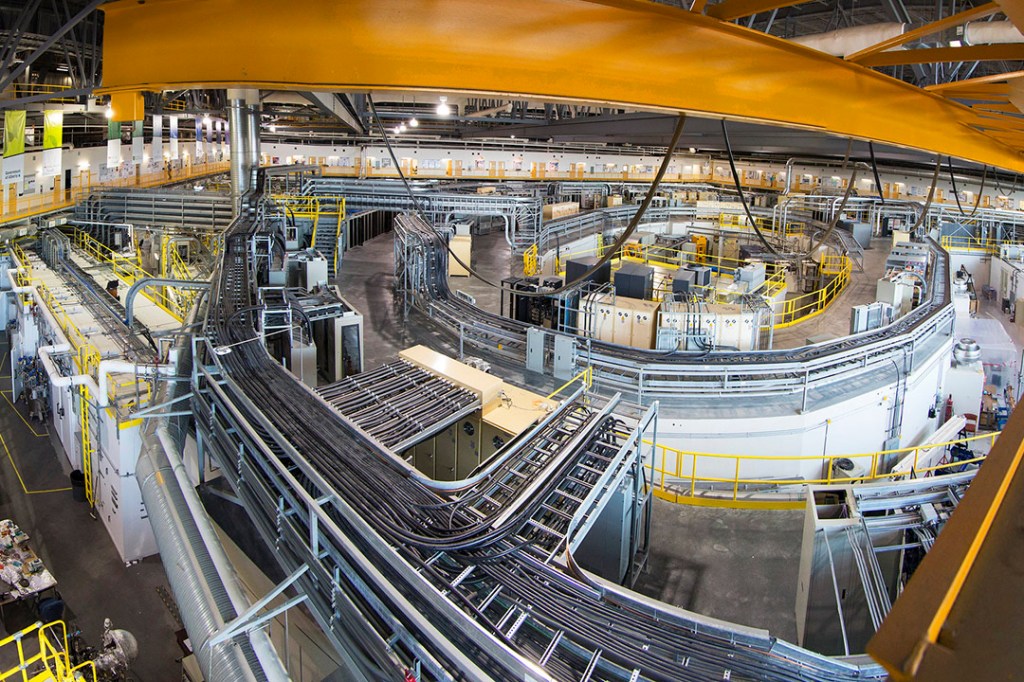
Canada has been instrumental in advancing single-crystal battery technology, with significant contributions from its academic institutions and research facilities. Researchers at Dalhousie University in Halifax have conducted extensive studies on single-crystal lithium-ion batteries. Utilizing the Canadian Light Source (CLS) at the University of Saskatchewan—a national synchrotron light source facility—they analyzed a single-crystal electrode battery that underwent continuous charging and discharging for over six years. Their findings revealed that this battery endured more than 20,000 cycles before reaching 80% capacity, equating to an impressive lifespan of approximately eight million kilometers in driving terms. This research underscores Canada’s pivotal role in developing durable and efficient battery technologies that could significantly enhance the lifecycle of electric vehicles.
Single-crystal batteries offer promising improvements in durability, performance, and safety for electric vehicles. Their widespread adoption could lead to longer-lasting EVs, reduced maintenance costs, and increased consumer confidence in electric mobility.
Marco Rubio, speaking after the G7 foreign ministers’ summit in Charlevoix, had the gall to suggest that Trump’s annexation fantasy was just an “economic argument” that “stands for itself.” Really? An economic argument? As if Canada’s entire existence hinges on whether the U.S. slaps a few tariffs on our exports.
When pressed about Trump’s repeated claims that the Canada-U.S. border is an “artificial line,” Rubio shrugged it off. According to him, there’s merely a “disagreement” between Trump and the Canadian government. No, Marco, it’s not a “disagreement.” It’s an outrageous, imperialist insult that no Canadian should tolerate.
Apparently, this all started back in December 2024 when then-Prime Minister Justin Trudeau met with Trump at Mar-a-Lago. Rubio claims Trudeau said Canada couldn’t survive if the U.S. imposed tariffs, and Trump, ever the megalomaniac, took that as an opening to suggest annexation. Now, let’s be clear: Trudeau has never confirmed saying anything remotely like that. But Trump, in his usual dishonest fashion, took it and ran – repeating the “51st state” nonsense so many times that even Trudeau, at first dismissing it as a joke, was forced to take it seriously.
Fast forward to today, and we have Trump sitting in the Oval Office with NATO Secretary-General Mark Rutte, once again declaring that Canada “only works as a state.” And what did Rutte, representing one of the world’s most powerful alliances, say? Nothing. Not a word. That’s NATO for you – silent when it comes to one of its founding members being treated like an American colony-in-waiting.
Thankfully, our new Prime Minister, Mark Carney, didn’t mince words. His response? “We will never, ever in any way, shape, or form be part of the United States.” Simple, direct, and exactly what needed to be said.
The sheer arrogance of Trump and his lackeys is breathtaking. Canada is a sovereign nation. We are not some economic vassal of the United States, nor are we waiting around for Washington to “save” us. The idea that our country exists only at the whim of American economic policy is an insult to everything we stand for.
Germany’s Foreign Minister, Annalena Baerbock, voiced strong support for Canada in response to U.S. President Donald Trump’s economic threats and remarks about making Canada an American state. She emphasized that sovereign borders must be respected, including those of Ukraine, Greenland, and Canada, and reaffirmed Germany’s close friendship with Canada.
Make no mistake – this is not about economics. It’s about power, control, and America’s delusional belief that it can swallow up anything it wants. Canada has fought too hard, for too long, to let some washed-up real estate con artist and his yes-men dictate our future.
America can keep its chaos, its dysfunction, and its toxic brand of politics. Canada is, and always will be, its own nation. And the sooner Washington gets that through its thick skull, the better.