Carney’s Distinction: Spending vs Investing

Mark Carney’s recent remarks at the housing development announcement have sparked an intriguing debate on fiscal responsibility that could well shape our nation’s political discourse this election season. In a climate where every policy decision is scrutinized, Carney’s clear differentiation between mere spending and genuine investment stands out as both a pragmatic and visionary approach.

At the event, Carney took the podium with a measured resolve, declaring, “This is not merely spending.” The announcement, a multi-billion-dollar initiative aimed at creating thousands of affordable homes, was not just a government outlay but, as Carney argued, a strategic investment in the country’s future. He reminded us that spending provides short-term relief, a temporary boost that often fades without leaving a lasting impact. In contrast, investing builds physical assets, from homes that shelter citizens to infrastructure that drives long-term economic growth.

During the press conference, a journalist pressed Carney for clarity: “But what exactly distinguishes spending from investing, especially in these turbulent economic times?” Carney’s response was incisive. “Consider this housing initiative. If we were simply spending, we’d be issuing subsidies or providing temporary relief. That money would dissipate, leaving us to confront the same issues a year or two down the line. What we’re doing here is building assets that not only meet immediate needs, but also stabilize our market for decades to come.” His explanation resonated, emphasizing that when the government borrows money for tangible investments, it’s laying the groundwork for future prosperity, rather than just adding to the current debt burden.

Critics have raised valid concerns about increasing deficits, asking, “But what about government deficits? Isn’t this just adding to our debt load?” Carney acknowledged the worry, noting that borrowing for short-term fixes often leads to a perilous cycle of debt. However, he argued, borrowing to invest in enduring assets, such as new housing, yields dividends in the form of job creation, improved living standards, and a robust, resilient economy. “Debt for spending is dangerous because it leaves nothing behind,” he stated. “Debt for investment, however, is different. When we invest in projects that drive economic growth, we’re not just managing debt, we’re transforming it into a catalyst for long-term stability.”

As someone who has witnessed countless policy debates, I find Carney’s distinction particularly refreshing. In an era dominated by immediate solutions, and short-lived political gains, his perspective challenges leaders to think beyond the next election cycle. The choice, as Carney laid it out, is stark: Will our policymakers continue to opt for fleeting spending that merely masks underlying problems, or will they embrace investments that secure a prosperous future?

This is more than a fiscal debate, it’s a much needed, fundamental question about our nation’s priorities. As voters and citizens, Canadians must demand that our leaders consider the long-term impacts of their decisions. The current housing development initiative, if executed wisely, is a testament to the power of strategic investment over transient spending, such as tax cuts for the rich, or removing the carbon tax. It promises to deliver not just immediate relief, but a foundation upon which a stronger, more resilient economy can be built. Again, this goes beyond the usual election cycle promises, and short-term thinking, that politicians usually indulge in, to get the votes they need to stay in power. 

In these uncertain times, Carney’s message is a timely reminder that every dollar spent should be scrutinized for its future value. As the election nears, his call to invest in our collective future rather than merely spending for today is one that deserves our full attention, and, perhaps, our support.

Forget the Third Term—Trump’s True Threat to Democracy Is Happening Now

Donald Trump’s recent statements about serving a third term should not be taken at face value. Instead, they are likely a deliberate red herring, designed to dominate the news cycle and distract the public from the real threats to democracy that his administration and allies are pursuing. This is a classic Trump strategy; make an outrageous claim, provoke an intense reaction, and while everyone is busy debunking it, work quietly in the background to consolidate power.

The reality is that a third term is constitutionally impossible without an amendment, which would require overwhelming congressional and state-level support; something Trump does not have. So why bring it up? Because it forces Democrats, legal scholars, and the media to focus on an imaginary crisis rather than the real one. While everyone is busy arguing about whether he “means it” or if there’s a legal loophole he could exploit, the actual threats to democracy, attacks on voting rights, the erosion of institutional checks and balances, and the installation of loyalists in key positions, go largely unchecked.

We’ve seen this playbook before. Throughout his first presidency, Trump used inflammatory rhetoric to create chaos and dominate media coverage, distracting from the structural changes his administration was making behind the scenes. His lies about a “stolen election” consumed public discourse, but the real story was the groundwork being laid for legal challenges, voter suppression laws, and, ultimately, the violent January 6th insurrection. His latest comments about a third term could serve a similar function, keeping his base engaged and enraged while drawing attention away from his administration’s more immediate moves.

The most dangerous aspect of this tactic is that it works. Every time Trump makes an outrageous claim, it forces his opponents to play defense, scrambling to explain why his idea is unconstitutional or unworkable. Meanwhile, his supporters rally around him, buying into the narrative that he is the only one who can “save” the country. This shift in focus allows him to continue his real mission; undermining democratic institutions to ensure his grip on power extends far beyond 2029, even if he never officially serves a third term.

Democrats and the media must recognize this strategy for what it is. Instead of getting caught up in the spectacle, they must stay laser-focused on what Trump is actually doing. The real story isn’t whether he can serve a third term, it’s how he is working right now to weaken democracy so that he won’t have to leave power in the first place.

A Commonwealth Without Borders: The Future of Free Movement?

The idea of free movement between Canada, New Zealand, Australia, and the UK has gained increasing attention in recent years. Often discussed under the banner of CANZUK, the proposal envisions a system similar to the European Union’s freedom of movement, allowing citizens of these four nations to live and work freely across their borders. At first glance, the case for such an arrangement seems compelling. These countries share deep historical ties, legal and political traditions rooted in the British system, and comparable economic standards. Advocates argue that freer movement would not only reinforce cultural and economic connections but also provide practical benefits, such as addressing labor shortages and strengthening diplomatic relationships.

The idea is not without precedent. Australia and New Zealand already enjoy a form of free movement under the Trans-Tasman Travel Arrangement (TTTA), which has allowed their citizens to live and work in either country with relatively few restrictions for decades. This arrangement has functioned smoothly, with both nations benefiting from a flexible labor market and strong cross-border ties. Extending a similar model to include Canada and the UK, proponents argue, would be a natural evolution of these existing relationships. Many supporters also point to the European Union’s Schengen Zone as proof that such agreements can work on a larger scale, allowing economic migration without overwhelming social systems.

However, beyond the rhetoric of shared heritage and common values, the proposal faces considerable economic and political challenges. While these nations are broadly comparable in terms of economic development, there are still notable differences in wages, cost of living, and employment opportunities. Australia and Canada, for instance, consistently rank among the most desirable destinations for migrants due to their higher wages and strong job markets. Without proper safeguards, this could lead to an uneven flow of migration, with workers from the UK and New Zealand gravitating towards the more prosperous economies of Canada and Australia, potentially creating labor shortages in their home countries.

Another critical concern is the impact on housing and infrastructure. Canada and Australia are already grappling with severe housing affordability crises, particularly in major cities like Toronto, Vancouver, Sydney, and Melbourne. An influx of migrants, even from culturally similar nations, could put additional strain on these markets, driving up housing prices and exacerbating shortages. While proponents argue that increased migration could also help address labor shortages in construction and other essential industries, critics warn that these benefits may take years to materialize, while the immediate impact on housing demand would be felt almost instantly.

The political landscape also complicates the feasibility of such a proposal. While public opinion polls have shown reasonable support for closer ties between these nations, immigration remains a contentious issue in all four. Brexit was, in part, driven by the UK’s desire to regain control over its borders, and many voters would likely resist any proposal that reintroduces a form of free movement, even if limited to Commonwealth nations. In Canada and Australia, immigration policy is a key electoral issue, and governments are unlikely to relinquish control over who enters their borders. National security concerns also play a role, as harmonizing immigration and vetting policies across four different governments would be a bureaucratic challenge.

Despite these obstacles, the concept of closer mobility between these nations is unlikely to disappear. While full free movement may be politically unrealistic in the near term, policymakers could explore intermediate steps, such as streamlined work visas, mutual residency pathways, or limited agreements for specific professions. Such measures would allow for greater mobility without the risks of an uncontrolled migration flow. Ultimately, while the dream of a CANZUK free movement zone remains an enticing one, its success will depend on whether political leaders can balance economic opportunity with the realities of national interests and public sentiment.

The Library in My Mind: How I Built a Memory Palace

Back in the late ‘80s, while waiting for my security clearance, the UK government put me through a variety of training courses – everything from project management and information technology to people skills. One of the more intriguing courses focused on building a library-style memory palace, a way to organize and recall information by mentally structuring it like a library. The idea of turning my mind into a well-ordered archive fascinated me – each piece of knowledge neatly stored and easily retrievable.

This technique has deep historical roots. It’s often traced back to Simonides of Ceos, a Greek poet from the 5th century BCE. According to legend, Simonides was called outside during a banquet, and while he was away, the building collapsed, killing everyone inside. The bodies were unrecognizable, but he realized he could recall exactly where each guest had been seated. This discovery led to the idea that spatial memory could be used as a structured recall system. The method was later refined by Roman orators like Cicero, who mentally placed key points of their speeches within familiar spaces and retrieved them by “walking” through those locations in their minds. Monks and scholars in the Middle Ages adapted the technique for memorizing religious texts and legal codes, and today, it’s still widely used – by memory champions, actors, lawyers, and even fictional detectives like Sherlock Holmes.

Inspired by this, I built my own mental library. I imagined a grand study—towering bookshelves, stained-glass windows, and a long oak table at the center. To stay organized, I divided it into sections: science, history, philosophy, personal experiences, and creative ideas. Each book represented a concept, placed where I could easily “find” it when needed.

At first, it felt awkward, like navigating an unfamiliar house. To train myself, I spent a few minutes each day mentally walking through the space, reinforcing connections. I used vivid imagery – a glowing tome for quantum physics, a worn parchment for ancient history. Storytelling also helped. I imagined Einstein seated in the physics section, Shakespeare near literature, and a wise, hooded monk in philosophy. When I struggled to recall something, I’d “ask” them, making the process more interactive.

Before long, the system became second nature. When writing, I could mentally browse my research shelves without flipping through endless notes. Before discussions, I’d “walk” through key sections to refresh my memory. Even decision-making improved – I’d place pros and cons in different areas and “see” them from multiple perspectives before making a choice.

The best part? My library keeps evolving. I add new shelves, reorganize sections, and revise old knowledge as I learn. It’s a living system, shaping the way I think and process information.

This isn’t a technique reserved for scholars or memory champions. Anyone can build a mental library, whether for learning, storytelling, or just keeping thoughts in order. With a little practice, it becomes second nature – a space you can visit anytime, where knowledge is always at your fingertips.

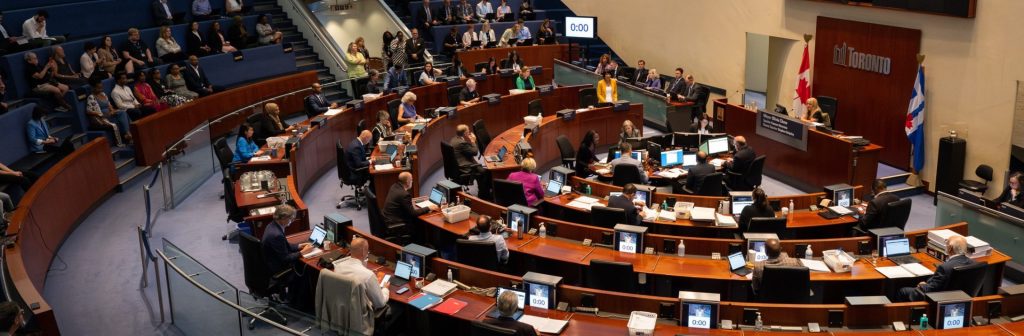
Greedy, Clueless, and Out of Touch: Toronto Councillors Debate a Disgraceful Pay Hike

Toronto politicians are completely out of touch with reality. At a time when the city is drowning in unaffordable rents, soaring food prices, and a crumbling public transit system, these councillors have the audacity to debate giving themselves a 24% pay raise—a jaw-dropping $33,000 increase—while ordinary Torontonians struggle to make ends meet.

This isn’t just tone-deaf; it’s selfish, unthinking stupidity. People across the city are losing their homes, skipping meals, and watching their quality of life deteriorate, but instead of focusing on fixing the city, these politicians are focused on fixing their own bank accounts. They already make $137,537 a year—more than enough to live comfortably—but apparently, that’s not enough for them. They want to pad their pockets while the people they’re supposed to serve scrape by.

And their excuse? That they haven’t had a significant raise since 2006? Cry me a river. Most workers in this city haven’t seen real wage growth in years, and many are stuck in precarious jobs with no benefits, yet councillors think now—in the middle of an affordability crisis—is the right time to fatten their wallets? It’s disgraceful.

If these politicians had even an ounce of integrity, they’d reject this outrageous raise outright. Instead, they’re actually debating it, proving once again that they are more concerned with their own wealth than with the suffering of the people they claim to represent.

What Did You Expect? The Fall of Mill Street and the Fate of Craft Breweries in Corporate Hands

Fans of Mill Street Brewery are in shock after Labatt announced it was shutting down the North York brewery, and shifting production to its industrial-scale facility in London, Ontario. Thirty-nine workers will lose their jobs, and it’s unclear if many of Mill Street’s small-batch beers will survive. The three remaining brewpubs—in Toronto, Ottawa, and Pearson Airport—will continue to operate, but anyone who’s followed the beer industry knows what’s coming next. This is just another chapter in a long and predictable story.

When Labatt, itself owned by global behemoth AB InBev, acquired Mill Street a decade ago, craft beer lovers were divided. Some saw it as an opportunity for Mill Street to grow with the backing of a major player. Others saw it for what it really was: the beginning of the end. This wasn’t a rescue mission—it was an extraction.

We’ve seen this play out before. Lakeport Brewing, once a Hamilton-based success story built on discount beer, was scooped up by Labatt in 2007 for $201 million. Just three years later, Labatt shut down the brewery, put 143 people out of work, and moved production to London. More tellingly, when potential buyers showed interest in taking over the plant, and keeping it running, Labatt refused. The brewing equipment was dismantled, ensuring that no one else could compete.

Sapporo’s 2006 acquisition of Sleeman Breweries led to a similar fate for Sleeman’s Halifax operation, which was shuttered in 2013. The difference? Unlike Labatt, Sapporo allowed the equipment to be sold off, helping fuel the rise of Collective Arts Brewing in Hamilton, but the lesson remains the same: when a craft brewery is acquired by a major player, it’s no longer a craft brewery – It’s a brand.

Mill Street was never going to be an exception. It started with real craft credentials—a small brewery in Toronto’s Distillery District, a reputation for eco-conscious brewing, and flagship beers like Tankhouse Ale and Organic Lager that set it apart in the early 2000s. By the time Labatt took over, it had already expanded significantly, adding brewpubs and scaling up production. That growth made it an attractive acquisition target, but it also meant Mill Street was now operating in the corporate world, where efficiencies trump tradition and scale wins over local identity.

Now, as production consolidates in London, the brewery’s original spirit is all but gone. Sure, the remaining brewpubs will still pour Mill Street beer, just as other corporate-owned brewpubs do with “craft” labels that are little more than marketing exercises. But the North York brewery’s closure isn’t just about job losses—it’s the final confirmation that Mill Street, as craft beer fans knew it, no longer exists.

If you’re surprised, you weren’t paying attention. Once an independent brewery sells to a major corporation, it’s only a matter of time before the “craft” part disappears. This isn’t a betrayal—it’s just business as usual.

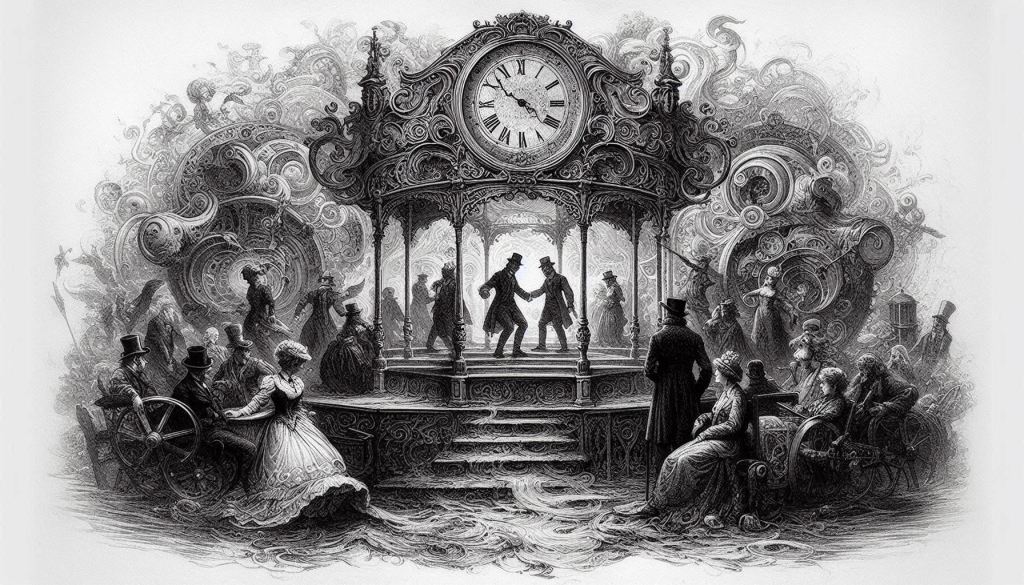
A Universe Without Time: Physics, Consciousness, and the Nature of Existence

If time were to happen all at once – where past, present, and future coexisted simultaneously – it would upend our understanding of reality, causality, and even consciousness itself. Our perception of time as a flowing sequence of events is deeply ingrained in both our experience and our scientific models, but what if that flow was an illusion? What if every moment simply existed, with no distinction between before and after?

One of the most immediate consequences of such a reality would be the breakdown of cause and effect. Our world operates on the principle that actions have consequences, that the past influences the present, which in turn shapes the future. If time were simultaneous, there would be no before or after – everything would simply be. In such a reality, would it even make sense to speak of events “happening”? Without sequence, there is no causality, and without causality, the entire structure of our decision-making and agency becomes questionable. Could free will exist in a reality where all choices have already unfolded in every possible way?

Our perception of time is not just a philosophical construct, but a deeply embedded feature of human consciousness. We process the world sequentially because our brains are wired to do so. If time were happening all at once, would we experience our entire lives simultaneously? Would we be both a newborn and an elderly person at the same time, fully aware of every moment we have ever lived? If that were the case, then identity itself might become meaningless, dissolving into an incomprehensible blur of every possible experience. Alternatively, it is possible that our consciousness would still only access one “slice” at a time, navigating an eternal landscape without truly perceiving its timeless nature.

This idea is not entirely foreign to physics. The “block universe” model in relativity suggests that time is a fixed, four-dimensional structure where the past, present, and future all exist equally. In this view, time does not “flow”; rather, it is a static dimension much like space, with our perception of movement through it being an emergent phenomenon. If this were true, the notion of “now” would be subjective, merely a point of reference chosen by an observer rather than a fundamental feature of the universe. This model sounds similar to how the fictional wormhole aliens in Star Trek: Deep Space 9 live, as they have no understanding of linear time, and the concept of consequences. 

Another major implication of a timeless reality is how it would affect the laws of physics themselves. Much of modern science relies on the assumption that time allows for entropy, the increase of disorder in a system. This principle explains why we remember the past but not the future and why systems evolve rather than remaining frozen in place. If time did not progress, but instead existed as a complete whole, then entropy might be an illusion, or at the very least, an incomplete way of understanding change. Could it be that what we perceive as time’s passage is simply our consciousness moving through an already-existent structure?

If time truly happened all at once, it would redefine the very nature of reality. Perhaps we are already living in such a universe but are unable to perceive its full nature due to the limitations of human cognition. What we call “the present” might just be a thin veil over a vast, timeless structure, one that we are only beginning to understand.

Economists Are Finally Catching Up – But Will Politicians Listen?

For years, many of us outside the ivory tower have watched economists confidently explain the world using tidy models that don’t quite match reality. Now, it seems even the experts are starting to wake up. Nobel laureate Angus Deaton, a man who has spent over five decades shaping economic thought, recently admitted that he’s rethinking much of what he once believed. In his essay, Rethinking My Economics, he acknowledges something the rest of us have known for a long time; economics, as it has been practiced, has ignored some fundamental truths about power, fairness, and the actual lives of working people.

One of his biggest realizations is that power—not just free markets or technological change—determines wages, prices, and opportunities. The old economic story said that workers got paid what they were worth, and if wages were low, it was because of “supply and demand.” Deaton now recognizes that corporate power has a much bigger role than economists have admitted. Employers dictate pay, not some invisible hand. This is what workers and unions have been saying for generations.

Speaking of unions, Deaton now regrets his past views on them. Like many economists, he once saw unions as a drag on efficiency. Now he sees them as a necessary counterbalance to corporate power. He even links their decline to some of today’s biggest problems—like stagnant wages and the rise of populism. Those of us who watched good union jobs disappear over the decades could have told him that.

Deaton also revisits the supposed wonders of free trade and globalization. He used to believe they were unquestionably good for everyone, lifting millions out of poverty worldwide, and now he wonders if the benefits of global trade have been overstated, especially for North American workers. It turns out that shipping jobs overseas and gutting local industries does have consequences. Again, not news to the factory workers and small-town business owners who saw their livelihoods disappear.

Even on immigration, Deaton has had a rethink. While he still sees its benefits, he admits he hadn’t fully considered its effects on low-wage workers. Many working-class folks—especially in industries like construction and manufacturing—have long argued that an influx of labor can drive down wages. For decades, economists dismissed these concerns as uninformed or even xenophobic. Now, Deaton is realizing that, actually, those workers had a point.

One of the biggest flaws in modern economics, Deaton argues, is its obsession with efficiency. The field has spent too much time focusing on what is “optimal” in theoretical terms while ignoring what is fair. Efficiency is great if you’re a CEO looking at profit margins, but for ordinary people trying to build stable lives, fairness matters just as much—if not more.

Perhaps most importantly, Deaton now believes that economics needs to learn from other disciplines. Historians, sociologists, and philosophers have long been tackling questions about inequality, power, and justice that economists are only now beginning to take seriously. Maybe if more economists had paid attention to those fields earlier, we wouldn’t be in such a mess now.

Which brings us to Mark Carney. Once the golden boy of central banking, Carney is now stepping into the political arena with the Canadian Federal Liberals, promising policies that sound progressive, but still carry the scent of Bay Street. The big question is: will his economic approach reflect the real-world reckoning that Deaton and others are finally having, or will it be more of the same old technocratic tinkering? Carney has talked a lot about inclusive growth and climate action, but will he acknowledge—like Deaton now does—that power imbalances, corporate dominance, and the decline of unions are at the heart of inequality? Will he push policies that actually shift power back to workers, or just dress up neoliberal economics with a few social programs? If Carney truly embraces Deaton’s new thinking, we might see a real departure from the old economic playbook, but if he sticks to the well-worn path of market-friendly “solutions,” it’ll just be another round of the same policies that got us here in the first place.

It’s refreshing to see someone like Deaton openly question his own past beliefs. It’s a rare thing for a leading economist to admit they’ve been wrong, but for those of us who have lived through the consequences of these flawed economic theories, starting with the years of Reagan and Thatcher, the real question is: Why did it take them so long to figure this out? And now that they have—will the politicians actually do anything about it?

Sex, Lies, and Bad Pacing: The Anora Problem

Sean Baker’s Anora may have won over the Oscars, but let’s be honest, this movie is a mess wrapped in neon lights and misplaced enthusiasm. It felt like something Baker wrote during his first year in film school fulfilling his teenage fantasies, and it’s the cinematic equivalent of a dive bar that looks fun from the outside, but reeks of stale beer and regret the moment you step in. Sure, it aims for a gritty, heartfelt take on sex work and the human condition, but what we get instead is a meandering, self-indulgent hormonal dream that confuses excess for artistry.

Let’s start with the so-called plot. Actually, scratch that, let’s start by asking if there even is a plot. The film meanders like a lost tourist on the Vegas Strip, lurching from scene to scene with no clear purpose. Ani, our protagonist, is introduced as a stripper with big dreams and zero depth, and we’re supposed to care about her whirlwind relationship with a clueless Russian heir; but instead of a gripping character study, we get a series of chaotic encounters that amount to little more than an overlong, R-rated sitcom episode where the jokes don’t land and the stakes feel artificial. There is a lack of real violence that we might expect from the henchmen, perhaps to maintain sympathy for both sides of the conflict, but Ani seem to either ignorant of the danger she is in, or a much hardened character than we are led to believe. 

Speaking of artificial, the film’s depiction of sex work is about as grounded as a reality show. While Baker clearly wants to paint a raw, unfiltered portrait, he ends up romanticizing and sanitizing it in a way that feels both naive and irresponsible. The whole thing plays like someone’s edgy fantasy of what the industry might be like rather than a film that has anything meaningful to say. It’s not exactly Pretty Woman, but it’s also nowhere near as insightful as it thinks it is; and it’s certainly nowhere near as nuanced as Wayne Wang’s The Centre of the World

Then there’s the pacing, or rather, the complete lack of it. The movie swings wildly between frantic, high-energy sequences and long, drawn-out moments of supposed introspection. Instead of tension, we get tedium. Instead of depth, we get characters staring off into the distance like they’ve just realized they left the oven on. Sean Baker’s direction, usually sharp and compelling, feels strangely unfocused here, as if he’s trying to recreate the chaotic energy of the Safdie brothers, but forgot to include a sense of purpose.

And let’s not forget the so-called humor. The film has been described as a dark comedy, but the laughs are as rare as a taxi in a rainstorm. What we get instead are awkward, uncomfortable moments that don’t quite land, sometimes because they’re too crude, sometimes because they’re just not funny. It’s like watching someone tell an inside joke to a room full of confused strangers.

By the time the credits roll, Anora feels less like a bold, provocative piece of filmmaking, and more like an experiment that spiraled out of control. The characters are thin, the story is scatterbrained, and the attempts at social commentary barely scratch the surface. It’s a movie that wants to be raw and unflinching, but ends up feeling hollow, like an expensive neon sign with a burnt-out bulb. Sure, some will call it daring, but there’s a fine line between bold and bloated, and Anora trips right over it.

The Often Hidden, and Misunderstood Dominant/submissive Dynamic in Human Relationships

At the core of every human interaction lies a subtle dance of power and vulnerability – a dynamic of dominance and submission. This concept, while often misunderstood or dismissed, is deeply embedded in the way we connect with one another, influencing everything from romantic relationships to professional interactions and even friendships. It’s not always about control or acquiescence in the traditional sense, but about the ebb and flow of influence, support, and leadership.

The Universal Nature of Power Dynamics
Power dynamics exist on a spectrum, manifesting in ways both explicit and implicit. In romantic partnerships, for instance, one partner might naturally take the lead in decision-making or planning, while the other might shine in nurturing emotional intimacy. Neither role is inherently superior – both are essential to a healthy balance. This interplay isn’t about domination in a harsh sense; it’s about trust. Submission, in this context, is a choice to yield or follow, often driven by respect for the other’s strengths.

Even in friendships, these dynamics are present. Think about your closest friends: Is there someone who often initiates plans or provides guidance when you’re struggling? Conversely, is there someone who seeks comfort or advice from you? These roles might shift over time or depend on the situation, but the dynamic persists.

Why Dominance and Submission Are Not Always About Control
Dominance often carries a negative connotation, evoking images of manipulation or authoritarian behavior. But in healthy dynamics, dominance is less about control and more about leadership, confidence, or decisiveness. Similarly, submission isn’t about weakness—it’s about trust, vulnerability, and the willingness to let someone else take the reins when appropriate.

Consider a workplace setting. A manager might take on the dominant role by providing direction, while employees adopt a submissive role by following that direction to achieve shared goals. However, a good manager also knows when to step back and listen, showing that dominance and submission are situational and reciprocal.

The Fluidity of These Roles
The most successful relationships – romantic, platonic, or professional – are those where dominance and submission flow naturally and aren’t rigidly fixed. A romantic partner who typically leads financially might lean on their counterpart for emotional stability. A friend who usually gives advice might need a shoulder to cry on. Recognizing this fluidity allows for deeper, more authentic connections because each person feels valued for their unique contributions.

The Pitfalls of Imbalance
Problems arise when one person perpetually dominates or perpetually submits, leaving no room for reciprocity. An overly dominant person may come across as controlling or dismissive, while an overly submissive person may lose their sense of self or feel unfulfilled. Healthy dynamics require mutual respect, clear communication, and a willingness to adapt to each other’s needs.

Embracing the Dynamic
Recognizing the Dominance/submission dynamic in your relationships doesn’t mean you need to label or overanalyze every interaction. Instead, it’s an opportunity to better understand yourself and the people around you. Who tends to take charge, and in what situations? When do you feel most comfortable leading, and when do you find strength in stepping back?

Ultimately, this dynamic is not about power for its own sake – it’s about balance. Every human connection thrives on give-and-take, on moments of leadership and surrender. Embracing this truth can help you build deeper, more meaningful relationships grounded in trust, respect, and mutual support.

In what areas of your life do you see this dynamic at play?