Thatcher’s Flawed Philosophy: How Community Really Does Defines Us

Margaret Thatcher’s infamous declaration that “there is no such thing as society” has sparked decades of debate and remains a contentious cornerstone of her political philosophy. Her emphasis on self-interest over community solidarity, however, neglects a fundamental truth: humans are inherently social beings, and society is not an abstract ideal but a lived reality. To dismiss the concept of society is to deny the interconnectedness that defines human existence. 

From the earliest days of our evolution, humans have depended on cooperation and collective effort for survival. Group solidarity enabled us to hunt, share resources, build shelters, and ultimately thrive. Language, culture, and complex societal structures emerged from this cooperation, underscoring that our progress has always been rooted in community. Thatcher’s rejection of society as a meaningful entity ignores this profound evolutionary history.

Modern science further reinforces the critical role of social connections. Studies in sociology, psychology, and anthropology repeatedly demonstrate that strong social ties contribute to better mental and physical health, greater happiness, and longer life expectancy. Conversely, social isolation and loneliness have devastating consequences, leading to increased rates of mental illness, substance abuse, and even early mortality. Community is not just a philosophical idea; it is an essential foundation for individual and collective well-being.

History provides countless examples of the power of community to create positive change. Civil rights movements, environmental activism, labor struggles—these are not the outcomes of individuals acting in isolation but of people coming together in solidarity to challenge injustice and fight for shared goals. Such movements illustrate that progress is often born from collective action rather than solitary self-interest.

Even Thatcher’s own notion of self-interest fails to account for the human capacity for empathy, reciprocity, and altruism. While individuals may act in their own interests, they do so within a framework of interconnected relationships. Acts of kindness and generosity are not rare deviations from human nature but deeply ingrained aspects of it. Recognizing the well-being of others as intertwined with our own is not only logical but vital to the fabric of any functioning society.

Thatcher’s dismissal of society as a nonentity represents a reductionist and ultimately flawed view of human nature. Far from being atomized individuals, we are part of a larger web of connections that sustains us. Acknowledging the reality and importance of community is essential if we are to build resilient societies that prioritize the common good and provide a sense of belonging for everyone. Society does exist—and it is the very foundation upon which we stand.

From Prescriptions to Prevention: The Growing Impact of Canadian Pharmacists

Pharmacists in Canada have become essential pillars of the healthcare system, taking on expanded roles that go far beyond dispensing medications. As our population grows and ages, and as primary care resources become increasingly strained, pharmacists are stepping up to fill critical gaps in care. Their unique combination of accessibility, expertise, and patient trust makes them well-suited to these enhanced responsibilities.

One of the most visible ways pharmacists have broadened their reach is through vaccine administration. It wasn’t so long ago that getting a flu shot or other routine vaccinations required a trip to the doctor’s office or a public health clinic. Now, across Canada, pharmacists play a key role in immunization programs. The COVID-19 pandemic underscored their importance, as pharmacists helped deliver millions of vaccine doses quickly and efficiently, often reaching communities where healthcare access was otherwise limited.

Another area where pharmacists are making a real difference is in treating minor ailments. In many provinces, they are now authorized to prescribe medications for everyday conditions such as urinary tract infections, seasonal allergies, and cold sores. This reduces the need for a lengthy wait at a doctor’s office and allows patients to receive timely treatment. Alberta, for instance, has been at the forefront, granting pharmacists the authority to prescribe independently. It’s a model that has proven effective and is gradually being embraced elsewhere.

Beyond acute issues, pharmacists are increasingly involved in the long-term management of chronic diseases like diabetes, hypertension, and asthma. Their role often includes monitoring patients, adjusting medications, and providing counseling to ensure treatments are followed correctly. Programs like Ontario’s MedsCheck allow pharmacists to conduct thorough reviews of a patient’s medication regimen, helping to prevent complications and improve quality of life. For those managing complex conditions, this kind of hands-on support can be transformative.

Pharmacists have also emerged as key players in addressing Canada’s opioid crisis. Many now provide naloxone kits and training, equipping individuals and families to respond to overdoses. Additionally, they support patients undergoing opioid substitution therapy, such as methadone or buprenorphine treatment, helping to reduce stigma and promote recovery. These services demonstrate the compassion and expertise pharmacists bring to some of the most challenging aspects of healthcare.

Their work extends even further, encompassing point-of-care testing for conditions like strep throat, high cholesterol, or blood sugar levels. By offering immediate results and on-the-spot advice, pharmacists enable patients to make informed decisions without delay. Nova Scotia, for example, has introduced rapid strep throat testing in pharmacies, where patients can receive a prescription on the same visit if necessary.

Mental health care is another area where pharmacists are proving invaluable. They regularly counsel patients on the proper use of psychiatric medications, monitor for side effects, and collaborate with other healthcare providers to ensure effective treatment. Saskatchewan has introduced collaborative care models that empower pharmacists to take a more active role in managing mental health conditions, a critical service given the growing demand for mental health support.

Education and preventive care are also cornerstones of pharmacists’ expanding role. They are often the first point of contact for patients seeking advice on lifestyle changes, smoking cessation, or managing the early signs of chronic illnesses. Programs in provinces like Ontario provide pharmacists with the tools and reimbursement to run smoking cessation clinics, helping countless patients improve their long-term health.

These expanded responsibilities are not without challenges. The scope of practice varies across provinces, and public awareness about what pharmacists can offer remains limited. Additionally, some services lack adequate funding, which can hinder their availability. But the potential is enormous. By empowering pharmacists further—perhaps by granting them authority to prescribe routine medications like birth control—Canada can make significant strides in improving healthcare access and outcomes.

In a system often characterized by long wait times and overstretched resources, pharmacists have emerged as trusted, knowledgeable, and accessible providers. Their ability to combine technical expertise with compassionate care is reshaping how Canadians experience healthcare, proving that pharmacists are much more than dispensers of medications—they are true healthcare partners.

Bridging the Water Divide: Inequality in Access to Potable Water

In this second of four articles on water, I want to explore the social inequalities that surround access to potable water. 

Access to clean drinking water should be a given, not a privilege. Yet across the world, millions are denied this most basic human right. The problem isn’t simply about scarcity—there’s enough water on the planet to sustain everyone. The real issue lies in the deep-seated inequalities that dictate who gets reliable access and who doesn’t. Socioeconomic status, geography, and government priorities all play a role in determining whether a community has safe drinking water or must rely on unsafe sources. These disparities create ripple effects, fueling public health crises, widening economic gaps, and deepening gender inequalities.

The divide between urban and rural communities in access to potable water is particularly glaring. In many developing countries, large cities have water infrastructure in place, but those living in informal settlements or on the outskirts often lack access to piped water. Meanwhile, rural populations—especially Indigenous communities and those in remote areas—are frequently left behind due to chronic underfunding and government neglect. In Canada, for example, dozens of First Nations communities have been under long-term boil-water advisories, some for decades. Despite the country’s wealth and technological capacity, these communities remain without the infrastructure needed to ensure safe drinking water. It’s a stark reminder that systemic inequality, not just technical limitations, drives the crisis.

Rapid urbanization is making things even worse. Cities are growing faster than their water infrastructure can keep up, leading to supply shortages, contamination from aging pipes, and increasing pressure on surrounding water sources. In places like Cape Town and Chennai, urban water crises have shown that even major metropolitan areas are vulnerable to running dry when poor planning and climate pressures collide. When water becomes scarce, it’s always the poorest communities that suffer the most—forced to wait in long lines, pay inflated prices, or rely on unsafe alternatives. Meanwhile, industries and wealthier neighborhoods often find ways to secure their supply, reinforcing the divide.

Gender inequality is another hidden consequence of water scarcity. In many parts of the world, the burden of collecting water falls almost entirely on women and girls. This often means walking for hours each day just to fetch a few buckets, time that could be spent in school, at work, or simply resting. The physical toll is immense, leading to long-term health issues, and the journey itself can be dangerous, exposing women to the risk of violence and harassment. The consequences extend far beyond individual hardship. When girls miss out on education because they have to collect water, their future economic opportunities shrink, trapping them—and their families—in cycles of poverty.

Solving these problems isn’t just a matter of engineering better water systems; it’s about rethinking how we value and distribute water. Governments and international organizations must prioritize investment in water infrastructure, not just in major cities but in the rural and marginalized communities that have been neglected for too long. Local communities need to be empowered to manage their own water resources, with access to the funding and technology necessary to implement sustainable solutions. At the policy level, water governance needs to be strengthened to prevent exploitation by corporations that see water as a commodity rather than a human right. And if we’re serious about addressing gender inequality, ensuring closer access to safe water sources must be a top priority.

At its core, the water crisis is a justice issue. It’s not just about pipes and treatment plants—it’s about power, inequality, and whose needs are prioritized. The good news is that solutions exist, and they’re entirely within our reach. The question is whether we have the political will and collective determination to make safe water a reality for everyone, not just those fortunate enough to be born in the right place.

The Problematic Legacy of Geordi La Forge and Leah Brahms in Star Trek: The Next Generation

The dynamic between Geordi La Forge and Dr. Leah Brahms in “Star Trek: The Next Generation” (TNG) serves as an uncomfortable reflection of deeper issues surrounding privacy, consent, and the portrayal of male-female relationships in media. Examining the episodes “Booby Trap” and “Galaxy’s Child” reveals not just problematic interactions, but also the limitations of the show’s ethical imagination.

In “Booby Trap”, Geordi creates a holographic version of Leah Brahms to solve a crisis aboard the USS Enterprise. What begins as a technical necessity quickly veers into murky territory when Geordi develops personal feelings for the hologram. This digital Leah, designed to assist with engineering challenges, is imbued with enough personality to simulate human connection, but she’s still a tool, incapable of true agency or consent. Geordi’s affection for the hologram reflects an unsettling fantasy: a world where one can mold a perfect partner without regard for the autonomy of the real person behind the likeness.

This tension explodes in “Galaxy’s Child”, when the actual Dr. Brahms arrives on the Enterprise. Geordi, buoyed by his prior “relationship” with the hologram, anticipates a warm connection. Instead, Leah discovers the simulation, sparking an understandable sense of violation. The holographic version was created – and romanticized – without her consent, raising significant ethical concerns. The show sidesteps the gravity of Leah’s discomfort by centering on Geordi’s good intentions and admiration for her work, failing to grapple with the invasive nature of his actions.

This storyline taps into a broader cultural trope: the “nice guy” who feels entitled to affection because his intentions are pure. Geordi’s well-meaning persona becomes a shield against accountability, excusing behaviors that breach personal boundaries. Meanwhile, Leah’s autonomy and emotional response are marginalized, her discomfort framed as an obstacle to Geordi’s emotional growth.

Even the resolution falls flat. Leah’s justified anger dissipates far too quickly, subsumed by a focus on professional collaboration. The narrative ultimately suggests that personal boundaries are secondary to technical expertise, a troubling message that undermines the importance of respect and accountability in relationships.

The implications extend beyond TNG. Later portrayals of Geordi in “Star Trek: Picard” position him as a family man, with daughters Sidney and Alandra. While the identity of his wife is left ambiguous, non-canon sources such as “Engines of Destiny” imagine Geordi and Leah eventually marrying, a conclusion that feels jarring given the unresolved ethical breaches in their earlier interactions. The novels frame their relationship as one of mutual respect and shared passion for engineering, but this idealized progression sidesteps the critical flaws in its foundation.

The Geordi-Leah dynamic exemplifies a recurring issue in media: the prioritization of male character arcs over the agency of female characters. TNG’s treatment of their interactions reflects outdated attitudes about privacy, consent, and the consequences of male entitlement. It’s a narrative that not only diminishes Leah’s humanity but also leaves viewers with unresolved questions about the ethics of their bond.

If Star Trek is to live up to its ideals of exploration and progress, it must interrogate these missteps, offering more nuanced and respectful portrayals of relationships. Only then can it boldly go where it’s never gone before: toward a future of genuine equality and respect.

Elbows Up, Canada! 

Ah, Canada. The land of politeness, poutine, and apparently perfectly timed political drama. If you’ve been paying attention over the last month, you know it’s been a real doozy for us Canucks. First, Mark Carney, the economist-turned-political-messiah, officially stepped onto the national stage. Then, Mother Nature decided to remind us who’s boss with a wild mix of warm spells, deep freezes, and sudden dumps of snow. And finally, as if the week wasn’t Canadian enough, we got a new rallying cry: Elbows Up!

Mark Carney’s entry into federal politics has been long expected, but still managed to cause a stir. Here’s a guy who made central banking look—well, not exciting, exactly, but at least important enough that people pretended to care. He kept Canada’s economy steady through the 2008 financial crisis, under the Harper government, jetted off to the UK to help them through Brexit, and now he’s back, seemingly ready to steer this country through whatever economic storm comes next. He’s got the calm, measured tone of a man who has witnessed financial meltdowns up close, and the kind of charisma that makes fiscal policy sound almost appealing; but politics is a different beast altogether. Managing currency fluctuations is one thing—handling Question Period is another. I wasn’t really looking forward to yet another grey-haired white guy leading the country, but we’ll see if Canada buys what he’s selling. For now, we know Mark Carney is officially in charge of the Liberals, and almost the new Prime Minister.

Meanwhile, the weather has been reminding Canadians why March is the cruelest month. The classic fake spring arrived in full force, tricking people into putting their winter boots away—only for reality to come slamming back with an ice storm, a deep freeze, or a snow dump, depending on where you live. Ottawa, as always, seemed to be experiencing three different seasons at once, with the added insult of a wind chill so sharp it felt personal. And yet, like every year, we go through the same ritual; the brief moment of hope, the inevitable betrayal, and then the begrudging acceptance that we are, in fact, still in Canada.

And then there’s Elbows Up. What started as a phrase to describe Connor Bedard’s determined return to hockey after a brutal injury has quickly taken on a life of its own. There’s something deeply Canadian about it—it’s tough, practical, and just a little bit scrappy. It’s the perfect metaphor for how we handle everything. Snowstorm? Elbows up. Hockey fight? Elbows up. Trying to squeeze past someone in a Tim Hortons without knocking over their double-double? Elbows up—politely, of course.

It’s a reminder that we don’t back down easily in this country. We don’t go looking for trouble, but if it comes, we brace ourselves and push through—sometimes with a bit of force, but always with the unspoken agreement that we’ll say sorry afterward. So whether you’re trying to navigate Carney’s political future, survive the next swing in temperature, or just make it through the day without slipping on the ice, one thing is clear; keep your elbows up, Canada. It’s what we do best.

And not one mention of the Pumpkin Spice Palpatine!

The Ottawa Amalgamation Failure

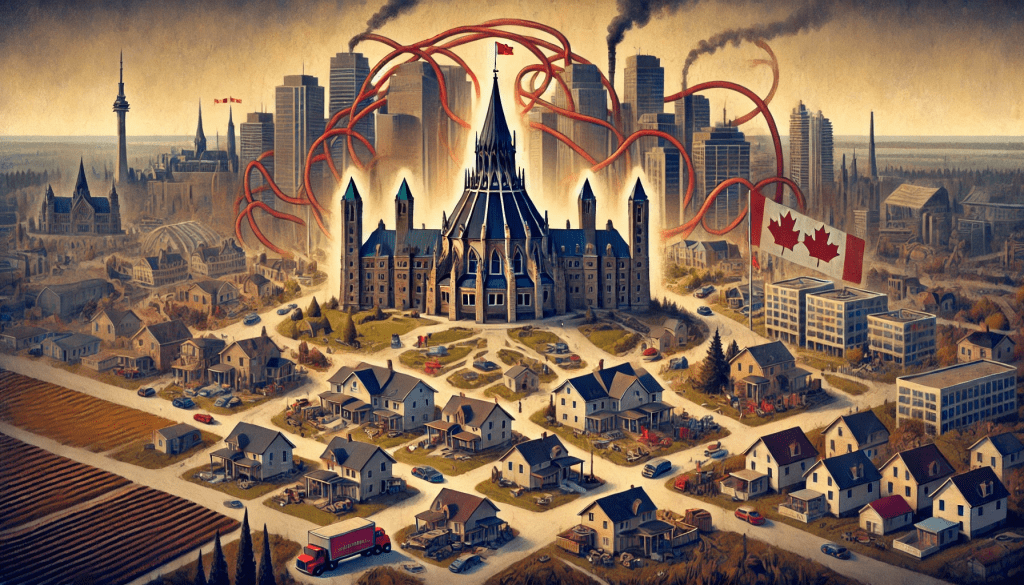
The amalgamation of the 13 municipalities into the single-tier City of Ottawa in 2001 was touted as a transformative move. It was expected to streamline governance, reduce redundancy, and create financial efficiencies. Promises of improved municipal services and lower taxes were at the forefront of the pitch made by the Harris government in Ontario. However, in practice, the amalgamation has faced widespread criticism for its failure to fulfill these expectations. I worked as a member of a geospatial applications team to support evidence-based decision making during this transition, and it soon became clear that politics rather than data and community requirements was driving the bus. 

Improved Services
One of the primary promises of amalgamation was to standardize and enhance municipal services across all former municipalities. However, this promise has not been fully realized, particularly for rural and suburban areas, which have often felt left behind. Several key issues have been noted:

Prior to amalgamation, smaller municipalities had tailored services suited to their unique needs. Post-amalgamation, rural areas, such as West Carleton and Rideau-Goulbourn, have voiced concerns over reductions in services like road maintenance, snow clearing, and public transit availability. Urban-centric planning has often overshadowed rural priorities. Rather than simplifying governance, the larger bureaucratic structure of the amalgamated city has at times hindered efficient decision-making. Residents have reported delays in service delivery and inefficiencies in resolving local issues.

One of the most visible struggles has been with Ottawa’s public transit system, particularly with the Ottawa Light Rail Transit (LRT) project. This has been plagued by cost overruns, operational challenges, and inadequate service in suburban and rural areas. Residents question whether the amalgamated city’s centralization has exacerbated these issues.

Lower Taxes
Another major promise was the reduction of property taxes due to economies of scale and centralized administration. However, this has not materialized, and in many cases, taxes have increased. Many residents of rural and suburban areas have seen tax hikes without proportional improvements in services. Before amalgamation, smaller municipalities often operated with lower budgets and tax rates tailored to their limited scope. Amalgamation brought uniform tax rates, which disproportionately impacted these regions.

Amalgamation created unforeseen administrative and operational costs. For example, the integration of different IT systems, payroll structures, and service contracts has led to ballooning expenses. These costs have been passed on to residents through higher taxes. The perception that rural residents are subsidizing urban infrastructure projects, such as the LRT, has deepened dissatisfaction. Rural areas often feel they are paying higher taxes for services that primarily benefit the urban core.

Loss of Local Control
Another often-overlooked consequence of amalgamation has been the loss of local decision-making. Smaller municipalities had more control over their budgets, development priorities, and service delivery. Post-amalgamation, these decisions are centralized, often resulting in policies that do not reflect the needs of individual communities. This has alienated many residents and fostered distrust in the amalgamated city’s leadership.

Evaluation and Criticism
Critics argue that amalgamation prioritized financial theories over the realities of local governance. While some benefits of centralization, such as unified planning and a larger economic development strategy, have been achieved, the overall failure to deliver on improved services and lower taxes has undermined public confidence. Amalgamation’s implementation lacked sufficient consultation with residents and did not adequately address the diverse needs of Ottawa’s urban, suburban, and rural communities.

The amalgamation of Ottawa’s 13 municipalities was envisioned as a way to create efficiencies and deliver better services at lower costs. However, the reality has been far more complex, with significant gaps between promises and outcomes. The perceived failure to deliver on these promises has left many residents, particularly in rural and suburban areas, feeling underserved and overtaxed. This has sparked ongoing debates about whether the amalgamation truly benefited the diverse communities it was meant to unite or whether it simply centralized problems under a single, unwieldy structure.

He Said, She Said: The Perks of Dating Across Generations

He Says: Dating an independent younger mother is like finding a partner with superhero qualities. She’s resilient, focused, and masterful at managing her time; better than most CEOs. She doesn’t need rescuing; she’s already fought her battles and won. What she values is a partner who brings wisdom, stability, and a calm presence in her whirlwind of responsibilities. For an older guy like me, it’s refreshing. There’s no pretense, no unnecessary drama, just an authentic, meaningful connection, built on mutual respect.

And let’s talk about her energy! It’s magnetic, a constant reminder that life is vibrant and full of possibilities. She keeps me engaged, challenges me to stay present, and proves that growing older doesn’t mean slowing down. More than that, she’s aligned with my thinking about the beauty of balance; how to be both independent and deeply connected.

She Says: Dating an older gentleman is like stepping into an oasis of calm after the daily chaos of parenting. He’s emotionally grounded, self-assured, and, best of all, done with playing games. My time is my most valuable asset, and I need someone who respects my schedule, understands my priorities, and supports me without trying to control or fix things. Older men get that.

What I love about him is his ability to listen, his steady presence. I’ve spent so much time managing crises and doing everything myself that it’s a relief to be with someone who can just be there without adding pressure. He doesn’t expect perfection, he values honesty and effort, and there’s something deeply reassuring about being with someone who knows who they are, what they want, and how to be a real partner.

He Says: Stability? Sure, but let’s talk about the fact that I’m learning just as much from her. Her independence is inspiring, it pushes me to be more adaptable, more open to change. And that vitality? It’s contagious. I may have a few gray hairs, but that doesn’t mean I’m set in my ways. If anything, her passion and determination remind me that life is about movement, growth, and embracing new experiences.

What makes this work is that we’re not trying to force anything. We don’t have to be everything to each other, but we show up when it counts. When life throws us curveballs, we face them together; no drama, no games. It’s a partnership built on respect, not expectations.

She Says: And let’s not forget patience. Older men have a way of slowing things down in the best possible way. In a world that’s constantly demanding more, that kind of presence is priceless. I used to worry about how a relationship might affect my kids, but with him, it’s just… easy. He’s patient with them, but he also knows when to step back and give me space to handle things. He respects the boundaries I’ve set as a parent, but he’s always there when I need him.

And the way he makes time for me, just us, no distractions, reminds me of how important it is to nurture the connection we’ve built. There’s an ease to being with him that I didn’t know I was looking for, and now that I’ve found it, I can’t imagine going back to anything less.

He Says: And that’s what makes it work, isn’t it? We’re not playing by anyone else’s rules. We’re just two people figuring it out together, supporting each other, growing together, and sharing a real connection. Her kids, her responsibilities, they’re part of the package, but they’re never a barrier. I’m not here to replace anyone or change anything; I’m here to be part of her life, to add something positive. And honestly, it’s one of the most rewarding things I’ve ever done.

Beyond Alto: The Ripple Effect of High-Speed Rail on Local Transit and Business

The Alto high-speed rail project is poised to do more than just transform intercity travel—it will also act as a catalyst for expanded local public transportation networks and economic growth in smaller communities along the corridor. High-speed rail doesn’t exist in isolation; it requires efficient first- and last-mile connections to ensure that travelers can seamlessly reach their final destinations. As Alto stations are developed in cities like Peterborough and Trois-Rivières, there will be a natural demand for increased bus services, light rail connections, and other forms of public transit to serve passengers arriving and departing from these hubs.

In cities like Ottawa and Montreal, where light rail transit (LRT) networks are already in place or under development, Alto will likely drive additional investment in urban transit expansion. Commuters traveling into these cities will need efficient ways to connect from high-speed rail stations to workplaces, universities, and residential areas. This could lead to the creation of new LRT lines, expanded bus routes, and improved transit hubs that integrate multiple modes of transportation under a single, seamless system. Toronto, for instance, may see an expansion of its GO Transit network or additional streetcar service to accommodate increased passenger flow from the high-speed rail station.

Smaller communities like Peterborough, which has long suffered from limited transit options, stand to benefit significantly. With an Alto station positioned in the city, businesses catering to travelers—hotels, restaurants, and retail establishments—will likely see increased activity. At the same time, local governments may prioritize the development of new transit services, such as regional bus routes that connect surrounding rural areas to the high-speed rail station. This increased connectivity could make Peterborough a more attractive destination for commuters who work in Toronto or Ottawa but prefer the affordability and quality of life found in a smaller city.

The economic ripple effects extend beyond just transit and business development. High-speed rail has been shown in other countries to attract new industries, create demand for office space near stations, and encourage residential development in previously overlooked areas. With Alto, towns along the route could see a surge in interest from businesses looking to take advantage of the improved connectivity. Real estate markets may also experience a boost as professionals and families consider relocating to these areas, knowing they can quickly access larger cities for work or leisure.

Ultimately, Alto is not just about linking major urban centers—it’s about reshaping the broader transportation ecosystem. By creating a high-speed backbone, it encourages cities and towns to rethink their own transit strategies, leading to improved local services that benefit both residents and visitors. If properly managed, this project has the potential to generate a more interconnected and accessible transportation network across Ontario and Quebec, fostering economic growth and enhanced mobility for generations to come.

The Bureaucratic Dating Blues

Dating a retired public servant in eastern Ontario is like entering a relationship with a government agency—there’s a system, and it runs on a strict schedule. You may think you’re spontaneous, but you’ll quickly learn that spontaneity has no place in the world of meticulously planned lunches and pickleball tournaments.

First, there’s the lunch calendar, sacred and immutable. Tuesdays are for soup and sandwiches with “the girls,” a rotating cast of retired colleagues with names like Barb, Diane, and Cheryl. Thursdays? Reserved for the seniors’ center “Lunch & Learn,” where they gleefully absorb new knowledge about gardening or the benefits of turmeric.

Sports activities are non-negotiable, too. Golf in the summer, curling in the winter, and pickleball year round. Try suggesting a last minute romantic getaway, and you’ll be met with, “I can’t. It’s our semi-annual shuffleboard tournament!”

Then there are the day trips: wineries in Prince Edward County, fall drives to gawk at leaves, and bus tours to Merrickville for “just a little shopping.” You’ll find yourself in the back seat of a rented minivan, sipping coffee from a thermos, wondering if this is really what dating looks like now.

But don’t worry—there’s a silver lining. These retirees are loyal, organized, and punctual. Just remember: your Friday dinner date is at 5 p.m. sharp, because they need to be home in time for “Jeopardy!” You may not get a whirlwind romance, but you’ll always know exactly where you stand—and what’s for lunch tomorrow.

The Failing Republic: Why the U.S. is Losing Its Separation of Powers

The United States was designed as a carefully balanced system, drawing from Polybius’ theory of anakyklosis, the ancient idea that governments cycle through different forms of rule as they degenerate. The Founders sought to prevent this cycle from repeating in America by creating a mixed government – a system that combined elements of monarchy (the presidency), aristocracy (the Senate and judiciary), and democracy (the House of Representatives and popular elections). This balance was supposed to be maintained through separation of powers and checks and balances, preventing any single branch from becoming dominant. However, over time, this system has eroded, leading to political dysfunction, growing authoritarian tendencies, and an increasing sense that American democracy is failing to sustain itself.

One of the most obvious signs of this breakdown is the expansion of executive power. The U.S. presidency, originally designed to be a limited office constrained by Congress, has grown into an institution that wields enormous influence over both domestic and foreign policy. Congress’ constitutional power to declare war has been effectively ignored for decades, with presidents engaging in military actions without formal approval. Executive orders, once meant for administrative matters, now serve as a way for presidents to bypass legislative gridlock and unilaterally shape national policy. Emergency powers, originally intended for genuine crises, have been used to consolidate authority, further tipping the balance away from Congress and toward the executive. What was once a system of monarchy constrained by law is increasingly resembling the early stages of tyranny, where power becomes concentrated in the hands of a single leader.

Meanwhile, the institutions meant to act as a wise, stabilizing force, the Senate and the judiciary, have themselves become distorted. The Senate, originally designed to serve as a check on populist excess, has become a bastion of partisan gridlock, where legislative action is often blocked not through debate and compromise but through procedural loopholes like the filibuster. The Supreme Court, meant to provide legal stability, has evolved into a de facto policymaking body, issuing rulings that shape national laws based on the ideological leanings of its justices rather than broad democratic consensus. The fact that justices serve lifetime appointments ensures that political biases from decades past continue shaping the present, often overriding the will of the electorate. Rather than serving as an aristocratic check on instability, the judiciary and Senate have increasingly acted as oligarchic strongholds, where entrenched power resists democratic accountability.

At the same time, the democratic elements of the system have begun to decay into their own worst tendencies. Gerrymandering has allowed political parties to carve up districts in ways that virtually guarantee electoral outcomes, stripping voters of meaningful representation. Populist rhetoric has taken over political campaigns, where leaders appeal not to reasoned debate but to emotional manipulation and fear-mongering. The rise of social media-driven outrage politics has further fueled division, turning every issue into an existential battle where compromise is seen as betrayal. The January 6th attack on the Capitol was not just an isolated event but a symptom of a deeper problem, the slide of democracy into oligarchy, or mob rule, where decisions are no longer made through structured governance but through force, intimidation, and the manipulation of public anger.

This erosion of balance has led to a state of chronic political paralysis. Congress, once the heart of American governance, now struggles to pass meaningful legislation, forcing presidents to govern through executive action. Public trust in institutions is collapsing, with many Americans believing that elections, courts, and government bodies are rigged against them. And looming over it all is the increasing potential for authoritarianism, as political leaders, on both the left and right, flirt with the idea that democratic norms can be bent, ignored, or rewritten to serve their interests. This is precisely the pattern that anakyklosis predicts: when democracy becomes too unstable, people turn to strong leaders who promise to restore order, often at the cost of their freedoms.

If the United States is to avoid falling deeper into this cycle, it must take deliberate action to restore the balance of power. Congress must reclaim its authority over war, legislation, and oversight. The judiciary, particularly the Supreme Court, may need reforms such as term limits to prevent long-term ideological entrenchment. Electoral integrity must be strengthened, ensuring fair representation through independent redistricting commissions and protections against voter suppression. And perhaps most importantly, the American public must become more politically literate, resisting the pull of demagoguery and demanding a return to governance based on reason, debate, and compromise.

Without these changes, the U.S. risks following the path of so many republics before it, where democracy fades, power consolidates, and the cycle of anakyklosis completes its turn once again.