As a business consultant, my work follows a hybrid model – my home office, to client sites, to hotels and back home again. These days, I rarely accept projects where the client requires that I work full-time out of their offices, as I prefer to focus on my project deliverables, and find hourly coffee breaks, and ad hoc meetings distracting. While I often lead multi-stakeholder initiatives, I much prefer working as part of a small team capable of leveraging today’s collaborative tools and communication apps from the sanctity of my home.
The debate over working from home (WFH) versus traditional office settings has gained momentum over the past few years, especially after the COVID-19 pandemic pushed millions into remote work. In Canada, the transition was significant: before the pandemic, about 7% of Canadians worked from home; by April 2020, that number surged to 40%, before settling around 20% in 2023. Research on this shift has produced mixed findings, with some studies showing increased productivity and others highlighting challenges that come with remote work.
Positive reports, like the 2025 study by Fenizia and Kirchmaier, suggest that WFH can lead to a productivity boost—12% in the case of public sector workers. This increase was largely attributed to fewer distractions and a more flexible environment. Stanford’s 2020 study also found a 13% increase in performance among remote workers, citing quieter environments and fewer sick days as contributing factors. Similarly, the U.S. Bureau of Labor Statistics observed a rise in productivity across industries that adopted remote work between 2019 and 2021.
However, not all findings are so glowing. A University of Chicago study found that WFH doesn’t necessarily boost productivity across the board, noting that some jobs still require in-person collaboration. The San Francisco Federal Reserve echoed this sentiment, suggesting that remote work alone isn’t a major factor in driving productivity growth. Some sectors, like tech, have reported stable productivity, but with challenges in communication and collaboration. Studies in Canada have also shown that the ability to work from home varies by industry. Finance and insurance sectors were more adaptable to remote work, while industries like manufacturing and agriculture saw little benefit from the shift.
Despite the varied findings, employee demand for flexibility remains strong. A 2024 survey by the Public Service Alliance of Canada revealed that 81% of Canadians believe remote work benefits employees, with 66% reporting that it boosts organizational productivity. The survey found that most employees felt more focused and productive while working remotely, enjoying the balance it offers. Still, companies are grappling with how to make remote work work for everyone, with some—like Amazon—insisting on a return to the office to foster collaboration.
Ultimately, the future of work in Canada seems to be leaning towards hybrid models, where employees can enjoy the benefits of both office interaction and remote flexibility. The challenge remains to find the right balance, considering industry-specific needs and employee preferences, ensuring that productivity, morale, and collaboration thrive no matter where work is done.
Over the decades, my views on national service have shifted in ways I never anticipated. In the 1970s, I opposed it as a right-wing strategy to control young people. By the 1990s, after working in military settings that fostered aggressive elitism, I argued that civilians should remain separate from the patriarchal uniformed culture. Then, in the 2010s, I found myself engaged in change management projects within uniformed teams plagued by misogyny and racism. Now, after six decades of reflection, I find myself reconsidering my stance yet again.
National service has long been debated as a tool for unity, civic responsibility, and military readiness. But its potential to erode military elitism and foster a stronger connection between soldiers and society is often overlooked. Professional militaries, especially in nations where service is voluntary, tend to cultivate exclusivity—a culture where soldiers see themselves as distinct, even superior, to the civilians they serve. This divide reinforces the notion of the military as a separate class, rather than an integrated part of society. National service disrupts this dynamic by compelling a broader cross-section of the population to serve, reshaping military identity from an elite institution to a shared civic duty.
In voluntary systems, the military often attracts those who seek discipline, structure, or prestige—creating an insular culture with its own rigid hierarchy. Civilians, in turn, either glorify or distance themselves from this world, reinforcing the idea that service is for a dedicated few rather than a collective obligation. By contrast, when participation is mandatory across social classes and career paths, the military becomes more representative of society. The uniform is no longer a symbol of an exclusive warrior class, but a temporary role worn by people from all walks of life.
This integration fosters deeper civilian-military interaction. In countries like Switzerland and Israel, where service is universal, military experience is common rather than exceptional. Nearly everyone has served or knows someone who has, preventing the formation of a professional military caste detached from the society it protects. In contrast, nations with fully voluntary forces risk developing a military with its own insular traditions and perspectives, further widening the civilian-military gap.
Scandinavian countries offer compelling examples of how national service can shape military culture. Norway introduced gender-neutral conscription in 2015, significantly increasing female participation and reinforcing the country’s commitment to equality. Sweden, after briefly abolishing conscription, reinstated a selective system in 2017 to address recruitment shortages. While both countries prioritize inclusivity, Norway enforces universal service more strictly, while Sweden selects only those necessary for military needs. These models highlight how national service can be adapted to different societal priorities while still promoting integration.
This shift from exclusivity to civic duty is essential for preventing an isolated, professionalized force with an “us vs them” mentality. In a national service system, military service is just one form of contribution, alongside disaster relief, infrastructure projects, and community assistance. This broader framework erodes the idea that military life is inherently superior, reinforcing the principle that national service—whether military or civilian—is about collective responsibility, not personal status.
The benefits of this integration extend beyond military culture. Veterans who return to civilian life find themselves in a society where their experience is widely shared, reducing post-service isolation and preventing the hero-worship that can distort public perceptions of the military. When nearly everyone has served in some capacity, soldiers are seen not as a privileged class, but as fellow citizens fulfilling a duty like everyone else.
Perhaps most importantly, national service strengthens democracy itself. By grounding military power in the citizenry, it prevents the rise of a professional warrior class detached from national values. It ensures that defense, like governance, remains a shared responsibility rather than the domain of a select few. In this way, national service transforms military duty from an elite pursuit into a universal expectation—one that keeps soldiers connected to, rather than separate from, the society they serve.
For centuries, the way we represent the world on maps has shaped our understanding of geography, politics, and culture. Traditional projections, like the widely used Mercator, have long been criticized for distorting the relative sizes of continents, reinforcing a Eurocentric worldview. But over time, innovative cartographers have sought to challenge these distortions with alternative projections that offer a more balanced and accurate view of our planet. Two such approaches—the Cahill–Keyes projection and the AuthaGraph map—stand out for their unique methods of minimizing distortion and improving spatial representation.
The Cahill–Keyes map, an evolution of Bernard Cahill’s 1909 “Butterfly Map,” was refined by Gene Keyes in 1975 to create a more symmetrical, contiguous world map. Unlike the Mercator projection, which greatly exaggerates landmasses near the poles, the Cahill–Keyes map unfolds the Earth into an octahedral shape, forming an “M” configuration that keeps continents connected while reducing distortion. By presenting landmasses with a higher degree of spatial accuracy, this projection fosters a more holistic view of global geography. It has been praised for its educational value, challenging the parochial perspectives often reinforced by traditional mapping systems.
The AuthaGraph map, developed in 1999 by Japanese architect Hajime Narukawa, takes a different approach. Using a complex method of dividing the globe into 96 triangles and transforming it into a near-rectangular form, this projection maintains proportional relationships between continents and oceans better than most existing maps. The AuthaGraph gained significant recognition after winning Japan’s Good Design Grand Award in 2016, and has since been used in scientific and educational contexts to provide a more accurate representation of Earth’s geography. Unlike the Cahill–Keyes projection, which prioritizes contiguity, the AuthaGraph sacrifices some familiar visual continuity to achieve an exceptional balance of size and shape accuracy.
Both of these projections challenge outdated methods that have long influenced global perceptions. The Mercator map, despite its usefulness for navigation, has historically exaggerated the importance of northern regions while diminishing the size of Africa, South America, and other equatorial regions. These distortions have subtly reinforced geopolitical biases, making alternative projections like Cahill–Keyes and AuthaGraph essential tools for rethinking our worldview. While no single map can perfectly translate a three-dimensional Earth onto a two-dimensional surface, these newer projections push the boundaries of cartography, offering fresh perspectives that align more closely with reality.
Beyond their technical advantages, these maps serve a broader purpose in education and global awareness. The Cahill–Keyes map emphasizes planetary unity by maintaining continent contiguity, making it particularly useful for fostering a connected understanding of world geography. The AuthaGraph, with its emphasis on accurate proportions, is invaluable for scientific applications, such as climate modeling and oceanic studies. Both contribute to a growing movement that seeks to correct historical inaccuracies and promote a more equitable, data-driven representation of our planet.
In the end, cartography is as much about perspective as it is about accuracy. The Cahill–Keyes and AuthaGraph maps remind us that the way we visualize the world shapes the way we think about it. By embracing innovative projections, we take a step toward seeing Earth not just as a collection of distorted borders, but as a dynamic, interconnected whole.
For much of the 20th century, Canadian cities played a direct role in developing and managing affordable housing, often in partnership with provincial and federal governments. Public housing projects, such as Regent Park in Toronto and Benny Farm in Montreal, were built to provide low-income families with stable rental options. However, starting in the 1980s and accelerating through the 1990s, municipalities largely withdrew from housing development as senior governments cut funding and shifted responsibility to the private sector. The federal government ended its national social housing program in 1993, leaving provinces and cities with fewer resources to maintain or expand affordable housing stock. As a result, municipal involvement in housing became limited to zoning regulations, subsidies, and partnerships with private developers, contributing to the affordability crisis seen today.
Canadian cities are beginning to take a more hands-on approach to tackling the housing crisis again, by developing their own low-cost community rental properties on municipally-owned land. With rising rents, stagnant wages, and increased housing demand, affordability has become a pressing concern across the country. Many municipalities, recognizing the limits of relying solely on the private sector, are leveraging public land to create permanently affordable rental options for lower-income residents.
One of the key advantages of this approach is the ability to bypass speculative real estate markets that often drive up costs, and limit long-term affordability. By building on land they already own, cities can keep costs down and ensure that these units remain accessible to those in need, rather than being converted into high-priced rentals or condominiums. Toronto’s Housing Now initiative is a prime example, using city-owned lands to develop mixed-income communities where a significant portion of the units are dedicated to affordable rental housing. These projects are structured to remain affordable over the long term, either through direct municipal ownership or partnerships with non-profit housing providers.
Collaboration with non-profit organizations, housing cooperatives, and community land trusts has become an essential part of this strategy. Many cities recognize that while they can provide the land and initial investment, long-term management and tenant support are often best handled by organizations with experience in affordable housing. Vancouver has been a leader in this area, working with its Community Land Trust to develop and manage affordable units across the city. These partnerships not only ensure that affordability is maintained in perpetuity but also allow for a more community-focused approach to housing, where tenant needs and long-term sustainability are prioritized over profit.
Another emerging trend in municipal-led housing development is the use of modular and prefabricated construction. These methods allow for faster, more cost-effective builds, reducing both construction time and expenses. Ottawa and Edmonton, for example, have invested in modular housing projects to provide rapid solutions for those in immediate need, including people experiencing homelessness. These developments often integrate support services such as mental health care, employment programs, and childcare, recognizing that affordability is about more than just keeping rent low—it’s about providing stability and access to essential resources.
Policy changes at the municipal level are also playing a crucial role in supporting these initiatives. Some cities have adjusted zoning laws to allow for higher-density affordable housing developments or have introduced inclusionary zoning policies that require developers to include affordable units in new projects. Montreal’s 20-20-20 bylaw is an ambitious attempt to balance private development with affordability, mandating that large residential projects include at least 20% social housing, 20% affordable housing, and 20% family-oriented units. While policies like these don’t create city-built rental properties directly, they reinforce the broader municipal commitment to ensuring housing remains within reach for lower-income residents.
Despite the progress being made, challenges remain. Municipal governments often face funding constraints, relying on provincial and federal support to bring these projects to life. Bureaucratic hurdles and community opposition—often fueled by NIMBY (Not In My Backyard) sentiments—can slow down approvals and limit where these developments can be built. However, growing public awareness of the affordability crisis has led to increased political pressure to push projects forward. Programs like the federal Housing Accelerator Fundand the Rapid Housing Initiative are providing much-needed financial backing, allowing cities to expand their efforts and bring more units online.
The future of municipal-led affordable rental housing looks promising. While cities alone can’t solve Canada’s housing crisis, their willingness to take a more active role in development is a step toward ensuring that affordable housing is treated as essential infrastructure rather than a market-driven commodity. If these efforts continue to grow, they could serve as a model for other municipalities seeking sustainable, long-term solutions to the housing affordability challenge.
Well, well, well… looks like Manchester United are getting a taste of what we Geordies had to put up with for 14 years under Mike Ashley. Cost-cutting, redundancies, and a general sense that the people running the club see it as more of a financial spreadsheet than a football institution. Welcome to the world of being treated like a “brand” instead of a football club, lads. How’s it feel?
Sir Jim Ratcliffe has come in swinging the axe, with up to 200 staff members getting their marching orders. Free staff meals? Gone. Perks? Vanished. At this rate, the poor sods still employed will be fighting over who gets to lick the spoon in the staff canteen. But don’t worry, there’s “performance-linked incentives” to keep morale up—because nothing motivates an underpaid, overworked employee quite like the vague promise of a bonus that’ll never arrive.
All of this while Man U, a club that rakes in cash like a dodgy bookie, somehow keeps posting financial losses. Turns out that when you spend billions on panic-buys and bloated wages without much thought, it eventually catches up with you. And now, instead of solving the root of the problem, Ratcliffe is going full “Sports Direct” and slashing costs like a man trying to save a sinking ship with a teaspoon.
Now, us Newcastle fans have seen this movie before. Mike Ashley had us running on a skeleton crew, refusing to spend properly while still expecting us to be grateful for the privilege of existing. For years, we were stuck in football purgatory, watching bargain-bin signings and uninspiring football while the club’s bank account got fatter. Sound familiar, United fans? Aye, we thought so.
The difference is, we got out of it. Ashley’s gone, and now we’ve got owners who actually want to win things—imagine that! Meanwhile, Man United are looking more and more like a club stuck in the past, desperately trying to cut costs while pretending they’re still the big boys. If they’re not careful, Old Trafford will start looking as lifeless as St James’ Park did in the Ashley years. But hey, at least their staff will have plenty of room in the canteen now.
Germany’s federal election has sent ripples across Europe, highlighting both the challenges and the resilience of the continent’s democratic institutions. In a tightly contested race, the conservative CDU/CSU, led by Friedrich Merz, secured a narrow victory, while the far-right Alternative für Deutschland (AfD) achieved its most significant post-war result, gaining nearly 19.5% of the vote. This outcome underscores a growing political divide in Germany, but also reaffirms the enduring strength of its democratic processes. Despite fears of radicalism, mainstream parties have reaffirmed their commitment to upholding democratic norms, with Merz explicitly ruling out any coalition with the AfD.
The election was precipitated by the collapse of Chancellor Olaf Scholz’s coalition government, a victim of economic stagnation and internal disputes. While the Social Democrats (SPD) suffered their worst post-war result, the stability of Germany’s institutions ensures that the country remains a pillar of the European project. The transition to new leadership will undoubtedly come with challenges, but Germany’s role as a leading economic and political force within the EU remains unshaken.
Far-right rhetoric has gained traction in some regions, fueled by concerns over immigration and economic uncertainty. However, this trend is counterbalanced by the resilience of the European Union itself. The EU has repeatedly demonstrated its ability to navigate political turbulence among member states, acting as a stabilizing force that prioritizes economic strength, security, and democratic governance. The Franco-German alliance, while facing strains, remains central to European cohesion, and President Emmanuel Macron has been vocal about the need for stronger European integration to counter populist forces.
Transatlantic relations add another layer of complexity to the European political landscape. The return of Donald Trump to the White House has introduced unpredictability, particularly regarding U.S. support for Ukraine and potential economic policy shifts that could impact European markets. However, rather than weakening the EU, these external pressures have only reinforced the bloc’s determination to assert its independence on key issues such as defense, energy, and trade. Macron and other European leaders have continued to push for greater strategic autonomy, ensuring that Europe is not overly reliant on shifting U.S. policies.
Europe’s path to stability lies in its ability to reinforce its institutions, deepen cooperation among member states, and address the root causes of public discontent. By strengthening the European Commission’s role in economic planning, expanding security initiatives such as PESCO (Permanent Structured Cooperation), and implementing policies that promote inclusive economic growth, the EU can effectively counter the rise of extremism and maintain its position as a global leader in democratic governance.
Update Since writing this piece, Friedrich Merz has spoken about a stronger, integrated EU, that can look after itself without assistance from the USA, and the possibility of exploring a European Defence Force outside of NATO.
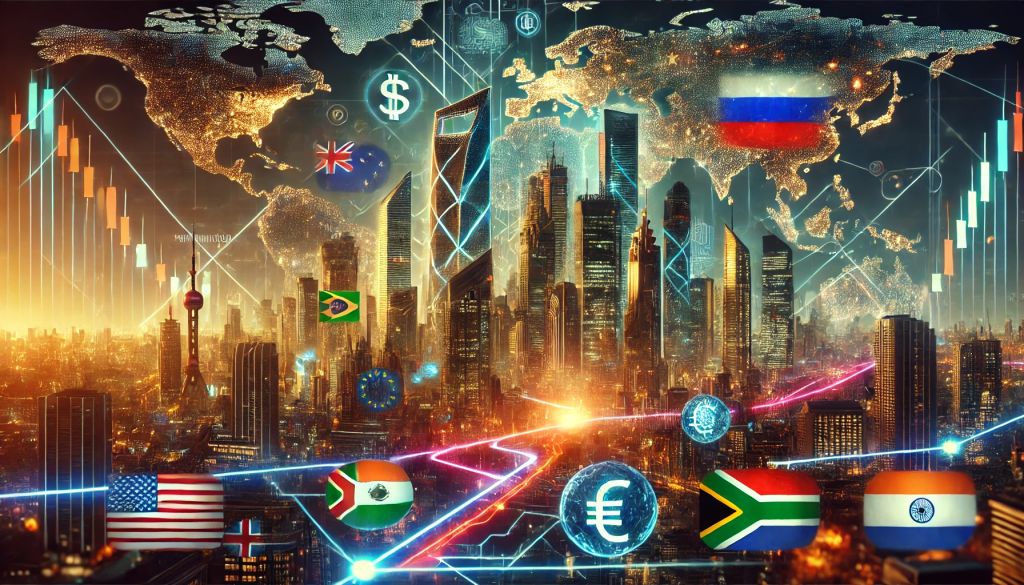
BRICS has evolved from an economic alliance into a geopolitical force challenging Western dominance. Originally conceived as a framework for cooperation among emerging markets, the bloc now pursues a strategic agenda that threatens the global order long shaped by Europe and North America. By fostering economic interdependence, promoting financial independence, and expanding its diplomatic influence, BRICS is positioning itself as a counterweight to Western-led institutions like the IMF, World Bank, and NATO. Its rise signals a shift toward a multipolar world where U.S. and European dominance is no longer assured.
At the core of BRICS’ strategy is economic cooperation aimed at reducing reliance on Western markets and financial institutions. Trade agreements and joint investment projects among Brazil, Russia, India, China, and South Africa strengthen internal resilience while offering developing nations an alternative to the West’s economic model. The New Development Bank (NDB) plays a key role, financing infrastructure and sustainability projects without the political conditions often attached to Western aid. This economic realignment is further reinforced by BRICS’ push to de-dollarize global trade, insulating its members from U.S. financial influence and sanctions. By increasing the use of local currencies and developing alternatives to SWIFT, BRICS is actively undermining the dollar’s global dominance. If oil-producing nations like Saudi Arabia shift toward BRICS’ financial system, the petrodollar system could face serious disruption, weakening the U.S. economy and limiting Washington’s ability to leverage economic power as a foreign policy tool.
For Europe, BRICS represents a different kind of challenge. While not as dependent on the dollar, the EU’s economic model relies on stable access to global markets, raw materials, and energy. BRICS’ growing control over critical resources—such as rare earth minerals, oil, and food supplies—poses risks to European industry. Russia and China have already demonstrated a willingness to use trade as a geopolitical weapon, and as BRICS strengthens its economic ties, European access to these resources could become more costly and politically conditional. Additionally, BRICS’ growing influence in Africa, Latin America, and the Middle East threatens Europe’s traditional soft power approach in these regions. By providing loans and investments without Western-style conditions, BRICS is offering an appealing alternative to nations wary of IMF-imposed austerity. This shift weakens Europe’s ability to shape international policies and erodes its influence in regions it has long considered strategic.
Beyond economics, BRICS is reshaping global diplomacy by advocating for a multipolar world. The bloc frequently aligns its positions in the UN, G20, and WTO, pushing for reforms that reduce Western dominance. By expanding its membership to include emerging economies across the Global South, BRICS is creating a parallel alliance network that enables countries to resist Western pressure. The potential inclusion of Iran and other anti-Western regimes raises concerns about a new axis of influence that could counterbalance NATO and other Western-led security alliances. While BRICS is not yet a military pact, growing defense cooperation—particularly between Russia and China—suggests that security coordination could become more structured over time.
Technology is another battleground where BRICS threatens Western leadership. China and India are emerging as global tech powerhouses, while Russia excels in cybersecurity and artificial intelligence. If BRICS nations successfully develop independent digital ecosystems—ranging from payment systems to semiconductor industries—Western tech companies may lose access to key markets. The push for BRICS-led internet infrastructure could also fragment global digital governance, reducing the West’s ability to shape online policies and monitor cyber threats. Meanwhile, BRICS’ emphasis on state sovereignty and non-interference in domestic affairs provides an ideological alternative to the Western model of governance. As more nations align with this approach, the ability of the U.S. and Europe to promote democracy, human rights, and free-market policies could diminish.
BRICS is not just an economic alliance, but a structural challenge to the Western-led world order. By advancing financial independence, expanding geopolitical influence, and fostering technological self-sufficiency, the bloc is steadily eroding the dominance of Western institutions. While internal divisions and logistical hurdles remain, BRICS’ trajectory suggests that Europe and North America must adapt to a world where their influence is no longer guaranteed. Whether the West engages with BRICS on more equal terms or resists and risks further global fragmentation will determine the shape of international relations in the years to come.
Canada has long been defined by its vast natural resources, exporting raw commodities like oil, lumber, minerals, and agricultural products to its largest trading partner, the United States. This resource-based economy has created prosperity, but left Canada vulnerable to global market fluctuations and overreliance on one major partner. Imagine, however, a seismic shift where Canada halts raw commodity exports to the U.S. and reorients its economy toward value-added manufacturing, inspired by Germany’s renowned industrial model. Such a transformation could redefine Canada’s role in the global economy, fostering innovation, diversification, and resilience.
The cornerstone of this strategy would be transitioning away from the sale of unprocessed resources. Instead of exporting crude oil, Canada could refine it domestically into high-quality petrochemical products, such as plastics and specialty chemicals. Similarly, rather than selling raw lumber, the country could invest in producing engineered wood products, furniture, and prefabricated housing materials. By processing these materials at home, Canada would capture greater value from its resources, create high-skilled jobs, and reduce economic dependency on the United States.
The shift to manufacturing would require a robust focus on innovation, supported by substantial investment in research and development (R&D). Germany’s manufacturing success is largely driven by its Mittelstand—small and medium-sized enterprises specializing in precision engineering, machinery, and high-quality goods. Canada could emulate this approach by fostering clusters of specialized industries in areas such as green energy technology, robotics, and medical devices. Government incentives, tax breaks, and public-private partnerships could nurture these industries and position Canada as a global leader in advanced manufacturing.
Education and workforce development would play a crucial role in this transformation. Canada’s universities and technical colleges would need to prioritize programs in engineering, technology, and applied sciences. Skilled trades would also need to be elevated in prestige and supported through apprenticeships and certification programs, ensuring a steady supply of talent for emerging industries. Drawing inspiration from Germany’s dual education system, which integrates classroom learning with practical experience, Canada could create a workforce tailored to the demands of a high-tech manufacturing economy.
While transitioning to a manufacturing-based economy, Canada would also strengthen its global trade relationships, reducing reliance on the U.S. market. Trade agreements with the European Union, the Comprehensive and Progressive Agreement for Trans-Pacific Partnership (CPTPP) nations, and emerging markets in Africa and Asia would be leveraged to expand exports of Canadian-made goods. This diversification would provide stability in the face of economic or political disruptions in any one region.
Environmental sustainability would underpin this economic transformation. With global demand shifting toward eco-friendly products, Canada’s manufacturing sector could focus on producing green technologies, such as electric vehicles, renewable energy infrastructure, and energy-efficient building materials. These industries would not only align with Canada’s climate commitments but also tap into growing markets worldwide.
However, such a dramatic shift would not be without challenges. Significant upfront investment, trade tensions with the U.S., and resistance from established industries would need to be managed. Yet the long-term benefits—a diversified, innovative, and resilient economy—would far outweigh the short-term obstacles.
By embracing value-added manufacturing, Canada could break free from its resource-dependent past and secure a prosperous, sustainable future. This shift would allow the country to redefine its economic identity, becoming not just a supplier of raw materials but a global leader in high-quality, innovative goods.
Ever feel like your life is an endless RSVP? Invitations roll in: “Come to this event! Join me for that activity! Let’s grab a drink!” It’s lovely to be included, truly. But what’s less lovely are the interrogations that follow when I politely decline.
“What are you doing instead?” “Are you feeling okay?” “Wait… who’s more important than me?”
Ah, the joys of boundary-setting in a world that thrives on FOMO and social expectations.
This isn’t my first rodeo with the honesty vs. transparency debate, but today I want to shift the focus. It’s not about what I say to others – it’s about how I choose to live my daily life. For me, it’s far simpler (and far more satisfying) to opt in when I genuinely want to connect than to constantly opt out to preserve my space.
If the world were a little more straightforward, I’d label my lifestyle as that of a Solo Polyamorous Relationship Anarchist (or SoPoRA for short). What does that mean? It’s a big mouthful, sure, but at its core, it’s a fancy way of saying I value my autonomy and independence while cherishing meaningful, non-hierarchical connections with others.
Solo Polyamory is all about embracing the beauty of being my own primary partner, while maintaining multiple, consensual relationships. It’s not about having less love – it’s about loving without turning my life into a game of musical chairs, where one partner automatically claims the “primary” seat.
And Relationship Anarchism? That’s the freedom to reject societal scripts about how relationships should work. No automatic rankings of romantic partners above friends. No forcing connections into neat little boxes labeled “partner,” “friend,” or “fling.” Instead, each relationship is uniquely crafted based on mutual agreement and organic growth.
Now, before you picture me as some lone wolf prowling around in emotional isolation, let me clarify: this choice doesn’t mean I don’t value connection – it just means I thrive on creating it without compromising my independence.
But what this looks like practically, I hear you ask? Well, I love my space – my home is my sanctuary, and it’s where I recharge. I set firm personal boundaries to maintain my autonomy – this isn’t selfish – it’s self-care. Communication is my superpower – I prioritize honesty, consent, and mutual understanding with anyone I’m involved with.
Solo Polyamory and Relationship Anarchism require a level of self-awareness and emotional intelligence that can feel like a full-time job some days. But the rewards? Oh, they’re worth it. There’s a joy in living authentically, in crafting connections that adapt as people grow, and in knowing every “yes” you give is genuine.
So, the next time I politely decline an invitation, know this: it’s not about you. It’s about me choosing to live a life that feels full, free, and fulfilling – one beautifully crafted, consensual connection at a time.
The Canadian government’s announcement of Alto, a new high-speed rail network linking Toronto and Quebec City, marks a watershed moment in the nation’s transportation history. This 1,000-kilometer electrified corridor will connect major urban centers while slashing travel times, with trains reaching speeds of up to 300 km/h. The journey from Toronto to Montreal, currently a grueling five-hour trip by rail, will be cut to just three hours, making it a direct competitor to short-haul flights. More than just a transportation project, Alto represents a long-overdue commitment to sustainable, efficient public infrastructure—one that could reshape how Canadians move between their largest cities.
Canada has been here before, at least in theory. The dream of high-speed rail has surfaced repeatedly over the decades, only to be shelved due to shifting political priorities, economic downturns, or a lack of public and private investment. In the 1960s, CN’s TurboTrain attempted to bring high-speed service to the Montreal-Toronto corridor, but despite its impressive top speed of 225 km/h, it was plagued by technical challenges and ultimately discontinued. Later, in the 1980s, Bombardier proposed a high-speed link between Quebec City and Windsor, but enthusiasm waned in the face of funding concerns and political inertia. Meanwhile, other nations surged ahead. France launched the TGV in 1981, Japan’s Shinkansen had already been running since 1964, and China rapidly built the world’s most extensive high-speed rail network. Canada, with its vast geography and car-dependent culture, lagged behind, leaving VIA Rail to struggle with aging rolling stock and shared freight tracks that made reliable service nearly impossible.
The Alto project signals a long-overdue course correction. The government has committed $3.9 billion over six years to develop the project, covering environmental assessments, land acquisition, Indigenous consultations, and detailed engineering work. The project’s scale makes it the largest infrastructure investment in Canadian history, with an estimated 51,000 jobs created during construction and a projected annual boost of $35 billion to the national GDP. The selected consortium, Cadence, brings together some of the most experienced transportation and infrastructure firms in the world, including CDPQ Infra, AtkinsRéalis, Keolis Canada, SYSTRA Canada, SNCF Voyageurs, and, notably, Air Canada. With SNCF’s involvement, Alto benefits from France’s decades of expertise operating one of the world’s most successful high-speed rail networks.
Air Canada’s participation in the Alto consortium is a strategic move that acknowledges the inevitable disruption high-speed rail will bring to the lucrative Toronto-Montreal air corridor. As one of the busiest short-haul routes in North America, this segment has long been a key profit driver for the airline, particularly in the premium business travel market. However, with Alto set to offer a three-hour city-center-to-city-center journey—eliminating the hassles of airport security, boarding delays, and weather disruptions—many travelers, especially corporate clients, may shift their loyalty to rail. Rather than resisting this change, Air Canada is positioning itself within the Alto project to maintain influence over intercity travel dynamics, potentially leveraging its expertise in ticketing, loyalty programs, and intermodal connectivity. By integrating rail service into its broader network, Air Canada can remain a key player in the evolving transportation landscape, offering seamless connections between domestic, international, and rail-based travel. This approach mirrors strategies seen in Europe and Asia, where major airlines partner with high-speed rail operators rather than compete head-on, ensuring they remain relevant as travel preferences evolve.
Beyond the economic and technical aspects, Alto represents a fundamental shift in how Canada approaches public transit. For decades, intercity travel has been dominated by cars and airplanes, both of which contribute heavily to congestion and carbon emissions. The Toronto-Ottawa-Montreal corridor is one of the busiest in North America, yet for years, travelers have been forced to endure overcrowded highways, unreliable train schedules, or expensive, inconvenient air travel. High-speed rail changes the equation. Electrified trains eliminate the carbon footprint of regional flights, reducing overall transportation emissions in line with Canada’s climate goals. At the same time, by shifting travelers from cars to rail, Alto can alleviate highway congestion, making regional mobility smoother for everyone.
Connectivity is another major advantage. The Alto corridor isn’t just about linking Toronto, Ottawa, Montreal, and Quebec City—it’s also about providing a reliable transit spine for smaller communities like Peterborough and Trois-Rivières. For decades, these towns have struggled with limited or non-existent rail service, forcing residents to rely on personal vehicles or slow, infrequent buses. With high-speed rail, these regions stand to gain new economic opportunities, easier access to larger job markets, and increased tourism. Countries like France, Spain, and Japan have seen firsthand how high-speed rail can transform regional economies, bringing prosperity to areas once considered too remote to thrive.
At its core, the Alto project is a declaration that public transit is not just an afterthought, but a national priority. Efficient, well-funded public transportation is a hallmark of modern, forward-thinking societies, reducing economic inequality by making mobility accessible to everyone, not just those who can afford cars or flights. It also offers a more comfortable, humane travel experience—one where passengers can relax, work, or enjoy the scenery instead of navigating traffic or enduring the frustrations of airport line ups, and security checks.
Of course, the road ahead is not without obstacles. As my regular readers will know, I am not a fan of Public-Private Partnerships. Large-scale infrastructure projects in Canada have a history of delays, cost overruns, and political roadblocks. Public support, political will, and careful management will be critical in ensuring that Alto doesn’t become another shelved idea. If the government and its private-sector partners can deliver on their promises, however, Alto has the potential to redefine travel in Canada for generations to come.
For too long, Canadians have watched as other countries invested in the kind of fast, efficient, and sustainable transportation systems that make daily life easier. Now, with Alto, Canada finally has the chance to catch up. If done right, this project could mark the beginning of a new era—one where public transportation is recognized not just as a necessity, but as an engine of economic growth, environmental responsibility, and national connectivity.