The haggis (Haggis scoticus), a mysterious and elusive creature, is said to inhabit the remote Scottish Highlands. Long regarded as a cryptid akin to the Loch Ness Monster, the haggis is believed to be a small, fur-covered mammal uniquely adapted to Scotland’s rugged terrain. Its most distinctive feature is its asymmetrical legs, with one side longer than the other. This adaptation allows it to navigate steep hillsides effortlessly but confines it to running in a single direction around slopes—a limitation that has fueled stories of clever hunters capturing them by startling them into reversing course.
Haggises are thought to dwell in heather-clad hills and secluded glens, blending perfectly with their surroundings. Their diet consists of heather shoots, moss, and grasses, and they are rumored to forage near farms for grains like barley, which connects them to their culinary namesake. Some accounts suggest the haggis is nocturnal, emerging under the cover of darkness to avoid predators and humans.
Sightings of the haggis have been rare, often dismissed as folklore or misidentifications of other animals. Yet, local hunters and Highlanders insist on its existence, with tales of encounters passed down through generations. Scientific expeditions to confirm the haggis’s reality have been inconclusive, adding to its mystique.
The haggis remains an integral part of Scottish identity, celebrated in both folklore and tradition. For many, the creature is a symbol of Scotland’s wild beauty and the enduring mystery of its untamed landscapes.
With Doug Ford calling a provincial election for February 27th, 2025, the bigger question is how will this move affect Pierre Poilievre’s federal election ambitions?
The notion that Ontarians prefer to separate their provincial and federal allegiances stems from an observable—but not universal—trend in Canadian voting patterns. Historically, Ontarians have been seen as pragmatic voters who often prioritize balance in governance, particularly when one party’s policies become too dominant at one level of government. This sentiment can manifest as a counterweight strategy: if a party governs provincially, voters may feel the need to elect a different party federally to avoid over-concentration of power. However, the reality is nuanced, and many factors interplay with this perceived pattern.
Historical Context and Party Dynamics For much of Canada’s modern political history, Ontario has served as the battleground that determines national election outcomes. Given its population and seat count in the House of Commons, the province holds disproportionate influence over which federal party forms government. Historically, there have been instances when Ontarians demonstrated a preference for contrasting party control. For example:
1995–2003: While Mike Harris and the Ontario Progressive Conservatives implemented the controversial “Common Sense Revolution,” Ontarians repeatedly supported Jean Chrétien’s Liberal Party at the federal level. Voters may have been wary of similar austerity measures being implemented federally.
2003–2018: During the Ontario Liberal Party’s 15-year rule, the federal Liberal Party experienced both opposition and government periods. However, the Stephen Harper years (2006–2015) saw Ontarians lean Conservative federally, even while backing the Liberals provincially—a testament to their selective pragmatism.
Doug Ford and Ontario Politics Doug Ford’s premiership has been polarizing. His government’s handling of issues like healthcare, education, and pandemic management has garnered both staunch support and fierce criticism. A victory in the upcoming February 27th election would reinforce Ford’s leadership in Ontario and demonstrate voter confidence in his provincial policies. However, his association with the federal Conservative Party—though unofficial—could complicate federal dynamics.
Critics argue that Ford’s policies, including his cuts to social programs and controversial land-use decisions, such as opening portions of the Greenbelt for development, might alienate centrist Ontario voters from Pierre Poilievre’s federal Conservative Party. Many Ontarians may see the potential of a Conservative majority at both levels as a risk to maintaining a balanced political environment, especially if Ford’s policies are seen as misaligned with their values.
Federal Conservatives and Pierre Poilievre Pierre Poilievre’s leadership of the federal Conservative Party marks a shift toward a more populist, right-wing approach. While this strategy has energized parts of the Conservative base, particularly in Western Canada, it remains uncertain how it will resonate with Ontario’s diverse electorate. The province’s suburban and urban voters, who tend to swing elections, may view a Ford-Poilievre tandem as too ideologically extreme.
If Ontarians re-elect Ford, Poilievre may face an uphill battle convincing the province’s moderate voters that his federal policies differ meaningfully from Ford’s. This could weaken the Conservative Party’s ability to make significant inroads in the 905 region, a critical area surrounding Toronto that often decides federal elections.
Counterarguments and Complexities While the separation of provincial and federal voting patterns is an observable trend, it is far from absolute. Some commentators argue that shared governance by the same party can actually strengthen voter confidence if the party is performing well. For instance, Doug Ford’s ability to deliver on infrastructure projects, such as highway expansions, may enhance perceptions of Conservative competence, benefiting Poilievre federally. Additionally, the collapse of the Ontario Liberal Party and the challenges faced by the NDP at the provincial level leave limited alternatives for voters disenchanted with Ford.
Voter behavior is increasingly issue-driven rather than party-driven. Federal and provincial elections are often fought on vastly different platforms. Healthcare, education, and municipal matters dominate provincial elections, while federal campaigns focus on national defense, the economy, and foreign policy. Ontarians may see Ford and Poilievre as addressing separate issues, reducing the perceived risk of a Conservative double government.
While there is historical precedent suggesting that Ontarians often prefer different parties at the provincial and federal levels, it would be reductive to assume that Doug Ford’s re-election would automatically weaken the federal Conservative Party’s chances of winning a majority. Ontarians are pragmatic voters who weigh numerous factors beyond party labels. However, should Ford’s government face mounting criticism or become embroiled in scandals, this could cast a shadow on Poilievre’s campaign, particularly among centrist voters. Conversely, if Ford’s policies resonate with Ontarians and his government appears competent, it could bolster the case for a Conservative federal government.
Ultimately, the outcome will hinge on voter perceptions of leadership, policy, and governance at both levels—a dynamic interplay that defies simple predictions.
In support of my recent posts on Canadian economic sustainability and growth, in the presence of a Trump America, here is a piece about an industry close to my heart.
The story of craft brewing in Ontario is one of evolution, passion, and the persistent balancing act between government support and industry challenges. What began as a niche market for independent brewers has grown into a thriving sector that contributes significantly to the province’s economy. In 2023, Ontario’s craft brewing industry was estimated to be worth over $2 billion annually, with more than 270 craft breweries operating across the province. Despite already capturing approximately 10% of Ontario’s beer market, analysts suggest the industry has the potential to grow even further as consumers increasingly prioritize local, high-quality, and innovative products.
Ontario’s journey with craft beer began in the early 2000s when the government recognized the potential of small breweries to contribute to local economies and create jobs. The establishment of the Ontario Craft Brewers (OCB) association in 2003 marked a turning point. It provided a collective voice for independent brewers, allowing them to advocate for policies and resources that could help them compete with multinational corporations dominating the beer market. A few years later, the provincial government launched the Ontario Craft Brewers Opportunity Fund, a bold $8 million investment aimed at giving small breweries a much-needed leg up. This fund allowed many breweries to upgrade their equipment, improve packaging, and expand their marketing efforts. For many brewers just starting out, these investments were not only helpful; they were essential.
Beyond direct funding, tax incentives played an important role in shaping the industry’s early years. Breweries producing under a certain volume threshold benefitted from reduced excise duties, enabling them to reinvest savings into their operations. These measures helped level the playing field, allowing smaller breweries to compete in a market dominated by large-scale producers.
As the industry grew, so too did the government’s approach to supporting it. By the 2010s, Ontario’s craft beer market was booming, and policies shifted to focus on accessibility and expansion. One of the most significant changes came in 2015, when the province modernized beer retailing laws to allow sales in grocery stores. This move not only increased consumer access to craft beer, but also mandated that 20% of shelf space in participating stores be reserved for Ontario’s craft brewers. This was a game-changer for visibility, allowing small brewers to reach a broader audience, and compete more directly with large brands.
The government’s involvement didn’t stop there. In 2019, as part of the Canadian Agricultural Partnership (CAP), federal and provincial governments allocated over $1 million to help craft brewers adopt cutting-edge technologies, expand their production facilities, and tap into international markets. Rural breweries in particular benefitted from these programs, which often included support for tourism development, event spaces, and collaborations with local farmers. By emphasizing sustainable growth, these initiatives also supported environmental goals, such as reducing energy consumption and waste during brewing.
Despite these successes, government policies have not always aligned with the realities of small breweries. The “Buck-a-Beer” initiative introduced in 2018 is a prime example. While the program aimed to make beer more affordable for consumers by encouraging brewers to sell bottles for $1, it was widely criticized by craft brewers. For most, the economics simply didn’t work: producing high-quality beer at that price point would mean sacrificing either their profits or their standards. Instead, many brewers pushed for continued support in the form of grants and investments that prioritized long-term sustainability over short-term cost-cutting.
Today, Ontario’s craft beer industry is at an exciting crossroads. It has firmly established itself as a key economic driver, employing thousands of people and supporting local supply chains, from hop growers to independent retailers. With its current market size valued at over $2 billion, the sector has significant room to grow. Export programs are helping brewers break into international markets, while domestic consumers continue to seek out innovative, locally-produced beers. There’s also increasing interest in sustainable brewing practices, which could open up new opportunities for breweries willing to invest in eco-friendly technologies.
Still, challenges remain. Many small brewers are calling for expanded distribution infrastructure, particularly in rural areas, and more funding to support water conservation and waste management in brewing processes. Others advocate for greater access to affordable financing for equipment upgrades and facility expansions, arguing that these investments are critical to scaling up production to meet demand.
Ontario’s craft beer industry is a testament to what can be achieved when passion meets strategic support. From humble beginnings to a multi-billion dollar sector, it has proven its resilience and capacity for innovation. With thoughtful policies, ongoing investments, and a continued emphasis on quality and sustainability, the potential for future growth is as bright as the golden ales lining the shelves of Ontario’s breweries.
The notion that employee pensions should be managed independently of corporations originates from a fundamental need to protect workers’ financial futures. This separation is not merely a technicality—it is a safeguard against the potential misuse of pension funds by corporate leadership, especially in times of financial distress. Independent management ensures that pensions are shielded from corporate volatility, providing employees with a sense of stability and security that is often absent when companies control these vital funds.
Corporate history offers sobering lessons about the dangers of letting pensions remain under internal oversight. Nortel Networks, once a telecommunications giant in Canada, serves as a cautionary tale. In 2009, the company declared bankruptcy, leaving thousands of employees with drastically reduced retirement benefits. Nortel’s failure lay in its inability to separate pension funds from corporate finances. When the company collapsed, so did its workers’ financial safety net, illustrating how mismanagement can devastate lives.
Sears Canada provides another stark example of corporate negligence. As the company spiraled into financial ruin, it diverted money earmarked for employee pensions to pay bonuses to executives. By the time Sears liquidated in 2017, many of its workers were left with a fraction of their expected retirement savings. The betrayal of trust was profound, revealing how conflicts of interest and short-term corporate priorities can destroy decades of employee contributions.
Perhaps the most infamous case of pension mismanagement is the collapse of Enron. The energy company’s fraudulent practices led to one of the largest corporate scandals in history. Employees, encouraged to invest their retirement savings heavily in Enron stock, lost everything when the company’s value plummeted to zero in 2001. The devastation was not just financial; it shattered lives, proving how dangerous it can be for pensions to remain under corporate influence, especially when tied to a company’s performance.
In contrast, some systems demonstrate the benefits of independent pension management. The Ontario Teachers’ Pension Plan (OTPP) in Canada stands as a model of success. Completely independent of any single employer, the OTPP operates as a dedicated entity focused solely on securing the financial futures of its members. By keeping pension funds separate from corporate finances, the OTPP ensures that its members’ retirement savings remain insulated from the financial challenges of any individual employer.
Similarly, the California Public Employees’ Retirement System (CalPERS) highlights the advantages of independent oversight. As the largest public pension fund in the United States, CalPERS serves millions of employees by ensuring their pensions are managed with transparency and accountability. Free from the influence of any specific employer, CalPERS protects its members from the risks associated with corporate insolvencies or governance failures.
These examples reveal why policymakers must act to reform pension systems worldwide. Legislation mandating the independent management of pension funds is a necessary first step. By requiring third-party fiduciaries to oversee these funds, governments can protect workers from corporate mismanagement and ensure impartial oversight. At the same time, mechanisms like the U.S. Pension Benefit Guaranty Corporation (PBGC) must be strengthened and expanded globally to insure pension funds against insolvency.
Ethical corporate governance must also be a priority. Boards and executives should be explicitly barred from using pension funds to address short-term financial challenges or boost shareholder profits. Employees deserve to know that their retirement savings will be safeguarded, no matter the economic circumstances.
The stories of Nortel, Sears, and Enron serve as stark reminders of the consequences of inaction. Conversely, models like OTPP and CalPERS offer a glimpse of what is possible when pension funds are managed independently, transparently, and ethically. By learning from both failure and success, policymakers and corporate leaders can build a pension system that prioritizes employees over profit—a system that delivers on its promise of a secure retirement for all.
I’ve noticed a recurring theme in my posts about Star Trek: the pivotal role of the ship’s doctors. These characters aren’t merely healers; they are often the moral compass of the crew, embodying the Federation’s ideals while wrestling with their own internal conflicts. Among these remarkable figures, Dr. Joseph M’Benga stands out as one of the most compelling. His story is one of contrasts – a brilliant healer haunted by the scars of war, a scientist navigating the grey areas of survival, and a father whose love transcends the boundaries of science.
M’Benga’s medical expertise, especially his unparalleled understanding of Vulcan physiology, was forged during his internship on Vulcan; a testament to his dedication and intellect. As one of Starfleet’s most capable physicians, he saved countless lives aboard the USS Enterprise. But beneath this exterior of clinical precision lay a darker, more complex history. During the Klingon War, M’Benga served as a covert operative. His prowess in combat earned him the chilling nickname “the Ghost,” reflecting a lethal efficiency that starkly contrasted with his mission to preserve life. The brutal Battle of J’Gal left him grappling with the weight of his actions, and the moral compromises he was forced to make.
Amid his wartime trauma, M’Benga faced a deeply personal battle: his daughter Rukiya’s terminal illness. In a desperate bid to save her, he used the transporter buffer to hold her in stasis, preserving her life while searching for a cure. This act was not just an expression of his medical ingenuity, but also of his boundless love as a father. When the time came to release her into the care of a sentient nebula being, a decision that symbolized profound sacrifice, it underscored the depth of his humanity. M’Benga’s choice was not merely a scientific solution, but an emotional resolution, allowing Rukiya to transcend her suffering in a way that was both heartbreaking and hopeful.
Aboard the USS Enterprise, M’Benga’s dual roles as healer and soldier were constantly at play. Under Captain Pike’s leadership, and later Captain Kirk’s, he treated everything from routine injuries to the aftermath of violent battles. Whether guiding Spock through the complexities of Vulcan healing trances or wrestling with the moral dilemmas of triage in wartime, M’Benga embodied resilience and compassion. His quiet strength anchored the crew during moments of crisis, even as his personal burdens weighed heavily on him.
Though eventually succeeded by the iconic Dr. Leonard McCoy as Chief Medical Officer, M’Benga remained a vital figure in Starfleet’s medical corps throughout the 2260s. His later years saw him move to Stanford Medical Center, where he continued his medical practice before retiring to Vulcan. On the tranquil Vulcan plains, far from the chaos of starships and battles, M’Benga embraced a simpler existence as a plomeek farmer. This peaceful conclusion to his journey provided a stark contrast to his earlier life, symbolizing his desire to heal not only others but also himself.
Dr. Joseph M’Benga’s legacy in Star Trek is a testament to the duality of the human experience. Healer and warrior, scientist and survivor, his story is one of navigating trauma, moral ambiguity, and the unyielding tension between the preservation of life and the necessity of taking it. In the vast expanse of the Star Trek universe, M’Benga stands as a nuanced and deeply human reminder of the struggles and sacrifices that define us all – both on Earth and among the stars.
It’s not my normal practice to praise government agencies, and in this case I am going to make an exception. Policy Horizons Canada, a government organization focused on strategic foresight, plays a critical role in preparing Canada for potential futures through comprehensive research and scenario analysis. Utilizing an interdisciplinary approach, Policy Horizons examines broad socio-economic and technological trends, such as climate adaptation, digital transformation, and biodigital convergence, to help government and society anticipate and plan for long-term changes. This work emphasizes “futures literacy,” equipping policymakers with insights and foresight tools to address complex, emergent issues, such as the integration of AI in workplaces, evolving public health challenges, and climate migration impacts .
Among Policy Horizons’ notable contributions is its exploration of the “biodigital convergence,” which envisions a future where biological and digital technologies increasingly intersect, creating new possibilities but also ethical and regulatory challenges. This framework considers transformative scenarios, like personalized medicine and bioengineering, which could radically alter healthcare, industry, and even environmental management. These foresight studies are designed to prompt policymakers to evaluate possible outcomes proactively, considering both risks and opportunities.
Through initiatives like “Futures Week,” Policy Horizons collaborates with global experts, including representatives from the European Commission and other international foresight leaders, to identify common global themes and challenges. Such collaboration highlights the shared nature of many future-oriented issues, from climate resilience to geopolitical shifts, thus facilitating cooperative foresight and solutions. This global engagement is essential for building resilient, sustainable strategies that align with evolving global dynamics.
Policy Horizons also shares knowledge through accessible formats, including publications and video series on foresight methodologies. For example, they collaborated with the Strategic Innovation Lab at OCAD University to produce educational videos explaining foresight concepts and processes. These resources make complex foresight techniques available to a wider audience, supporting informed engagement on emerging trends.
Overall, Policy Horizons Canada exemplifies the importance of strategic foresight in governance. By identifying potential disruptors and engaging diverse perspectives, they equip Canadian policymakers with critical insights to navigate the uncertainties of tomorrow, ensuring a more resilient and adaptable society.
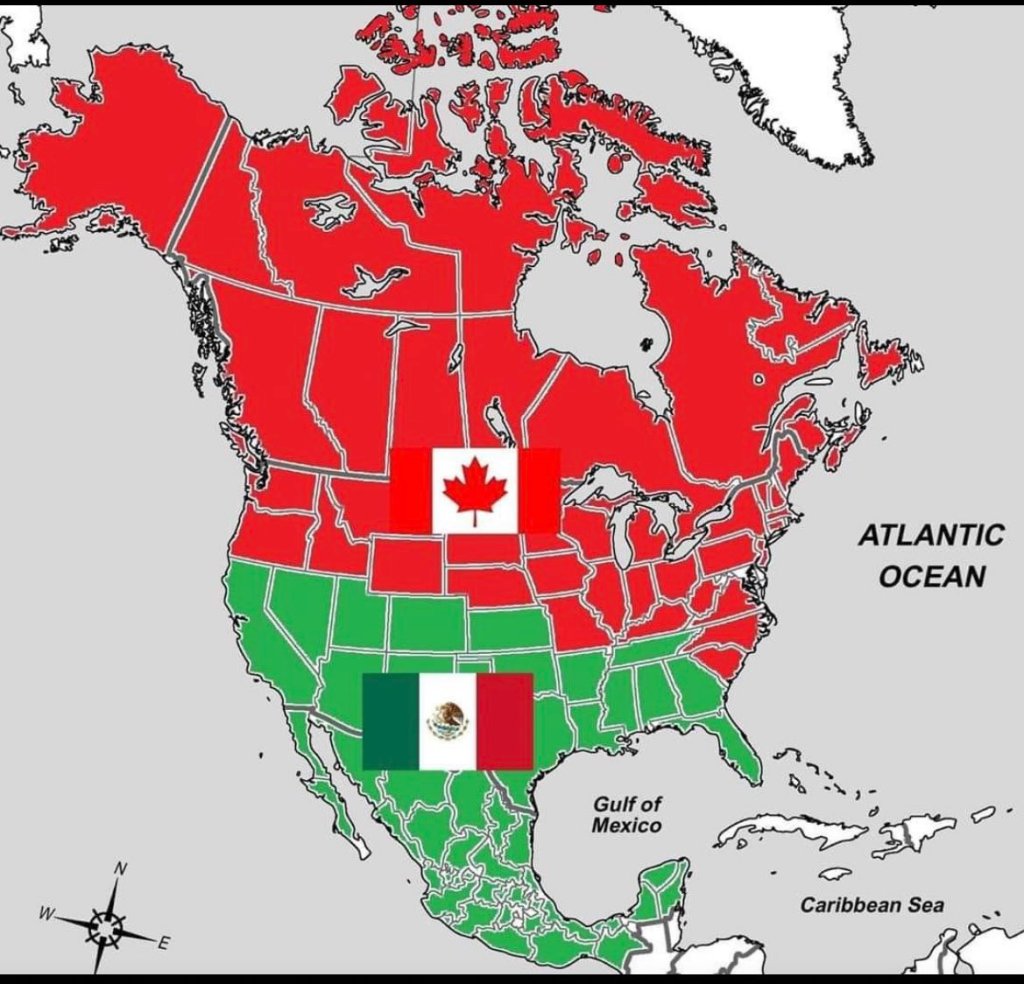
It began in the aftermath of the Trump years – a nation divided, fractured at its very core. The United States, once a symbol of strength and unity, had unraveled under the weight of its own polarization. Years of escalating political infighting, economic instability, and growing regional tensions had pushed the great experiment of American democracy to its breaking point. When the collapse came, it was not with a bang, but with a slow, inevitable unraveling.
In the early 2030s, the federal government, weakened by years of partisan gridlock and financial crises, failed to contain the growing unrest. States, long at odds over issues of governance, resources, and ideology, began asserting their independence. California, Texas, and other powerful states declared their sovereignty, severing ties with Washington, D.C., and leaving the remnants of the federal government powerless. What was once a union of fifty states dissolved into chaos.
As the world watched in shock, two nations quietly stepped forward: Canada and Mexico. Both had been America’s neighbors and partners, but now, they saw an opportunity, and a necessity, to reshape the continent.
The Canadian Annexation To the north, Canada extended a cautious but determined hand to the crumbling states along its border. The former states of Michigan, Minnesota, North Dakota, and Montana, facing economic collapse and a bitter winter with no central government to guide them, sought refuge under Ottawa’s governance. Canada, ever pragmatic, offered them integration in exchange for loyalty to its parliamentary system and adoption of its healthcare and social policies.
The Pacific Northwest—Washington, Oregon, and northern California—quickly followed. Their progressive politics and environmental priorities aligned well with Canada’s ethos. Vancouver and Seattle became twin metropolises, and the region flourished under Canadian stewardship. The newly expanded Canada, now stretching as far south as the Sierra Nevada, became an economic powerhouse, blending American innovation with Canadian stability.
Mexico’s Revival To the south, Mexico reclaimed lands it had lost centuries earlier. Texas, Arizona, New Mexico, and southern California were among the first to fall into its orbit. For these states, heavily influenced by Hispanic culture and history, the transition was both practical and symbolic—a return to roots.
Mexico, long underestimated on the global stage, rose to meet the challenge. The integration of these territories revitalized its economy, spurred technological innovation, and solidified its status as a regional superpower. Cities like Los Angeles and Austin, while retaining their unique identities, became hubs of a new Mexican-led cultural renaissance. Spanish replaced English as the dominant language in much of the region, and Mexico’s influence spread northward.
A Continent Redefined By the 2040s, the map of North America had been redrawn. Canada and Mexico had divided the former United States almost evenly, with a handful of independent city-states like New York and Chicago remaining as neutral enclaves. The continent was no longer dominated by a single superpower but by two distinct and rising nations, each shaped by the remnants of the United States they had absorbed.
Canada, now stretching from the Arctic to the Rockies and the Great Lakes to the Pacific, became a beacon of progressive governance and environmental stewardship. Mexico, infused with the energy of its newly integrated territories, grew into a vibrant economic and cultural force, bridging Latin America with the former United States.
The world adapted to this new reality. China and the European Union moved to fill the void left by America’s collapse, but Canada and Mexico ensured North America remained a critical player on the global stage. Though the stars and stripes had fallen, the legacy of the United States lived on—in the governments, cultures, and people of its successor states.
And so, the great American experiment ended, not in triumph or tragedy, but in transformation, a testament to the resilience of a continent and the enduring power of reinvention.
I am polyamorous, and have been for many a year. I cultivate and maintain a network of secure attachment relationships with people who are also polyamorous, who often have multiple partners of their own. I prefer to date and partner with experienced poly people, and occasionally someone crosses my path that feels so aligned that this policy goes out the window, and I get to date a polynewbie.
There will be many more posts on relationships in the 21st Century, and in the meantime, this one is where I will be sharing some of my favourite poly quotes, adding to it as the months go by.
Please be aware, while I am happy to discuss relationship dynamics, I am not interested in any negative commentary, and will block any source of unthinking, rude or obnoxious messages.
I hope you enjoy these thoughts. I tend to use the Canadian English spelling of polyamorous, but when posting quotes I use exactly what and how it was published.
”The quality of a polycule is directly proportional to the communication skills of its least emotionally secure member. Or, if you prefer something gentler, less absolute, more accepting. A polycule’s health depends less on its most skilled communicator, than on how well its least secure member feels heard. ” – @chrismcbean.bsky.social
“Polyamory (noun): when multiple people are plotting to care about you, a wholesome conspiracy” – @PolydotLand
“Polyamory is NOT endless orgies, nor is it cuckoldry with extra steps.
Polyamory is two idiots walking down the street holding hands debating with one another about how each of them should ask out their respective crushes, and then neither of them following through.” – @5aximus
“Solo polyamory helps me go at a comfortable pace. Now that I’m no longer entering relationships with a particular goal in mind, like marriage or cohabitation, I’m not in a rush to find out whether a partner can give me those traditional markers of relational success/fulfilment.” – @unapolygetic
“Your significant other is allowed to have meaningful relationships with other people. Your significant other is allowed to get things from those relationships that they don’t get from you. Demanding you be the only source of pleasure and support in their life is possessive and toxic.” – @LadylsAVamp_
“I was asked, ‘who is your best friend?’ I don’t know. I don’t use language like that anymore. It doesn’t fit. I have friends that hold the keys to different doors of my personality. And some open my heart. Some my laughter. Some my sin. Some my civic urgency.” – @abgljoe
“One of my favourite challenges posed by polyamory lies in its potential to undermine the idea that women are ‘rivals’ for the attentions of men. Hey, what if we are ‘collaborators’ in loving and supporting our mutual partners? I know, wild eh …” – @carriejenkins
“Solo polyamory is finding it more enjoyable to opt in to spending time with people as opposed to opting out to get my own space.” – @PolyamAwareness
“Relationships fail when people take their own insecurities and project them as their partner’s flaws.”- @stevemaraboli
On the eve of the US TikTok shutdown/ban, perhaps we should remind ourselves that it’s not just the Chinese that need watching when it comes to the misuse of our personal digital data.
The $5 billion fine paid by Meta (then Facebook) in 2019 should serve as a wake-up call for anyone involved in the world of social media—users, businesses, and regulators alike. This penalty, stemming from Facebook’s mishandling of personal data during the infamous Cambridge Analytica scandal, was a stark reminder of the risks associated with lax privacy policies and opaque data-sharing practices. While it was the largest fine ever imposed by the FTC for a privacy violation, the broader lessons extend far beyond the numbers.
The Cambridge Analytica incident revealed just how vulnerable our personal data is in the digital age. Millions of Facebook users had their information harvested through a seemingly harmless personality quiz, with the data then sold and weaponized for political purposes. What’s chilling is how easy it was for this to happen. Users were unaware that agreeing to share their data also meant exposing their friends’ information. This wasn’t just a breach of trust—it was a blueprint for how our digital lives could be exploited without our knowledge.
For Meta, the $5 billion fine was more than just a financial penalty; it was a public relations nightmare. The company was accused of violating a 2012 agreement with the FTC that required stricter privacy protections, and the backlash raised serious questions about whether tech giants could ever be trusted to regulate themselves. Yes, the settlement required Facebook to implement stronger accountability measures, but for many, this felt like too little, too late. Trust, once broken, is hard to rebuild, and Meta’s struggle to regain credibility continues to this day.
What can we learn from this? For one, transparency is no longer optional. Social media platforms must be upfront about how they collect, use, and share data. The days of burying crucial details in endless terms and conditions are over—users demand clarity. At the same time, regulators must take a more active role in setting and enforcing boundaries. If a $5 billion fine barely dents a company’s bottom line, then the penalties aren’t severe enough to deter bad behavior. Stronger consequences and stricter oversight are needed to keep tech companies accountable.
For everyday users, the lesson is clear: we must be vigilant about our digital footprint. Social media platforms are built on the currency of our data, and if we don’t value it, no one else will. That means thinking twice before clicking “accept” and understanding the implications of sharing personal information online. It also means holding platforms accountable by demanding better privacy protections and supporting legislation that puts users’ rights first.
The Meta fine wasn’t just a punishment—it was a warning. If we don’t take action to protect privacy, both individually and collectively, the next data scandal could make Cambridge Analytica look tame by comparison. The future of social media depends on whether we learn these lessons or allow history to repeat itself.
Canada’s economy has long been shaped by the extraction and export of raw commodities, often at the expense of capturing the greater value that comes from refining and manufacturing. While the federal and provincial governments frequently court large corporations to build processing facilities and high-tech manufacturing plants, this approach has significant drawbacks. Large multinationals tend to demand generous tax incentives, subsidies, and regulatory leniency, often draining public resources with little long-term benefit to local communities. A far more sustainable and equitable path lies in empowering Canada’s small and medium enterprises (SMEs) to lead the charge in developing vertical supply chains and producing high-end, value-added goods. This approach mirrors the model used by Germany, where a thriving network of small and medium-sized enterprises, known as the Mittelstand, drives economic growth, innovation, and export strength.
SMEs represent over 98% of all businesses in Canada and employ the majority of the workforce. These businesses are rooted in their local communities, reinvesting profits, fostering innovation, and creating jobs that benefit Canadians directly. Unlike large corporations, which often export profits abroad or automate local jobs, SMEs are more likely to prioritize long-term regional development. By focusing on this segment of the economy, Canada can avoid the pitfalls of corporate dependency while building a resilient, homegrown industrial base. Germany’s success with the Mittelstand has demonstrated that supporting SMEs can produce world-class companies while spreading economic benefits across regions rather than concentrating wealth in a few urban centers.
Supporting SMEs to move into value-added production requires targeted investment in several areas. First and foremost, SMEs need better access to funding. While large corporations negotiate multi-million-dollar subsidy deals with governments, small businesses often struggle to secure financing for research, infrastructure, and expansion. By redirecting public funds toward grants, low-interest loans, and cooperative funding models for SMEs, governments can ensure that public money stays within the Canadian economy. For example, small agricultural businesses could use this funding to process raw grain into plant-based protein products, while forestry SMEs could invest in engineered wood production for global markets. Much like Germany’s regional banks that provide financing tailored to small businesses, Canada could establish financial mechanisms that focus on the unique needs of SMEs.
Collaboration is another area where SMEs can thrive, given the right support. Unlike large corporations, which tend to centralize operations, SMEs naturally form networks of local producers, processors, and distributors. These networks could be further strengthened through government incentives for regional industry clusters. For instance, creating hubs where SMEs collaborate on processing critical minerals, manufacturing advanced materials, or producing green technologies would not only increase efficiency but also ensure that economic benefits are widely distributed. These clusters could also partner with universities and research institutions to develop cutting-edge products and processes, bridging the gap between innovation and commercialization.
A key advantage of SMEs is their ability to adapt quickly to changes in market demand and technology, something large corporations often struggle to do. This makes them ideal candidates for leading Canada’s transition to sustainable and green manufacturing. Many small businesses are already pioneering initiatives such as converting agricultural waste into bioplastics or developing renewable energy technologies. Investing in these efforts not only aligns with Canada’s climate goals but also positions the country as a leader in environmentally conscious production. Large corporations, by contrast, often prioritize short-term profits over sustainability, making them less reliable partners in achieving green economic growth.
Workforce development is also critical to supporting SMEs in building vertical supply chains. While large corporations may import expertise or automate jobs, SMEs are more likely to invest in training local workers. Expanding vocational programs and offering targeted apprenticeship opportunities for small businesses can ensure that Canadian workers have the skills needed for advanced manufacturing and value-added production. This approach would build a skilled workforce that remains tied to local communities, further anchoring economic growth. Again, Germany’s dual education system, which integrates apprenticeships with classroom training, offers a valuable model for Canada to emulate.
Focusing on SMEs allows Canada to build a strong national identity around its products. “Made in Canada” can become synonymous with quality, sustainability, and innovation if the country prioritizes small-scale, high-value production over raw commodity exports. Government branding initiatives and export incentives tailored to SMEs can open global markets for uniquely Canadian goods, from artisanal food products to cutting-edge clean technologies. Large corporations, by contrast, tend to dilute the national brand as they integrate Canadian resources into global supply chains, often leaving little trace of their origins.
Prioritizing SMEs over large corporations is not only a more equitable approach but also a more practical one. It minimizes dependency on multinational firms that can relocate at a moment’s notice and maximizes the long-term benefits of economic activity for Canadians. Germany’s Mittelstand has shown how a strong SME sector can build a resilient economy, drive innovation, and maintain global competitiveness. By adopting a similar model, Canada can transform its resource economy into a diversified, high-value manufacturing powerhouse. This strategy isn’t just about economics—it’s about reclaiming control over Canada’s future and ensuring that the wealth generated by its resources benefits the people who live here.















 The Rowanwood Chronicles