Lets Grow Cooperative Food Stores

As food prices at national supermarket chains continue to rise, local cooperative food stores offer a traditional, yet innovative alternative. Member-owned co-ops blend economic participation with social and environmental values, prioritizing community needs over profits. This model, which began in Canada in 1861 with coal miners in Nova Scotia, has grown steadily, with 435 food co-ops operating nationwide by 2022—a 12% increase since 2017.

Cooperative food stores operate democratically, with members sharing decision-making power. Each member has an equal vote on store policies, product selection, and profit distribution, ensuring decisions align with community priorities. According to the Canadian Co-operative Association (CCA), co-ops reinvest profits into infrastructure, local sourcing, and expanded services, creating direct economic benefits for members. In some cases, profits are distributed as member dividends, fostering further local investment.

These stores emphasize sustainability and local sourcing, reducing the carbon footprint associated with long-distance food transportation. A 2020 study by the Co-operative Housing Federation of Canada found that co-ops frequently engage in sustainable practices, supporting regional food security and small-scale farmers. The National Farmers Union of Canada reported in 2021 that 25% of local farmers primarily sell through co-ops or farmers’ markets, helping small producers compete in a market dominated by corporate chains.

Co-ops also strengthen community ties. Many host educational programs, cooking classes, and partnerships with local farmers, promoting food sustainability while fostering social cohesion. By prioritizing ethical sourcing and environmental practices, co-ops encourage responsible consumption and sustainable lifestyles. Examples such as Toronto’s Karma Co-op, founded in 1972, demonstrate the success of this model. With over 3,000 members, it provides organic, local, and sustainably sourced products while serving as a hub for community engagement.

Despite their benefits, co-ops face challenges. Start-up costs and membership fees can be barriers for low-income communities, while reliance on loans adds financial pressure. Decision-making in larger co-ops can be slow, as democratic processes require consensus. Additionally, their focus on local and organic goods may limit product variety and occasionally drive up prices compared to large grocery chains.

Nonetheless, the advantages of co-ops—community ownership, support for local economies, sustainability, and affordability—make them a compelling alternative to for-profit supermarket chains. With 65% of Canadians prioritizing local and organic food, the cooperative movement aligns with consumer preferences and offers a path toward more resilient, equitable food systems.

By empowering communities to take control of their food supply, co-ops address concerns around food security and environmental sustainability. As demand for ethical and community-driven food systems grows, the cooperative model is poised for continued success in Canada, offering a viable solution to rising food costs and corporate domination of the grocery industry.

The Return of the Northumberland Line 

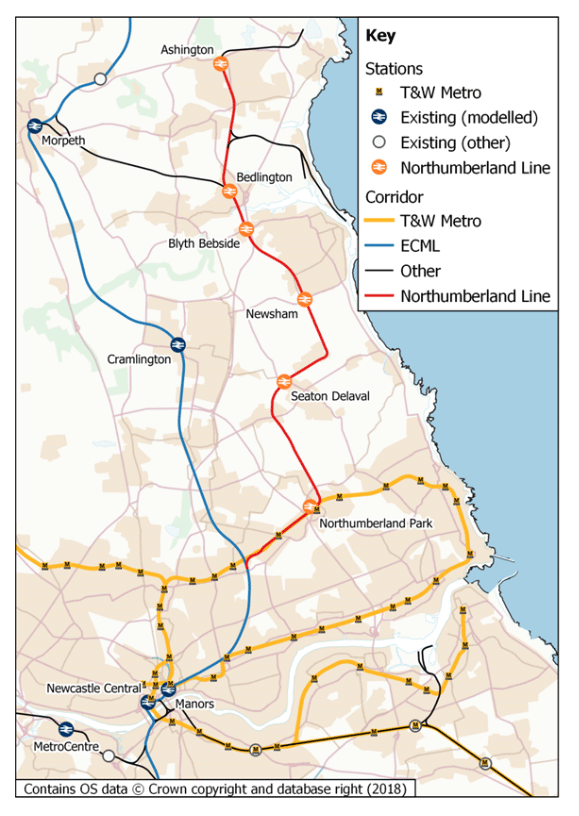
After more than 60 years, passenger services have returned to the Northumberland Line, reconnecting rural Northumberland to Newcastle and the wider UK rail network. Officially reopened on December 11, 2024, this project represents a significant milestone in North East England’s transport history, reversing the cuts of the Beeching era and reigniting the economic and social potential of the region.

A History Restored
The Northumberland Line was once part of the Blyth and Tyne railway network, integral to the industrial heartland of the region. However, passenger services ceased in 1964 due to the sweeping Beeching cuts, which prioritized cost-saving over connectivity. For decades, residents of towns like Ashington and Bedlington, which were once mining hubs, were left reliant on buses and cars for transportation.

Last passenger train 1964

Calls to reopen the line grew over the years, driven by the decline of local industries and increasing traffic congestion. Recognizing the need for improved transport infrastructure, a coalition of local councils, regional transport bodies, and the UK government invested £298.5 million to make the project a reality.

Rebuilding the Connection
The reopened line stretches 12 miles, linking six newly constructed or refurbished stations, including Ashington, Bedlington, Blyth Bebside, and Seaton Delaval, with Newcastle Central Station. Modern amenities, such as accessible platforms, onboard Wi-Fi, and spaces for bicycles and wheelchairs, make it a 21st-century solution tailored to today’s commuters.

Trains, operated by Northern Rail, run every 30 minutes during weekdays and hourly on evenings and Sundays. Notably, travel is priced affordably, with fares from just £1 for under-21s and a maximum of £3 for peak journeys between Ashington and Newcastle.

Integrated into the Wider Network
The Northumberland Line is seamlessly integrated into the Tyne and Wear Metro via Newcastle Central Station, giving passengers direct access to destinations across Tyneside, Sunderland, and Newcastle International Airport. This connectivity makes it easier for commuters, students, and tourists to move between rural Northumberland and urban centers, reducing reliance on car travel and alleviating congestion on major roadways.

The historical Newcastle Central Station is a vital hub on the East Coast Main Line, linking Northumberland Line passengers to long-distance services to London, Edinburgh, and beyond. This integration with both regional and national networks transforms the reopened line into a bridge between local communities and broader economic opportunities.

A Catalyst for Regional Growth
The project’s goals extend beyond transport. By improving access to education, employment, and leisure, it aims to stimulate economic development in towns along the line. For example, easier commutes to Newcastle could attract new businesses to Ashington and Blyth, while better transport links are expected to boost tourism in the region. The line also supports the region’s climate goals by encouraging a shift from cars to public transport, reducing congestion and emissions.

A Model for the Future
The Northumberland Line reflects a growing recognition of the value of rail in reconnecting underserved communities. It is part of the UK government’s Restoring Your Railway initiative, which seeks to reverse decades of cuts and restore lines that once served as lifelines for rural and industrial areas.

First train of the new era

As the first passenger train in over six decades pulled into Ashington Station on opening day, it symbolized more than just the return of a rail service. It marked the renewal of hope, opportunity, and a commitment to sustainable transport. The Northumberland Line is not just a revival of a forgotten route—it is a promise of what thoughtful investment in public infrastructure can achieve..

Limitarianism – A Balanced Way Forward 

With the US oligarchy taking over the White House next year, it’s time to look at what we need to develop to counter the mess and the broken economy they will leave post-Trump’s presidency. Philosopher Ingrid Robeyns, a leading proponent of limitarianism, argues that beyond a certain threshold, wealth does not significantly improve individual well-being, and may cause harm to others by perpetuating inequality and reducing collective welfare. While not a new idea, with historical thinkers such as Plato and JP Morgan espousing similar concepts, perhaps it times to further explore limitarianism.

Limitarianism is a philosophical and political concept that advocates setting limits on individual/family wealth to promote social equality, reduce harm caused by extreme wealth accumulation, and ensure fair distribution of resources. It is rooted in ethical considerations about justice, sufficiency, human welfare, and a sustainable environment. 

The philosophy suggests that extreme wealth is morally problematic, especially in societies where poverty and inequality persist. Excess wealth could be better used to address social issues like hunger, education, or healthcare. The accumulation of excessive wealth can lead to an imbalance of power, undermining democratic institutions. Wealthy individuals may exert disproportionate influence over political systems, media, and public policies. How many times have we seen this in western-style G7 democracies in recent years, where the right do everything they can to protect their wealth and power, while working people can’t pay for the basics of housing, food and transportation? 

Supporters of limitarianism argue for changes in taxation on income, inheritance, and wealth to cap extreme fortunes, along with a redistribution of excess wealth to fund programs like Universal Basic Income (UBI), ensuring a safety net for all citizens. Critics argue that wealth limits could stifle innovation, entrepreneurship, and economic growth, while curtailing personal liberties, and especially the right to accumulate multi-generational wealth.

While enforcing wealth caps, and managing global disparities in wealth distribution can be challenging in practice, limitarianism is gaining traction in debates on wealth inequality, especially in light of growing disparities between the ultra-rich and the rest of society. Movements advocating for wealth taxes and income redistribution often draw from limitarian principles to challenge the concentration of wealth and power.

As a leading advocate for limitarianism, Robeyns argues that extreme wealth is both unethical and harmful to democracy. She proposes a wealth cap of approximately €10 million, emphasizing that any surplus beyond what is needed for a flourishing life could be redirected toward societal challenges like the climate crisis or inequality. Where do you stand on this issue? For me, it seems like one possible set of mechanisms to help rebalance the redistribution of resources, while still supporting a western-style capitalist growth economy.  

Is this the End Of Civilization as We Know It?

Within the Hitchhiker’s Guide to the Galaxy, a trilogy told in five parts, Douglas Adams postulates that a rapid increase in the number of high street shoe shops is a clear indicator of the impending collapse of a civilization. Today, I am suggesting that Adams got it wrong; and instead of shoe stores, it’s the never ending construction and use of indoor storage facilities that is the harbinger of our society’s inevitable doom. 

H2G2 Cover

Why are we so fixated upon storing possessions that will rarely see the light of day again? Boxes of paperwork, generations of photos, and great grandma’s old wooden chest are just some of the items our kids will be dealing with at the end of our days.  Current monthly rentals run in the order of $200 to $500 for storing all our knickknacks, and the cubic capacity for conserving our personal histories continues to rise. 

During the pandemic, an acquaintance actually bought a second house because his primary residence was full, and he had run out of room to store his constantly growing collection of furniture, art and books.  Last year, I filled a large dumpster with a small part of my life’s detritus, and it was difficult to see the difference. This year, I gifted hundreds of books and DVDs to a local charity, and I finally felt some weight lifted from my shoulders. My closets are next, and the hardest part will be the kilts. 

In Sweden, they have the gentle art of death cleaning, where seniors or those battling a terminal illness organize and declutter their homes so as to save their loved ones from the burden of this cumbersome chore while grieving their loss. A more sensible life activity I cannot name, and it is the anthesis of IKEA and its flat pack storage frenzy.   

Paperwork can be digitised, meta-tagged and stored safely in the cloud. Photos likewise, and both collections can be searched and retrieved instantly, if and when needed; whereas great grandma’s chest should either be offered to the kids, or if they don’t want it, (and we all know they don’t want it) sold or gifted to someone who really has a use for it.  

Adams describes civilisation’s collapse because, in the end, all that could be bought were shoes, and so eventually we took to the trees and evolved wings.  Perhaps if we all just dealt with this overflow of physical possessions, communities could use these multi-storey repositories to provide housing and other amenities to help combat the current homelessness and lack of social housing infrastructure. 

Let’s adopt Scandinavian ways, and modify the tradition, so that starting today, indoor storage buildings gain a more meaningful use while decluttering our lives, and lifting all that weight from our shoulders.  In the meantime, I may have found a good home for my kilts within the next generation, and surprisingly, my business suits are being eyed too! 

Craft Stouts Come of Age

The craft beer world has never been shy about pushing boundaries, but few styles have matured with as much creativity and flair as stout. Once seen as a niche offering dominated by roasted malt bitterness and heavy textures, the stout has blossomed into a playground of innovation. From barrel aging to infusions of bold flavors like coconut, coffee, and even cayenne pepper, craft stouts are stealing the spotlight in the beer scene, offering drinkers an experience that is as indulgent as it is complex.

The Evolution of the Craft Stout
Over the last decade, craft brewers have taken stouts to new heights, fueled by a consumer base hungry for unique, premium beers. Enter the “pastry stout” phenomenon, where dessert-like flavors such as vanilla, chocolate, and marshmallow dominate. These beers are bold, sweet, and unapologetically decadent, designed to mimic the profiles of brownies, s’mores, and even birthday cakes.

But the evolution of the stout isn’t just about sweetness. Brewers have fine-tuned their techniques, creating stouts with layers of flavor that go beyond the basics. The result? A more polished, balanced style of beer that caters to seasoned drinkers and newcomers alike.

The Allure of Barrel Aging
If there’s one technique that screams sophistication in the craft stout world, it’s barrel aging. By aging their beers in barrels that once held bourbon, whiskey, rum, or even wine, brewers are adding depth and complexity to an already rich style.

Barrel Aged Titania

The process is not just about waiting for the beer to develop; it’s about creating layers. Bourbon barrels bring warm notes of vanilla, caramel, and oak. Rum barrels add a touch of spice and tropical sweetness, while wine barrels contribute tannins and fruity undertones. The time spent in these barrels transforms the beer, creating a velvety, layered drink that feels indulgent and rare.

For breweries, barrel-aged stouts are a way to stand out. Limited-edition releases drive excitement and bring a sense of exclusivity. For drinkers, these beers are an opportunity to explore something artisanal, often saved for special occasions or shared among friends.

Flavors That Go Beyond the Glass
Modern stouts are not just about tradition; they’re a canvas for creativity. Brewers are embracing unique ingredients to elevate their stouts into uncharted territory. The nutty sweetness of toasted coconut pairs beautifully with a stout’s inherent chocolate and coffee flavors, creating a tropical dessert in a glass. A natural match for stouts, coffee adds a roasted edge that ranges from nutty and fruity to dark and bitter, depending on the bean and roast profile. For those of us who love a little heat, cayenne adds a spicy kick to the finish, creating a beer with sweet, roasted notes upfront and a lingering warmth at the end..

A Toast to the Future
Craft stouts have come a long way from their humble beginnings, evolving into a sophisticated and endlessly creative category. Whether it’s a coconut-infused pastry stout, a coffee-forward breakfast beer, or a barrel-aged masterpiece, today’s stouts are redefining what beer can be.

I do have my personal favourites which include Sawdust City’s Titania, Tooth and Nail’s Fortissimo, and Evil Twin’s Even More Jesus; so next time you’re at your local brewery or bottle shop, don’t skip the stout. You might just find your new favorite drink—and a story worth savoring.

Asimov’s Warning Is Just As Valid Today 

Isaac Asimov’s assertion about the “cult of ignorance” in the United States, where the false equivalence of ignorance and knowledge undermines democracy, is disturbingly evident in many elected U.S. leaders. This trend, marked by anti-intellectualism and the rejection of expertise, is not only a historical thread, but also a contemporary issue with serious consequences. When political leaders prioritize personal beliefs or populist rhetoric over evidence-based decision-making, the nation’s progress is stymied.

One glaring example is the response to the COVID-19 pandemic, during which several federal leaders publicly rejected scientific consensus and medical expertise. President Donald Trump, for instance, consistently downplayed the severity of the virus, promoted unproven treatments like hydroxychloroquine, and suggested bizarre remedies such as injecting disinfectant. His administration’s frequent clashes with public health experts, including Dr. Anthony Fauci, showcased a dangerous preference for misinformation over evidence-based policy. This rejection of expertise delayed critical responses, contributing to the unnecessary loss of lives and eroding public trust in institutions.

Climate change denial is another prominent example of Asimov’s warning in action. Despite decades of scientific research and warnings about the catastrophic effects of global warming, U.S. federal leaders like Senator James Inhofe have openly dismissed the issue. Inhofe’s infamous act of bringing a snowball to the Senate floor in 2015 to mock climate change science epitomized the rejection of intellectual rigor in favor of simplistic and misleading arguments. Under President Trump, the United States withdrew from the Paris Climate Accord in 2017, a decision that disregarded global consensus and expert recommendations. This move not only hampered international climate action, but also showcased a willingness to prioritize political posturing over long-term environmental sustainability.

Education policy also reflects this strain of anti-intellectualism. Federal and state leaders have fueled culture wars over curricula, targeting topics like evolution, climate science, and systemic racism. Florida Governor Ron DeSantis, for example, has led efforts to restrict discussions of race and gender in schools, framing them as “woke indoctrination.” His administration’s actions, including banning Advanced Placement African American Studies, reflect a fear of critical thinking and a broader trend of politicizing education. Such measures not only undermine intellectual growth, but also perpetuate ignorance by denying students access to nuanced perspectives.

Another aspect of this “cult of ignorance” is the weaponization of populist rhetoric. Politicians like Marjorie Taylor Greene and Lauren Boebert frequently champion “common sense” over expertise, dismissing intellectual rigor as elitist. Greene’s baseless claims about space lasers causing wildfires or her rejection of vaccine science exemplify how some leaders amplify misinformation to appeal to their base. This rhetoric undermines trust in institutions, promotes conspiratorial thinking, and fosters a climate where ignorance is celebrated over informed debate.

The Trump administration’s broader approach to governance further illustrates Asimov’s critique. From rejecting intelligence assessments on foreign interference in elections to downplaying the impact of climate policies, the administration often sidelined expertise in favor of politically convenient narratives. This pattern was not limited to one administration. Leaders across political spectrums have, at times, embraced anti-intellectualism, whether through denial of scientific consensus, opposition to educational reform, or a reluctance to address systemic issues.

Asimov’s warning resonates because it touches on the core principle that democracy requires an informed citizenry and leaders willing to engage with complex realities. Yet, when leaders dismiss expertise and elevate ignorance to a virtue, they erode the foundations of democratic governance. The COVID-19 pandemic, climate change denial, and educational censorship demonstrate how the conflation of ignorance with knowledge can have dire consequences for public health, global stability, and intellectual progress.

Reversing this trend demands a renewed commitment to intellectual integrity and informed leadership. Politicians must prioritize evidence-based policymaking, foster trust in expertise, and resist the allure of populist rhetoric that sacrifices long-term progress for short-term gains. Only by respecting knowledge and promoting critical thinking can the United States counteract the “cult of ignorance” Asimov so aptly described and ensure a democratic future guided by reason and understanding.

Let’s Talk About Villeneuve’s Dune Universe 

I love the two Dune movies by Denis Villeneuve, and I am totally looking forward to the next chapter, but while I understand the need to simplify the story thread in order to make it work on the big screen, there are some things that need to be either clarified or expanded upon because the North American cultural filter really does distort the true message of Frank Herbert.   

Paul is much more than a manipulative noble. He’s a unique blend of influences: Mentat logic, Bene Gesserit discipline, Atreides honor, Fremen resilience, and Harkonnen cunning. His motivations go far beyond revenge; they stem from a profound awareness of humanity’s need to evolve. Paul doesn’t see his followers as mere tools, but as a complex mix of dangerous power and familial bonds.

Chani, meanwhile, isn’t just a warrior or a symbol of resistance. As a priestess and the daughter of Liet, her identity is deeply tied to the dream of transforming Dune into a flourishing paradise – not merely freeing the Fremen from oppression. She takes on the responsibilities of sisterhood and motherhood with Jamis’s widow and children, embracing them as her own. Chani supports Paul in his journey, urging him forward rather than standing in his way. Her love for Jessica and Alia, as well as her strategic acceptance of Paul marrying Irulan to help curb violence, highlights her strength and adaptability in a survivalist society. She’s a powerful figure shaped by her world, not a reflection of modern individualist ideals.

The Emperor, far from being a frail figure in decline, is rejuvenated by spice, and fully intent on ruling for decades. His ascension to the throne wasn’t simple or clean; he and Count Hasimir Fenring conspired together to poison his older brother thus seizing power. Irulan was never meant to be his heir or confidant; her marriage to Paul was a calculated move to pacify a rival, not that he had much choice. The Sardaukar, his elite soldiers, were formidable warriors, and used to almost destroy the Atreides because the Emperor saw that their martial training could put Duke Leto on the throne.  

Baron Harkonnen is no brutish simpleton. His villainy is sharp and calculated, and his control over his family is absolute. He wouldn’t allow his nephews to act out of turn or be blindsided by an Emperor’s arrival. The film adaptation misses much of his cunning and cruelty, leaving him underdeveloped despite ample material in the books.

The Dune universe isn’t a story of Western saviors reshaping a foreign land. Instead, it’s an intricate tale of a galactic empire steeped in Islamic and feudal traditions, where Western influences have been absorbed into a deeply anti-technological society. Power revolves around the Bene Gesserit, the Noble Houses (the Landsraad), and the Throne, with capitalism playing a significant role especially among the Harkonnens, the Ixians, and the Combine Honnete Ober Advancer Mercantiles (CHOAM). The Fremen represent a mystical and fiercely independent branch of this society, not a passive population waiting for rescue.

Other key elements also feel underexplored in adaptations: the Mentats, the Spacing Guild (which holds immense power by controlling interstellar travel), and Count Fenring, a character rich with intrigue. Perhaps the developing streaming channel shows on HBO will explore these important groups and individuals, using the prequel books as a guide?  The timeline compressions in the movie, where Paul’s journey from exile to commanding a planetary rebellion happens in the span of a pregnancy, lose the gradual buildup that Herbert carefully crafted.

Herbert’s story also draws a clear distinction between feminine and masculine power in his universe. While Jessica and Chani represent different approaches – Jessica wielding the strategic, subtle power of the Bene Gesserit and Chani embodying the pragmatic strength of the Fremen; modern retellings often blur these lines. Herbert’s narrative thrives on the tension and synergy between these power dynamics, especially in characters like Paul and Alia, who combine both elements. Modern interpretations sometimes lose this balance, favoring a more uniform portrayal of power that doesn’t fully reflect the original story’s complexity.

Ultimately, the developing Dune franchise is an epic achievement in storytelling and filmmaking. While adaptations might not capture every nuance, they still offer a breathtaking vision of Herbert’s world. The beauty and ambition of these films are undeniable, even if certain character dynamics or narrative layers are simplified. It’s worth watching and appreciating the scope of what it achieves – even as we continue to discuss what it leaves out.

Honesty vs Transparency

In my world, there is a strong push towards total interpersonal transparency these days. It’s a hard marketing sell by the “authentic living” leadership and coaching community – “Tell it all, be proactive, share everything, spare no detail, be vulnerable”.  As you can imagine, this doesn’t sit well with me, and while I am all for honest, open, clear and direct communication, I am also for keeping parts of my life private, and the lives of my close intimate friends and partners too. 

As I evolve and mature, it’s becoming easier to maintain my personal boundaries, although they are often seen by the uninitiated as rules, and please remember this is my social circle, not necessarily my close or particular friends, and yes, there is a difference. Before moving on to exploring the difference between honesty and transparency, let’s do a quick side bar, and clear up personal boundaries vs rules. 

My Personal Boundaries are empowering and enforceable because they are all about my actions, my choices, and there are consequences for others; whereas Rules are disempowering and often unenforceable, because they are about you and therefore out of my control. Perhaps I need to write a dedicated post of this subject. I will think more!  

As I have said, my privacy is very important to me, as is the privacy of my partners and particular friends, so for me the difference between honesty and transparency is that honesty is what I share with people as my perceived truth, whereas transparency is what others feel they need to know about me.  A good example of this would be how we share our tombstone data.  I like to share the minimum possible such a name, address, email and perhaps phone number (this is honesty), whereas many social media apps want all of the above plus DoB, hair colour, gender and inside leg measurement (for sake of transparency).  For me, the issue is that, if you’re transparent, you may not succeed in educating people as to what they really need to learn about you, whereas my truth is my truth and it informs people about my reality. When I am accused of being secretive, I am often simply exercising my right to privacy. People frequently dress up their invasive demands for information about my life as a need for “full transparency and disclosure”.  

This happened this week, when someone asked me why I wasn’t willing to attend a social event? I had already answered that I wasn’t available, and yet they pushed for full transparency demanding more disclosure, including what exactly I was doing with my time and with whom? My honesty was that I wasn’t available, and that’s a hard “No”, which is all they really needed to understand to access my truth; whereas if I had fully disclosed how I was engaged during that time, this information would have opened up a conversation about social and friendship priorities, which I wasn’t prepared to explore. My choices are my choices!    

There is a concept called a Disclosure Agreement that can be made with partners and particular friends about what we will and will not disclose about our relationships with other people. Perhaps it’s time for this concept to become a more common practice, especially in the days of megacorporation-controlled social media where anything and everything can be disclosed and shared on the InterWeb in an instant? 

Hydrogen Vehicles will Win the Day in Canada

While Electric Vehicles (EVs) are currently leading in urban and passenger markets for green energy cars, hydrogen is going to be the future in heavy-duty transport and regions, like Canada, where cold weather, and long distances make battery limitations more apparent.  Government policies and subsidies in Canada, in an effort to address climate change, have prioritized EV adoption, yet there are already rumblings that Canada’s aging electrical distribution grid does not have the capacity to support a growing population of EVs. 

Hydrogen Fuel Cell Vehicles (FCEVs) perform well in cold climates, as their energy systems are not as affected by extreme temperatures. Unlike EV batteries, which lose efficiency and range in sub-zero conditions, FCEVs maintain consistent performance. Hydrogen vehicles can be refueled in minutes, similar to gasoline cars, making them more convenient than EVs, which can take hours to charge, especially at home.

Hydrogen refueling stations could be strategically placed along highways, eliminating the need for dense urban networks that EVs require, which use highly valued real estate. Perhaps this is an opportunity for the traditional gas station chains, especially if future vehicles use the hydrogen portable cartridges or onboard tanks currently being tested. As of today, there are very few such stations in Canada compared to the expanding EV charging network, but this might quickly change as commercially available vehicles enter the market.  

It’s clear that industry believes that there is a growing market for FCEVs. Toyota, Hyundai and Honda all have commercially available hydrogen-fuelled cars, while BMW, General Motors, and Land Rover are test piloting such vehicles. Other specialist manufacturers including Nikola and Riversimple are focused on the logistics and freight sectors. 

Currently, producing green hydrogen (from renewable energy) is expensive, and most hydrogen today is derived from fossil fuels, reducing its environmental benefit, yet as the market grows, the cost of green hydrogen will decrease. 

The future of FCEVs looks promising as advancements in hydrogen fuel cell technology, infrastructure, and manufacturing continue to evolve. With global commitments to reduce carbon emissions, FCEVs offer a clean and efficient solution for both personal and commercial transportation, especially for long-range and heavy-duty applications. 

As governments and industries collaborate to overcome these challenges, FCEVs are poised to play a significant role in the transition to sustainable mobility.

Finally, I do wonder if anyone is looking at the issue of water, which is the only waste product of FCEVs, pouring onto our winter roads? 

Suppressing Political Protest is the Thin End of the Wedge

In recent years, Canadian municipalities have introduced bylaws aimed at limiting political and social protests, raising serious concerns about free expression. In Calgary, for example, a 2023 bylaw was passed that restricts “targeted protests” near certain facilities, such as libraries and recreation centers. Similarly, the City of Windsor imposed rules on protests in public spaces, citing the need for safety and order during events like the trucker convoy protests of 2022. While these measures are often justified as necessary for public safety, they risk suppressing legitimate dissent and silencing marginalized voices.

Ottawa is considering a bylaw aimed at restricting protests near schools, churches, and other “vulnerable institutions” in response to rising hate crimes and incidents like protests at LGBTQ+ events. This initiative, supported by Mayor Mark Sutcliffe, would establish buffer zones, limiting protests to protect marginalized communities. However, critics argue it may infringe on free speech rights. A balanced alternative could involve clear guidelines and designated protest areas to ensure safety without fully limiting the right to protest. 

These bylaws undermine the democratic principle of free expression, enshrined in the Canadian Charter of Rights and Freedoms. Restricting peaceful protest under the guise of maintaining public order opens the door to governmental overreach. Moreover, marginalized groups—often the most reliant on public protests to bring attention to their causes—are disproportionately affected. When governments prioritize the convenience of public space over the expression of dissent, they erode the foundations of a healthy democracy.

In Canada, public protests are managed under existing laws, which criminalizes unlawful assembly, riots, and acts of violence during protests. Municipalities can enforce local bylaws on noise control, traffic obstruction, and permits for large gatherings. For example, cities like Ottawa already require permits for protests that involve blocking roads or using sound amplification, ensuring public safety without infringing on freedom of expression.

These laws are sufficient because they balance the right to protest with public safety concerns, penalizing unlawful behavior while protecting peaceful dissent. Rather than additional restrictions, enforcing these existing measures effectively addresses disruptions without eroding civil liberties.