After Primacy: The Reordering of Alliances in a Post-American Western Bloc

The crisis imagined in Greenland is not important because of the territory itself. Its significance lies in what it would force into the open. The assumption that the West is synonymous with the United States has quietly structured global politics since 1945. Once that assumption breaks, the system does not collapse. It rebalances.

What follows is not a retreat from collective security, but its redistribution.

A reshaped NATO would emerge not through formal rupture, but through functional adaptation.

NATO’s defining feature has always been military integration under American leadership. In the post primacy phase, leadership would fragment without disappearing. The alliance would increasingly resemble a federation of security clusters rather than a single hierarchy. European command capacity would deepen. Arctic security would be governed through multilateral frameworks that deliberately limit unilateral dominance. Intelligence sharing would persist, but no longer assume uniform trust.

The United States would remain inside NATO, but no longer at its center of gravity.

This would not weaken deterrence. It would diversify it. Deterrence would rely less on the promise of overwhelming force and more on the certainty that aggression triggers coordinated exclusion, denial of access, and long term strategic isolation. NATO would become less reactive, less sentimental, and more conditional.

Security would be preserved not by loyalty, but by enforceable norms.

Parallel to this shift, a stronger economic alliance between the European Union and Canada would begin to take shape.

The logic is structural. Canada is economically integrated with the United States, but politically aligned with Europe on regulation, multilateralism, and rule based governance. As US reliability declines, Canada’s incentive to diversify deepens. Trade agreements would expand beyond goods to include energy coordination, industrial policy, research, and critical minerals. Arctic infrastructure would become a shared strategic priority rather than a bilateral vulnerability.

This would not be anti American. It would be post dependent.

The return of the United Kingdom to the European Union, while politically complex, becomes more conceivable in this environment.

Brexit was premised on a world in which the United States remained a stable anchor and global trade rules remained predictable. In a fragmented order, isolation loses its appeal. Economic gravity, regulatory coherence, and strategic relevance would pull London back toward Brussels. The argument would no longer be emotional or historical. It would be practical.

Outside the EU, the UK is exposed. Inside it, the UK is amplified.

Reintegration would not restore the pre Brexit EU. It would reshape it. A more security conscious, geopolitically assertive Europe would emerge, one less reliant on American mediation and more comfortable exercising power collectively.

As the Western bloc decentralizes, BRICS would evolve in response.

BRICS has never been a coherent alliance. It is a convergence of dissatisfaction rather than a shared project. Its internal contradictions are substantial. India and China remain strategic competitors. Brazil oscillates politically. South Africa balances aspiration with constraint. Russia has relied on confrontation to maintain relevance.

What changes in a post American West is not BRICS unity, but BRICS opportunity.

Without a US dominated Western bloc to react against, BRICS members gain room to maneuver independently. Economic experimentation increases. Regional leadership ambitions sharpen. Cooperation becomes more transactional and less ideological. The group shifts from rhetorical counterweight to pragmatic platform.

This does not produce a new bipolar order. It produces a looser multipolar field.

Russia and China, in particular, would recalibrate.

For decades, both have oriented strategy around resisting American dominance. Sanctions, military posture, and diplomatic narratives have been built on that axis. If the West ceases to function as a US proxy, that logic weakens. Europe becomes a distinct actor. Canada and parts of the Global South become independent centers of gravity.

China benefits most from this shift. Its preference has always been fragmentation over confrontation. A West that argues internally, but enforces norms collectively, is harder to demonize but easier to engage selectively. Economic statecraft replaces ideological struggle.

Russia faces a more constrained future.

Its leverage has depended on division within the West combined with American overreach. A Europe capable of autonomous defense and economic coordination leaves Moscow with fewer pressure points. Energy leverage erodes. Military intimidation loses marginal effectiveness. Russia remains disruptive, but increasingly regional rather than systemic.

The rebalancing does not eliminate conflict. It redistributes responsibility.

The defining feature of this new order is adulthood. Alliances cease to function as shelters and begin to function as contracts. Power remains uneven, but impunity is reduced. Legitimacy becomes a strategic asset rather than a rhetorical one.

The United States does not disappear from this system. It is repositioned.

It becomes a powerful participant rather than an unquestioned arbiter. When it cooperates, it is welcomed. When it coerces, it is constrained. This is not punishment. It is normalization.

The long arc of this transformation bends away from dominance and toward equilibrium.

The Greenland crisis, in this context, is remembered not as a territorial dispute, but as the moment when the post war order finally accepted what it had long resisted. Stability does not require a single center. It requires shared limits.

Once those limits are enforced, even the strongest actors must adapt.

After the Shock: Deterrence, Realignment, and the End of Assumed Leadership – Reshaping the West (Part 3) 

Once containment without war is attempted, the central question is no longer how allies respond to American aggression, but what follows if that response holds. Alliances are shaped as much by expectation as by capability. When expectations change, behavior follows.

The most immediate effect would be the collapse of assumed American indispensability.

For decades, NATO has operated on a quiet contradiction. European and Canadian allies publicly affirmed shared leadership while privately assuming that, in extremis, Washington would always anchor the system. A successful, coordinated effort to constrain a US administration would shatter that assumption. Not rhetorically, but operationally. Planning would proceed without default deference. Initiative would move outward rather than upward.

This would not mark the end of US power. It would mark the end of US exemption.

Deterrence would begin to function differently.

Traditional deterrence relies on the credible threat of force. What this crisis would demonstrate is the growing importance of denial deterrence and legitimacy deterrence. The message to future US administrations would be unambiguous. Military superiority does not guarantee political freedom of action. Aggression against allies triggers isolation, loss of access, and long term strategic diminishment.

This form of deterrence is slower, but it is cumulative. It does not require battlefield victories. It requires consistency.

Over time, American institutions themselves would begin to respond.

The United States is not monolithic. Power is distributed across federal agencies, courts, markets, states, corporations, and voters. Sustained external pressure, coupled with internal economic and diplomatic costs, would widen fractures between an aggressive executive and the broader system that depends on stability. Foreign policy isolation would bleed into domestic consequences. Investment would hesitate. Cooperation would thin. Elite consensus would fracture.

History suggests that empires rarely change course because they are defeated. They change course when the costs of dominance exceed the benefits.

For NATO and its partners, the longer term result would be structural diversification.

European defense integration would cease to be aspirational and become routine. Arctic governance would move toward multilateral control frameworks that deliberately dilute unilateral leverage. Intelligence and command structures would evolve to ensure continuity even if a major member becomes unreliable. None of this would require formal exits or dramatic declarations. It would occur through parallelism and redundancy.

The alliance would survive by becoming less centralized and less sentimental.

Globally, the signal would be unmistakable.

Russia and China would lose the ability to credibly argue that Western rules are merely instruments of American convenience. The moment allies demonstrate that those rules apply even to Washington, the narrative shifts. The claim to a rules based order becomes less rhetorical and more demonstrable. Power blocs would still compete, but the terms of legitimacy would tighten.

This would not produce harmony. It would produce constraint.

The most profound shift, however, would be psychological.

Once allies act decisively without waiting for American permission or rescue, the post Cold War era quietly ends. Not with collapse, but with maturation. The transatlantic relationship would no longer be defined by protection and gratitude, but by reciprocity and boundaries.

The United States would remain a critical partner when it chooses cooperation. It would cease to be treated as the system itself.

That distinction is the difference between alliance and dependency.

In that sense, a crisis triggered by Greenland would not simply test NATO. It would complete its evolution. From a structure built to contain an external threat, into one capable of enforcing norms internally without resorting to war.

The real question is not whether such a transformation is possible. The mechanisms exist. The capacity exists. The question is whether allies are willing to accept the discomfort that comes with adulthood in international politics.

Because once impunity is withdrawn, it cannot be restored without consent. And once consent is made conditional, power must finally learn restraint.

Containment Without War: Ending Alliance Impunity in the Twenty First Century – Reshaping the West (Part 2) 

If Part One exposes the fiction of automatic alliance protection, Part Two must confront a harder truth. The absence of a military response does not require submission. This is not 1938, and restraint need not mean appeasement.

A United States move against Greenland under a Trump administration would demand a response designed not to soothe Washington, but to constrain it. The tools exist. What has been lacking is the willingness to use them against an ally that behaves as though alliance membership confers impunity.

The first step would be political isolation, executed collectively and without ambiguity.

NATO members, alongside key non NATO partners, would need to suspend routine diplomatic engagement with the US administration itself. Not the American state. Not American civil society. The administration. This distinction matters. Ambassadors would be recalled for consultations. High level bilateral visits would cease. Joint communiqués would be frozen. Washington would find itself formally present in institutions, but substantively sidelined.

This is not symbolic. Modern power depends on access, legitimacy, and agenda setting. Denying those channels turns raw power into blunt force, costly and inefficient.

The second step would be economic containment, targeted and coordinated.

The mid twentieth century model of blanket sanctions is outdated. Today’s leverage lies in regulatory power, market access, and standards. European states, Canada, and aligned partners would move to restrict US firms closely tied to the administration’s political and financial ecosystem. Defense procurement would be restructured. Technology partnerships would be paused. Financial scrutiny would intensify under existing anti corruption and transparency frameworks.

None of this would require new treaties. It would require resolve.

The message would be clear. Aggression inside the alliance triggers costs that cannot be offset by military dominance alone.

Third, alliance structures themselves would need to adapt in real time.

NATO decision making, already consensus based, would be deliberately narrowed. US participation in strategic planning, intelligence fusion, and Arctic coordination would be curtailed on the grounds of conflict of interest. Parallel European led and transatlantic minus one mechanisms would emerge rapidly, not as an ideological project, but as operational necessity.

This would mark a shift from alliance dependence to alliance resilience.

The fourth pillar would be legal and normative escalation.

Denmark, backed by partners, would pursue coordinated legal action across international forums. Not in the expectation that courts alone would reverse an annexation, but to delegitimize it relentlessly. Every ruling, every advisory opinion, every formal objection would build a cumulative case. The objective would not be immediate reversal, but long term unsustainability.

Occupation without recognition is expensive. Annexation without legitimacy corrodes from within.

Finally, and most critically, allies would need to speak directly to the American public over the head of the administration.

This is not interference. It is alliance preservation. The distinction between a government and a people becomes essential when one diverges sharply from shared norms. Clear, consistent messaging would emphasize that cooperation remains available the moment aggression ceases. The door would not be closed. It would be firmly guarded.

The aim of this strategy is not punishment for its own sake. It is containment without war.

The twentieth century taught the cost of appeasing expansionist behavior. The twenty first century demands something more precise. Not tanks crossing borders, but access withdrawn. Not ultimatums, but coordinated exclusion. Not moral outrage alone, but structural consequences.

A United States that chooses coercion over cooperation cannot be met with nostalgia for past alliances. It must be met with a clear boundary. Power inside a system does not grant license to dismantle it.

The survival of NATO, and of the broader rules based order it claims to defend, would depend on allies finally acting as though that principle applies to everyone. Including the strongest member of the room.

Article Five, Greenland, and the Fiction of Absolute Alliances – Reshaping the West (Part 1) 

NATO’s Article Five is often spoken of as if it were a law of nature rather than a political agreement. An attack on one is an attack on all. The phrase is repeated so often that it begins to sound automatic, inevitable, even mechanical. In practice, it is none of those things.

The hypothetical invasion or annexation of Greenland by the United States exposes the limits of Article Five with unusual clarity.

Greenland is an autonomous territory within the Kingdom of Denmark. Denmark is a full NATO member, and Greenland falls within NATO’s geographic scope. If a non NATO power were to land forces there, the alliance’s response would be swift and largely predictable. Consultations would be immediate. Article Five would almost certainly be invoked. Military planning would follow.

The situation changes fundamentally when the attacker is not outside the alliance, but at its center.

Article Five was never designed to restrain the most powerful member of NATO. It assumes a clear external adversary and a shared understanding of who constitutes a threat. There is no provision in the treaty that explains how to respond when the guarantor of collective defense becomes the source of aggression. NATO is a collective defense alliance, not a system of internal enforcement.

From a legal standpoint, Denmark’s options within NATO would be limited. Article Four consultations would be triggered at once. Emergency meetings of the North Atlantic Council would follow. Strong political statements would likely be issued. What would not follow is a clear, binding obligation for NATO members to take military action against the United States.

Politically, the outcome is even more constrained.

No NATO member would realistically initiate military action against the United States over Greenland. Major European powers would issue forceful condemnations, pursue emergency diplomacy, and press the matter through the United Nations and other multilateral forums. Canada would find itself in a deeply uncomfortable position, alarmed by the Arctic precedent but unwilling to escalate militarily against its closest ally. Smaller NATO members would be privately alarmed, yet publicly cautious, acutely aware that their security against Russia depends on the credibility of the American guarantee.

This is the reality that alliance theory often avoids stating directly. NATO operates by consensus within a structure of profoundly unequal power. The alliance’s credibility rests not only on legal commitments, but on the assumption that its most powerful member will act as a stabilizing force rather than a disruptive one.

An American annexation of Greenland would not trigger a unified military response under Article Five. It would instead produce a severe political crisis. NATO decision making would likely stall. Trust within the alliance would erode rapidly. European efforts toward strategic autonomy would accelerate, not as an abstract ambition but as a practical necessity.

The greatest damage would be neither territorial nor military. It would be institutional. Article Five would be revealed not as a universal shield, but as a conditional promise shaped by power, politics, and restraint. For NATO, the lesson would be stark. Collective defense works only as long as the strongest actor chooses to defend the system itself.

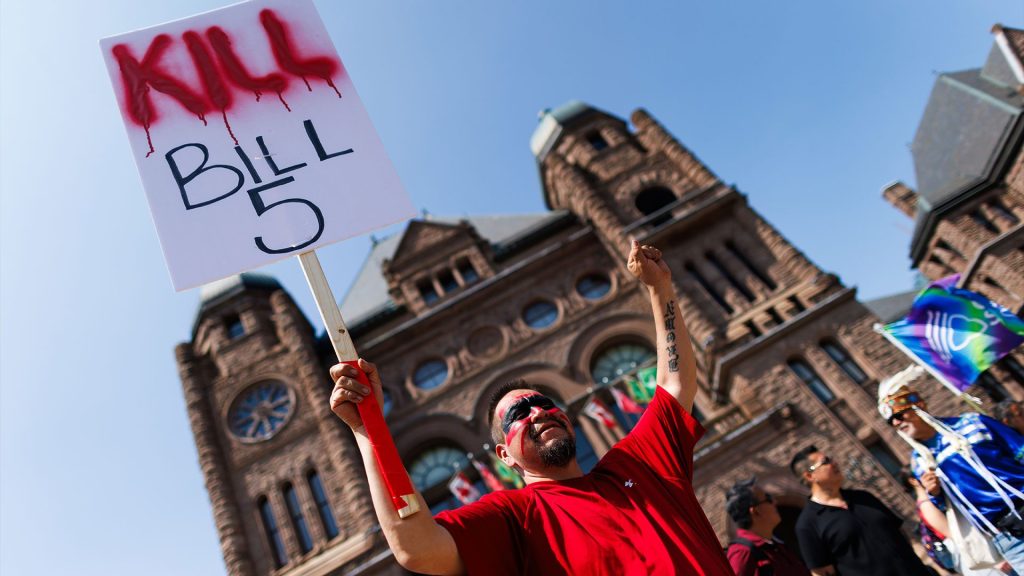
From Evidence to Exemption: How Bill 5 Rewrites Ontario’s Relationship with the Past

For more than four decades, Ontario’s archaeological system has rested on a quiet but essential bargain. Cultural heritage, once disturbed, cannot be reassembled. In exchange for allowing land to be developed, altered, and intensively used, the province embedded a requirement that trained professionals, operating at arm’s length from political power, would determine what lay beneath the surface and how it should be treated. This arrangement did not make archaeology anti-development. It made development accountable to history.

The recent amendments to the Ontario Heritage Act under Bill 5 weaken that bargain. They replace a system grounded in professional judgment and transparent process with one increasingly shaped by political discretion. The shift is not merely administrative. It strikes at the epistemological foundation of heritage protection by moving decisions about archaeological value away from evidence-based assessment and toward executive authority exercised behind closed doors.

Archaeology functions differently from most heritage disciplines because its subject matter is frequently unknown until it is destroyed. Unlike a heritage building or a designated landscape, an archaeological site often announces its existence only when machinery is already at work. The pre-Bill 5 framework recognized this reality by requiring assessment in areas of archaeological potential before development proceeded. That precautionary logic treated uncertainty as a reason for care, not as a justification for exemption. Bill 5 inverts that logic by allowing unknown sites to be bypassed if they are not already identified, a circular standard that guarantees loss precisely where knowledge is thinnest.

The damage here is cumulative rather than dramatic. Each unassessed site removed from the record narrows the historical archive permanently. Archaeology does not merely recover objects. It reconstructs patterns of land use, migration, trade, conflict, and environmental adaptation across thousands of years. When sites are destroyed without study, those patterns become fragmented, distorted, or irretrievable. Over time, this produces a thinner, more selective account of Ontario’s past, one shaped less by evidence than by what happened to survive political timelines.

The implications for Indigenous heritage are particularly severe. Many archaeological sites represent ancestral places that remain culturally and spiritually significant, regardless of whether they are formally registered or visible on the landscape. A system that allows cabinet or ministerial exemptions without robust, mandatory Indigenous consultation risks repeating older colonial patterns, where Indigenous history is treated as an obstacle to progress rather than a foundational layer of the land itself. When decisions are centralized and expedited, relationships grounded in consent, stewardship, and shared authority are the first casualties.

There is also an institutional cost. Professional archaeology in Ontario has long operated as a regulated field with ethical obligations, peer accountability, and methodological standards. When political actors gain the ability to override or pre-empt that process, expertise becomes advisory rather than determinative. Over time, this erodes the authority of professional judgment and encourages a culture where heritage protection is viewed as discretionary, negotiable, or expendable in the face of economic pressure.

Transparency suffers as well. Archaeological assessments, reports, and registers create a public record. They allow decisions to be scrutinized, challenged, and improved. Executive exemptions, by contrast, concentrate power while reducing visibility. Even when exercised legally, such authority diminishes public trust by removing heritage decisions from open processes and situating them within cabinet deliberations that are structurally insulated from external review.

The broader cultural consequence is a subtle recalibration of values. Heritage protection becomes framed not as a public good but as a regulatory burden to be managed or avoided. The past is no longer something held in trust for future generations, but something weighed against short-term policy objectives. That framing does not abolish archaeology outright. It renders it fragile, contingent, and politically vulnerable.

Ontario’s archaeological record is finite. Every exemption that allows development to proceed without assessment trades long-term knowledge for short-term convenience. Once made, that trade cannot be reversed. Bill 5 thus does not merely streamline process. It alters the moral economy of heritage protection by shifting authority away from evidence, expertise, and public accountability toward discretion exercised in the name of urgency.

History rarely announces its loss in the moment it occurs. The damage becomes visible only later, when questions can no longer be answered, when gaps appear where continuity should exist, and when future scholars inherit a record shaped less by what once was than by what was allowed to disappear.

The Big One Is Not a Metaphor

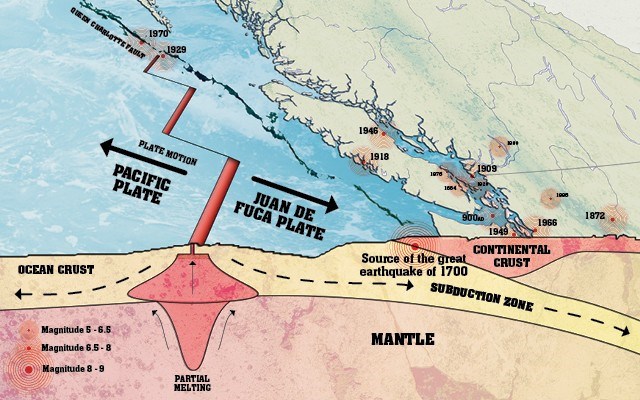
On Canada’s west coast, the phrase “the Big One” has drifted too easily into metaphor. It is used casually, invoked vaguely, and then set aside as a distant abstraction. The most recent British Columbia Disaster and Climate Risk and Resilience Assessment strips that comfort away. What it describes is not speculative catastrophe but a rigorously modelled scenario grounded in geology, history, and infrastructure analysis. A magnitude 9.0 megathrust earthquake off Vancouver Island is not only possible; it is among the more likely high-impact earthquake scenarios facing the province.

The source of the risk is the Cascadia Subduction Zone, where the Juan de Fuca Plate is slowly, but inexorably being driven beneath the North American Plate. This is not a fault that slips frequently and harmlessly. It locks, accumulates strain over centuries, and then fails catastrophically. The last full rupture occurred in January 1700, an event reconstructed through coastal subsidence records in North America and tsunami documentation preserved in Japanese archives. Geological evidence indicates that such megathrust earthquakes recur on timescales of hundreds, not thousands, of years. In emergency management terms, this places Cascadia squarely within the planning horizon.

The provincial assessment models a magnitude 9.0 earthquake occurring offshore of Vancouver Island. The projected consequences are stark. Approximately 3,400 fatalities and more than 10,000 injuries are expected. Economic losses are estimated at 128 billion dollars, driven by the destruction of roughly 18,000 buildings and severe damage to at least 10,000 more. These figures do not rely on worst-case fantasy. They emerge from known building inventories, population distribution, soil conditions, and transportation dependencies. They reflect what happens when prolonged, intense shaking intersects with modern urban density.

Geography shapes the damage unevenly, but decisively. Vancouver Island bears the brunt, particularly along its western coastline, where proximity to the rupture zone amplifies shaking and tsunami exposure. Eastern Vancouver Island, including Victoria, remains highly vulnerable due to soil conditions and aging infrastructure. On the mainland, a narrow, but densely populated band stretching from the United States border through Metro Vancouver to the Sunshine Coast experiences significant impacts, especially in areas built on deltaic and reclaimed land. Liquefaction in these zones undermines foundations, buckles roadways, and fractures buried utilities, compounding the initial damage long after the shaking stops.

The earthquake does not arrive alone. A tsunami follows as an inseparable companion hazard. The assessment projects wave arrival on the west coast of Vancouver Island within 10 to 20 minutes, leaving little time for anything other than immediate self-evacuation. The east coast of Vancouver Island and the Lower Mainland face longer lead times, roughly 30 to 60 minutes, but also greater population exposure. In parallel, major aftershocks, widespread landslides, fires ignited by damaged gas and electrical systems, and flooding from compromised dikes and water infrastructure unfold across days and weeks.

Probability is often misunderstood in public discussion, oscillating between complacency and panic. The assessment estimates a 2 to 10 per cent chance of such an extreme event occurring within the next 30 years. That range may sound small, but emergency management does not measure risk by likelihood alone. It multiplies likelihood by consequence. A low-frequency, ultra-high-impact event demands attention precisely because recovery, once required, will dominate public policy, fiscal capacity, and social stability for decades.

Comparative modelling reinforces this conclusion. United States federal planning scenarios for Cascadia earthquakes project casualty figures in the tens of thousands when the full Pacific Northwest is considered. Insurance industry analyses warn that a major Cascadia rupture would strain or overwhelm existing insurance and reinsurance systems, prolonging recovery and shifting costs to governments and individuals. These are not contradictions of the British Columbia assessment but confirmations of its scale.

What emerges from this body of evidence is not a call for fear, but for seriousness. Preparedness for Cascadia is not primarily about individual survival kits, though those matter. It is about seismic retrofitting of critical infrastructure, realistic tsunami evacuation planning, protection of water and fuel lifelines, and governance systems capable of functioning under extreme disruption. It is also about public literacy: understanding that strong shaking may last several minutes, that evacuation must be immediate and on foot, and that official assistance will not be instantaneous.

The Big One is not an unknowable threat lurking beyond prediction. It is a known risk with defined parameters, measurable probabilities, and foreseeable consequences. The only variable that remains open is how well institutions and communities choose to prepare. History shows that Cascadia will rupture again. Policy choices made before that moment will determine whether the event becomes a national trauma measured in generations, or a severe but survivable test of resilience.

Sources: 
British Columbia Ministry of Emergency Management and Climate Readiness. Disaster and Climate Risk and Resilience Assessment, October 2025, Chapter 5 Earthquake Scenarios. Province of British Columbia.
Yahoo News Canada. “B.C. report warns magnitude 9.0 quake could kill thousands.” 2025.
Geological Survey of Canada. Earthquakes and the Cascadia Subduction Zone. Natural Resources Canada.
U.S. Federal Emergency Management Agency. Cascadia Subduction Zone Earthquake and Tsunami Planning Scenarios.
Wikipedia. “Cascadia Subduction Zone” and “1700 Cascadia Earthquake.”

When Bed Bugs Became Normal

Over Christmas, in the middle of one of those conversations that wander from politics to rent to the sheer exhaustion of trying to live well, one of my kids said something that stopped me cold.

“You boomers don’t really get it,” they said. “Bed bugs are just part of life now.”

I laughed at first, because that is what you do when something sounds exaggerated. Bed bugs, to me, belonged to a different era. Something from old boarding houses, wartime hostels, badly run hotels in novels. Not something you simply absorbed into your mental list of modern inconveniences, like delayed buses or terrible customer service.

But they were serious. Not alarmist, not dramatic. Just factual. Friends had dealt with them. Neighbours had dealt with them. People they knew moved, threw out furniture, slept with their clothes sealed in bags, and then went on with their lives. It was not a story. It was context.

I live in Ottawa. I pay attention to housing. I read the news. And yet this had somehow slid past me. So I did what I usually do when I suspect I am wrong. I went and looked it up.

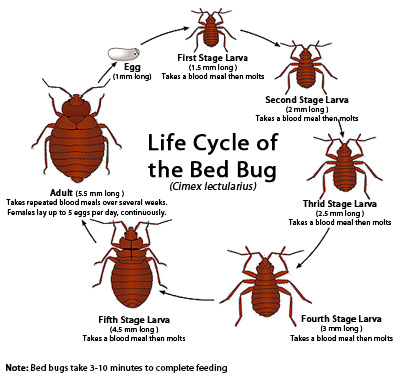
What I learned was uncomfortable, not because bed bugs are especially dangerous, but because they are ordinary now in a way they were not when I was younger. Bed bugs were largely suppressed in North America by the late twentieth century. They never disappeared, but for a long while most people never encountered them. That changed in the early 2000s, and the change stuck.

Public health agencies, pest control data, and municipal reporting all tell the same story. Increased travel, dense urban housing, and widespread resistance to common insecticides have allowed bed bugs to rebound and spread efficiently. They do not care if a place is clean. They do not care about income. They move by hitching rides in luggage, backpacks, furniture, and clothing. Human mobility is their advantage.

Ottawa, it turns out, regularly appears near the top of Canadian city rankings for bed bug treatments. Not because it is uniquely dirty or negligent, but because it is dense, mobile, and full of multi unit housing. Apartments, dorms, shelters, hotels, and condos form a continuous ecosystem. Once bed bugs are established in a building, eradication is slow, expensive, and often incomplete.

What surprised me most was not the prevalence, but the tone of the official advice. Ottawa Public Health does not speak about bed bugs as a rare emergency. It speaks about them as a recurring condition. Something to be managed. Something residents should learn to identify, report, and respond to calmly.

They do not transmit disease. That is the reassurance. But they do transmit stress. Anxiety. Shame. Sleeplessness. Financial strain. Entire households reorganized around plastic bags and heat treatments and waiting.

When you grow up believing a problem has been solved, its return feels like failure. When you grow up with the problem already present, it feels like weather. Something you watch for and plan around, but do not expect to eliminate.

That, I think, is the generational divide my kid was pointing at.

For many people in their twenties, bed bugs are not a crisis story. They are part of the background risk of renting, traveling, and sharing space in a city. You do not panic. You check. You adapt. You hope you are lucky.

I still do not like the idea that this is “just how it is now.” But I understand why they said it. And I understand now that my shock said more about my assumptions than about their reality.

Sometimes the world does not change all at once. Sometimes it just quietly adds another thing you have to live with, and waits to see who notices.

PS I did wash their bedding and clean the rooms as soon as they left.

Sources: 
Ottawa Public Health. Bed Bugs.
https://www.ottawapublichealth.ca/en/public-health-topics/bed-bugs.aspx
CityNews Ottawa. Ottawa ranks among Canada’s bed buggiest cities.
https://ottawa.citynews.ca
Health Canada. Bed bugs.
https://www.canada.ca/en/health-canada/services/pest-control-tips/bedbugs.html

🗓️ Five Things We Learned This Week

Week of December 27, 2025 – January 2, 2026

Even in the quiet stretch between Christmas and New Year’s, the world did not pause. Across science, politics, climate, conservation, and global systems, this past week offered reminders that change continues — sometimes quietly, sometimes decisively.


✈️ India’s Air Travel Crisis Revealed Systemic Fragility

In the days following Christmas, India’s largest airline faced widespread cancellations and delays after stricter pilot fatigue rules collided with already stretched staffing. By December 30, operations had stabilized, but only after tens of thousands of passengers were affected.

Why it matters: The disruption exposed how regulatory enforcement, labor shortages, and tight scheduling can cascade into national-scale failures — a warning for aviation systems worldwide.


🌍 The United Nations Expanded Climate Adaptation Financing

On December 29, the UN announced a significant expansion of its climate adaptation finance framework, directing additional concessional funding toward countries already experiencing severe climate impacts.

Why it matters: While mitigation often dominates headlines, adaptation funding is where climate policy becomes tangible for vulnerable communities facing floods, drought, and displacement.


🐘 Kenya Reported Its Lowest Elephant Poaching Levels in Decades

Kenyan wildlife authorities confirmed on December 28 that elephant poaching has dropped to historic lows, crediting community-based conservation programs, improved ranger coordination, and aerial surveillance.

Why it matters: This rare conservation success shows that sustained investment, local engagement, and enforcement can reverse even long-running environmental crises.


⚖️ The U.S. Supreme Court Halted a Major Immigration Enforcement Rule

On December 30, the U.S. Supreme Court temporarily blocked the rollout of a new federal immigration enforcement policy, pending further legal review.

Why it matters: The decision reinforces judicial limits on executive power and reshapes the near-term landscape for immigration enforcement, labor policy, and civil rights debates.


🔭 The James Webb Telescope Detected Water Vapor on a Rocky Exoplanet

NASA scientists confirmed between December 31 and January 1 that Webb telescope data shows strong evidence of water vapor in the atmosphere of TRAPPIST-1e, one of the most promising Earth-like exoplanets identified so far.

Why it matters: This finding strengthens the case for studying potentially habitable worlds beyond our solar system and marks another leap forward in observational astronomy.


Closing thoughts: From airline systems and courtrooms to savannas and distant star systems, this week’s stories remind us that progress, risk, and discovery do not respect holiday calendars. Paying attention — even during the quiet weeks — remains an act of civic and intellectual care.

Arctic Gateways: Why Greenland Matters More Than Maps Suggest

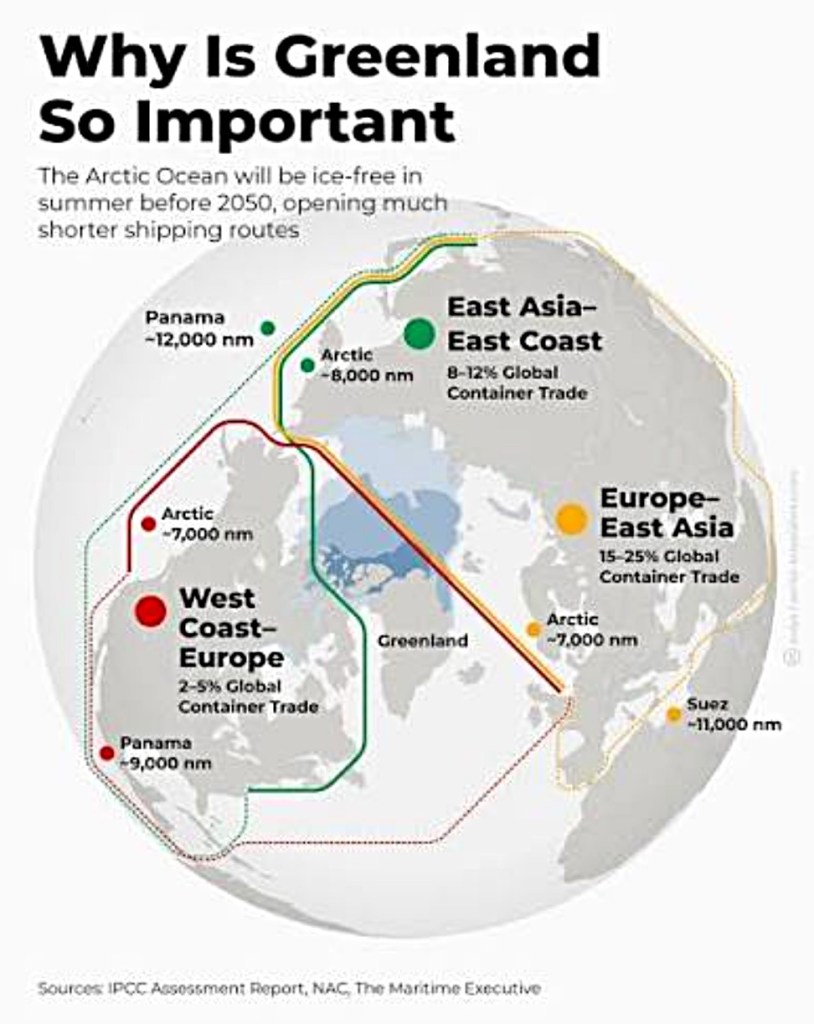
There is a deceptively simple geographic fact that sits quietly beneath much of the current Arctic maneuvering. In the entire Arctic region, there is effectively only one deep-water port that remains reliably ice-free year-round without the benefit of icebreakers, and that port is Nuuk, Greenland. This is not a trivia point. It is a structural constraint that shapes strategy, logistics, and power projection across the high north.

Nuuk’s status is the product of oceanography rather than politics. The West Greenland Current carries relatively warm Atlantic water northward along Greenland’s western coast, keeping the approaches to Nuuk navigable even through winter. By contrast, most other Arctic ports, including those in northern Canada, are either seasonally accessible or require sustained icebreaking support. Russia is often cited as an exception, but ports like Murmansk rely heavily on infrastructure, icebreaker fleets, and state subsidy to maintain year-round access. Nuuk stands apart in that its ice-free condition is natural, persistent, and proximate to the North Atlantic.

From a United States perspective, this matters enormously. American interest in Greenland is not primarily about territory in the nineteenth-century sense. It is about access, logistics, and denial. An ice-free port in the Arctic functions as a fixed node in what is otherwise a hostile operating environment. It enables sustained naval presence, resupply, maintenance, and potentially dual-use civilian and military shipping without the constant friction of ice conditions. In a future where Arctic sea lanes become more commercially viable and militarily contested, control or influence over such a node is strategically priceless.

This helps explain why U.S. engagement with Greenland has intensified well beyond rhetoric. Investments in airports, telecommunications, scientific infrastructure, and diplomatic presence all serve a dual purpose. They embed American interests into Greenland’s development trajectory while ensuring that any future expansion of Arctic activity occurs within a framework friendly to U.S. security priorities. The infamous proposal to “buy” Greenland was widely mocked, but it reflected a blunt articulation of a real strategic anxiety: the United States does not want its primary Arctic foothold to drift politically or economically toward rivals.

Canada’s position is more complex and, in some ways, more constrained. Canada has the longest Arctic coastline of any nation, yet no equivalent year-round ice-free deep-water port in its Arctic territory. This creates a persistent asymmetry. Canadian sovereignty claims rest on presence, governance, and stewardship rather than on continuous maritime access. The North is Canadian not because it is heavily used, but because it is administered, inhabited, and regulated.

As a result, Canada’s northern strategy cannot simply mirror that of the United States. Where Washington focuses on access and power projection, Ottawa must focus on resilience, legitimacy, and long-term habitation. Investments in northern communities, Indigenous governance, search and rescue, environmental monitoring, and seasonal port infrastructure are not secondary to sovereignty. They are sovereignty. Canada’s emphasis on the Northwest Passage as internal waters is inseparable from its need to demonstrate effective control without relying on year-round commercial shipping.

At the same time, the existence of Nuuk as the only naturally ice-free Arctic port creates both a vulnerability and an opportunity for Canada. The vulnerability lies in over-reliance on allied infrastructure. In any future crisis or competition scenario, Canadian Arctic operations would almost certainly depend on U.S. logistics routed through Greenland. The opportunity lies in cooperation. Joint development of northern capabilities, shared situational awareness, and integrated Arctic planning allow Canada to compensate for geographic disadvantages without surrendering policy autonomy.

What this ultimately reveals is that the Arctic is not opening evenly. It is opening selectively, along corridors dictated by currents, ice dynamics, and climate variability. Nuuk sits at the intersection of those forces. It is a reminder that geography still matters, even in an age of satellites and cyber power. For the United States, Greenland is a keystone. For Canada, it is a neighbor whose strategic weight must be acknowledged, managed, and integrated into a broader vision of a stable, governed, and genuinely Canadian North.

In that sense, the conversation about ice-free ports is not really about shipping. It is about who gets to shape the rules of the Arctic as it transitions from a frozen margin to a contested frontier.

Why Canada Should Make Voting Compulsory: Lessons from Australia

Canada prides itself on being a democratic nation, yet voter turnout tells a different story. In the 2021 federal election, just over 62% of eligible Canadians cast a ballot. Compare that with Australia, where voting has been mandatory since 1924, and turnout regularly exceeds 90%. The contrast is striking, and instructive. If Canada is truly committed to representative democracy, it should make voting compulsory.

Australia’s experience shows how dramatically voting laws can reshape political engagement. When the country introduced compulsory voting in 1924, turnout jumped from under 60% to over 91% in just one election. This wasn’t just a statistical change; it was a transformation of civic culture. Elections became more representative, and policy debates began to reflect a broader range of voter concerns. In Australia, “a parliament elected by a compulsory vote more accurately reflects the will of the electorate,” notes the Australian Election Commission. Canada could reap the same benefits.

One of the most compelling arguments for compulsory voting is the way it strengthens democratic legitimacy. When turnout is low, election results can be skewed by the interests of a narrow, often more affluent and ideologically extreme segment of the population. This leads to policies that favour the vocal few rather than the silent majority. By contrast, when everyone must vote, politicians must listen to everyone, including the marginalized and the poor. As historian Judith Brett puts it, “Now that means that politicians, when they’re touting for votes, know that all of the groups, including the poor, are going to have a vote. And I think that makes for a more egalitarian public policy.”

Critics argue that compulsory voting infringes on personal freedom. But Australians have lived with the system for a century, and public support for it remains strong, hovering around 70% since 1967. In fact, in 2022, 77% of Australians said they would still vote even if it weren’t mandatory. This suggests that making voting compulsory doesn’t stifle freedom; it cultivates civic responsibility.

Furthermore, compulsory voting could help counter political polarization in Canada. In voluntary systems, political parties often cater to their most radical base to energize turnout. But in Australia, where turnout is nearly universal, parties are forced to appeal to the political centre. This moderating influence is desperately needed in Canada’s increasingly divided political landscape.

Canada’s current voter turnout rates are simply not good enough. A democracy where one-third of citizens routinely sit out elections is a democracy with a legitimacy problem. If we want politics that are more representative, inclusive, and moderate, then it’s time to follow Australia’s lead. Voting is not just a right, it’s a duty. And like jury service or paying taxes, it should be expected of every citizen.

Source:
• BBC News (2022). “Why Australia makes voting mandatory.” https://www.bbc.com/news/world-australia-61505771
• Australian Electoral Commission. “Compulsory voting.” https://www.aec.gov.au/Voting/Compulsory_Voting/
• Elections Canada (2021). Voter Turnout. https://www.elections.ca/content.aspx?section=ele&dir=turn&document=index&lang=e