There are political decisions that change a nation’s trajectory, and then there are political decisions that change the clock on the microwave twice a year.
British Columbia’s long-gestating move to end seasonal time changes belongs to the second category. And yet, like so many small administrative reforms, it reveals more about governance, coordination, and federalism than its modest subject suggests.
When David Eby says the issue is about “making life easier for families” and “reducing disruptions for businesses,” he is not wrong. Twice a year, millions of people reset schedules, disrupt sleep cycles, confuse meeting times, and briefly destabilize routines. The economic cost is diffuse but real. The human irritation is universal.
But the British Columbia story is not simply about clocks. It is about interdependence.
A Province Ready, A Continent Not British Columbia passed legislation in 2019 to adopt permanent daylight saving time. The public consultation showed strong support. The mechanics were prepared. The legal framework exists. Yet implementation stalled because BC tied its decision to the U.S. Pacific Northwest, particularly Washington, Oregon, and California.
Why? Because Vancouver and Seattle function less like distant cities and more like adjacent economic zones. A two-hour time gap for part of the year would complicate trade, transportation, markets, and daily cross-border life. So BC waited on American congressional action that never arrived.
That is the quiet absurdity of modern federalism. A provincial legislature can pass a law. A neighbouring state legislature can pass a similar law. And both remain inert because a third legislative body, thousands of kilometres away in Washington, D.C., controls the clock.
BC’s renewed political framing signals impatience with that paralysis.
Canada’s Patchwork Time Regime Canada does not have a single national time policy. Provinces decide.
Saskatchewan effectively does not change clocks. Yukon moved to permanent time in 2020. Ontario passed legislation that would end seasonal changes, but only if Quebec and New York follow suit. Nova Scotia has debated similar moves.
In other words, the legislative scaffolding already exists across multiple provinces. What is missing is synchronization.
This is the core tension. Canadians dislike changing clocks. Legislatures have responded. Yet every province that is economically entangled with a neighbour hesitates to move unilaterally.
BC’s decision, if implemented regardless of U.S. action, would break that coordination norm. It would demonstrate that a province can absorb the temporary inconvenience of cross-border time divergence in exchange for internal consistency.
That matters.
The Real Policy Question No One Likes to Debate There is also a deeper issue that remains politically underexplored. Ending clock changes is popular. Choosing which time to keep is less so.
Permanent daylight saving time means brighter winter evenings and darker winter mornings. In northern latitudes, those mornings become very dark indeed. Sleep researchers often argue permanent standard time aligns better with human circadian rhythms. Politicians prefer the marketing appeal of longer evening light.
BC chose permanent daylight saving time.
The choice is not trivial. It reflects a cultural preference for after-work daylight over morning biological alignment. It favours consumer time over solar time.
That debate is barely visible in the political messaging, but it exists beneath the surface.
What This Means for Canada If BC proceeds, several things follow.
First, Ontario’s conditional legislation becomes harder to justify. The argument that “we must wait for everyone” weakens once one major province decides not to.
Second, public debate will intensify in provinces that have already prepared legislative tools but lack political momentum.
Third, the federal government may find itself facing pressure for coordination, even if timekeeping remains a provincial power. A national conversation could emerge not because Ottawa initiated it, but because provincial asymmetry forces it.
Will the rest of Canada follow immediately? No.
Will BC’s move increase the probability of broader change within five years? Very likely.
Clock policy is rarely transformative. But it is revealing. It exposes how deeply integrated provincial economies are with the United States. It demonstrates the limits of legislative autonomy in a continental marketplace. And it shows that even mundane administrative reforms require geopolitical choreography.
In the end, this is not about daylight. It is about governance friction.
And as with so many small reforms, once one jurisdiction proves that the sky does not fall when the clocks stop changing, others tend to follow.
📅 Saturday, February 21 → Friday, February 27, 2026
🇺🇦 1) Ukraine War Enters a New Phase ⚔️
Ukraine’s war with Russia continued with intensified fighting and renewed Western support discussions. While front lines shifted only marginally, the scale of combat and equipment losses remained high.
Key points:
Heavy fighting persists in eastern regions
Ongoing debates over additional sanctions and aid
Concerns about long-term war fatigue in allied nations
➡️ The conflict remains one of the central drivers of global security uncertainty.
🇺🇸 2) U.S. Politics Heats Up Ahead of 2026 Elections 🗳️
Early maneuvering for the 2026 midterm elections accelerated, with both major parties sharpening their messaging on the economy, immigration, and national security.
Key points:
Campaign organizations expanding operations
Key swing states receiving early attention
Policy debates intensifying in Congress
➡️ Political rhetoric is expected to escalate as the election cycle unfolds.
📉 3) Global Economy Sends Mixed Signals 💹
Financial markets delivered uneven performance as inflation cooled in some regions while growth slowed in others. Central bank policies continue to dominate investor expectations.
Key points:
Interest rates remain a major concern
Energy prices fluctuate amid geopolitical risks
Manufacturing weakness in parts of Europe and Asia
➡️ Economists describe the outlook as fragile rather than stable.
🌦️ 4) Extreme Weather Continues Worldwide 🌪️
Floods, storms, and unusual temperature patterns affected multiple regions, highlighting the ongoing impact of climate volatility on infrastructure and communities.
Key points:
Flooding events in several countries
Drought concerns persist elsewhere
Rising costs for insurance and recovery
➡️ Scientists warn that extreme weather is becoming more frequent and disruptive.
🚀 5) Space Exploration Momentum Builds 🌕
National space agencies and private companies continued preparations for lunar and deep-space missions, underscoring the accelerating pace of the modern space race.
Key points:
New missions in development or testing
Growing international cooperation
Expanding role of commercial providers
➡️ Space exploration is increasingly multinational and commercially driven.
✨ The Big Picture
This week reflected a world balancing geopolitical tension, economic uncertainty, climate pressure, and technological ambition. Rather than a single dominant headline, multiple long-term trends continued to shape global events simultaneously.
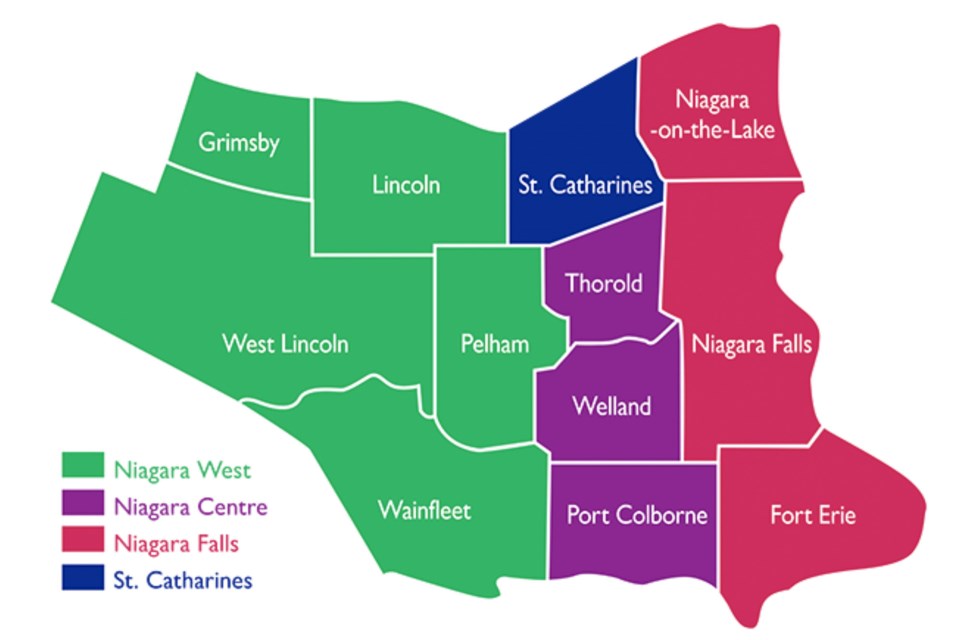
There is a recurring belief in Canadian municipal politics that scale solves problems. If governance feels messy, make it larger. If coordination is difficult, centralize it. If local voices disagree, fold them into a single chorus and call it harmony. The proposal to merge the municipalities of the Regional Municipality of Niagara into one city rests squarely on this assumption: that bigger government will behave more rationally, more efficiently, and more strategically than a collection of smaller ones.
History suggests otherwise.
Niagara is not a fragmented city waiting to be assembled. It is a region of distinct places bound together by geography, not by a single urban heartbeat. Niagara Falls lives on tourism and spectacle. St. Catharines functions as an educational, service, and industrial hub. Welland carries a canal town identity shaped by manufacturing and working-class roots. Niagara-on-the-Lake trades on heritage, agriculture, and controlled growth. The lakefront communities of west Niagara look toward Hamilton, not the Falls. Rural townships measure success in acres preserved, not towers approved.
To govern these places as though they share identical needs is not efficiency. It is administrative wishful thinking.
The Ottawa Example: A Warning, Not a Blueprint Advocates of amalgamation frequently point to the creation of the modern Ottawa from the former Regional Municipality of Ottawa–Carleton as proof that diverse municipalities can be fused into a single functional city. What is often omitted is that the fusion solved technical coordination problems while creating enduring political ones.
Ottawa gained unified transit planning, standardized services, and the ability to execute large infrastructure projects. It also inherited a permanent rural-urban divide that shapes every budget, planning decision, and election cycle. Farmers in the outer wards pay for light rail they will never ride. Suburban taxpayers argue they subsidize downtown priorities. Former municipalities continue to organize politically along pre-2001 boundaries, a quarter century later.
Amalgamation did not erase local identity. It merely removed the local governments that once represented it.
Niagara would face this tension in amplified form. Ottawa, despite its diversity, had a dominant employment core and a single metropolitan labour market. Niagara has several centres and multiple economic logics. Tourism, agriculture, manufacturing, retirement living, cross-border trade, and suburban commuting do not pull in the same direction.
Power Will Flow Somewhere Every amalgamation produces a gravitational centre, whether intended or not. Decisions must be made, staff must be housed, budgets must be prioritized. In a single Niagara city, influence would inevitably concentrate in the largest population centres, most likely St. Catharines or Niagara Falls. Smaller municipalities would not disappear, but their ability to shape outcomes would diminish.
This is not a moral failure. It is mathematics.
Residents of smaller towns would still vote, but their votes would be diluted across a much larger electorate. Local issues that once dominated council agendas would become minor items competing with region-wide priorities. A zoning dispute that matters deeply to a village could be invisible in a chamber preoccupied with housing targets or tourism infrastructure.
Democracy at scale becomes less intimate and more transactional.
Coordination Without Erasure None of this suggests the status quo is perfect. Niagara does suffer from fragmented planning, duplicated administration, and occasional municipal rivalry. Regional transit integration demonstrates that cooperation can produce tangible benefits without dissolving local governments. Shared services for policing, utilities, and infrastructure can achieve economies of scale while preserving local autonomy.
The real strategic question is not whether Niagara needs to function more cohesively. It is whether cohesion requires uniformity.
A region can behave like a federation rather than a unitary state. Strong regional planning frameworks, binding growth strategies, and pooled services can align municipalities without forcing them into a single institutional mold. This approach accepts that diversity is not a problem to be engineered away but a reality to be governed intelligently.
Bigger Is Not the Same as Better Large cities do not automatically make better decisions. They simply make larger ones. When those decisions are wrong, the consequences are correspondingly bigger. A misjudged development strategy, infrastructure investment, or tax policy applied across a half-million residents can entrench problems for decades.
Small municipalities, for all their limitations, retain the ability to experiment, adapt, and reflect local priorities quickly. They function as laboratories of governance. Amalgamation replaces this patchwork of experimentation with a single policy regime that must suit everyone and will inevitably fit some poorly.
Uniformity feels orderly from a distance. Up close, it can be suffocating.
The Strategic Path Forward If Niagara seeks a more prosperous and coherent future, the priority should be integration of function rather than consolidation of identity. Build region-wide systems where scale truly matters: transit, major infrastructure, environmental management, economic promotion. Preserve local decision-making where place matters most: land use, community character, local services, cultural priorities.
The lesson from Ottawa is not that amalgamation fails or succeeds. It is that it solves some problems while creating others that cannot easily be reversed. Once municipalities disappear, recreating them is practically impossible.
Niagara does not need to become one city to act like a mature region. It needs governance arrangements that respect the fact that it is not one place, and never has been.
Bigger government can coordinate more. It cannot care more, listen better, or understand the nuances of twelve different communities at once. Those qualities arise from proximity, not scale.
In Prince Edward County, the sudden cluster of “for sale” signs hanging on winery gates and brewery fences is not coincidence. It is the visible edge of a structural shift. What was once Ontario’s most romanticized craft-beverage frontier is entering its consolidation phase.
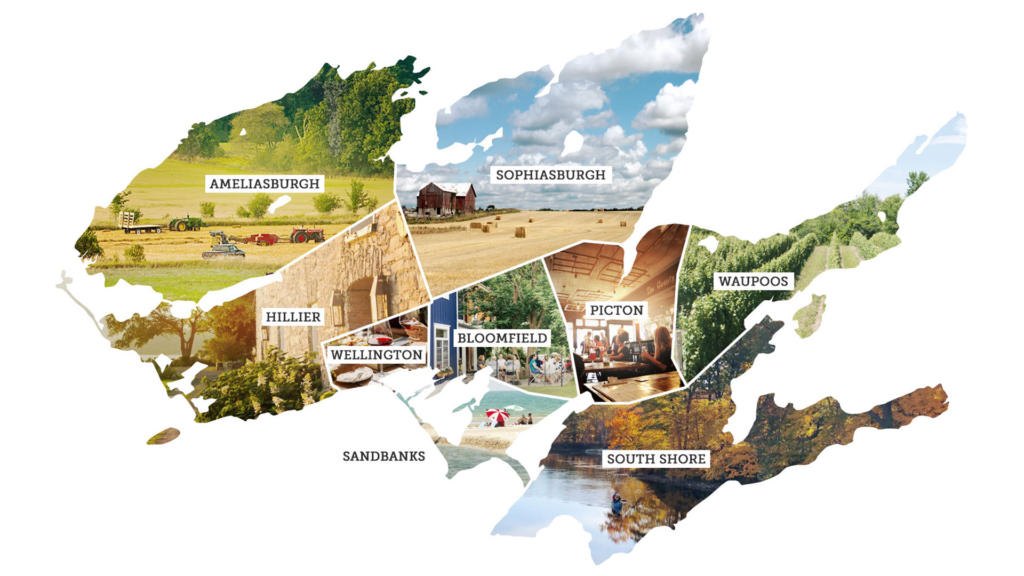
For two decades, the County was a story of pioneers. Thin limestone soils, lake-tempered winds and stubborn optimism produced a generation of estate wineries in Hillier, small-batch cider houses in Waupoos and farmhouse breweries tucked behind century barns. Many were founded between the early 2000s and mid-2010s. They were not built as scalable industrial operations. They were built as passion projects with hospitality rooms attached.
Now those founders are aging. Succession planning in lifestyle agriculture is notoriously weak. Children often pursued careers elsewhere. Managers were rarely given equity. The result is predictable: retirement without a natural buyer inside the tent.
But demographics alone do not explain the volume of listings.
Margins have tightened dramatically. Vineyard agriculture in the County is capital-intensive and climate-exposed. Vines take years to mature. Winter kill remains a risk. Labour costs have risen. Packaging, especially aluminum cans and glass, has been volatile and more expensive. Energy costs for fermentation and climate control have climbed. Insurance premiums have followed suit. A small producer making 5,000 to 20,000 cases annually does not have the purchasing leverage of a multinational brand.
Retail evolution adds another layer. Ontario’s beverage market has been liberalizing beyond the historic dominance of the Liquor Control Board of Ontario. On paper, more outlets should help local producers. In practice, broader distribution means competing on shelf space against scaled domestic brands and global imports with marketing budgets County operators cannot match. Boutique wineries built around cellar-door experiences now face a world that rewards consistent volume and supply chain reliability.
Tourism volatility compounds the stress. Prince Edward County’s beverage economy is profoundly seasonal. July and August can carry an entire year. A cool spring, wildfire smoke, a soft tourism season, or simply consumer belt-tightening can erase projected profits. Fixed costs do not shrink when weekend traffic does.
Land values further distort the equation. The County is no longer simply farmland. It is lifestyle real estate within reach of Toronto and Ottawa buyers. In areas like Hillier and Waupoos, vineyard acreage carries speculative value unrelated to grape yield. Owners approaching retirement can often extract more certainty by selling land and brand assets than by enduring another decade of climate risk and thin margins.
The recent spike in Ontario-focused buying following the removal of U.S. products from LCBO shelves created a short-term lift for local wine. Yet macro tailwinds do not erase micro fragility. Increased demand benefits those positioned to supply at scale. It does not automatically rescue a 15-acre estate winery with aging equipment and limited distribution.
There is also market saturation. Prince Edward County’s brand became its own magnet. Success attracted entrants. Tasting rooms multiplied. Craft beer, cider and wine competed not only with imports but with one another within a geographically tight region. Weekend tourism dollars are finite. Too many taprooms chasing the same visitor inevitably compresses revenue per operator.
None of this suggests collapse. It signals maturation. Every emerging wine region passes through romance, expansion, strain and consolidation. The County is entering the phase where well-capitalized buyers, regional consolidators and hospitality groups acquire established brands and infrastructure at more rational valuations.
For observers, the current listings are less a crisis than a transition. The era of founder-driven artisanal sprawl is giving way to professionalized, capital-structured ownership. Prince Edward County’s limestone soils are not going anywhere. The question is not whether wine, beer and cider will continue there. The question is who will own the next chapter, and at what scale.
The for-sale signs are not a verdict. They are the punctuation mark between one generation’s dream and the next generation’s balance sheet.
We now know that least eight human species walked the Earth roughly two hundred thousand years ago. Homo sapiens shared the planet with Homo neanderthalensis, Homo heidelbergensis, Homo floresiensis, Homo naledi, Denisovans, and others whose fossil traces remain incomplete or disputed. These populations overlapped in time, geography, and in some cases behavior. They hunted similar prey, shaped stone tools, buried their dead, and adapted to radically different ecological niches. None of them understood themselves as species. That distinction would only become visible after most of them were gone.
Paleoanthropology has repeatedly demonstrated that human evolution is not a clean sequence, but a braided stream. Species diverged, converged, interbred, and vanished in patterns that resist simple narratives of progress. Genetic evidence now confirms that Homo sapiens did not replace other humans through isolation alone, but through partial interbreeding followed by demographic dominance. The boundary between species was porous, unstable, and context-dependent. Speciation, as it occurred in the human lineage, was neither tidy nor immediately legible to those living within it.
Homo sapiens itself emerged slowly, marked less by sudden anatomical novelty than by shifts in cognition, social organization, and symbolic capacity. Early sapiens were not obviously superior in strength or survival skills. Their eventual dominance appears to have been driven by abstract reasoning, cooperative flexibility, and the ability to operate within increasingly complex symbolic systems. These advantages were invisible in the short term and decisive only over long spans of time. Dominance, in evolutionary terms, is always clearer in retrospect.
The modern assumption that human evolution has effectively ceased rests on a misunderstanding of how evolution operates. Evolution does not stop when a species becomes culturally complex. It accelerates when environments change faster than inherited adaptations can comfortably track. The current human environment has shifted more dramatically in the last century than during any comparable period since the emergence of symbolic cognition. This shift is not merely technological. It is cognitive, perceptual, and ecological.
People today live in a world shaped more by complex systems and ideas than by the physical environment. Day-to-day survival increasingly depends on dealing with symbols like money, rules, screens, and data instead of direct human contact or practical tasks in the real world. We often respond to information rather than people, and to problems that are spread out over time and distance and filtered through technology.
These conditions are very different from the ones human brains evolved for. As a result, the gap between how we are wired and how we now live is not a small issue, but a basic feature of modern life.
Within this context, neurodivergent humans are typically framed as statistical outliers within Homo sapiens. Their traits are classified as disorders or deficits, defined by deviation from neurotypical norms of social intuition, emotional regulation, sensory processing, and attentional control. These norms are treated as universal human baselines rather than historically contingent adaptations. Paleoanthropology offers no support for this assumption. Across the human lineage, variation in cognition has been the raw material of adaptation, not an error to be corrected.
Species are not defined solely by reproductive isolation. While this criterion is useful in some contexts, it fails to capture the complexity of speciation in organisms with overlapping ranges, long generation times, and strong cultural mediation. Human evolution in particular demonstrates that species can remain genetically compatible while diverging behaviorally, cognitively, and ecologically. Neanderthals and sapiens interbred, yet maintained distinct adaptive strategies for tens of thousands of years. Genetic permeability did not prevent species distinction. It accompanied it.
A more functional definition of species emphasizes adaptive coherence. A species can be understood as a population that shares a stable strategy for engaging with its environment, reinforced across generations by ecological fit, social organization, and assortative reproduction. By this definition, neurodivergent humans exhibit early markers of speciation. Their traits do not appear randomly or independently. They cluster into a coherent cognitive architecture that interacts with contemporary environments in systematically different ways.
Common features of this architecture include altered sensory thresholds, atypical dopamine regulation, nonlinear associative thinking, heightened pattern recognition, reduced dependence on social reward, and the capacity for sustained focus detached from immediate interpersonal feedback. These traits are often treated as impairments because they conflict with institutions designed around neurotypical cognition. However, from an evolutionary perspective, impairment is inseparable from context. Traits that are maladaptive in one environment may be advantageous in another.
Paleoanthropological evidence suggests that early Homo sapiens may themselves have appeared cognitively unusual relative to contemporaries. Increased abstraction, symbolic behavior, and reduced reliance on immediate sensory cues may have seemed inefficient or socially disruptive in environments favoring embodied skill and direct coordination. What later proved adaptive was not immediately recognized as such. Divergence is often misclassified as dysfunction until selection pressures reveal its utility.
The contemporary environment amplifies this dynamic. Technological systems magnify cognitive differences rather than smoothing them. Pattern recognition scales. Hyperfocus compounds. Reduced sensitivity to social signaling becomes an advantage in machine-mediated contexts. Neurodivergent humans increasingly occupy niches where their cognitive architecture is not merely tolerated but essential. These niches are expanding, not contracting.
At the same time, cultural mechanisms delay recognition of divergence. Diagnostic frameworks emphasize normalization. Educational and occupational systems reward masking. Neurodivergent individuals are pressured to simulate neurotypical behavior to survive socially and economically. Masking functions as a short-term adaptation, allowing individuals to pass within the dominant species. It does not eliminate divergence. It obscures it.
Crucially, neurodivergent humans are now able to find one another across distance, forming communities, collaborations, and reproductive pairings that were historically unlikely. Assortative mating among neurodivergent individuals is increasing, even when unacknowledged. Over time, such patterns reinforce divergence by stabilizing cognitive traits across generations. Paleoanthropology suggests that similar processes operated in the emergence of earlier human species, long before reproductive isolation became absolute.
This argument does not imply hierarchy or inevitability. Evolution does not produce winners in a moral sense. It produces strategies that persist or fail under specific conditions. Multiple human species once coexisted. Their fates were shaped by climate instability, technological shifts, competition, and chance. Coexistence was unstable, but not impossible. Replacement was not intentional. It was emergent.
The ethical discomfort provoked by the idea of a new human species is itself revealing. Modern societies are deeply invested in the concept of a singular humanity progressing linearly toward improvement. Speciation disrupts this narrative. It suggests that difference is not a temporary deviation but an enduring feature of human evolution. The impulse to medicalize or suppress divergence reflects fear of fragmentation rather than scientific caution.
Extinction, when it occurs, rarely announces itself. Species disappear not through catastrophe alone but through gradual mismatch. They persist as long as their adaptive strategies align with prevailing conditions. When those conditions shift, decline appears ordinary until it becomes irreversible. Paleoanthropology repeatedly shows that the disappearance of human species was likely experienced by those living through it as continuity, not collapse.
The greatest constraint on human evolution in the present era may not be genetic but cultural. Systems optimized for a single cognitive profile suppress variation precisely when environmental volatility demands it. By narrowing the range of acceptable cognition, contemporary societies risk reducing humanity’s adaptive capacity at a moment of unprecedented change.
If a new human species is emerging, it will not announce itself in language or law. It will be identified through diagnoses, productivity metrics, and behavioral correction. Its members will be told they are defective versions of something else. History suggests that this is not how defectiveness appears. It is how divergence appears when judged by the standards of the outgoing form.
Evolution is always legible in hindsight and opaque in the present. Species are named after they dominate or after they vanish. Those living through transitions rarely recognize their significance. If neurodivergent humans represent the early formation of a new human species, the evidence will not be found in declarations of identity but in the slow accumulation of adaptive coherence.
Humanity has never been singular for long. The silence surrounding this possibility may simply be the eighth time it has forgotten that fact.
At the Munich Security Conference, European leaders openly discussed preparing for a world where U.S. protection may no longer be guaranteed 🇪🇺⚔️.
Greater European military autonomy
Expanded defense spending
Discussion of relying on France’s nuclear deterrent
The tone was stark: leaders warned that the post-Cold War security framework may be fading. This points toward a long-term restructuring of global power relationships.
✈️ 2. Italy Moves to Ban Strikes During the Winter Olympics
With millions expected to travel for the Milano-Cortina Winter Games, Italy announced emergency measures to prevent airport shutdowns 🚫✈️.
Planned labor strikes threatened major disruption
Government intervention to suspend airport walkouts
Security concerns following prior transport incidents
Hosting the Olympics often leads governments to prioritize uninterrupted transport and security over normal labor actions.
🎭 3. Massive Indian Cultural Festival in Kuwait
More than 700 performers showcased Indian heritage at a major open-air festival on Kuwait’s Green Island 🇮🇳🎶.
Traditional dance and music performances
Food, crafts, and cultural exhibits
Strong participation from expatriate communities
Free public access
The event highlighted the growing influence of diaspora communities and cultural diplomacy in the Gulf region.
Large-scale Russian drone attacks struck energy facilities and port infrastructure, particularly around Odesa ⚡🚁.
Damage to power systems
Economic disruption
Pressure on export routes
Ongoing humanitarian risks
The conflict continues to shape global security, energy markets, and political alignment across Europe.
🪐 5. Saturn Enters Aries — A Cultural Moment
Saturn’s transition into Aries generated widespread global attention in astrology circles 🔮✨.
Last occurred in the late 1990s
Interpreted as a period of accountability and upheaval
Major engagement across social media and popular culture
Regardless of scientific validity, such symbolic narratives often reflect public mood and influence social discourse.
🌟 Weekly Takeaway
This week revealed structural shifts rather than a single dominant headline — evolving security alliances, governments prioritizing mega-events, ongoing war impacts, expanding cultural globalization, and a search for meaning in uncertain times.
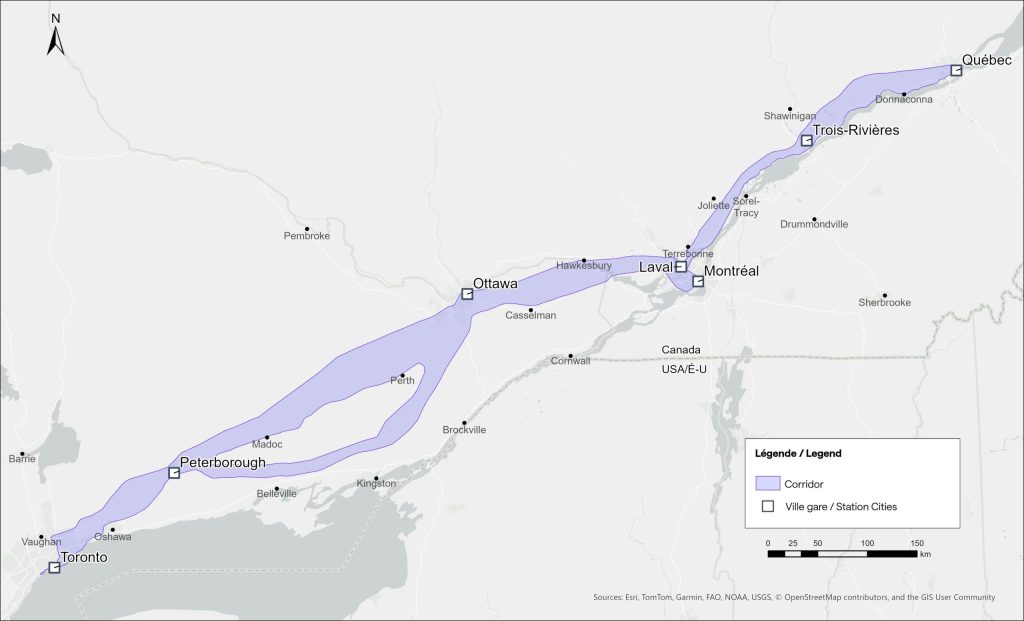
Canada faces a pivotal moment in defining the future of intercity rail. The introduction of a high-speed Altos service presents an opportunity to transform long-distance travel between major metropolitan centers, but its success hinges on the careful delineation of its corridor. Too often, proposals conflate high-speed ambitions with the realities of existing rail service, risking operational compromise. A northern alignment for Altos, distinct from the established southern VIA Rail corridor, represents the most effective solution for both speed and regional accessibility.
High-speed rail and conventional intercity service serve fundamentally different purposes. Altos is designed to connect major urban anchors directly, minimizing travel time through long, straight alignments, gentle curves, and full grade separation. Introducing intermediate stops at towns such as Belleville, Kingston, or Brockville would impose braking and acceleration penalties, schedule complexity, and infrastructure constraints that erode the system’s core value proposition. High-speed rail cannot achieve transformative travel times if it is forced to behave like conventional regional service.
The southern VIA Rail corridor, by contrast, exists to serve the communities that rely on rail for connectivity rather than speed. VIA Rail’s mandate is not to compete with high-speed intercity travel, but to provide reliable, frequent service linking smaller towns and cities to major urban centers. Belleville, Kingston, Brockville, and other communities depend on these connections for economic, social, and educational purposes. By maintaining the southern corridor for VIA, the service can focus on its core function: ensuring that smaller communities remain linked to metropolitan hubs, rather than attempting to serve as a high-speed through-route that would compromise both speed and accessibility.
Quantitative projections reinforce the strategic logic of a dedicated high-speed alignment. The planned Alto network between Toronto and Quebec City is expected to reach speeds up to 300 km/h, potentially reducing the current Montreal–Toronto rail journey from more than five hours to approximately three hours on high-speed track, a reduction of over 40 percent in travel time. Such reductions are a key driver of modal shift, since international evidence finds that high-speed rail that cuts travel times can attract a large share of travelers from road and air, significantly boosting ridership compared with conventional rail. In Canada’s case, future high-speed service could carry tens of millions of passengers annually, far exceeding the ridership of existing VIA Rail services, while generating an estimated $15 billion to $27 billion in economic value over decades through time savings, productivity gains, and reduced congestion. These figures underscore the economic rationale for building a system capable of truly high-speed operation rather than one constrained by mixed-traffic regional service.(altotrain.ca)
Routing Altos along a northern corridor also presents broader economic and developmental opportunities. A dedicated alignment can open new nodes of growth, stimulate investment in previously underserved areas, and create jobs in planning, construction, and operations. At the same time, VIA Rail can concentrate on fulfilling its statutory mandate: providing essential rail service to smaller communities, improving reliability, frequency, and accessibility along the southern corridor without interference from high-speed trains. This dual approach maximizes the overall utility of Canada’s rail network, ensuring that both large and small communities benefit.
Ultimately, the future balance of intercity rail depends on recognizing the distinct roles of each service. Altos should focus on moving cities closer together, achieving rapid, reliable intercity travel. VIA Rail should remain the backbone of regional connectivity, serving intermediate towns with frequent, accessible service that links them effectively to major urban centers. By allowing each system to fulfill its intended function, Canada can achieve a rail network that is both fast and inclusive, transformative yet equitable.
A fair reading is that a significant share of Alberta’s current complaints function as sideshows, but not empty ones. They are distractions with a purpose, and that purpose is political rather than policy-driven.
At the federal level, the Carney government’s real files are structural and unforgiving: restoring long-term productivity, managing a fragile transition to a low-carbon economy without regional collapse, stabilizing housing and infrastructure finance, and navigating a volatile global trade and security environment. None of those problems yield to symbolic confrontation. They require boring competence, capital discipline, and political stamina. Against that backdrop, disputes over judicial appointments, equalization rhetoric, or procedural grievances are comparatively low-impact on Canada’s material trajectory.
From Alberta’s perspective, however, these conflicts are useful theatre. They re-center politics on identity, grievance, and sovereignty rather than on questions where provincial governments have fewer clean answers of their own. A public argument about judges, Ottawa elites, or federal overreach is easier to sustain than a hard conversation about Alberta’s economic diversification, fiscal exposure to commodity cycles, or long-term labour force constraints. These fights allow provincial leaders to frame themselves as defenders rather than managers.
For the Carney government, the danger is not that these complaints derail core policy, but that they consume political oxygen. Every hour spent responding to performative ultimatums is an hour not spent building coalitions around housing finance reform or industrial strategy. The risk is cumulative. A steady drip of constitutional agitation can distort the agenda, forcing Ottawa into a reactive posture that favours short-term messaging over long-term statecraft.
That said, dismissing the disputes entirely would be a mistake. Sideshows still shape public mood. They erode trust in institutions, normalize the idea that core democratic guardrails are negotiable, and create a climate where substantive reform becomes harder to explain and sell. The judicial appointment fight matters less for what it changes immediately than for what it signals: a willingness to challenge institutional norms to score political points.
In the bigger picture, then, Alberta’s complaints are not the main story of Canada’s moment, but they are part of the background noise that can either be managed or allowed to metastasize. The test for the Carney government will be whether it can keep its focus on the genuinely consequential files while refusing to let performative conflict define the national agenda. Governments lose momentum not when they face opposition, but when they mistake noise for substance.
The announcement by Premier Danielle Smith that Alberta will withhold funding for new judicial appointments unless the federal government gives the province a formal role in selecting those judges has jolted political observers across Canada. The premier’s letter to Prime Minister Mark Carney makes explicit what had previously been a background tension in Canadian federalism: provincial frustration with the federal judicial appointment process and an insistence that courts reflect local values and expectations. Smith argues that this reform would “strengthen public confidence in the administration of justice, promote national unity within Alberta and ensure judicial decision-making reflects the values and expectations of Albertans.” Her government has proposed an advisory committee with equal representation from Alberta and the federal government to assess and recommend candidates.
The direct Alberta issue is almost simple to state and glaringly complex to resolve. Superior court judges who serve in Alberta are appointed by the federal government and paid by Ottawa, while the province bears the cost of court infrastructure and support staff. Under Canada’s current judicial appointment system the federal government relies on independent advisory committees that include representatives appointed by provinces and law societies, but ultimate appointment power rests with the federal cabinet and prime minister. Fraser’s office has pushed back firmly against Smith’s ultimatum, underscoring that the existing process is designed to preserve judicial independence by keeping appointments “at arm’s length from political influence.” In rejecting Alberta’s call for change, the federal justice minister emphasized that judges need to make decisions “without fear and without seeking the favour of those who have power over appointments” and cautioned that threats tied to funding could undermine democratic norms.
This dispute resonates far beyond courtrooms. At its heart is an age-old constitutional question about the separation of powers and the boundary between political authority and judicial independence. Democracies rest on the premise that the judiciary should act as a check on executive and legislative power, not as an extension of it. The Canadian model tries to balance federal appointment authority with advisory input from provinces, but it deliberately avoids direct political control at the provincial level. By threatening to leverage provincial funding to gain influence, Smith’s government crosses into a zone that legal experts and critics argue already risks encroaching on judicial neutrality. The federal government’s emphasis on maintaining the current process without succumbing to political pressure underscores the idea that judicial appointments should not be bargains to be struck in the course of intergovernmental brinkmanship.
The wider context in which this debate unfolds reflects broader tensions in Canadian politics. Across Western liberal democracies, debates over judicial review, “activist” judges, and institutional legitimacy have become flashpoints in partisan discourse. The insistence that judges “reflect local values” can be read as part of a populist challenge to established institutions, one that demands greater control by elected governments over courts seen as aloof or counter-majoritarian. Yet the counter-argument — articulated by judicial leaders and constitutional scholars — is that treating courts as political prizes erodes the very safeguards that protect minority rights and hold governments accountable to law rather than political expediency. Maintaining the independence of the judiciary is not an abstract procedural goal but a foundational element of a functioning constitutional order.
The choice facing Canadian democracy, therefore, is not merely one of process reform or intergovernmental negotiation. It is a question of how a mature democratic system balances competing imperatives: responsiveness to provincial concerns, unity within a federated polity, and the insulation of core legal institutions from the pressures of partisan contestation. Premier Smith’s initiative invites a national conversation about these imperatives, but it also highlights the risks inherent in coupling financial leverage to demands for political influence over courts. History offers cautionary examples of how populist challenges to judicial autonomy can spiral into broader constitutional crises when governments seek control over the arbiters of legal disputes. The stakes, in Canada’s case, are not limited to Alberta’s courts but extend to the very integrity of judicial independence and the confidence citizens place in the rule of law.
When Alberta MLAs take their seats in the Legislative Assembly, they swear an oath of allegiance to the Crown. It’s not optional. It’s not ceremonial theater. It’s a legal requirement under the Legislative Assembly Act, a pledge of loyalty to the constitutional order they’re about to serve within.
So what happens when those same MLAs sign a petition advocating for Alberta’s separation from Canada?
They break that oath.
Let’s be clear about what the Crown represents. It’s not just a distant monarch in another country. In Canada’s constitutional framework, the Crown is the Canadian state. Swearing allegiance to the Crown means swearing allegiance to Canada’s sovereignty and constitutional order. You can’t pledge loyalty to that framework while simultaneously working to dismantle it. The two positions are fundamentally incompatible.
Some might argue that advocating for political change through democratic means is itself protected within the system, that exploring sovereignty options is legitimate political discourse. That’s a convenient dodge. There’s a difference between debating constitutional reform and actively campaigning to break up the country. Signing a separation petition isn’t abstract discussion – it’s concrete political action toward ending the very state you’ve sworn allegiance to.
Quebec recognized this contradiction, and did something about it. In December 2022, Quebec passed legislation making the oath to the Crown optional for MNAs. They kept only the oath to “the people of Quebec” as mandatory. This came after PQ and Québec Solidaire MNAs refused to swear allegiance to King Charles III following the 2022 election. Rather than maintain the hypocrisy, Quebec changed the law.
That’s the point. Quebec understood that you can’t have it both ways. If your MLAs are going to advocate for separation, don’t make them swear loyalty to what they’re trying to leave. Alberta has made no such change. Alberta MLAs still take the full oath to the Crown, knowing exactly what it entails.
Which means Alberta MLAs who sign separation petitions are doing so while bound by an oath they’ve violated. They voluntarily swore allegiance, then voluntarily betrayed it. No one forced them to take the oath. No one forced them to seek public office. They chose both, and apparently saw no contradiction.
This isn’t about whether separation itself is right or wrong. It’s about integrity in public office. It’s about whether the oaths our elected officials take actually mean something, or whether they’re just words to be discarded when politically convenient.
Public office requires public trust. That trust rests on the assumption that when someone swears an oath, they intend to keep it. When MLAs sign separation petitions after swearing allegiance to the Crown, they tell Albertans that their word means nothing, that oaths are performative, that constitutional obligations can be ignored whenever political expediency demands it.
If Alberta MLAs want to advocate for separation, they should do what Quebec did: change the oath. Until then, signing that petition isn’t political courage. It’s oath-breaking, plain and simple.






 The Rowanwood Chronicles