
In football, and I mean real football, a curious paradox persists: the world’s most dazzling players, those who commanded the pitch with poise and brilliance, often falter when tasked with leading a team from the dugout. While their on-field exploits are the stuff of legend, management requires an entirely different skill set; one that transcends talent and demands vision, communication, and an almost psychological finesse.
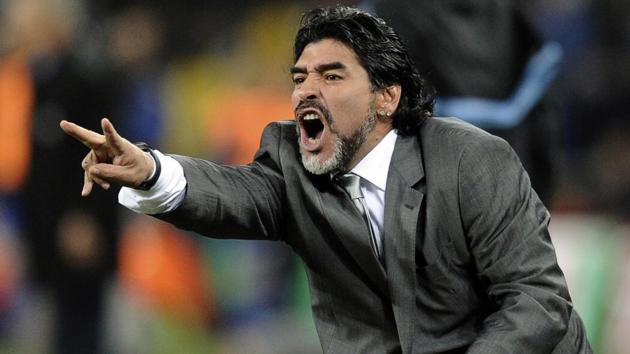
One of the most striking examples of this is Diego Maradona. Revered as perhaps the greatest footballer of all time, Maradona’s exploits for Argentina and Napoli were transcendent. Yet his stints as a manager were tumultuous at best. His tenure with the Argentinian national team, highlighted by an erratic 2010 World Cup campaign, was marked more by passion and unpredictability than tactical acumen. Argentina’s heavy 4-0 defeat to Germany in the quarter-finals underscored his limitations in preparing and organising a team.
Similarly, Thierry Henry’s managerial struggles stand in stark contrast to his glittering playing career. As a player, Henry was elegance personified, a prolific striker who terrified defenders and mesmerised fans. But his time as head coach of AS Monaco in 2018-19 was a sobering reminder that tactical genius on the field doesn’t automatically translate to success in the technical area. Monaco languished under his stewardship, and he was dismissed after just 20 matches.
Closer to home, England’s own Wayne Rooney serves as a more contemporary example of this phenomenon. Rooney’s playing career was a marvel: Manchester United’s all-time leading goalscorer, a talisman for England, and one of the most gifted players of his generation. Yet his foray into management has been fraught with challenges. After a difficult spell at Birmingham City, Rooney took the helm at Plymouth Argyle in May 2024. However, his tenure was short-lived; after just over seven months, he departed by mutual consent following a nine-game winless streak that left Plymouth at the bottom of the Championship table, having conceded a record 51 goals in 23 games.
Frank Lampard is another case in point. A midfield maestro with Chelsea and one of England’s finest players, Lampard’s managerial career has been defined by inconsistency. While his tenure at Derby County was promising, his time at Chelsea, despite an initial spark, ended in disappointment, and his stint with Everton saw the club embroiled in a relegation battle. Lampard’s managerial journey highlights the difficulty of translating individual brilliance into sustained team success.
By contrast, it is often the unheralded players who shine in management. José Mourinho, for instance, never played professional football at a notable level. Yet his grasp of tactics, psychology, and man-management propelled him to the pinnacle of the sport, with Champions League triumphs and league titles across Europe. Similarly, Arsène Wenger’s unremarkable playing career belied a revolutionary approach to management that transformed Arsenal and English football as a whole.
The reasons for this discrepancy are manifold. Great players often rely on instinct and natural ability, traits that can’t be easily taught or replicated. When tasked with coaching, they may struggle to communicate effectively with players who don’t share their innate understanding of the game. By contrast, those with modest playing careers often spend years studying tactics, learning how to motivate diverse personalities, and honing a more methodical approach.
This is not to say that no great player can transition successfully into management. Zinedine Zidane’s tenure at Real Madrid, with three consecutive Champions League titles, is a glowing exception. Similarly, Pep Guardiola, whose playing career was respectable if not legendary, has become one of the most innovative managers of all time. These examples, however, remain rarities.
Ultimately, football is a game of nuances, and while the touch of genius can light up the pitch, success in the dugout requires a completely different form of brilliance. It is a reminder that in football, as in life, talent alone is rarely enough.

 The Rowanwood Chronicles