Beyond the Capital: Why Federal Work Must Follow Where Canada Is Growing

In the old rhythms of Canadian public service, the federal workplace was always Ottawa. Parliament Hill, rising above the banks of the Ottawa River, anchored not just governance, but geography itself. For decades, the logic was simple. If government work was done in one place, then the people who did that work would go there.

That logic no longer fits the country we live in.

What is often framed as an “Ottawa problem” – empty office towers, struggling downtown businesses, and debates about return-to-office mandates – is in fact a regional and national economic issue. The conversation has focused narrowly on the capital’s core, while ignoring the quieter, more fragile economies that surround it.

Small towns and villages do not have the economic buffers that large cities enjoy. They do not have diversified commercial districts, deep tourism markets, or the ability to absorb sudden shocks. When people leave town every weekday morning and return only to sleep, the effects are immediate and visible. Cafés close. Retail shrinks. Volunteer organizations struggle. Municipal tax bases flatten. One employer leaving, one policy shift, one lost opportunity can tip the balance.

And yet, this is where population growth is increasingly happening.

Across Eastern Ontario and much of Canada, families are choosing towns like Kemptville not because they are cheaper versions of cities, but because they offer something cities increasingly cannot. Space. Community. A sense of belonging. The growth is not speculative. It is real, measurable, and ongoing. The problem is that economic policy, particularly federal workplace policy, has not kept pace with that shift.

This is why North Grenville Mayor Nancy Peckford’s proposal to establish a federal remote work hub in Kemptville deserves to be understood as more than a local initiative. It is a response to a structural imbalance. Peckford pointed to the Kemptville Campus as an ideal off-site federal workspace, with secure buildings, high-speed internet, and flexible co-working space. Its location, she noted, offers a practical alternative to grinding commutes and limited parking in downtown Ottawa.

But the deeper argument is economic.

When federal employees work where they live, money circulates locally. Lunch is bought on Main Street, not in a food court. Childcare is local. Errands happen mid-day. The economic multiplier effect in a small town is outsized because the base is smaller. A handful of stable, well-paid jobs can sustain multiple businesses. The presence of daytime professionals supports services that would otherwise be unviable.

Large cities, including Ottawa, undoubtedly face challenges, yet they are resilient in ways small towns are not. They attract private investment. They adapt. They reconfigure. Small towns rarely get that luxury. Growth may be happening there, but it is fragile growth, easily reversed if policy decisions treat these places as peripheral rather than integral.

There is also the environmental dimension, one that aligns neatly with federal climate commitments. Long daily commutes from surrounding communities into Ottawa generate emissions that are entirely avoidable. Distributed work hubs reduce traffic congestion, lower greenhouse gas output, and do so without massive infrastructure spending. This is climate policy that improves lives rather than restricting them.

Mayor Peckford framed her proposal in terms of quality of life and community sustainability, emphasizing the importance of keeping people close to their families and rooted in their towns. That framing matters. It acknowledges that public servants are not abstract units of labour. They are neighbours, parents, volunteers, and taxpayers.

Ottawa will always matter. Parliament Hill will always be the symbolic heart of federal governance. But a modern public service does not need to be physically concentrated in one city to remain effective, coherent, or accountable.

If anything, the legitimacy of federal institutions is strengthened when they are visibly embedded across the regions they serve.

Kemptville’s proposal points toward a future where federal employment supports not just a capital city, but an entire constellation of towns and villages that are quietly doing the work of growing Canada. It is not about taking something away from Ottawa. It is about recognizing where the country already is – and where it is going.
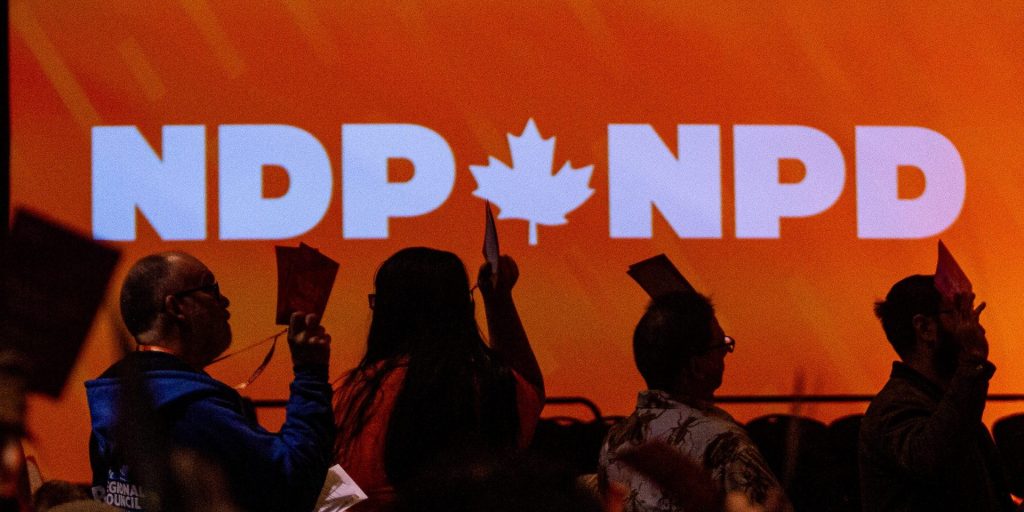

Will the Rise of U.S. Progressives Help Revive the Canadian NDP?

The election of Zohran Mamdani as mayor of New York City marks a qualitative shift in North American progressive politics. This is no longer a story about insurgents pushing from the margins. It is about democratic socialists governing major institutions, commanding budgets, shaping public narratives, and translating movement demands into administrative power.

Alongside figures like Alexandria Ocasio-Cortez and Bernie Sanders, Mamdani’s ascent signals that U.S. progressivism has entered a new phase. The question for Canada is no longer whether these ideas resonate culturally, but whether the Canadian New Democratic Party is capable of learning the deeper strategic lessons now on offer.

The answer remains conditional. The NDP can benefit from the American progressive surge only if it studies how power is being built and exercised, not just how it is branded.

Structural and Cultural Constraints
Canada’s parliamentary, multi-party system should in theory favour a social democratic party. The NDP does not need to fight a hostile primary system or operate as a faction inside a centre-right coalition party, as U.S. progressives must within the Democrats. Yet despite this structural advantage, the NDP has struggled to convert progressive sentiment into durable electoral growth.

The party remains caught between ideological clarity and managerial caution. It often campaigns as a movement party while governing, or aspiring to govern, as a risk-averse administrator. This has produced a persistent credibility gap. Movement activists do not feel represented between elections, while swing voters hear careful policy talk without an emotionally compelling story of change.

Meanwhile, U.S. progressive discourse has become culturally influential in Canada. Class-conscious language, housing-first politics, and explicit critiques of corporate power now circulate widely through social media and activist networks. But cultural influence does not automatically translate into organizational renewal. That requires infrastructure, discipline, and leadership development.

From Insurgency to Governance: The Mamdani Moment
Mamdani’s election as New York City mayor is significant precisely because it closes the loop between organizing and governing. His political roots lie in tenant unions, transit justice campaigns, and DSA-backed electoral work that treated municipal power as a strategic prize rather than a symbolic platform.

As mayor, Mamdani now governs through the same principles that animated his rise: rent stabilization, public ownership, resistance to privatization, and an explicit alignment with working-class and immigrant communities. Crucially, these commitments are not framed as ideological abstractions, but as practical solutions to daily crises like housing costs, transit access, and public services.

This matters for the Canadian NDP because it demonstrates that democratic socialist politics can scale without dilution when rooted in permanent organizing structures. The DSA model, now validated at the level of North America’s largest city, treats elections as moments in an ongoing campaign rather than endpoints. Governance becomes an extension of movement pressure, not its replacement.

By contrast, the NDP remains largely election-centric. Local riding associations often go dormant between cycles. Policy development is centralized. Grassroots energy is mobilized episodically, then dissipates. Even when the party holds power provincially or influences federal policy, it rarely uses that position to expand organizing capacity outside the party itself.

Some Canadian organizations have attempted to replicate aspects of the DSA approach, including Courage Coalition and SomeOfUs. These efforts show promise but remain disconnected from a mass electoral vehicle capable of sustaining them. Mamdani’s mayoralty demonstrates what becomes possible when that gap is closed.

What the NDP Would Need to Change
If the NDP wants to benefit from the U.S. progressive breakthrough, including Mamdani’s victory, it would need to make several strategic shifts.

First, it must invest in permanent grassroots infrastructure that exists independently of campaign timelines. Organizing around housing, labour rights, and public services cannot be treated as messaging exercises. They must be lived relationships.

Second, the party must reclaim class-based language without apology. Housing affordability, food prices, wages, and corporate profiteering are not niche issues. They are the material conditions shaping political identity. Mamdani’s success shows that naming antagonists clearly does not alienate voters when tied to credible solutions.

Third, bold policy must be localized and nationalized in Canadian terms. Public power, green industrial policy, and decommodified housing already align with Canada’s institutional history. Crown corporations, cooperative ownership, and Indigenous-led land stewardship provide a domestic frame that avoids shallow American mimicry.

Fourth, the NDP must cultivate leaders who organize year-round and govern transparently, rather than relying on tightly controlled national figures. Mamdani’s credibility did not emerge from media polish but from years of visible, accountable work.

Finally, the party must abandon technocratic restraint as its default tone. Emotional resonance is not manipulation. It is how people recognize themselves in politics. Urgency, fairness, and dignity are not slogans. They are organizing principles.

A Blueprint, Not a Shortcut
The rise of U.S. progressives, now culminating in Mamdani’s mayoralty, does not offer the NDP an easy revival narrative. What it offers instead is a blueprint for how movements become institutions without losing their soul.

The NDP does not lack progressive values. What it lacks is a movement culture capable of sustaining those values under pressure. Mamdani’s transition from organizer to mayor shows that such a culture can win, govern, and endure.

Whether the NDP studies that lesson seriously, or continues to treat U.S. progressivism as aesthetic inspiration rather than structural instruction, will determine whether it remains a protest party with influence, or becomes a governing force with momentum.

Sources
Mamdani, Z. 2024. Interviews and public statements as New York City mayor. Jacobin.
McGrane, D. 2019. The New NDP: Moderation, Modernization, and Political Marketing. UBC Press.
Taylor, K. 2023. “The lessons Jagmeet Singh should learn from Bernie Sanders.” Policy Options.
Democratic Socialists of America NYC. 2022 to 2025. Electoral and governance strategy documents.

The Politics of Distraction: Why Alberta’s Complaints Matter Less Than They Appear

A fair reading is that a significant share of Alberta’s current complaints function as sideshows, but not empty ones. They are distractions with a purpose, and that purpose is political rather than policy-driven.

At the federal level, the Carney government’s real files are structural and unforgiving: restoring long-term productivity, managing a fragile transition to a low-carbon economy without regional collapse, stabilizing housing and infrastructure finance, and navigating a volatile global trade and security environment. None of those problems yield to symbolic confrontation. They require boring competence, capital discipline, and political stamina. Against that backdrop, disputes over judicial appointments, equalization rhetoric, or procedural grievances are comparatively low-impact on Canada’s material trajectory.

From Alberta’s perspective, however, these conflicts are useful theatre. They re-center politics on identity, grievance, and sovereignty rather than on questions where provincial governments have fewer clean answers of their own. A public argument about judges, Ottawa elites, or federal overreach is easier to sustain than a hard conversation about Alberta’s economic diversification, fiscal exposure to commodity cycles, or long-term labour force constraints. These fights allow provincial leaders to frame themselves as defenders rather than managers.

For the Carney government, the danger is not that these complaints derail core policy, but that they consume political oxygen. Every hour spent responding to performative ultimatums is an hour not spent building coalitions around housing finance reform or industrial strategy. The risk is cumulative. A steady drip of constitutional agitation can distort the agenda, forcing Ottawa into a reactive posture that favours short-term messaging over long-term statecraft.

That said, dismissing the disputes entirely would be a mistake. Sideshows still shape public mood. They erode trust in institutions, normalize the idea that core democratic guardrails are negotiable, and create a climate where substantive reform becomes harder to explain and sell. The judicial appointment fight matters less for what it changes immediately than for what it signals: a willingness to challenge institutional norms to score political points.

In the bigger picture, then, Alberta’s complaints are not the main story of Canada’s moment, but they are part of the background noise that can either be managed or allowed to metastasize. The test for the Carney government will be whether it can keep its focus on the genuinely consequential files while refusing to let performative conflict define the national agenda. Governments lose momentum not when they face opposition, but when they mistake noise for substance.

More Than a Provincial Dispute: Judicial Appointments and the Fragility of Democratic Norms

The announcement by Premier Danielle Smith that Alberta will withhold funding for new judicial appointments unless the federal government gives the province a formal role in selecting those judges has jolted political observers across Canada. The premier’s letter to Prime Minister Mark Carney makes explicit what had previously been a background tension in Canadian federalism: provincial frustration with the federal judicial appointment process and an insistence that courts reflect local values and expectations. Smith argues that this reform would “strengthen public confidence in the administration of justice, promote national unity within Alberta and ensure judicial decision-making reflects the values and expectations of Albertans.” Her government has proposed an advisory committee with equal representation from Alberta and the federal government to assess and recommend candidates.  

The direct Alberta issue is almost simple to state and glaringly complex to resolve. Superior court judges who serve in Alberta are appointed by the federal government and paid by Ottawa, while the province bears the cost of court infrastructure and support staff. Under Canada’s current judicial appointment system the federal government relies on independent advisory committees that include representatives appointed by provinces and law societies, but ultimate appointment power rests with the federal cabinet and prime minister. Fraser’s office has pushed back firmly against Smith’s ultimatum, underscoring that the existing process is designed to preserve judicial independence by keeping appointments “at arm’s length from political influence.” In rejecting Alberta’s call for change, the federal justice minister emphasized that judges need to make decisions “without fear and without seeking the favour of those who have power over appointments” and cautioned that threats tied to funding could undermine democratic norms.  

This dispute resonates far beyond courtrooms. At its heart is an age-old constitutional question about the separation of powers and the boundary between political authority and judicial independence. Democracies rest on the premise that the judiciary should act as a check on executive and legislative power, not as an extension of it. The Canadian model tries to balance federal appointment authority with advisory input from provinces, but it deliberately avoids direct political control at the provincial level. By threatening to leverage provincial funding to gain influence, Smith’s government crosses into a zone that legal experts and critics argue already risks encroaching on judicial neutrality. The federal government’s emphasis on maintaining the current process without succumbing to political pressure underscores the idea that judicial appointments should not be bargains to be struck in the course of intergovernmental brinkmanship.  

The wider context in which this debate unfolds reflects broader tensions in Canadian politics. Across Western liberal democracies, debates over judicial review, “activist” judges, and institutional legitimacy have become flashpoints in partisan discourse. The insistence that judges “reflect local values” can be read as part of a populist challenge to established institutions, one that demands greater control by elected governments over courts seen as aloof or counter-majoritarian. Yet the counter-argument — articulated by judicial leaders and constitutional scholars — is that treating courts as political prizes erodes the very safeguards that protect minority rights and hold governments accountable to law rather than political expediency. Maintaining the independence of the judiciary is not an abstract procedural goal but a foundational element of a functioning constitutional order.  

The choice facing Canadian democracy, therefore, is not merely one of process reform or intergovernmental negotiation. It is a question of how a mature democratic system balances competing imperatives: responsiveness to provincial concerns, unity within a federated polity, and the insulation of core legal institutions from the pressures of partisan contestation. Premier Smith’s initiative invites a national conversation about these imperatives, but it also highlights the risks inherent in coupling financial leverage to demands for political influence over courts. History offers cautionary examples of how populist challenges to judicial autonomy can spiral into broader constitutional crises when governments seek control over the arbiters of legal disputes. The stakes, in Canada’s case, are not limited to Alberta’s courts but extend to the very integrity of judicial independence and the confidence citizens place in the rule of law.  

Sworn to the Crown, Signing for Separation: Alberta’s Oath Problem

When Alberta MLAs take their seats in the Legislative Assembly, they swear an oath of allegiance to the Crown. It’s not optional. It’s not ceremonial theater. It’s a legal requirement under the Legislative Assembly Act, a pledge of loyalty to the constitutional order they’re about to serve within.

So what happens when those same MLAs sign a petition advocating for Alberta’s separation from Canada?

They break that oath.

Let’s be clear about what the Crown represents. It’s not just a distant monarch in another country. In Canada’s constitutional framework, the Crown is the Canadian state. Swearing allegiance to the Crown means swearing allegiance to Canada’s sovereignty and constitutional order. You can’t pledge loyalty to that framework while simultaneously working to dismantle it. The two positions are fundamentally incompatible.

Some might argue that advocating for political change through democratic means is itself protected within the system, that exploring sovereignty options is legitimate political discourse. That’s a convenient dodge. There’s a difference between debating constitutional reform and actively campaigning to break up the country. Signing a separation petition isn’t abstract discussion – it’s concrete political action toward ending the very state you’ve sworn allegiance to.

Quebec recognized this contradiction, and did something about it. In December 2022, Quebec passed legislation making the oath to the Crown optional for MNAs. They kept only the oath to “the people of Quebec” as mandatory. This came after PQ and Québec Solidaire MNAs refused to swear allegiance to King Charles III following the 2022 election. Rather than maintain the hypocrisy, Quebec changed the law.

That’s the point. Quebec understood that you can’t have it both ways. If your MLAs are going to advocate for separation, don’t make them swear loyalty to what they’re trying to leave. Alberta has made no such change. Alberta MLAs still take the full oath to the Crown, knowing exactly what it entails.

Which means Alberta MLAs who sign separation petitions are doing so while bound by an oath they’ve violated. They voluntarily swore allegiance, then voluntarily betrayed it. No one forced them to take the oath. No one forced them to seek public office. They chose both, and apparently saw no contradiction.

This isn’t about whether separation itself is right or wrong. It’s about integrity in public office. It’s about whether the oaths our elected officials take actually mean something, or whether they’re just words to be discarded when politically convenient.

Public office requires public trust. That trust rests on the assumption that when someone swears an oath, they intend to keep it. When MLAs sign separation petitions after swearing allegiance to the Crown, they tell Albertans that their word means nothing, that oaths are performative, that constitutional obligations can be ignored whenever political expediency demands it.

If Alberta MLAs want to advocate for separation, they should do what Quebec did: change the oath. Until then, signing that petition isn’t political courage. It’s oath-breaking, plain and simple.​​​​​​​​​​​​​​​​

Beyond Tariffs: How the EU – India Free Trade Agreement Signals a New Trade Order

The conclusion of the European Union – India Free Trade Agreement (FTA)marks a defining moment in global economic governance, drawing to a close nearly two decades of intermittent negotiations and signalling a recalibration of economic power in a fracturing global trade system. Known in press briefings as the “mother of all deals,” this comprehensive pact expands market access, slashes tariffs on a historic scale, and positions both partners to mitigate the impact of rising protectionism by third countries. This essay analyzes the pact’s economic architecture, geopolitical drivers, and implications for the broader global order.  

At the heart of the pact is an expansive liberalization of trade in goods and services. The agreement eliminates or significantly reduces tariffs on over 90% of traded goods by value, with India granting preferential access to more than 99% of Indian exports and the EU offering liberalization on approximately 97% of its exports to India. Major industrial sectors: machinery, chemicals, pharmaceuticals, medical and optical equipment will see tariff lines phased out across multi-year timetables. Special quotas and phased reductions on sensitive lines such as automobiles reflect carefully calibrated concessions designed to balance domestic political interests with international commitments; cars imported from the EU will face duties reduced from up to 110 % today to single-digit levels under an annual quota regime.  

Services and investment chapters are similarly consequential. EU firms gain enhanced access to India’s services sectors, including financial services, maritime transport and professional services, while intellectual property protections are strengthened to align Indian and European frameworks, critical for sectors reliant on predictable rights enforcement. The agreement also includes provisions for cooperation on customs procedures and dispute resolution, signalling an intent to reduce non-tariff barriers that often impede real-world commerce.  

The strategic timing of the FTA’s conclusion cannot be divorced from the changing global trade architecture. Both India and the EU have faced increasing volatility in their trade relationships with the United States, where elevated tariffs and trade tensions have disrupted traditional export patterns and encouraged market diversification. In this context, the FTA functions as a risk-mitigation strategy, reducing reliance on markets where tariff policies are unpredictable and asserting a rules-based alternative anchored in predictable market access and regulatory cooperation. For India, which currently faces tariff rates as high as 50 % in some third-country markets, the deal offers a pathway toward diversification and deeper integration into global value chains.  

Moreover, the pact reflects a broader geopolitical calculus. The EU and India together represent a market of approximately 2 billion people and a substantial share of global GDP. Strengthening bilateral economic ties serves as a hedge against the economic influence of China, and aligning regulations and standards contributes to the EU’s broader strategy of consolidating like-minded partners with robust legal and market frameworks. The agreement also dovetails with complementary FTAs, such as the UK–India deal, enhancing India’s connectivity with major advanced economies.  

Critically, the FTA embeds sustainability and regulatory cooperation into its economic architecture. Chapters addressing environmental protections, labour standards, and sustainable development aim to balance liberalized trade with social and ecological commitments. The inclusion of structured cooperation on climate action, supported by financial pledges from the EU, situates this trade pact within a broader normative framework seeking to reconcile growth with sustainability imperatives.  

Despite its ambition, implementation challenges remain. The agreement requires formal ratification by the European Parliament, member states, and the Indian Union Cabinet before entering into force. Domestic constituencies, particularly in agriculture and automobile sectors, will continue to influence the pace and contours of implementation. The phased nature of tariff reductions, especially in politically sensitive areas, illustrates the enduring tension between economic liberalization and domestic economic safeguards.  

The EU – India Free Trade Agreement represents a landmark in twenty first century trade policy. Its comprehensive coverage of goods, services, and regulatory cooperation; enacted against a backdrop of rising global tariff volatility, positions it as both an economic catalyst and a strategic bulwark within a more fragmented global trade order. As implementation unfolds, the agreement’s success will largely depend on how effectively this new architecture can foster deeper economic integration while respecting the diverse economic imperatives of its signatories.  

Sources:
Policy, outcomes and tariff details: EU–India Free Trade Agreement Chapter Summary, European Commission policy memo, 2026
India-EU FTA coverage and preferential access statistics, The Economic Times, January 2026;
Strategic context and export liberalisation figures, European Union official releases and reports, 2026;
Integration of services and sustainability provisions, policy analyses, 2026.  

A Grocery Tax Credit Alone Cannot Fix Rising Food Prices

Canada’s recent announcement of an enhanced grocery-focused tax credit represents a fiscal effort to address household affordability pressures, yet it stops well short of tackling the underlying drivers of elevated food prices. The Canada Groceries and Essentials Benefit expands the existing Goods and Services Tax (GST) credit by roughly 25% for five years and includes a one-time 50% top-up payment in 2026. This adjustment aims to put additional cash into the hands of low- and modest-income families facing grocery price inflation, particularly in urban centres where household budgets are already stretched. [Source]

Estimated Annual Benefit under Canada Groceries and Essentials Benefit, 2026

Household TypeApprox. Eligible PopulationCurrent GST Credit (CAD)Proposed Credit Increase (%)Estimated Annual Benefit (CAD)
Single adult3.2 million44325%554
Couple, no children2.5 million56625%708
Single parent, 1 child1.4 million57525%719
Single parent, 2 children0.8 million76525%956
Couple, 2 children2.1 million1,51225%1,890

While additional income support can indeed help households cope with higher nominal grocery bills, it does not alter the prices displayed on supermarket shelves. Grocery stores set prices based on a complex array of supply-side factors that lie outside direct consumer control: global commodity costs, transportation and fuel expenses, labour and packaging inputs, and competitive dynamics among retail chains. The benefit’s design boosts purchasing power without addressing these structural determinants of food prices, meaning that support can be absorbed by continued price increases rather than translating into lower costs at the till.

The policy’s focus on cash transfers also leaves out many of the indirect pressures on affordability. Rising energy prices, fluctuations in the Canadian dollar, and climate-related impacts on domestic agriculture have contributed to a higher cost base for essential foods. While the government intends the credit to be a temporary buffer, households may continue to feel the pinch if structural cost drivers are not addressed simultaneously.

Recent Food Price Inflation by Category (Canada)

CategoryYear-over-Year Change
Grocery overall+4.7% (Nov 2025)
Fresh or frozen beef+17.7% (Nov 2025)
Coffee+27.8% (Nov 2025)
Fresh vegetables+3.7% (Apr 2025)
Eggs+3.9% (Apr 2025)
Bakery products+2.1% (Oct 2025)
Dairy+1.4% (Oct 2025)

Economic evidence from the last several quarters shows that grocery inflation in Canada has consistently outpaced general inflation, intensifying concerns about affordability. Certain staples, such as beef and coffee, have experienced particularly sharp increases due to both international market volatility and domestic supply constraints. Meanwhile, vegetables, eggs, and dairy, while increasing at a slower pace, contribute to the cumulative pressure on household budgets. The uneven nature of these price increases highlights the limitations of a single cash transfer in addressing widespread cost pressures. [Source]

Critics of the grocery tax credit correctly note that without accompanying measures to control prices or enhance competition, the benefit functions primarily as a transfer payment rather than a price-stabilization mechanism. If households receive more after-tax income but supply bottlenecks or concentrated market structures enable retailers to maintain high markups, the net effect on real affordability may be muted. Economists caution that demand-side fiscal support can, in certain contexts, perpetuate inflationary pressures if it is not paired with supply-side reforms that ease cost pressures or intensify competition.

Structural reforms could take several forms. Stronger enforcement of competition law to reduce the market power of dominant grocery chains could increase pricing discipline. Targeted subsidies for producers or investments in logistics could help lower costs upstream, which may eventually be reflected in lower retail prices. Carefully calibrated price controls, while politically sensitive, could provide temporary relief for essential goods. Each option carries trade-offs, including potential impacts on supply reliability and long-term market incentives, but all address the fundamental drivers of high prices in ways that cash transfers alone cannot.

While the enhanced GST credit may help buffer household budgets in the short term, it is not a substitute for policies that alter the economics of food pricing. Without interventions that directly address supply constraints, market concentration, or cost pressures, consumer relief will depend on continued transfers rather than a fundamental correction of price dynamics. Future discussions on food affordability would benefit from integrating demand support with concrete strategies to increase supply efficiency, foster competition, and reduce the cost of essential goods. [Source]

Does Rosemary Barton Know Where the Line Is? Journalism, Punditry, and the Authority Problem at CBC

In recent weeks, two moments involving Rosemary Barton have sharpened a long-simmering concern about the state of Canadian political journalism. Taken together, they invite a serious question about boundary discipline, not at the margins of commentary, but at the very centre of institutional authority. When the senior political correspondent at a public broadcaster appears uncertain about where journalism ends and punditry begins, the issue is no longer personal style. It is structural.

The most telling example came during Barton’s criticism of Mark Carney for publicly pushing back against Donald Trump. Carney’s assertion that Canadians are strong was met not with a question about strategy or consequences, but with a rebuke. Barton suggested that he should not “talk like that” while negotiations with the United States were ongoing. This was not interrogation. It was correction. The distinction matters. Journalism tests claims and identifies risks. Punditry adjudicates what ought to be said and enforces preferred norms of behaviour. In this case, the journalist stepped into the role of strategic adviser.

That intervention rested on an unstated, but powerful assumption. It treated rhetorical restraint toward the United States as the only responsible posture and framed public assertiveness as diplomatically naïve or reckless. Yet this is not a settled fact. It is a contested theory of power. For many Canadians, public expressions of confidence and sovereignty are not obstacles to negotiation, but instruments of democratic legitimacy. By presenting elite caution as self-evident realism, Barton transformed a debatable worldview into an implied journalistic standard.

This moment did not stand alone. It echoed a broader pattern in which certain political choices are framed as inherently reasonable while others are treated as violations of an unwritten rulebook. Barton’s interviews frequently embed normative assumptions inside ostensibly neutral questions. The effect is subtle, but cumulative. Political actors who align with institutional orthodoxy are invited to explain. Those who depart from it are warned, corrected, or disciplined. Over time, skepticism becomes asymmetrical, and audiences begin to sense that the field of legitimate debate is being quietly narrowed.

The problem is compounded by Barton’s position. A senior political correspondent does not merely report events. The role carries symbolic weight. It signals what seriousness looks like, what competence sounds like, and which instincts are deemed responsible. When that authority is used to police tone or enforce elite etiquette, it reads not as opinion, but as instruction. Viewers are not encountering a commentator among many. They are encountering the voice of the institution.

This is particularly consequential at a public broadcaster. CBC’s democratic legitimacy depends on its ability to distinguish clearly between explanation and advocacy. When journalists appear more concerned with managing political risk on behalf of elites than with illuminating choices for the public, trust erodes. Citizens do not feel informed. They feel managed. That erosion rarely arrives as a scandal. It accumulates through moments that feel small, instinctive, even well intentioned, yet consistently tilt in the same direction.

The Carney episode also revealed a deeper misalignment of priorities. Carney’s remarks were aimed at Canadians, not at Trump. They functioned as reassurance and civic affirmation in a moment of external pressure. Barton’s response implicitly subordinated domestic democratic speech to foreign sensibilities. That is a value judgment about whose audience matters most. It may be a defensible argument in a column. It is not a neutral premise for an interview.

None of this requires imputing bad faith or crude partisanship. The issue is not ideology so much as role confusion. Contemporary political media increasingly collapses reporting, analysis, and commentary into a single on-air persona. The incentives reward strong takes and strategic framing. Over time, journalists can begin to experience elite consensus as common sense and dissent as irresponsibility. The line does not disappear all at once. It fades.

At the senior level, however, that line must be actively maintained. Journalism asks why choices are made and what consequences follow. Punditry advises, corrects, and enforces norms. When a journalist tells a political actor what should or should not be said, the boundary has been crossed. When that crossing becomes habitual, it reshapes the institution’s relationship with the public.

The question, then, is not whether Rosemary Barton is tough enough or fair enough in any single exchange. It is whether she still recognizes the limits of her authority. A senior political correspondent is not a shadow negotiator, a risk manager, or a guardian of elite comfort. The role is to clarify politics, not to perform it.

If that distinction is lost at the top, the consequences cascade downward. Journalism becomes strategy. Explanation becomes correction. And the public broadcaster, slowly and without declaration, ceases to act as a referee and begins to play the game itself.

When No One Owns the Failure

Why Ottawa’s LRT Crisis Is a Public-Private Partnership Problem
Ottawa’s Confederation Line is often discussed as a story of bad trains, harsh winters, or unfortunate teething problems. That framing is convenient. It is also wrong.

What Line One actually represents is a textbook failure of the public-private partnership model when applied to complex, safety-critical urban transit. The current crisis, in which roughly 70 percent of Line One’s rail cars have been removed from service due to wheel bearing failures, does not reflect a single engineering defect. It reflects a governance structure designed to diffuse responsibility precisely when responsibility matters most.

P3s and the Illusion of Risk Transfer
Public-private partnerships are sold on a simple promise. Risk is transferred to the private sector. Expertise is imported. Costs are controlled. The public gets infrastructure without bearing the full burden of delivery.

In reality, Line One demonstrates the opposite. Risk was not transferred. It was obscured.

The City of Ottawa owns the system. A private consortium designed and built it. Operations and maintenance are contracted. Vehicles were selected through procurement frameworks optimized for bid compliance rather than long-term resilience. Oversight is fragmented across contractual boundaries. When failures emerge, every actor can point to a clause, a scope limit, or a shared responsibility.

The result is not efficiency. It is paralysis.

The Bearing Crisis as a Structural Warning
Wheel bearing assemblies are not peripheral components. They are foundational safety elements, designed to endure hundreds of thousands of kilometres under predictable load envelopes. That Ottawa was forced to pull all cars exceeding approximately 100,000 kilometres of service is not routine maintenance. It is an admission that the system’s assumptions about wear, inspection, and lifecycle management were flawed.

Under a traditional public delivery model, this would trigger a clear chain of accountability. The owner would interrogate the design, mandate modifications, and absorb the political cost of service reductions during remediation.

Under the P3 model, the response is slower and narrower. Each intervention must be negotiated within contractual constraints. Remedies are evaluated not only on technical merit, but on liability exposure. Decisions that should be engineering-led become legalistic.

This is not a bug in the P3 model. It is the model working as designed.

Why Transit Is a Bad Fit for P3s
Urban rail systems are not highways or buildings. They are complex, adaptive systems operating in real time, under variable conditions, with zero tolerance for cascading failure. They require continuous learning, rapid feedback loops, and the ability to redesign assumptions as reality intrudes.

P3 structures actively inhibit these qualities.

They separate design from operations. They treat maintenance as a cost center rather than a safety function. They rely on performance metrics that reward availability on paper rather than robustness in practice. Most importantly, they fracture institutional memory. Lessons learned are not retained by the public owner. They are buried in proprietary reports and contractual disputes.

Line One’s repeated failures, from derailments to overhead wire damage to bearing degradation, are not independent events. They are symptoms of a system that cannot self-correct because no single entity is empowered to do so.

The Expansion Paradox
Ottawa is now extending Line One east and west while the core remains unstable. This is often framed as momentum. In policy terms, it is escalation.

Every kilometre of new track increases operational complexity and maintenance load. Every new station deepens public dependence on a system whose reliability has not been structurally resolved. Under a P3 framework, expansion also multiplies contractual interfaces, compounding the very governance problems that caused the original failures.

This is how cities become locked into underperforming infrastructure. Not through malice or incompetence, but through institutional inertia reinforced by sunk costs.

A Policy Alternative
Rejecting P3s is not a call to nostalgia. It is a recognition that certain assets must be governed, not merely managed.

Urban rail requires:
• Unified ownership of design, operations, and maintenance.
• Independent technical authority answerable to the public, not contractors.
• Lifecycle funding models that prioritize durability over lowest-bid compliance.
• The ability to redesign systems midstream without renegotiating blame.

None of these are compatible with the current P3 framework.

Cities that have learned this lesson have moved back toward public delivery models with strong in-house engineering capacity and transparent accountability. Ottawa should do the same, not after the next failure, but now.

The Real Cost of P3 Optimism
The cost of Line One is no longer measured only in dollars. It is measured in lost confidence, constrained mobility, and the quiet normalization of failure in essential infrastructure.

Public-private partnerships promise that no one pays the full price. Ottawa’s experience shows the opposite. When everyone shares the risk, the public absorbs the consequences.

Line One does not need better messaging or tighter performance bonuses. It needs a governance reset. Until that happens, every bearing replaced is merely another patch on a system designed to forget its own mistakes.

Sources
CityNews Ottawa. “OC Transpo forced to remove trains from Line 1 due to wheel bearing issue.” January 2026.
https://ottawa.citynews.ca
Yahoo News Canada. “70% of Ottawa’s Line 1 trains out of service amid bearing problems.” January 2026.
https://ca.news.yahoo.com
Transportation Safety Board of Canada. “Rail transportation safety investigation reports related to Ottawa LRT derailments.” 2022–2024.
https://www.tsb.gc.ca
OC Transpo. “O-Train Line 1 service updates and maintenance notices.”
https://www.octranspo.com

Patriarchy, Matriarchy, and the Question of Social Design

In the long sweep of human history, few structures have shaped daily life as thoroughly as systems of gendered power. Patriarchy and matriarchy are often presented as opposites, but this framing obscures more than it reveals. One is a historically dominant system of centralized authority. The other is a set of social arrangements that redistribute power, responsibility, and meaning in fundamentally different ways. Understanding the distinction is less about reversing hierarchy and more about examining which values a society chooses to place at its core.

Patriarchy is best understood not simply as male leadership, but as a worldview. Authority is concentrated, legitimacy flows downward, and social order is maintained through hierarchy. Political power, economic control, inheritance, and cultural narratives tend to align around masculine-coded traits such as dominance, competition, and control. Caregiving and relational labor are treated as secondary, often invisible, despite being essential to social survival. Even when patriarchal systems soften over time, their underlying logic remains intact. Power is something to be held, defended, and exercised over others.

Matriarchy, by contrast, is frequently misunderstood as a mirror image of patriarchy. Anthropological evidence suggests otherwise. Societies described as matriarchal or matrilineal rarely exclude men or invert domination. Instead, they organize authority around kinship, continuity, and shared responsibility. Descent and inheritance often pass through the maternal line, anchoring identity in stable social bonds. Decision-making tends to be collective, with influence distributed across elders, family networks, and community councils rather than vested in singular rulers.

The most compelling argument for matriarchal systems lies not in claims of moral superiority, but in outcomes. Where patriarchy centralizes power, matriarchy diffuses it. This structural difference reduces the risk of authoritarian drift and limits the social damage caused by individual ambition. Authority becomes situational rather than absolute, exercised in service of group continuity rather than personal dominance.

Care occupies a radically different position in these systems. In patriarchal cultures, care is often framed as a private obligation or charitable act. In matriarchal societies, care functions as infrastructure. Child-rearing, elder support, emotional labor, and social repair are recognized as essential to collective resilience. Policies and customs evolve to protect long-term wellbeing rather than prioritize short-term extraction, whether economic or political.

Violence, too, is treated differently. Patriarchal systems have historically rewarded aggression, conquest, and coercion with status and legitimacy. Militarization becomes a cultural ideal rather than a last resort. Matriarchal societies, while not free of conflict, tend to favor mediation, kinship accountability, and reconciliation. Social cohesion is preserved by repairing relationships rather than punishing transgression alone.

Identity formation reveals another contrast. Patriarchy emphasizes individual achievement and competitive success. Worth is measured by rank, wealth, or dominance. Matriarchal systems emphasize relational identity. Individuals are defined by their roles within a web of mutual dependence. This orientation fosters cooperation and shared accountability, particularly during periods of crisis or scarcity.

Gender roles themselves often prove more flexible in matriarchal contexts. Patriarchy enforces rigid norms while presenting them as natural or universal. Matriarchal systems decouple masculinity from rule and femininity from subservience. Men retain agency and dignity without being positioned as default authorities. Leadership becomes contextual rather than gender-mandated.

It is important to note that few contemporary thinkers advocate for a pure matriarchy imposed upon modern states. The more serious project is post-patriarchal rather than anti-male. It asks whether societies organized around care, continuity, and distributed authority are better equipped to face complex global challenges than those organized around dominance and extraction.

From a cultural perspective, the question is not which gender should rule. It is which values should shape the structures that govern collective life. History suggests that systems prioritizing care, shared power, and relational responsibility produce more stable and humane outcomes. In an era defined by ecological strain, demographic shifts, and social fragmentation, these lessons are less ideological than practical.

It has long been argued that culture is not destiny, but design. Patriarchy is one design among many, not an inevitability. Matriarchal principles offer an alternative blueprint, not for reversing oppression, but for dismantling it altogether.