Not All Great Players Make Great Managers

In football, and I mean real football, a curious paradox persists: the world’s most dazzling players, those who commanded the pitch with poise and brilliance, often falter when tasked with leading a team from the dugout. While their on-field exploits are the stuff of legend, management requires an entirely different skill set; one that transcends talent and demands vision, communication, and an almost psychological finesse.

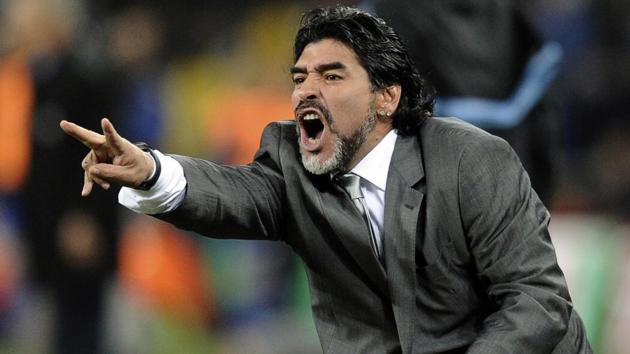
One of the most striking examples of this is Diego Maradona. Revered as perhaps the greatest footballer of all time, Maradona’s exploits for Argentina and Napoli were transcendent. Yet his stints as a manager were tumultuous at best. His tenure with the Argentinian national team, highlighted by an erratic 2010 World Cup campaign, was marked more by passion and unpredictability than tactical acumen. Argentina’s heavy 4-0 defeat to Germany in the quarter-finals underscored his limitations in preparing and organising a team.

Similarly, Thierry Henry’s managerial struggles stand in stark contrast to his glittering playing career. As a player, Henry was elegance personified, a prolific striker who terrified defenders and mesmerised fans. But his time as head coach of AS Monaco in 2018-19 was a sobering reminder that tactical genius on the field doesn’t automatically translate to success in the technical area. Monaco languished under his stewardship, and he was dismissed after just 20 matches.

Closer to home, England’s own Wayne Rooney serves as a more contemporary example of this phenomenon. Rooney’s playing career was a marvel: Manchester United’s all-time leading goalscorer, a talisman for England, and one of the most gifted players of his generation. Yet his foray into management has been fraught with challenges. After a difficult spell at Birmingham City, Rooney took the helm at Plymouth Argyle in May 2024. However, his tenure was short-lived; after just over seven months, he departed by mutual consent following a nine-game winless streak that left Plymouth at the bottom of the Championship table, having conceded a record 51 goals in 23 games. 

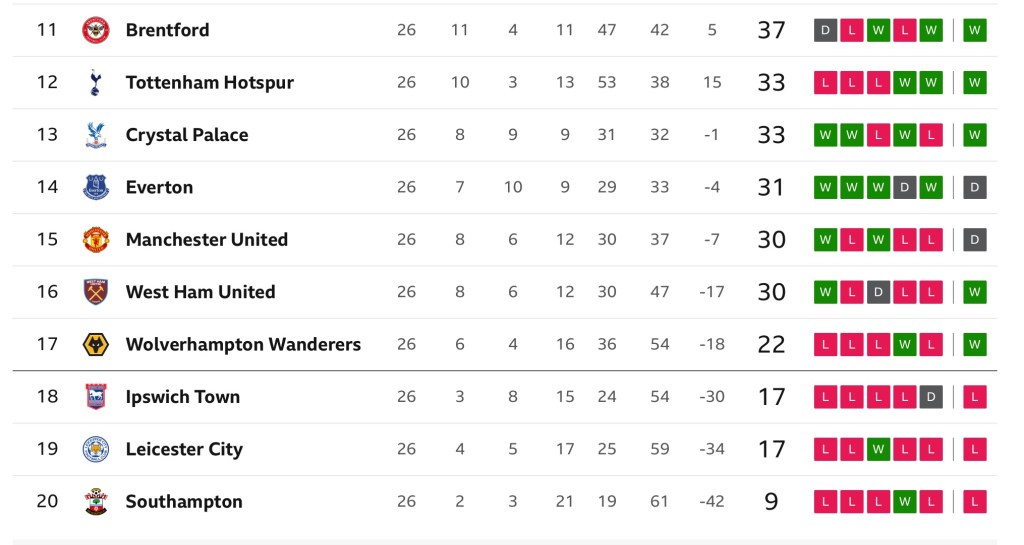
Frank Lampard is another case in point. A midfield maestro with Chelsea and one of England’s finest players, Lampard’s managerial career has been defined by inconsistency. While his tenure at Derby County was promising, his time at Chelsea, despite an initial spark, ended in disappointment, and his stint with Everton saw the club embroiled in a relegation battle. Lampard’s managerial journey highlights the difficulty of translating individual brilliance into sustained team success.

By contrast, it is often the unheralded players who shine in management. José Mourinho, for instance, never played professional football at a notable level. Yet his grasp of tactics, psychology, and man-management propelled him to the pinnacle of the sport, with Champions League triumphs and league titles across Europe. Similarly, Arsène Wenger’s unremarkable playing career belied a revolutionary approach to management that transformed Arsenal and English football as a whole.

The reasons for this discrepancy are manifold. Great players often rely on instinct and natural ability, traits that can’t be easily taught or replicated. When tasked with coaching, they may struggle to communicate effectively with players who don’t share their innate understanding of the game. By contrast, those with modest playing careers often spend years studying tactics, learning how to motivate diverse personalities, and honing a more methodical approach.

This is not to say that no great player can transition successfully into management. Zinedine Zidane’s tenure at Real Madrid, with three consecutive Champions League titles, is a glowing exception. Similarly, Pep Guardiola, whose playing career was respectable if not legendary, has become one of the most innovative managers of all time. These examples, however, remain rarities.

Ultimately, football is a game of nuances, and while the touch of genius can light up the pitch, success in the dugout requires a completely different form of brilliance. It is a reminder that in football, as in life, talent alone is rarely enough.

From Isak to Woltemade: Murphy’s Cross Keeps the Toon Dream Alive

By Big Mac, the OAP Blogger from Byker

Ey up! Big Mac from Byker here, sharpening me quill to spin a fresh yarn now that things’ve changed at St. James’ Park. The Magpies have lost Alexander Isak, and the Toon Army is keen to see how Jacob “Murph” Murphy fares without his long-partner in crime. But right out the gate, there’s signs Murph’s crossing ability still has that Geordie magic, he helped us get the win over Wolves yesterday. Let’s have a proper chat about it.

Isak’s Exit: A Legend in the Making Moving On
First off, let’s get the facts straight. Alexander Isak officially left Newcastle United for Liverpool on deadline day, 1st September 2025.  It was a British record transfer fee of £125 million, making him the most expensive British-club deal of the summer, and a landmark move in English football.  Isak had been one of our deadliest strikers: since signing in summer 2022, he scored 62 goals in 109 appearances for Newcastle in all competitions.  He was central to the 2024-25 season’s highs, not least the Carabao Cup win.  But the Sad Toon struggle is real when a talisman like him departs.

Enter Woltemade & Murphy Rising
Newcastle didn’t hang about replacing Isak. Nick Woltemade came in from Stuttgart for a club‐record fee, signed to fill the void left by Isak.  The immediate test was yesterday’s match vs Wolves at St James’ Park, a hard-fought 1-0 win. But the beauty of it was in how Murphy still showed he’s got the eye, the deliverer. 

Woltemade got the winner in his debut, heading in a cross from Murphy in the 29th minute.  That cross was right on the money – perfect delivery. It told us that even without Isak alongside him, Murphy can still pick out a header, find a forward, link up. That moment felt like a bridge between what was, and what could be with this new era.

Comparing to Legends: Shearer & Solano
Now, folks often talk about legends, and there’s no bigger in this town than Alan Shearer and Nolberto Solano. Shearer, of course, was clinical, ferocious, the kind of striker who could score with half-a-chance. And Solano, silky on the right, with whipped crosses, set-pieces, and those clever passes. Together, they were one of the best striker-provider pairs in Toon history.

Comparing Murph & Isak to Shearer & Solano ain’t sacrilege, because what we’re seeing with Murphy now is some of the same DNA: the ability to spot runs, to deliver quality service, to anticipate what the striker is gonna do. Isak and Murphy had chemistry; Isak knew where to be, Murphy knew where to aim. But with Isak gone, we’re yet to see if Murphy can build a new kind of connection, as dependable and electric as Shearer & Solano’s. Yesterday’s assist for Woltemade gives me hope.

The Magic of Murphy: Crossing, Timing, Vision
If there’s a reason Murphy remains so important, it’s this: his crossing ability, his timing, and his work ethic. Yesterday, aside from the cross that led to Woltemade’s goal, he had a few other chances: one disallowed, one fizzed just past.  Wolves weren’t pushovers. They threatened. But Murphy was steady, patient, looked for the chance, delivered. That’s what Solano used to do in his day, always eyeing the overlapping full-backs, always ready to whip in a cross that could split defences.

With Isak gone, we’re seeing Murphy change gear. Not just being the assist man for a known finisher, but spotting new runs, new patterns, and making those crosses count for others. Woltemade rose well. That’s not just his header, that’s Murphy’s accuracy and vision. The way he picks out the far post cross, knowing someone will be there, that kind of thing Shearer used to feed off, with Solano or others.

Challenges Ahead & Hope for the New Era
Of course, it’ll be tricky. Isak was more than a finisher; he had movement, clever link-ups, pace, vision, and knew how to press. Wolves’ game showed that Newcastle is adjusting. We’ll see good crosses, and sometimes they won’t be met. Woltemade got cramp and had to come off; there’s going to be trial and error. But Murphy is looking like the kind of lad who can lead the front-line service, even without Isak.

Filling the shoes of a legend isn’t easy, and Shearer’s boots are massive, but if Murphy keeps delivering crosses like that, and if Woltemade or others keep the runs that Murphy can feed, we might be building something new, something special. The crowd yesterday were singing for Murphy after the game; you could feel the faith was shifting slightly, from, “What will we do without Isak?” to, “Alright, we’ve still got survivors.”

Final Thought from Big Mac
So, here’s what I reckon: Isak has moved on, and yes, it hurts a bit, seeing one of our best high up at another club. But football moves ever onward, and from yesterday’s cross for Woltemade’s debut goal, I saw a glimpse of that old magic. Not exactly Shearer & Solano, not yet, but the seeds are planted.

Murphy, with his vision and crosses, is stepping up. Woltemade’s debut gave us a moment of hope. The Toon Army will be behind them, and if they keep weaving this kind of understanding, maybe the next legendary partnership is forming before we know it.

Howay the lads – the pitch still got room for new legends.

From Shearer’s Graft to Owen’s Fannyin’ — Isak’s Lost the Plot! 

By Big Mac, the OAP Blogger from Byker

Whey aye, what’s this pure pish wi’ Isak then? I’m tellin’ ye, it’s a bleedin’ disgrace! This lad could’ve been a Shearer, graftin’ away, proper Toon number 9! Man, no messing about. But noo? Nah, he’s lookin’ more like an Owen, all flash, no heart, and ready to scarper the minute he don’t get his own way. Absolute belta for takin’ the piss, if ye ask me.

Alan Shearer, now he was the real deal. A Geordie through and through, who gave every sodden drop of sweat for the Toon. None of this faffin’ about or sulkin’ when the wind changed. And then there’s Owen, a decent player maybe, but no loyalty, just a selfish git who legged it when the going got tough. Isak’s startin’ to show his true colours, and it’s nae pretty.

And it’s no just Isak who struggles wi’ loyalty and grit when movin’ on. Look at Andy Carroll, his move tae Liverpool was meant tae be a big thing, record fee and all that faff. But what happened? The poor lad ended up a right shower. Injuries kept him off the pitch, and when he did play, it was like he’d lost his feet. Never looked comfortable, like he was playin’ someone else’s game. After a while, he was shuttled off on loan and eventually sold, leavin’ Toon fans scratchin’ their heads and wonderin’ why we bothered. That’s the trouble wi’ takin’ a chance on big money moves, sometimes it just turns into a right mess.

And José Enrique? Another one who looked like he might boss it, but ended up just battlin’ injuries and poor form. When he did get on the pitch, he was all over the shop, no consistency, no confidence, just a shadow o’ the player we knew at the Toon. Fans hoped he’d sort the left-back spot, but instead he faded away and was eventually released like dead weight. Another lad who couldn’t hack it when the pressure was on, if ye ask me.

I’m well up to me neck wi’ these money-grabbing, ego-crazed wankers thinkin’ Newcastle’s just a stepping stone for their little careers. This club’s got soul, man. It’s about pride, passion, and honour. If ye can’t hack that, if ye’re too daft or too selfish to get that, then do us all a favour, jog on back to wherever ye came from.

Isak’s actin’ like a sulky bairn, whinin’ and moanin’ because things ain’t goin’ his way. Well, that’s pure shite and we won’t stand for it. We want players who’ll fight tooth and nail for every ball, who respect the badge like it’s their own family. The fans won’t tolerate no flash git more interested in his own arse than the team.

The Toon’s on the rise, new money, new dreams, but it means now more than ever we need men with balls who know what this club means. If Isak’s too thick or too soft to understand, the door’s wide open. We deserve better, and by gad, we’ll get it.

No Free Lunch: Ratcliffe’s Red Devils Get the Mike Ashley Treatment

Well, well, well… looks like Manchester United are getting a taste of what we Geordies had to put up with for 14 years under Mike Ashley. Cost-cutting, redundancies, and a general sense that the people running the club see it as more of a financial spreadsheet than a football institution. Welcome to the world of being treated like a “brand” instead of a football club, lads. How’s it feel?

Sir Jim Ratcliffe has come in swinging the axe, with up to 200 staff members getting their marching orders. Free staff meals? Gone. Perks? Vanished. At this rate, the poor sods still employed will be fighting over who gets to lick the spoon in the staff canteen. But don’t worry, there’s “performance-linked incentives” to keep morale up—because nothing motivates an underpaid, overworked employee quite like the vague promise of a bonus that’ll never arrive.

All of this while Man U, a club that rakes in cash like a dodgy bookie, somehow keeps posting financial losses. Turns out that when you spend billions on panic-buys and bloated wages without much thought, it eventually catches up with you. And now, instead of solving the root of the problem, Ratcliffe is going full “Sports Direct” and slashing costs like a man trying to save a sinking ship with a teaspoon.

Now, us Newcastle fans have seen this movie before. Mike Ashley had us running on a skeleton crew, refusing to spend properly while still expecting us to be grateful for the privilege of existing. For years, we were stuck in football purgatory, watching bargain-bin signings and uninspiring football while the club’s bank account got fatter. Sound familiar, United fans? Aye, we thought so.

The difference is, we got out of it. Ashley’s gone, and now we’ve got owners who actually want to win things—imagine that! Meanwhile, Man United are looking more and more like a club stuck in the past, desperately trying to cut costs while pretending they’re still the big boys. If they’re not careful, Old Trafford will start looking as lifeless as St James’ Park did in the Ashley years. But hey, at least their staff will have plenty of room in the canteen now.

Latte Art, Avocados, and Empty Seats: A Geordie’s Guide to London Football Bias

Ah, the old southern bias strikes again! You’d think life – and football – only exists south of Watford Gap, wouldn’t you? Apparently, if you’re not down in London sipping a flat white in some soulless Shoreditch café or paying £12 for a slice of avocado toast, you don’t count. And when it comes to football, if you’re not Arsenal, Chelsea, or Spurs, well, you might as well be playing in the Championship according to some of these so-called pundits.

Take Newcastle United, for example – a proper football club with proper fans – HWTL! Not like these plastic mobs that turn up late to the Emirates and spend half the match checking their Instagram. Newcastle’s got St. James’ Park – a cathedral of football where 52,000 Geordies belt out chants so loud you can hear them in Sunderland (not that anyone’s listening down there). But according to the media, we’re just a “stepping stone” club, a place for players to stop off on their way to bigger, shinier things down south. Bigger? Shinier? Do me a favour.

Let’s talk about some of the lads pulling on the black and white these days. Anthony Gordon – a scouser by birth, but now one of our own. They said he’d never live up to his price tag when he joined, but he’s proved them wrong and then some. The lad runs like he’s got a rocket strapped to his back, and you’d need a police escort to catch him. Can you see him swapping the roar of the Gallowgate for a quiet corner of Stamford Bridge? Nah, me neither.

And then there’s Alexander Isak, a Swedish Rolls-Royce of a striker. He glides past defenders like they’re traffic cones and scores goals for fun. You reckon he’s looking at London and thinking, “Hmm, I’d like to swap the passion of the Toon Army for some half-empty seats at the Tottenham Hotspur Stadium”? Not a chance. He’s thriving in the North East – where football’s not just a sport, it’s a religion.

Oh, and don’t forget Bruno Guimarães, the Brazilian maestro pulling the strings in midfield. There’s not a club in the world that wouldn’t want him, but he’s made it crystal clear – he loves it here. You think he’s giving up proper football culture, and a city that treats him like a king to join the Arsenal TikTok brigade? Behave yourself.

The thing is, Newcastle’s not just a pit stop anymore. The days of being patronized by the southern elite are over. We’ve got world-class players, world-class facilities, and owners who could buy and sell most of London without breaking a sweat. And the fans? The best in the business. They’d follow the lads to the ends of the Earth – though, let’s face it, for us, that’s just Sunderland.

So, to all the southern softies with your artisan beers and overpriced flats: keep your latte art and your selfie sticks. Up here, we’ve got grit, heart, and a team that’s building something special. And trust me, once a player feels the raw passion of St. James’ Park and hears the roar of the Gallowgate, they’re not heading south – unless it’s for an away game or to show Spurs what a real club looks like.

NUFC Needs A New Stadium Complex

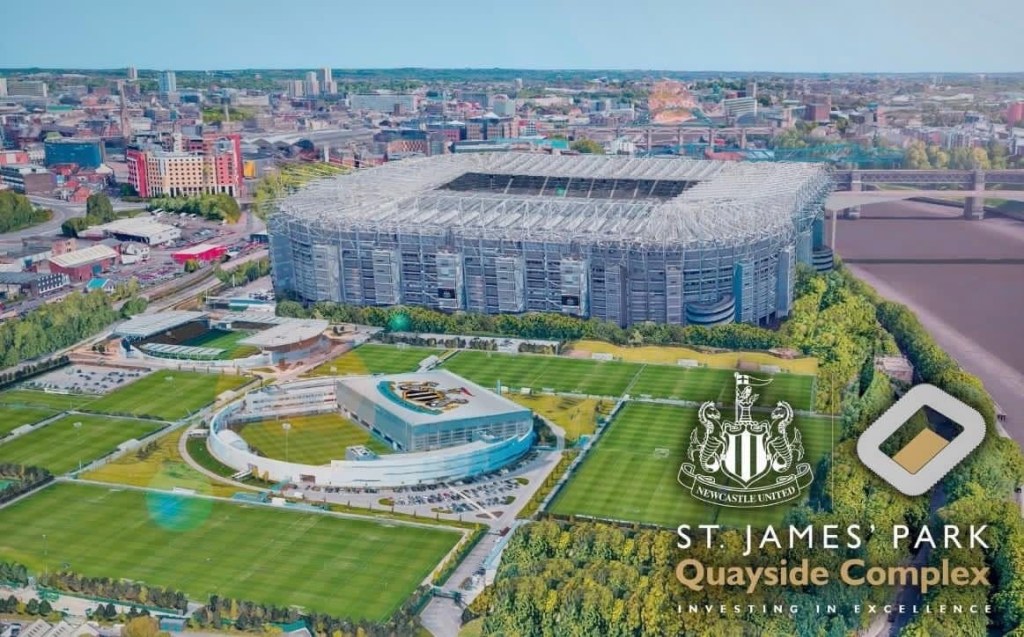
For all true Geordies, there is only one sports team that holds a place in our hearts. Newcastle United is an integral part of the region’s identity, as is the stadium St James’ Park, home to the team since 1892, yet SJP is constrained by its urban location, surrounded by Leazes Terrace, roads, and nearby developments. While SJP holds huge sentimental value for the club, the city and the fans, perhaps it’s time to consider developing a new stadium complex in a less restricted area of the city?

While upgrading St James’ Park might seem like a cheaper option, retrofitting an older structure can often become a costly and prolonged endeavour. Unforeseen complications in renovation projects frequently inflate budgets beyond initial estimates.

Conversely, a new stadium, although more expensive initially, would be designed with modern construction techniques that ensure cost predictability, energy efficiency, and future adaptability. Additionally, a state-of-the-art facility could significantly boost the local economy by attracting major events like concerts, international matches, and other large-scale events that St James’ Park cannot readily accommodate.

With Newcastle United’s ambitious ownership and growing status in the Premier League, the club will need facilities that reflect its aspirations. A new stadium with a capacity of 70,000, even 80,000 plus, could match or exceed competitors like Tottenham Hotspur and Manchester City in terms of matchday revenue, sponsorship opportunities, and global visibility.

A brownfield site near the River Tyne presents a compelling option for Newcastle United’s new stadium complex. Its unique location and redevelopment potential make it an attractive alternative to expanding St James’ Park. The site’s proximity to the River Tyne places it within reach of Newcastle’s city centre, ensuring the new stadium remains a core part of the city’s identity. Excellent transport links, including nearby Metro stations, bus routes, and road infrastructure, would allow fans easy access while avoiding the current congestion challenges of St James’ Park.

The redevelopment of a brownfield site aligns with urban planning principles of repurposing underutilized land rather than consuming greenfield areas, minimizing environmental disruption. The larger area could also accommodate additional amenities, such as a dedicated fan zone, expansive parking, and training facilities, turning the stadium into a multifunctional venue for year-round events. The new stadium could incorporate features like solar panels, green roofs, and rainwater harvesting systems, reducing its environmental footprint. The proximity to the River Tyne also presents opportunities for innovative eco-design, such as utilizing the river for heating and cooling systems through heat pump technology.

A stadium beside the River Tyne would give Newcastle United a visually striking and iconic location. The riverside view could become a signature image for the club, much like Anfield’s Shankly Gates or the view of the Thames from Fulham’s Craven Cottage.

While St James’ Park holds sentimental value for Newcastle fans, the limitations imposed by its location, age, and structure suggest that a new stadium would better serve the club’s aspirations and fans’ needs. It is an opportunity to honor Newcastle United’s history while embracing a bold, modern vision for its future.

Sources
Brownfield Regeneration UK (2023). “Case Studies in Urban Redevelopment.
Newcastle Chronicle (2024). “Potential Sites for Newcastle United’s New Stadium.
The Guardian (2022). “Stadiums as Catalysts for Urban Growth.”
Environment Agency (2023). “Managing Flood Risks in Riverside Developments.”
The Athletic (2024). “Newcastle United’s Long-Term Stadium Plans.”
Smith, J. (2023). “Stadium Expansion vs. New Build: Challenges for Premier League Clubs.” Football Architecture Journal.
Jones, R. (2022). “Economic Impacts of Modern Football Stadiums on Urban Development.” Sports Economics Quarterly.
Newcastle Chronicle (2024). “Why St James’ Park Expansion Is Almost Impossible.”