Two Views on the Seattle Pride – World Cup Controversy: You Decide

The 2026 FIFA World Cup is nearly upon us, and already one match has become the talk of the globe. Iran and Egypt are scheduled to play in Seattle on June 26, coinciding with the city’s Pride celebrations. Meanwhile, Belgium and New Zealand play at Vancouver at the same time. It’s a situation that could have been prevented, or at least mitigated, depending on how you look at it.

Below are two perspectives. Read both, then make up your mind: should FIFA swap the venues, or should Pride go ahead as planned and the teams have taken responsibility to negotiate in advance?

Option 1: Swap the Venues – A Simple, Fair Fix
The simplest solution to this controversy is also the fairest: swap the venues. Play Belgium – New Zealand in Seattle and Egypt – Iran in Vancouver. Both games are final group-stage matches, kicking off simultaneously, so competitive integrity is preserved. No team gains any advantage; the rules remain intact.

Geography favors this solution. Seattle and Vancouver are only about 200 km apart, a trivial distance for professional teams, officials, and even fans. Logistically, operations: from security to transportation are already prepared for both matches, so moving the venue is feasible.

This approach respects all parties involved. Pride celebrations continue in Seattle, where they belong, but the teams whose cultural norms clash with the event are placed in a context free of conflict. FIFA would be acting pragmatically and diplomatically, resolving an unnecessary international flashpoint while keeping the tournament fair and orderly.

Swapping the venues is a small adjustment with a big payoff: fairness, reduced tension, and the smooth running of a world-class event.

Option 2: Pride Has Every Right – Teams Should Plan Ahead
The other perspective focuses on cultural context and foresight. Pride is a legitimate, deeply rooted celebration in North America. Seattle has every right to organize its programming around local values and the communities it serves. Pride is not a provocation, it is inclusion in action.

Iran and Egypt, aware that they would play in North America, could have negotiated with FIFA long before the draw about the possibility of sensitive match locations. Waiting until the schedule is published to object is a choice; one that creates conflict that could have been avoided.

From this perspective, Pride remains non-negotiable. Host cities are entitled to celebrate their values, and visiting teams are expected to understand and adapt to the context in which they play. International competitions operate in a global arena; foresight, planning, and cultural diplomacy are just as important as on-field performance.

The lesson here: Pride doesn’t yield. Teams who find themselves in potential conflict have a responsibility to raise concerns in advance, not retroactively, after the headlines are already written.

Your Choice
A precedent for FIFA deferring to host-country cultural norms exists. In the 2022 World Cup in Qatar, players were prohibited from displaying Pride symbols or any politically or ideologically charged messaging, with yellow cards threatened for violations. 

FIFA justified this as respecting the legal and cultural framework of the host nation, even though it conflicted with broader global expectations of inclusion. This shows that FIFA has historically prioritized the host country’s cultural context when determining what is permissible on the field, a reality that frames the Seattle situation.

There it is: two options, two perspectives. Should FIFA make a practical swap to prevent conflict, or should Pride proceed as a cultural right and the teams accept responsibility for negotiating ahead of time?

The tournament, the culture, and the politics all converge in one match in one city. Now it’s up to you: which approach do you support?

Not All Great Players Make Great Managers

In football, and I mean real football, a curious paradox persists: the world’s most dazzling players, those who commanded the pitch with poise and brilliance, often falter when tasked with leading a team from the dugout. While their on-field exploits are the stuff of legend, management requires an entirely different skill set; one that transcends talent and demands vision, communication, and an almost psychological finesse.

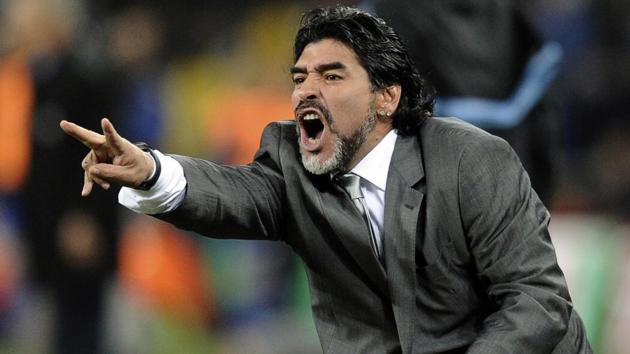
One of the most striking examples of this is Diego Maradona. Revered as perhaps the greatest footballer of all time, Maradona’s exploits for Argentina and Napoli were transcendent. Yet his stints as a manager were tumultuous at best. His tenure with the Argentinian national team, highlighted by an erratic 2010 World Cup campaign, was marked more by passion and unpredictability than tactical acumen. Argentina’s heavy 4-0 defeat to Germany in the quarter-finals underscored his limitations in preparing and organising a team.

Similarly, Thierry Henry’s managerial struggles stand in stark contrast to his glittering playing career. As a player, Henry was elegance personified, a prolific striker who terrified defenders and mesmerised fans. But his time as head coach of AS Monaco in 2018-19 was a sobering reminder that tactical genius on the field doesn’t automatically translate to success in the technical area. Monaco languished under his stewardship, and he was dismissed after just 20 matches.

Closer to home, England’s own Wayne Rooney serves as a more contemporary example of this phenomenon. Rooney’s playing career was a marvel: Manchester United’s all-time leading goalscorer, a talisman for England, and one of the most gifted players of his generation. Yet his foray into management has been fraught with challenges. After a difficult spell at Birmingham City, Rooney took the helm at Plymouth Argyle in May 2024. However, his tenure was short-lived; after just over seven months, he departed by mutual consent following a nine-game winless streak that left Plymouth at the bottom of the Championship table, having conceded a record 51 goals in 23 games. 

Frank Lampard is another case in point. A midfield maestro with Chelsea and one of England’s finest players, Lampard’s managerial career has been defined by inconsistency. While his tenure at Derby County was promising, his time at Chelsea, despite an initial spark, ended in disappointment, and his stint with Everton saw the club embroiled in a relegation battle. Lampard’s managerial journey highlights the difficulty of translating individual brilliance into sustained team success.

By contrast, it is often the unheralded players who shine in management. José Mourinho, for instance, never played professional football at a notable level. Yet his grasp of tactics, psychology, and man-management propelled him to the pinnacle of the sport, with Champions League triumphs and league titles across Europe. Similarly, Arsène Wenger’s unremarkable playing career belied a revolutionary approach to management that transformed Arsenal and English football as a whole.

The reasons for this discrepancy are manifold. Great players often rely on instinct and natural ability, traits that can’t be easily taught or replicated. When tasked with coaching, they may struggle to communicate effectively with players who don’t share their innate understanding of the game. By contrast, those with modest playing careers often spend years studying tactics, learning how to motivate diverse personalities, and honing a more methodical approach.

This is not to say that no great player can transition successfully into management. Zinedine Zidane’s tenure at Real Madrid, with three consecutive Champions League titles, is a glowing exception. Similarly, Pep Guardiola, whose playing career was respectable if not legendary, has become one of the most innovative managers of all time. These examples, however, remain rarities.

Ultimately, football is a game of nuances, and while the touch of genius can light up the pitch, success in the dugout requires a completely different form of brilliance. It is a reminder that in football, as in life, talent alone is rarely enough.

From Isak to Woltemade: Murphy’s Cross Keeps the Toon Dream Alive

By Big Mac, the OAP Blogger from Byker

Ey up! Big Mac from Byker here, sharpening me quill to spin a fresh yarn now that things’ve changed at St. James’ Park. The Magpies have lost Alexander Isak, and the Toon Army is keen to see how Jacob “Murph” Murphy fares without his long-partner in crime. But right out the gate, there’s signs Murph’s crossing ability still has that Geordie magic, he helped us get the win over Wolves yesterday. Let’s have a proper chat about it.

Isak’s Exit: A Legend in the Making Moving On
First off, let’s get the facts straight. Alexander Isak officially left Newcastle United for Liverpool on deadline day, 1st September 2025.  It was a British record transfer fee of £125 million, making him the most expensive British-club deal of the summer, and a landmark move in English football.  Isak had been one of our deadliest strikers: since signing in summer 2022, he scored 62 goals in 109 appearances for Newcastle in all competitions.  He was central to the 2024-25 season’s highs, not least the Carabao Cup win.  But the Sad Toon struggle is real when a talisman like him departs.

Enter Woltemade & Murphy Rising
Newcastle didn’t hang about replacing Isak. Nick Woltemade came in from Stuttgart for a club‐record fee, signed to fill the void left by Isak.  The immediate test was yesterday’s match vs Wolves at St James’ Park, a hard-fought 1-0 win. But the beauty of it was in how Murphy still showed he’s got the eye, the deliverer. 

Woltemade got the winner in his debut, heading in a cross from Murphy in the 29th minute.  That cross was right on the money – perfect delivery. It told us that even without Isak alongside him, Murphy can still pick out a header, find a forward, link up. That moment felt like a bridge between what was, and what could be with this new era.

Comparing to Legends: Shearer & Solano
Now, folks often talk about legends, and there’s no bigger in this town than Alan Shearer and Nolberto Solano. Shearer, of course, was clinical, ferocious, the kind of striker who could score with half-a-chance. And Solano, silky on the right, with whipped crosses, set-pieces, and those clever passes. Together, they were one of the best striker-provider pairs in Toon history.

Comparing Murph & Isak to Shearer & Solano ain’t sacrilege, because what we’re seeing with Murphy now is some of the same DNA: the ability to spot runs, to deliver quality service, to anticipate what the striker is gonna do. Isak and Murphy had chemistry; Isak knew where to be, Murphy knew where to aim. But with Isak gone, we’re yet to see if Murphy can build a new kind of connection, as dependable and electric as Shearer & Solano’s. Yesterday’s assist for Woltemade gives me hope.

The Magic of Murphy: Crossing, Timing, Vision
If there’s a reason Murphy remains so important, it’s this: his crossing ability, his timing, and his work ethic. Yesterday, aside from the cross that led to Woltemade’s goal, he had a few other chances: one disallowed, one fizzed just past.  Wolves weren’t pushovers. They threatened. But Murphy was steady, patient, looked for the chance, delivered. That’s what Solano used to do in his day, always eyeing the overlapping full-backs, always ready to whip in a cross that could split defences.

With Isak gone, we’re seeing Murphy change gear. Not just being the assist man for a known finisher, but spotting new runs, new patterns, and making those crosses count for others. Woltemade rose well. That’s not just his header, that’s Murphy’s accuracy and vision. The way he picks out the far post cross, knowing someone will be there, that kind of thing Shearer used to feed off, with Solano or others.

Challenges Ahead & Hope for the New Era
Of course, it’ll be tricky. Isak was more than a finisher; he had movement, clever link-ups, pace, vision, and knew how to press. Wolves’ game showed that Newcastle is adjusting. We’ll see good crosses, and sometimes they won’t be met. Woltemade got cramp and had to come off; there’s going to be trial and error. But Murphy is looking like the kind of lad who can lead the front-line service, even without Isak.

Filling the shoes of a legend isn’t easy, and Shearer’s boots are massive, but if Murphy keeps delivering crosses like that, and if Woltemade or others keep the runs that Murphy can feed, we might be building something new, something special. The crowd yesterday were singing for Murphy after the game; you could feel the faith was shifting slightly, from, “What will we do without Isak?” to, “Alright, we’ve still got survivors.”

Final Thought from Big Mac
So, here’s what I reckon: Isak has moved on, and yes, it hurts a bit, seeing one of our best high up at another club. But football moves ever onward, and from yesterday’s cross for Woltemade’s debut goal, I saw a glimpse of that old magic. Not exactly Shearer & Solano, not yet, but the seeds are planted.

Murphy, with his vision and crosses, is stepping up. Woltemade’s debut gave us a moment of hope. The Toon Army will be behind them, and if they keep weaving this kind of understanding, maybe the next legendary partnership is forming before we know it.

Howay the lads – the pitch still got room for new legends.

Skates Over Seats: Why Ottawa Prefers the Rideau Canal to the Arena

Winterlude is here, and Ottawans, along with the tourists are really getting their money’s worth this year, with consistent sub-zero temperatures, smooth ice, and new food franchises.  This season’s festival clearly demonstrates that Ottawans would rather be out participating in activities, than sitting on uncomfortable plastic seats watching sports. 

Ottawa has plenty of things going for it—picturesque scenery, a high quality of life, and more civil servants per capita than just about anywhere else on the continent. But when it comes to sports culture, the capital falls a little flat. Yes, we have professional teams. We have the Senators in the NHL, the Redblacks in the CFL, and a handful of smaller franchises that do their best to keep the local sports scene lively. But despite all this, Ottawa just doesn’t have the rabid, all-consuming sports identity you find in places like Montreal or Toronto.

For starters, the fan engagement here is… conditional. When a team is winning, Ottawa can look like a real sports city. Remember the 2017 Senators playoff run? The entire town briefly got swept up in the excitement—until, of course, the next season, when attendance dropped faster than the team’s fortunes. This isn’t unique to hockey. The Redblacks won a Grey Cup in 2016, and for a brief, shining moment, the city actually seemed to care about the CFL. But before that? The league had already folded two Ottawa franchises due to lack of interest. If your city keeps losing football teams the way most people lose toques, it might not be a sports town.

Hockey is supposed to be the exception, but even that’s complicated here. The Senators have always struggled to build a truly devoted fanbase, and a big reason for that is simple—Ottawa is filled with Leafs and Habs fans. On any given game night at the Canadian Tire Centre, when Toronto or Montreal is in town, it’s just as likely to sound like an away game as a home one. There’s no other NHL city in Canada where this happens. Imagine walking into a Flames game in Calgary and seeing half the crowd decked out in Oilers jerseys. It would be unthinkable. In Ottawa, it’s just another Tuesday.

Part of the problem is that this is a government town. People move here for work, not because their great-grandfather was a Sens fan, and they were born to suffer through rebuilding seasons. There’s no blue-collar sports culture, no generational loyalty to a single team. The fanbase is a mixed bag, and when teams start to lose, the casual supporters disappear.

And if we’re being completely honest, Ottawans are more likely to be playing sports than watching them. Why sit in a half-empty stadium when you could be skating on the Rideau Canal, cross-country skiing in Gatineau Park, or cycling along the Ottawa River? The city’s recreational culture is strong—its spectator culture, not so much.

So yes, Ottawa has sports teams. But is it a sports town? Not really. It’s a town that tolerates sports, one that occasionally gets excited when a team does well, but quickly moves on when they don’t. The real energy here isn’t in the arenas or stadiums—it’s in the coffee shops, the outdoor trails, and, of course, in the never-ending debates over LRT failures and public service policies. And maybe that’s fine. Not every city needs to be a die-hard sports town. But let’s not pretend Ottawa is something it’s not.