From Vision to Momentum: Alto Enters Its Defining Phase

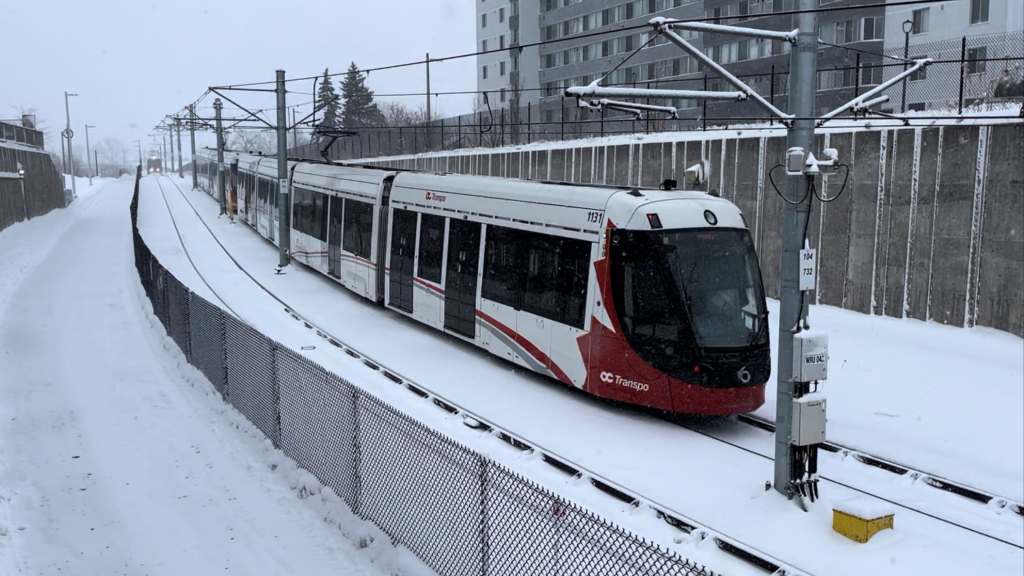
For years, Canada’s ambitious dream of linking its greatest cities with true high-speed rail has hovered in the realm of feasibility studies and future pipe dreams. Now, in the closing weeks of 2025, that dream has shifted decidedly toward reality; not because steel is yet being laid, but because the Alto high-speed rail initiative has crossed a crucial threshold from concept to concerted preparation and public engagement.

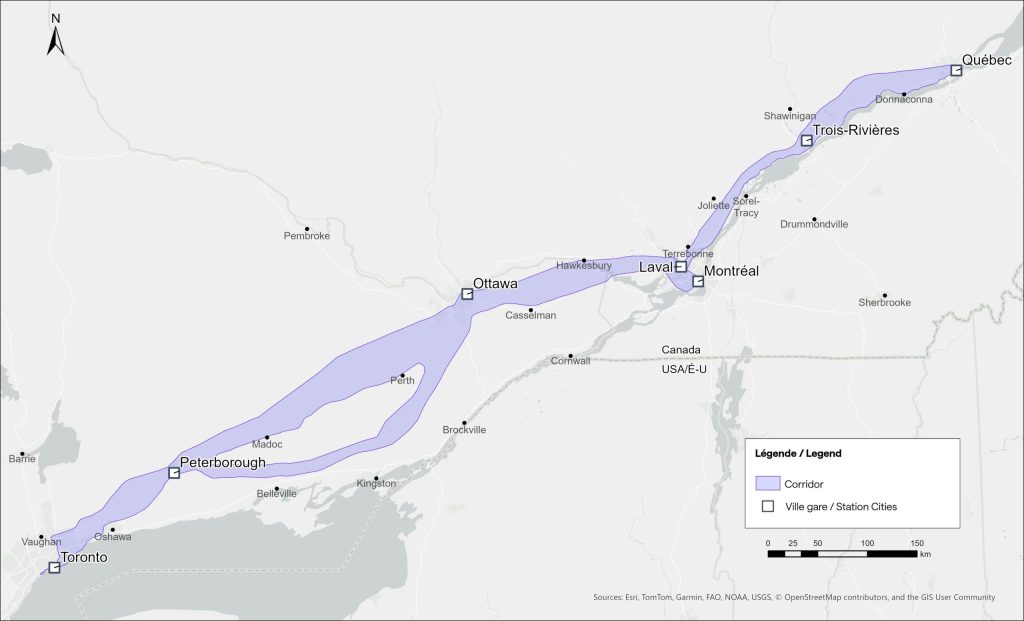
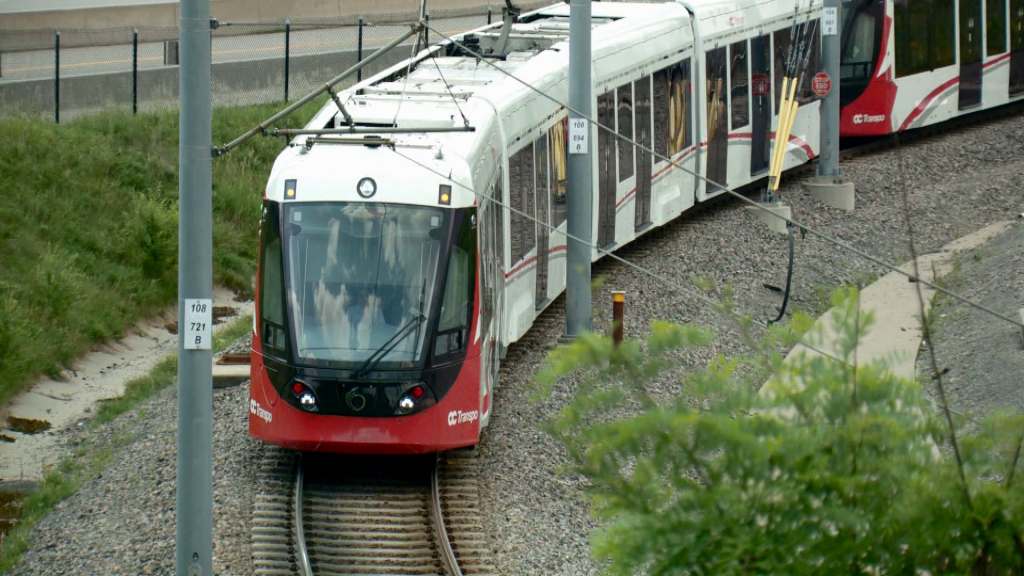
At its core, Alto is a transformative infrastructure vision: a 1,000-kilometre electrified passenger rail network connecting Toronto to Québec City with trains capable of 300 km/h speeds, slicing travel times compared to what today’s intercity rail offers and binding half the nation’s population into a single, rapid mobility corridor. The design phase, backed by a multi-billion-dollar co-development agreement with the Cadence consortium, is well underway, and the federal government has signaled its intent to see this project delivered as one of the largest infrastructure investments in decades.  

The most noteworthy milestone in recent weeks has been a strategic decision about where Alto will begin to take physical shape. On December 12, officials announced that the Ottawa–Montreal segment – roughly 200 km – will be the first portion of the network to advance toward construction, with work slated to begin in 2029. This choice reflects a practical staging strategy: by starting with a shorter, clearly defined corridor that spans two provinces, engineering and construction teams can mobilize simultaneously in Ontario and Québec and begin delivering economic and skills-development benefits sooner rather than later.  

This announcement isn’t just about geography; it marks a shift in Alto’s progression from broad planning to community-level engagement. Beginning in January 2026, Alto will launch a comprehensive three-month consultation process that includes open houses, virtual sessions, and online feedback opportunities for Canadians along the corridor. These sessions will inform critical decisions about alignment, station locations, and mitigation of environmental and community impacts. Indigenous communities, municipalities, and public institutions will be active participants in these discussions as part of Alto’s ongoing commitment to consultation and reconciliation, a recognition that this project’s success hinges not only on engineering prowess, but on thoughtful, inclusive planning.  

Beyond route planning, Alto and Cadence are also turning to Canada’s industrial capacity, particularly the steel sector, to gauge the domestic supply chain’s readiness for what will undeniably be a massive procurement exercise. With thousands of kilometres of rail and related infrastructure components needed, early outreach to the steel industry is intended not just to assess production capacity, but to maximize Canadian content and economic benefit from the outset.  

Yet not every question has a definitive answer. Strategic discussions continue over the optimal location for Alto’s eventual Toronto station, with the CEO publicly acknowledging that a direct connection to Union Station may not be guaranteed; a decision that could shape ridership patterns and integration with existing transit networks across the Greater Toronto Area.  

As the calendar turns toward 2026, the Alto project sits at an inflection point: one foot firmly planted in detailed design and consultation, the other inching closer to the realm of shovels and steel rails. Political support appears robust, and fiscal planning, including major project acceleration initiatives and supportive legislation, has built momentum. Yet, as any transportation planner will tell you, the distance between planning and construction is long, often winding, and frequently subject to political, economic, and community pressures.

Still, for advocates and observers alike, the significance of the latest developments cannot be overstated. Alto has graduated from “what if?” to “when and how,” and that alone marks a major step forward in Canada’s transportation evolution.

Tewin and the Shape of Ottawa’s Future

At the moment, I don’t feel I know enough about this developing issue to take a position, so I plan on monitoring the situation and perhaps look at the bigger picture.  

Four years ago, Ottawa city council voted to expand the urban boundary into lands southeast of the city to create a massive new suburban community called Tewin. The project, a partnership between the Algonquins of Ontario (AOO) and Taggart Group, envisions housing for up to 45,000 people on 445 hectares of land. This expansion was one of the most controversial planning decisions of the last decade, both for its symbolic weight and its long-term implications. Today, councillor Theresa Kavanagh has re-opened the debate, proposing that Tewin be stripped from Ottawa’s Official Plan. Her efforts highlight the difficult choices cities face between growth, climate goals, and Indigenous reconciliation.

The Promise of Tewin
Supporters of Tewin present it as a once-in-a-generation opportunity. For the Algonquins of Ontario, the project represents an unprecedented role in shaping Ottawa’s future. After centuries of dispossession, Tewin offers not only revenue streams and jobs but also visibility in the city’s urban fabric. This symbolic dimension, land not merely ceded or lost, but built upon in partnership, is difficult to dismiss.

Developers and some councillors also argue that Ottawa must accommodate population growth. With Canada’s immigration targets rising, pressure on housing supply is intense. Tewin promises tens of thousands of new homes, potentially designed with modern sustainability standards. Proponents emphasize that large master-planned communities can integrate parks, schools, and infrastructure in ways that piecemeal infill cannot. In this vision, Tewin is not sprawl, but a carefully designed city-within-a-city.

The Cost of Sprawl
Yet the critiques are no less powerful. City staff initially ranked the Tewin lands poorly during their 2020 evaluations, citing soil unsuitability, distance from infrastructure, and limited transit access. Servicing the site: extending water, sewers, and roads will cost nearly $600 million, much of it beyond the city’s 2046 planning horizon. These are funds that could otherwise reinforce existing communities, transit networks, and climate-resilient infrastructure.

Urban sprawl carries environmental and social costs. Tewin sits far from rail lines and job centres, ensuring that most residents will be dependent on cars. This contradicts Ottawa’s stated climate action commitments, which emphasize compact growth and reduced vehicle emissions. Critics also note that adding a massive suburb undermines efforts to intensify existing neighbourhoods, where transit and services are already in place.

Indigenous Voices, Indigenous Divisions
The Indigenous dimension of Tewin complicates the debate. On the one hand, the Algonquins of Ontario have secured a rare position as development partners, advancing reconciliation through economic participation. On the other hand, not all Algonquin communities recognize AOO’s legitimacy, and some argue that consultation has been narrow and exclusionary. The project thus embodies both progress and tension in the city’s relationship with Indigenous peoples. To reject Tewin outright risks appearing to dismiss Indigenous economic aspirations; to proceed with it risks deepening divisions and ignoring long-standing calls for more inclusive engagement.

A City at the Crossroads
Councillor Kavanagh’s push to remove Tewin from the Official Plan is more than a single motion. It reopens a philosophical question: what kind of city does Ottawa wish to become? If it seeks to embody climate leadership, resilient infrastructure, and walkable communities, Tewin appears to be a step backward. If it seeks to honour Indigenous partnership and ensure abundant housing supply, the project has undeniable appeal.

Ultimately, Tewin forces Ottawa to confront a contradiction at the heart of Canadian urbanism. We are a country that has promised climate action, but remains tethered to car-dependent suburbs. We are a nation that aspires to reconciliation, but often struggles to reconcile competing Indigenous voices. To move forward, Ottawa must do more than weigh costs and benefits; it must articulate a vision of growth that is both just and sustainable.

In this sense, Tewin is not merely a development proposal. It is a mirror held up to the city itself, reflecting both its aspirations and its unfinished work.

Sources:
• CTV News Ottawa. “Tewin development project passes latest hurdle but some say it still doesn’t belong.” August 2024. Link
• Ontario Construction News. “Ottawa councillor sparks renewed debate over controversial Tewin development.” April 2025. Link
• CTV News Ottawa. “Councillor withdraws motion to remove 15,000-home development from Ottawa’s Official Plan until after byelection.” April 2025. Link
• Horizon Ottawa. “Stop the Tewin Development.” Accessed October 2025. Link

When Confederation Feels Like Confrontation: Ontario and Quebec’s Alberta Dilemma

As I write in my Ottawa living room, and although my sympathies stretch eastward into Quebec and the Martimes, I am watching Alberta events on the evening news as if viewing a distant cousin gone rogue. From here, in Central Canada, we’ve built our identity on a tapestry of industrial dynamism, social progressiveness, and an uneasy, yet genuine, devotion to national unity. So when Alberta thunders about “owning” its oil sands, rails under federal pipeline delays, and threatens separatism with a bravado more suited to Texas than to the spirit of Confederation, it feels less like a debate among equals, and more like a family spat escalating into road rage.

The Great Divide
Central Canada’s frustration begins with a simple question: Why can’t Alberta appreciate that its prosperity rides on Canada’s backbone? We know well the clang of steel from Lake Ontario factories, the laboratories of McGill and U of T, the commuter trains of the GTA carrying workers into offices that fuel innovation, culture, and trade. We see our tax dollars flow westward into infrastructure grants and environmental clean‑ups, yet all we hear back is how Ottawa is strangling Alberta’s lifeblood. In boardrooms and bistros alike, we exchange incredulous glances. “Is that really how they see us?”

In Ontario’s legislature or Quebec City’s cafés, the lament is the same. Alberta’s insistence on unfettered resource development, against carbon pricing, against pipeline regulations, against the minimal environmental guardrails that we accept as part of modern governance, strikes us as not only shortsighted, but tone‑deaf. After all, we’re the ones negotiating trade deals abroad, keeping Canada’s credit rating intact, and answering to the world for our climate commitments. When Alberta rips up its federal‑provincial agreements, and paints itself as a victim, it risks making the rest of us look like oppressors.

When Conservatives Moved the Needle
It wasn’t a personal chemistry with any one leader that mattered so much as policy alignment. Under Conservative governments, particularly during the years following 2006, Ottawa embraced free‑market principles that resonated deeply in Alberta: lower corporate taxes, streamlined approvals, and a lighter regulatory touch on energy projects. This wasn’t about nostalgia for a single prime minister, but about a political philosophy that saw energy as an engine of growth, not a problem to be managed.

From Alberta’s perspective, deregulated markets and balanced budgets felt like recognition of its core economic values. In Central Canada, we may have questioned some of those choices, but we accepted that a spectrum of economic approaches made Canada stronger. The result was a pragmatic détente: pipelines moved forward, investment flowed, and while we debated environmental trade‑offs, there was at least mutual respect for each region’s priorities.

When Regionalism Becomes Roadblock
Today, the rhetoric out west often sounds like, “Build the pipeline, or we’ll build our own exit ramp.” Yet Central Canada knows unequivocally that there is no exit ramp. Our factories, hospitals, and schools depend on the interprovincial movement of people, goods, and capital. The same pipelines Alberta demands are the conduits that keep our cars running, and our manufacturing humming. When Alberta complains that Ottawa’s carbon tax is an “Ottawa cash grab,” it ignores that those funds have helped pay for the recent transit expansions in Edmonton and Calgary, along with the wastewater infrastructure upgrades in Lethbridge.

Even more galling is the separatist thunder: poll after poll invites alarm with one in three Albertans saying they might consider leaving Canada under a Liberal government, feels like a hostage‑negotiation tactic, rather than a legitimate policy platform. Central Canada hears the echoes of Texas secession talk, fireworks and flags, bravado and bluster, but we see the policy vacuum behind the spectacle. We wonder: can they name a single agreement on the global stage that would willingly recognize a 4.4 million‑person “Republic of Alberta”? Or do they really believe they can simply flip a switch and declare independence?

Progressive Values Under Siege
For all our differences, Central Canada prides itself on progressive values: public healthcare that is universal, environmental targets that align with global science, and social policies that aim to reduce inequality. We do not see these as luxuries, but as imperatives for a 21st century nation. So when Alberta snarls at any shift toward renewable energy or regulatory tightening, we perceive a rejection, not only of policy, but of shared national values. It’s as if Alberta believes that “progressive” is a dirty word, an urban‑elitist dictate, rather than a democratic choice.

The result is a mutual distrust. We view Alberta as obstinate, and uncooperative; they view us as meddlesome and judgmental. And somewhere in the commotion, Canada the country begins to feel less like “one nation” and more like warring fiefdoms.

Pathways to Reconciliation
Even as Central Canadians exhale in frustration, we still cling to the idea that this can be repaired. We remember that the Constitution, our shared contract, grants Alberta ownership of its resources (Section 92A), but also vests Ottawa with authority over interprovincial trade, environmental standards, and national unity. Those overlapping jurisdictions are not battlegrounds to be won; they are negotiation tables to be inhabited with respect.

Here’s what we in the centre would propose:
1. Joint Stewardship Councils
Permanent federal‑provincial bodies—one on energy and one on climate—co‑chaired by ministers from Ottawa and Edmonton, with rotating seats for other provinces. Their mandate: to align pipelines, carbon policy, and regional development in a single coherent plan.
2. Mutual Accountability Reporting
Instead of one‑way complaints, require quarterly reports on how federal actions affect provincial economies and vice versa, published publicly so Albertans and Ontarians alike can see the trade‑offs.
3. Shared Diversification Funds
A federally matched investment fund for Alberta to channel resource revenues into hydrogen, critical minerals, and technology hubs—mirroring grants Ontario and Quebec receive for their own diversification.
4. Cultural Exchange Programs
Scholarships and internships pairing Alberta students with agencies in Ottawa, and Central Canadians with energy‑sector positions in Calgary and Fort McMurray, because trust grows when people move across the lines, not when walls go up.

Towards a True Confederation
As I look east from Ontario or west from Quebec, I still see Alberta as part of Canada’s grand promise, a province of immense resources, entrepreneurial spirit, and resilient people. But a promise requires reciprocity. If Alberta wants the benefits of the Canadian federation, it must share responsibility for national projects, ideals, and compromises. And if Central Canada wants Alberta to feel at home in Confederation, we must speak not with condescension, but with open hands and honest trade‑offs.

In the end, Texas doesn’t have to be our model, and neither does Paris or Beijing. We can be distinctly Canadian: united not in uniformity, but in a federalism that accepts our regional flavors and binds them together in mutual respect. Only then will Alberta’s roar feel like a proud Canadian voice, rather than an echo of someone shouting from outside our walls.

A Transatlantic Lens: Exploring the Biggest Differences Between Europe and North America

The feedback I have been getting is that readers have been enjoying my serialised essays exploring subject matter to greater depth. This series of posts is for my friends on both sides of the Atlantic who love to debate this topic, often over European old growth wine and Alberta beef steaks.

Living in North America since the early 1990s as a European, I’m constantly struck by the quirks, surprises, and sometimes baffling differences between the continents. Over the next few weeks, I’ll explore ten key contrasts: spanning work, cities, food, and politics, and share what these differences mean in everyday life.

The Ten Differences

1. Social Safety Nets

In Europe, healthcare, pensions, and social support are expected parts of life. In North America, it’s more “your responsibility,” with benefits often tied to your job. It’s a mindset shift—comfort versus risk, security versus self-reliance, and it shapes so much of daily life.

2. Urban Planning and Transport

European cities invite walking, biking, and public transit. North American life often demands a car for everything. That difference affects how people socialize, shop, and spend their days. Suddenly, running errands isn’t quick, it’s a logistical decision.

3. Work-Life Balance

Europeans enjoy generous vacations and shorter workweeks. North Americans often work longer hours with less guaranteed downtime. Life here can feel like a constant race, while in Europe, there’s a stronger sense of living, not just working.

4. Cultural Formality and Etiquette

Europeans prize subtlety, traditions, and social cues. North Americans are casual, direct, and friendly—but sometimes painfully blunt. Adjusting between the two takes awareness: what feels warm here might feel sloppy there, and what feels polite there can seem distant here.

5. Business Practices

European companies lean toward consensus, careful planning, and stability. North American firms move fast, take risks, and chase growth. The difference shows up in meetings, negotiations, and career paths; you quickly learn when to push and when to wait.

6. Education Systems

Europe often offers low-cost or free higher education and emphasizes broad learning. North America favors expensive, specialized programs. The gap affects opportunities, student debt, and the way people approach learning for life versus learning for a career.

7. Food Culture

In Europe, meals are rituals – slow, social, and seasonal. Here, convenience and speed often rule, and portions are huge. That doesn’t just shape diets; it changes how people connect over meals and how they experience daily life.

8. Political Culture

European politics embrace multiple parties, coalitions, and compromise. North America leans on two parties and polarized debates. This difference affects trust, civic engagement, and how people view the government’s role in society.

9. History and Architecture

Europeans live among centuries of history in their streets, buildings, and laws. North America feels newer, faster, and more forward-looking. The environment subtly teaches what matters: continuity versus reinvention, roots versus growth.

10. Attitudes Toward Environment

Europe integrates sustainability into daily life: cycling, recycling, and urban planning. North American approaches vary, often prioritizing convenience or growth over ecology. Cultural attitudes toward responsibility shape everything from transportation to policy priorities.

These ten contrasts are just a glimpse of life across the Atlantic. In the weeks ahead, I’ll dive deeper into each, sharing stories, observations, and reflections. The goal isn’t just comparison, it’s understanding how culture shapes choices, habits, and even identity. Stay tuned for the journey.

Preclearance, NEXUS, and Nonsense: The Ambassador Who Cried ‘Play Nice’

Diplomacy, as the textbooks remind us, is supposed to be the fine art of saying nothing offensive in as many words as possible while drinking bad coffee in conference rooms. But nobody seems to have given that manual to Pete Hoekstra, the newly minted U.S. Ambassador to Canada, who has decided to trade in understatement for a megaphone. In the span of a few short months, Hoekstra has managed to scold Canadians for not being sufficiently pro-American, accuse us of harboring “anti-American” slogans, and downplay Canada’s concerns about border overreach. If he’s aiming for “charm offensive,” he has nailed the second half of the phrase.

This is, of course, not the first time Canada and the U.S. have had words. We’ve bickered over softwood lumber, dairy tariffs, steel quotas, pipelines, and, once upon a time, acid rain. But usually ambassadors play the role of polite go-between, smoothing over disputes while the real political firestorms rage between ministers and presidents. Hoekstra seems to have missed the memo: his preferred strategy is less smooth diplomacy, more bull in a China shop – minus the bull’s natural grace.

His latest theme? Canadians just aren’t playing nice. We apparently spend too much time with “elbows up,” as if the entire country were auditioning for beer league hockey. He’s miffed that Canada has dared to issue travel advisories about U.S. border searches, insisting those reports are “isolated events.” Never mind that Canadian travelers actually experienced them. It’s a bit like telling someone who just got splashed by a passing truck that rain isn’t real.

Nowhere is this attitude more obvious than in the discussions around U.S. preclearance, the system where American border officers operate inside Canadian airports, inspecting passengers before they even board a plane to the United States. For travelers, preclearance is handy: you arrive stateside as a domestic passenger, skip long immigration lines, and make your connections. For the U.S., it’s even better: it lets them enforce their rules on foreign soil, keeping anyone they don’t like from ever boarding. For Canada, it’s…..complicated. Preclearance represents cooperation, yes, but also a certain loss of sovereignty. Not surprisingly, Ottawa sometimes drags its heels on expansion.

To Hoekstra, though, Canada’s reluctance to roll out the red carpet for more American officers in our airports amounts to ingratitude. The U.S. gives us this wonderful gift, he implies, and we respond with suspicion. It’s the diplomatic equivalent of scolding a dinner guest for not raving loudly enough about the casserole. The irony is rich: when Canada recently announced its first landpreclearance operation in the U.S., with Canadian officers screening travelers at a New York border crossing, nobody in Ottawa suggested that Americans were being unfriendly. Apparently only Canadians can be accused of bad manners.

And then there’s NEXUS, the trusted traveler program that makes cross-border trips bearable for frequent fliers. Here, too, Canada and the U.S. cooperate closely, with Canadians now able to use Global Entry kiosks thanks to their NEXUS membership. But you wouldn’t know it from the ambassador’s rhetoric. He talks as if the U.S. is single-handedly shouldering the burden of efficiency while Canada stubbornly blocks progress. The reality is that both sides benefit and both sides foot the bill. Preclearance doesn’t spring fully formed from Washington; Canadian airports build the facilities, Canadian taxpayers share the costs, and Canadian sovereignty bends to make it possible.

So why the sharp elbows from Hoekstra? Partly it’s style, he has never been known as a shrinking violet. But partly it reflects a broader U.S. strategy of leaning harder on Canada. The two countries are already sparring at the World Trade Organization over tariffs that Ottawa calls “unjustified.” Washington wants more Canadian concessions on energy, environment, and defense spending. Ambassadors don’t freelance in these circumstances; they set the tone their bosses in the White House prefer. If that tone is loud, impatient, and dismissive of Canadian sensitivities, then Hoekstra is performing to spec.

Still, it’s worth noting how Canadians are responding. While most don’t object to preclearance itself, after all, we enjoy shorter lines at airports, there is resistance to being lectured about it. Canadians pride themselves on being cooperative partners, not subordinate provinces. When the ambassador claims Canada isn’t “playing nice,” many hear it as “you’re not agreeing quickly enough with U.S. demands.” The fact that Canada has invested in NEXUS expansions, shared intelligence, and even put its own officers on U.S. soil underlines the absurdity of the accusation.

In the end, Hoekstra’s style may generate headlines, but it risks eroding goodwill. Diplomacy works best when it feels like a partnership of equals, not a schoolteacher scolding a roomful of students. Canadians are famously polite, but we’re also famously stubborn when pushed. If the ambassador thinks a little tough talk will get Canada to open every airport door to U.S. preclearance, he may be in for a long wait.

Until then, travelers will keep swiping their NEXUS cards, lining up at preclearance facilities, and quietly rolling their eyes at the spectacle. After all, Canadians know that living next to the United States is a bit like living next to an elephant. When it shifts, you feel it. When it trumpets, you really feel it. And when the ambassador starts lecturing you about your manners, sometimes the most diplomatic response is the Canadian classic: a polite smile, a quiet mutter, and an elbow gently nudged back into his ribs.

When Crown Corporations Forget Their Purpose

Two of Canada’s most visible Crown corporations, Canada Post and VIA Rail, seem to have lost their way. Both were created to knit together a vast and sparsely populated country, ensuring that every Canadian, no matter how remote, had access to essential services. Yet today, both have turned their gaze inward toward big-city markets, downgrading or abandoning the rural, northern, and remote communities they were meant to serve.

The problem is not simply poor management. It is a deeper contradiction in how we think about these federal institutions. Are they public services, funded and guaranteed by the government for the benefit of all? Or are they commercial enterprises expected to operate like businesses, focusing on profitability and efficiency?

Canada Post was once the backbone of national communication. Its universal service obligation was understood as a cornerstone of Canadian citizenship: every town and hamlet deserved a post office, and every address would receive mail. But with letter volumes collapsing and courier giants competing for parcels, Canada Post has shifted its focus to the most profitable markets. Rural post offices are shuttered or reduced to part-time counters in retail stores, and delivery standards in remote regions are steadily eroded.

VIA Rail’s story follows the same pattern. Founded in the late 1970s to preserve passenger trains when private railways abandoned them, it was meant to provide Canadians with a reliable and accessible alternative to highways and airlines. Instead, successive governments have treated VIA as a subsidy-dependent business rather than a national service. The Québec–Windsor corridor receives ever more investment, while iconic transcontinental and regional services limp along on political life support. Communities once promised rail access now watch the trains roll past them, or disappear entirely.

This retreat from universal service runs against the spirit of equality that Canadians expect from their public institutions. The Charter of Rights may not explicitly guarantee access to mail or transportation, but the principle of equal citizenship surely demands more than a market-driven approach that privileges Toronto and Montréal while ignoring Thompson or Whitehorse.

What’s going wrong is simple: Crown corporations are being managed as if they were private companies, not public trusts. Efficiency metrics and financial self-sufficiency dominate decision-making. National obligations are left vague, unenforced, or quietly abandoned. Governments praise the rhetoric of service while starving these corporations of the dedicated funding that would allow them to fulfill it.

Canada is not a compact, densely settled country where commercial logic alone can sustain public goods. It is a nation stitched together across vast geography by institutions that recognize service as a right, not a privilege. If we want Canada Post and VIA Rail to serve all Canadians, we need to stop pretending they can behave like for-profit businesses and still fulfill their mandates.

That choice is ultimately political. Parliament must decide: either redefine these corporations as genuine public services with modern mandates and stable funding, or admit that rural and northern Canadians will always be left behind.

Until then, our Crown corporations will continue to forget their purpose, and with it, a piece of the Canadian promise.

The Return of Britain’s Railways: A Justified Journey Back to Public Hands

Few issues in the United Kingdom’s domestic infrastructure provoke as much consistent frustration, and cautious optimism, as the performance of the national railway system. After more than three decades of privatized operation, mounting failures in service quality, rising costs, and structural inefficiencies have prompted a significant policy shift. The renationalization of Britain’s train services marks the gradual undoing of a deeply ideological experiment that has fallen short of its promises.

This shift is not driven by nostalgia, but by necessity.

Background and Rationale for Renationalization
The privatization of British Rail in the mid-1990s was framed as a path to modernity. Proponents argued that market competition would drive efficiency, reduce government spending, and improve customer service. Instead, the result was a fragmented system comprised of multiple Train Operating Companies (TOCs), overseen by various regulatory bodies, while infrastructure was handed to a separate private firm, Railtrack—an entity whose eventual failure and replacement by Network Rail in 2002 was an early indicator of deeper systemic flaws.

Despite significant taxpayer subsidies, performance metrics across the privatized rail network began to deteriorate by the 2010s. Delays, overcrowding, high fares, and poor coordination became routine issues. Government spending on the sector did not decline; instead, public funds increasingly subsidized private profits. By 2020, annual state support exceeded £7 billion.

The COVID-19 pandemic laid bare the system’s fragility. As passenger numbers collapsed, the government assumed emergency control over all franchises, effectively nationalizing operations under temporary measures. This moment of crisis exposed the private sector’s dependence on public backing and underscored the need for structural reform.

Recent Developments and Implementation
Renationalization in Britain has proceeded in stages, marked by pragmatism rather than ideological confrontation. Several poorly performing franchises, such as Northern, Southeastern, and the East Coast Main Line, were brought under the control of the government’s Operator of Last Resort (OLR). This allowed continuity of service while avoiding legal entanglements with private firms.

A formal framework was introduced with the Passenger Railway Services (Public Ownership) Act 2024, passed under the Labour government. This legislation allows passenger services to be brought under public control as contracts with private operators expire. In May 2025, South Western Railway (SWR) became the first operator transitioned under this new legal mechanism. Other operators, including Greater Anglia and c2c, are expected to follow before the end of the year.

This incremental approach avoids costly buyouts and is designed to be financially and administratively sustainable. Most passenger services in England are projected to return to public ownership by 2027.

The Role of Great British Railways
A central element of the reform effort is the establishment of Great British Railways (GBR), a single public entity that will unify track and train operations, long-term planning, fare structures, and accountability. The GBR model replaces the franchising system with a concession-based framework, where the state retains fare revenue and strategic control while outsourcing operations under tightly managed contracts.

GBR is not intended to replicate the British Rail of the past. It reflects modern best practices, taking cues from integrated public systems in Germany, Japan, and other high-performing countries. The goal is to streamline operations, enable through-ticketing, and restore strategic coherence to rail governance.

Implementation, however, has encountered delays. Structural changes, legislative hurdles, and coordination challenges have slowed GBR’s rollout. Industry stakeholders continue to press for greater clarity and faster progress.

Challenges and Caveats
While the rationale for public control is widely supported, several challenges remain. Technical difficulties have marred the rollout of SWR’s new Arterio fleet, due to manufacturing delays and labour disputes. Industrial relations require careful management to avoid disruption and foster long-term cooperation.

Fares remain a sensitive issue. Although public ownership may improve value for money, there is as yet no guarantee of fare reductions. Without visible improvements in affordability and service reliability, public support, though currently strong, may erode.

Operational excellence will be critical. Renationalization removes profit motives but does not in itself guarantee efficiency, innovation, or customer satisfaction. Robust governance, sustained investment, and clear performance targets are essential for long-term success.

Public and Political Sentiment
Public opinion has consistently favoured renationalization. A 2024 Ipsos poll found that 54% of Britons support the return of rail services to public ownership. The policy aligns with broader desires for a reliable, affordable, and accountable public transport system, particularly in the context of climate commitments and regional economic development.

Politically, the approach adopted avoids the pitfalls of abrupt, combative state intervention. By allowing contracts to expire and absorbing operations through established legal mechanisms, the process has proceeded with minimal disruption.

A Measured Return to Public Responsibility
The renationalization of Britain’s railways represents a strategic recalibration of transport policy. After decades of dysfunction under fragmented private control, the reassertion of public oversight is both justified and overdue.

This is not a reversal for its own sake, nor a rejection of innovation or partnership. It is a reassertion of the principle that essential public infrastructure should serve the common good, not the balance sheets of corporate shareholders.

The coming years will determine whether this vision can be translated into a rail system that is reliable, integrated, and equitable. If managed well, the return to public ownership may yet become one of the most important and popular infrastructure reforms in modern British history.

Sources:
• “New dawn for rail as South Western services return to public hands,” GOV.UK, May 25, 2025. Link
• “Great British Railways and the public ownership programme,” GOV.UK, May 25, 2025. Link
• “Passenger Railway Services (Public Ownership) Act 2024,” GOV.UK, November 28, 2024. Link
• “Public Attitudes towards rail nationalisation and strike action,” Ipsos, May 2, 2024. Link
• “SWR to be first train UK operator to be renationalised under Labour plan,” Reuters, December 4, 2024. Link
• “Great British Railways Takes Major Step Forward: 2025,” Rail Industry Connect, May 29, 2025. Link

The Future of Museums, Part Two: Digitization, Repatriation, and the New Cultural Commons

If the first step in the ethical evolution of museums is reckoning with the origins of their collections, the second must be reimagining how cultural treasures can be shared, studied, and celebrated without being hoarded. Fortunately, the 21st century offers tools our forebears could only dream of. Digital technology, particularly high-resolution 3D scanning, modeling, and immersive virtual platforms, is rewriting the rules of preservation and access. When used with cultural sensitivity and ethical intention, these tools allow us to honour ownership, facilitate repatriation, and still nourish a global commons of cultural knowledge.

Take 3D scanning: what was once an expensive novelty is now a powerful instrument of restitution and democratization. Museums can now create hyper-detailed digital replicas of artifacts, capturing every chisel mark, brushstroke, or weave of fabric. These models can be studied, shared online, integrated into augmented or virtual reality tools, or even 3D printed, all without requiring the physical artifact to remain on display in a distant capital city. This changes the equation. The original object can go home, back to the community or country from which it was taken, while its likeness continues to serve educational and scientific purposes worldwide.

There is a quiet but profound dignity in this digital compromise. It allows for the physical return of heritage to those to whom it belongs, not just legally, but spiritually and historically, while also supporting the broader mission of museums to educate and inspire. And in many cases, the digital version can do things the original never could. Scholars can examine its dimensions in microscopic detail. Teachers can beam it into classrooms. Visitors can manipulate it, interact with it, and even walk through the worlds from which it came.

Yet let’s not pretend digital tools are a panacea. A scan cannot replicate the scent of parchment, the weight of a carved idol, or the sacredness of a funerary mask imbued with ancestral memory. Creating these models demands money, time, and skilled technicians, resources that smaller institutions may lack. But for those who can muster them, the return is substantial: ethical legitimacy, global engagement, and future-proof access to cultural heritage.

Enter the virtual museum, a concept whose time has truly come. With internet access now ubiquitous in much of the world, online museum platforms are exploding. Whether it’s the British Museum’s virtual galleries or the immersive tours of the Louvre, these digital spaces offer a new kind of cultural experience: borderless, accessible, and unconstrained by bricks, mortar, or geopolitics. For those unable to travel, due to distance, disability, or cost, virtual museums are not just convenient; they are transformational.

These platforms do more than display scanned objects. They weave in video, sound, oral histories, and expert commentary. They let users “handle” objects virtually, walk through reconstructions of lost cities, or compare artworks from across time zones and traditions. And crucially, they offer a space where repatriated artifacts can remain visible to the world. A sculpture returned to Nigeria or a mask restored to a Pacific island doesn’t need to vanish from global consciousness. Its story, and its scanned image, can be co-curated with local voices, shared respectfully, and kept safe in the digital domain.

This co-curation is vital. A truly decolonized digital strategy doesn’t just upload images, it shares authority. It ensures that the descendants of artifact-makers help decide how those objects are described, displayed, and interpreted. Digital museums can become sites of collaboration, not appropriation; places where cultural equity is baked into the code.

And then there’s the sustainability argument. Virtual museums dramatically reduce the environmental costs of international exhibitions, staff travel, and artifact shipping. They offer resilience against disaster, a fire, flood, or war may destroy a gallery, but not its digital twin. In a world of increasing instability, that matters.

So where does this leave us? It leaves us at the edge of something hopeful. The combination of digital modeling and virtual museums does not replace the need for physical repatriation, it complements and strengthens it. It allows us to move beyond the binary of “ours” versus “theirs,” and into a more nuanced, shared stewardship of humanity’s treasures.

The museum of the future is not a fortress. It is a node in a network, a partner in a dialogue, and a bridge across histories. If museums can embrace this vision, ethical, inclusive, and digitally empowered, they can transform from institutions of possession to institutions of connection. And that, perhaps, is the most valuable exhibit of all.

The Future of Museums, Part One: Reckoning with the Past

Museums occupy a cherished yet complicated place in our cultural landscape. They are, at their best, sanctuaries of human achievement and memory; places where we marvel, learn, and connect. They are guardians of our collective stories, offering glimpses into lives, ideas, and aesthetics across time and geography. Yet increasingly, those guardianship roles are being scrutinized. In this post, the first of a two-part reflection, I want to explore how museums must reckon with their past in order to remain relevant, ethical, and inspirational institutions in a post-colonial world.

Modern museums serve multiple purposes. They are educators, preserving and interpreting both natural and human histories. Through exhibitions, talks, and online media, they help us understand not only what came before us, but also how those pasts continue to shape the present. They are also preservers of culture, entrusted with tangible and intangible heritage, from tools and textiles to oral traditions and sacred rites. Increasingly, they are also spaces of community engagement and social inclusion. The best of today’s museums are no longer content to speak about people; they strive to speak with them, creating room for conversations around identity, migration, environment, and justice. And let’s not forget their economic impact: museums draw visitors, support local artisans, and boost cultural tourism. Their value is not only educational, but civic and economic.

And yet, many of the very objects that give museums their gravitas are also at the heart of a profound ethical challenge. Too many were acquired in contexts of coercion, extraction, or outright theft during the height of imperial expansion. The British Museum’s possession of the Elgin Marbles or the Rosetta Stone, icons of antiquity mired in controversy, is not exceptional; it is emblematic. These artifacts, however artfully displayed, carry the invisible weight of colonial conquest. For many communities of origin, their removal constitutes not just a historical grievance, but an ongoing erasure of identity.

Western museums often point to their capacity to conserve, study, and exhibit these artifacts responsibly. They argue, sometimes sincerely, that global access to human history is a noble goal. But this defense rings hollow in a world where digital preservation is commonplace and where the moral imperative to return stolen cultural property grows louder each year. The question isn’t simply who can care for these artefacts, it’s who should.

Repatriation, the return of cultural property to its place of origin, has shifted from a theoretical debate to a global movement. France’s pledge to return looted artifacts to Benin, Germany’s restitution of the Benin Bronzes, and the Smithsonian’s newly developed ethical return policies are not fringe gestures. They are signals of a deeper cultural shift. Repatriation, after all, is not just about boxes being shipped back across oceans. It’s about truth-telling. It’s about nations acknowledging histories of violence and dispossession, and about institutions committing to restorative justice.

This new ethical landscape demands changes in practice. Provenance research, once an obscure archival task, must now be a public commitment. Shared custodianship models, where institutions collaborate with origin communities to co-curate, rotate, or jointly own artifacts, offer ways forward that don’t sacrifice conservation. And above all, museums must embrace the decolonization of their own internal cultures: rethinking who gets to tell the stories, who sits on the boards, and whose voices shape the narrative.

Museums can still be temples of learning and wonder. But for them to truly serve society in the 21st century, they must relinquish their roles as colonial trophy cases. The future lies in humility, transparency, and cooperation. In part two of this series, I’ll look at how new technologies and evolving curatorial philosophies are helping museums reinvent themselves for the world to come.

The Regressive Weight of Road and Bridge Tolls

Tolls on bridges and highways are often presented as pragmatic tools of modern infrastructure finance. They provide a clear user-pay model, in which those who drive the road or cross the bridge contribute directly to its upkeep. Yet beneath the tidy arithmetic lies a deeper inequity. Tolling is inherently regressive, disproportionately affecting those least able to shoulder the burden, while leaving the wealthy relatively untouched. In the Canadian context, with a geography that frequently demands travel over water or long stretches of road, tolls create a system where access is rationed by income rather than need.

The Confederation Bridge linking Prince Edward Island to the mainland is an instructive example. Until this summer, Islanders and visitors alike were charged more than $50 per vehicle for the right to leave the province. For many families and small businesses, this was not a casual expense but a recurring cost that shaped economic opportunity and even the rhythm of daily life. Following recent political attention, the toll has been reduced to $20, but the principle remains unchanged. Crossing a bridge that connects one part of the country to another still requires a fee that weighs more heavily on working families than on tourists or affluent professionals. It is not simply a question of price but of fairness in access to mobility. 

Ontario’s Highway 407 tells a similar story, albeit in a different register. Originally built as a public project, the highway was privatized under a 99-year lease in the late 1990s. Since then, tolls have risen sharply, far outpacing inflation, with profits flowing to private shareholders rather than to the public purse. The highway’s users include commuters with little choice but to pay for faster access into Toronto. For higher-income households, the fee is a convenience. For those on modest wages, it can become a recurring penalty that extracts a significant portion of their income simply to get to work on time. The toll structure reinforces a two-tier mobility system, in which efficiency is a privilege purchased rather than a public good ensured. 

Beyond inequity, tolling is also an inefficient means of raising revenue. Collection and enforcement systems consume a substantial share of funds, with studies showing that administrative costs can swallow up to a third of toll revenues. The very act of charging per crossing introduces distortions, encouraging some drivers to divert onto untolled secondary routes, which increases congestion and emissions elsewhere. The costs, both financial and social, ripple outward in ways rarely accounted for in the fiscal logic of tolling schemes. 

If the objective is to ensure that those who benefit from road systems pay a fair share, there are more equitable instruments available. A progressive licensing system that levies higher annual fees on luxury or high-value vehicles would generate steady, predictable revenue without punishing those who rely on basic mobility. Such a measure would align responsibility with capacity to pay, ensuring that the wealthiest drivers contribute more to infrastructure upkeep. At the same time, it would leave ordinary workers and families free from the arbitrary impositions of per-trip tolls.

Canada’s transportation network binds communities, sustains commerce, and enables social life. It should not be carved into segments where access is contingent on one’s bank account. Tolls, whether on bridges or highways, undermine the principle of equitable mobility. A system of progressive licensing fees offers a better path, one that respects both fairness and fiscal responsibility. The country requires infrastructure policies that do not merely balance budgets, but also balance justice.

Sources
• Global News. “Confederation Bridge tolls lowered.” July 28, 2025. https://globalnews.ca/news/11314912/confederation-bridge-tolls-lowered
• Government of Canada. “Canada’s new government cuts transportation costs in Atlantic Canada.” July 28, 2025. https://www.pm.gc.ca/en/news/news-releases/2025/07/28/canada-s-new-government-cuts-transportation-costs-in-atlantic-canada
• Wikipedia. “Ontario Highway 407.” Accessed August 2025. https://en.wikipedia.org/wiki/Ontario_Highway_407
• Institute for Research on Poverty (University of Wisconsin). “Equity Implications of Tolling.” Working Paper 1378-10. https://www.irp.wisc.edu/publications/dps/pdfs/dp137810.pdf