Why my ‘70s NAIM Audio HiFi still Hits the Right Notes

In an age of slick streaming platforms and high-tech gadgets, I’m still loyal to my ‘70s NAIM Audio stereo system. This vintage setup, revered for its unmatched sound and no-nonsense durability, delivers a listening experience that many modern systems struggle to emulate. That warm, enveloping sound pulls me into the heart of every track, making even the simplest songs feel like intimate performances.

The beauty of my NAIM system, a NAC 12 pre-amp, coupled with a NAP 120 power amp, lies in its timeless craftsmanship. Built with meticulous care and engineered for longevity, it has weathered decades of use without faltering. While today’s tech often succumbs to planned obsolescence, my NAIM stereo just keeps on going, proving that true quality never goes out of style. This philosophy reflects the legacy of Julian Vereker, NAIM Audio’s founder and the mastermind behind the brand’s commitment to capturing the soul of music.

Vereker wasn’t just an engineer; he was a passionate music lover. His mission? To craft audio gear that faithfully preserves the emotion of a performance. This ethos, rooted in what audiophiles call the “British hi-fi sound,” eschews flashy effects in favor of clarity, precision, and fidelity. Listening to my NAIM system feels authentic – no overhyped bass or unnecessary frills, just the music as it was meant to be heard.

There’s also something irresistibly nostalgic about spinning my favorite albums on this classic setup. The tactile joy of turning physical dials and the sleek, minimalist design of the components make the experience as much about connection as it is about sound. In a world that often prioritizes convenience over quality, my NAIM system serves as a reminder of an era when hi-fi wasn’t just gear – it was an art form.

Yet even as I revel in my vintage setup, I can’t help but admire NAIM’s latest creation: the NAIT 50 anniversary system. Launched to celebrate the company’s 50th year, it blends NAIM’s rich heritage with modern upgrades, staying true to Vereker’s vision while embracing contemporary tech. It’s a perfect nod to the past and a bold step forward, proof that the brand’s dedication to excellence hasn’t wavered.

For me, my 1970s NAIM stereo is more than equipment – it’s a time machine and a testament to enduring craftsmanship. It proves that some things really do get better with age, and it reminds me that investing in quality always pays off. With the NAIT 50 carrying Vereker’s legacy into the future, NAIM continues to show that great sound is, and always will be, timeless.
Oman – the Land of Mountains, Seas, and Mist

Oman, situated on the southeastern coast of the Arabian Peninsula, is a nation with a rich history, and distinctive culture shaped by its geography, strategic location, and traditions.

I was fortunate enough to spend many months working in Oman during the ‘80s at part of a multi-disciplinary scientific project run by the Royal Geographical Society.  I will probably write more about this interesting time in my life, and for now I want to talk about Oman. 

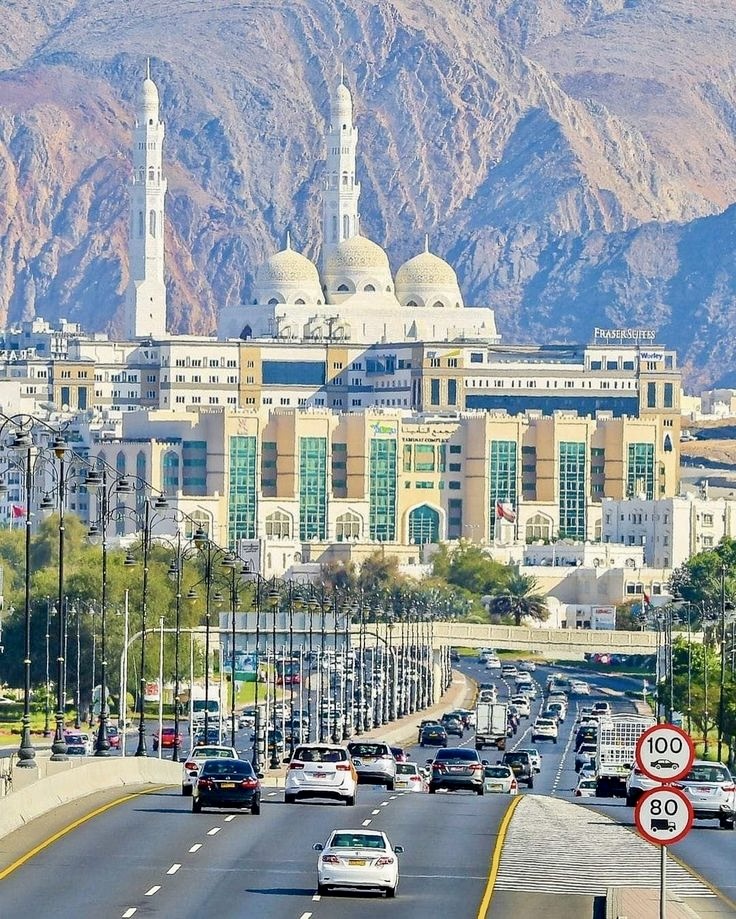
The first thing that strikes you about Oman is its profound serenity. Arriving in Muscat, the capital, you are greeted by a landscape unlike the glittering skyscrapers of its Gulf neighbors. Instead, Oman embraces you with its ochre-hued forts, low-rise whitewashed buildings, and mountains that seem to cradle the city. It’s a country that whispers its charm rather than shouts it, and as you explore, you realize Oman’s uniqueness lies in its unhurried blend of history, culture, and the gentle hospitality of its people.

Oman has been inhabited since prehistoric times, with archaeological evidence of early settlements dating back to the Stone Age. It was an important center for the production and trade of frankincense, a commodity highly prized in the ancient world. Oman’s strategic location at the mouth of the Persian Gulf established it as a significant maritime power. During the 17th and 18th centuries, the Omani Empire controlled parts of East Africa, including Zanzibar, as well as key trade routes in the Indian Ocean. Oman maintained a degree of autonomy throughout history, resisting colonization by European powers. Its ability to preserve sovereignty has contributed to its unique identity in the Arab world.

Omani architecture reflects a blend of Islamic, African, and indigenous styles. The country is home to many forts, castles, and watchtowers, such as the Bahla Fort, a UNESCO World Heritage Site. Omani food blends Arabian, African, and Indian influences, reflecting its role in ancient trade networks. Signature dishes include shuwa (slow-cooked lamb) and majboos (spiced rice with meat). Omani music and dance are deeply tied to its history and geography. Traditional genres like al-bar’ah and razha often feature drums and chanting. The art of silverwork, especially the crafting of khanjars (traditional curved daggers), is also emblematic of Omani culture.

Venturing into the interior, you find Nizwa, a city crowned by a fortress that once served as a stronghold of the Imamate. Standing atop the fort’s towers, you see the palm-fringed oases of date plantations, the lifeblood of this desert nation. Here, the centuries-old aflaj irrigation systems, recognized by UNESCO, snake through the earth, embodying the ingenuity of Oman’s ancestors. At the Friday livestock market in Nizwa, you see another side of Oman. Farmers, clad in traditional attire, auction goats and cattle with a practiced rhythm that has remained unchanged for generations. It’s a scene vibrant with life, blending practicality with the rituals of community.  

Omanis are known for their hospitality and religious tolerance. While the majority practice Ibadism, an Islamic sect known for its moderation, Oman has significant Sunni and Shia populations, as well as expatriate communities from South Asia and East Africa.

The country’s landscapes mirror its cultural diversity. In Dhofar, the southern province, the monsoon season transforms the arid desert into a lush, green paradise—a phenomenon locals call khareef. This region, home to the fabled Land of Frankincense, feels like a world apart, with mist-shrouded hills and a coastline where waves crash dramatically against cliffs.

Oman is unique in the Arab world for its diplomatic neutrality, and its dedication to preserving its identity amidst modernity. Sultan Qaboos, who ruled Oman for half a century, transformed the nation with thoughtful modernization, emphasizing education and infrastructure while retaining cultural authenticity.

As I reflect on my time in Oman, I am reminded not only of its serene landscapes and warm hospitality, but also of the enduring spirit of a country that remains steadfast in its identity, offering an experience unlike any other in the Arab world. Oman is not merely a place—it is a living testament to the harmony between the past and the present.

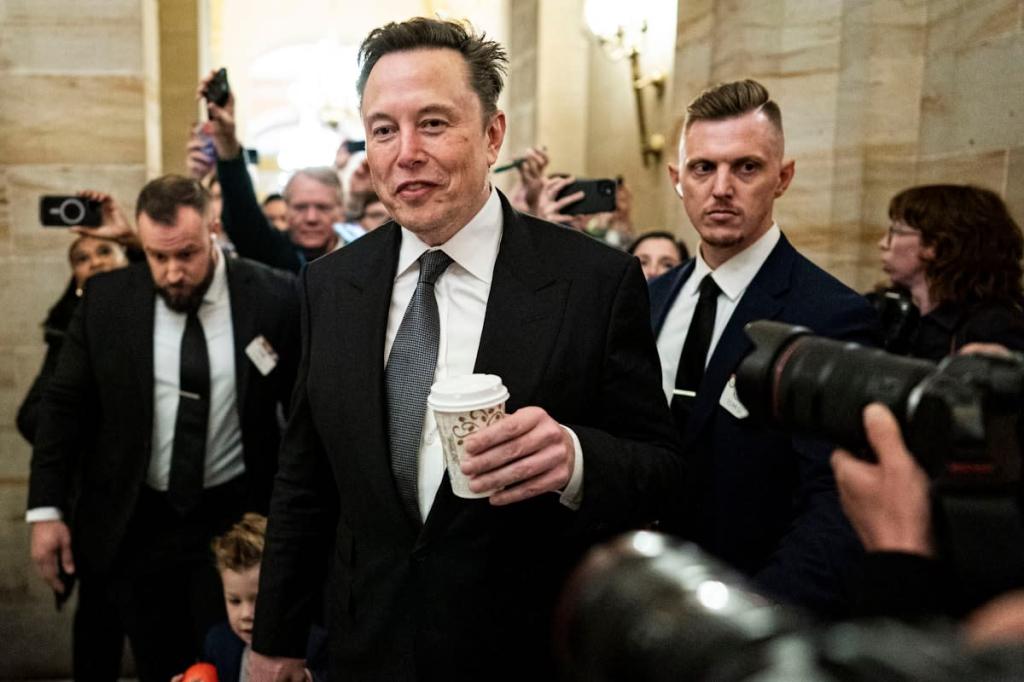
Elon Musk as Speaker of the House? A Fascinating, but Unlikely Scenario

I was just discussing the failed spending bill vote in the House of Representatives with a U.S. acquaintance, and they brought up the possibility of Elon Musk becoming Speaker of the House.  As surprising as this idea might be, it is technically feasible, although surely, highly unlikely? While the Constitution does not require the Speaker to be a sitting member, every Speaker since the role’s creation in 1789 has been an elected representative, and even if Musk was nominated he would still have to receive a majority vote in the House of Representatives.

While this rule opens the door for unconventional candidates, the reality of such a scenario is much more complex. The role of Speaker demands a deep understanding of legislative processes, the ability to manage the intricate dynamics of Congress, and the capacity to build coalitions across a divided political body. Musk, while an innovative entrepreneur, lacks the political and legislative experience traditionally associated with the position.

Even if Donald Trump, or another prominent Republican were to propose Musk as a candidate, achieving majority support would be a monumental task. The House is already deeply divided along partisan lines, and the idea of electing a non-politician to such a critical role would likely face significant resistance from both parties. Additionally, Musk’s outspoken and often polarizing public persona could further complicate efforts to secure widespread support.

Perhaps this is the ultimate FAFO?

Update
Just as I post this short piece, I see that a number of prominent GOP members are being reported as supporting the notion of Musk as Speaker. Representative Marjorie Taylor Greene of Georgia and Senator Rand Paul of Kentucky seem to think it’s a good idea, so I will sit back and enjoy the show.

Comedy Meets Legacy: Why Lower Decks Is Star Trek’s Most Endearing Spin-Off

Star Trek: Lower Decks is a delightfully refreshing addition to the Star Trek franchise, masterfully blending humor, heart, and reverence for its source material. Created by Mike McMahan, this animated series shifts the spotlight to the junior officers aboard the USS Cerritos, offering a comedic, yet affectionate, exploration of the daily lives and misadventures of Starfleet’s unsung heroes.

The show centers on ensigns Mariner, Boimler, Tendi, and Rutherford, whose quirks and chemistry drive the narrative. Mariner’s rebellious streak and Boimler’s neurotic ambition create a dynamic that is both hilarious and heartfelt, while Tendi’s boundless enthusiasm and Rutherford’s tech-savvy charm add layers of warmth and relatability. Together, they navigate everything from mundane maintenance tasks to chaotic alien encounters, showcasing the humor in the often-overlooked corners of Starfleet life.

The series doesn’t just celebrate Star Trek’s legacy, it revels in it. Packed with clever references and Easter eggs, Lower Decks is a treasure trove for longtime fans, while remaining accessible to newcomers. Its vibrant animation and fast-paced humor offer a fresh aesthetic that feels innovative yet unmistakably Star Trek.

A standout moment in the series is its crossover with Star Trek: Strange New Worlds, where the animated chaos of Boimler and Mariner collides with the live-action gravitas of Captain Pike and his crew. The episode brilliantly bridges the tonal and stylistic gap between the two shows, resulting in a celebration of Starfleet’s shared values that is as nostalgic as it is original.

Beneath the laughs, Lower Decks delivers heartfelt storytelling about teamwork, growth, and the unsung heroes of the Federation. It proves that Star Trek’s optimistic vision of the future remains as compelling and adaptable as ever.

The series culminated this week in a heartfelt and triumphant final episode, delivering a perfect blend of humor, nostalgia, and emotional closure that leaves fans both satisfied and longing for more. Star Trek: Lower Decks will undoubtedly be missed, but its legacy as a bold and joyful chapter in the Star Trek universe will live long and prosper.

Communities Benefit from Employee Ownership Trusts 

This month, I learned that the owner of Rega Research Ltd, a UK-based hi-fi design and manufacturing business I admire, recently transferred all company shares to an Employee Ownership Trust (EOT).

EOTs are an innovative UK structure enabling businesses to transition to employee ownership. Established under the 2014 Finance Act, they provide a tax-advantaged succession option that benefits employees and local economies. Unlike selling to private equity or competitors—which can lead to job loss or relocation—EOTs promote stable business continuity, preserving a company’s values and long-term interests.

Canada lacks a direct equivalent to EOTs, though interest in similar models is growing. Employee ownership in Canada typically occurs through Employee Share Ownership Plans (ESOPs), which involve employees directly purchasing stock. However, ESOPs vary widely based on company size, tax considerations, and industry needs, making them less standardized than EOTs.

EOTs build multi-generational community assets, ensuring businesses continue to serve local economies sustainably. By focusing on long-term growth over short-term returns, they align company goals with broader community priorities such as job stability, environmental responsibility, and local investment. Many EOT businesses reinvest locally, further strengthening their role as community assets.

Another advantage of EOTs is the sense of shared purpose they create among employees. Workers become stewards of the company, fostering collaboration, innovation, and adaptability. This ownership mindset cultivates a strong internal culture that ensures long-term sustainability, even across generational changes.

EOTs also democratize wealth by providing financial stability and opportunities to employees, creating ripple effects that support families and communities. This long-term focus makes EOTs a transformative model for building sustainable, community-oriented businesses.

In its 2023 budget, the Canadian government announced plans to explore support for employee ownership, including studying EOT structures and tax incentives like those in the UK. With many small to medium-sized enterprises (SMEs) facing succession challenges as owners retire, EOTs could offer a way to keep businesses rooted in their communities. If implemented, a Canadian EOT framework could provide tax benefits and simplify employee buyouts, aligning more closely with the UK model.

The Transactional Nature of Modern Dating: How Apps Have Changed the Search for Connection

In the age of digital connectivity, dating has been revolutionized by community websites, social media, and a growing number of dating apps. While the convenience and access these platforms provide are undeniable, they’ve also redefined romance in ways that feel increasingly transactional. The pursuit of meaningful relationships has often been reduced to a series of swipes, clicks, and algorithm-driven decisions—shifting the way people view love, intimacy, and human connection.

Dating apps such as Tinder, Bumble, and Hinge have adopted a gamified approach to romance. Their swipe-based mechanics mimic the reward systems of video games, offering quick hits of validation or rejection with every right or left swipe. Like pulling the lever of a slot machine, the instant gratification these apps deliver often prioritizes surface-level judgments, such as physical appearance, over meaningful compatibility. Finding a partner becomes a numbers game, where the goal is less about connection and more about who can “win” the next match.

This gamification feeds into a consumer-market mindset, where potential partners are treated as products to browse, evaluate, and discard. Profiles are carefully curated advertisements, each bio or photo a sales pitch for attention. Users scroll through these digital shelves, comparing options and weighing perceived value, much like shopping for goods. This commodification of dating fosters a transactional approach—relationships are often pursued based on what someone offers, rather than a foundation of mutual emotional investment.

Behind the scenes, the algorithms that drive dating apps reinforce this dynamic. Designed to prioritize efficiency, they aim to generate quick matches at scale. The sheer volume of options, while seemingly beneficial, creates the illusion of endless possibilities. For many, this fuels the “paradox of choice,” a phenomenon where too many options lead to indecision and dissatisfaction. A lingering sense that someone “better” might be just one swipe away can prevent users from committing, encouraging them to chase an ideal match rather than nurture real, imperfect relationships.

Adding to this transactional nature are the apps’ monetized features—premium subscriptions that promise greater visibility, unlimited swipes, or the ability to filter matches with precision. Dating, in many cases, has literally become pay-to-play. Users can boost their profiles to gain attention or unlock exclusive tools to “optimize” their romantic prospects. These features further commodify dating, making connections feel like purchases rather than organic discoveries.

Beyond the structural elements of these platforms, dating apps have also reshaped cultural attitudes toward intimacy. While they have opened doors to more diverse forms of relationships, they’ve also normalized casual connections and short-term encounters. In many cases, relationships are treated as temporary exchanges—sources of companionship, validation, or physical intimacy with little emphasis on long-term commitment. This casualization aligns perfectly with a transactional mindset: relationships are only as valuable as what they provide in the moment.

The consequences of this shift are significant. Emotional detachment has become more common, as relationships are often viewed as fleeting and disposable. Genuine effort and emotional depth can take a backseat when a quick match requires less investment. Treating people as profiles to be judged can lead to objectification, reducing empathy and human connection. Meanwhile, the impersonal and competitive nature of dating apps can take a toll on mental health. Users may experience burnout, rejection, or feelings of inadequacy as they navigate an endless cycle of swipes and shallow interactions.

Still, dating apps are not inherently harmful—they are tools that reflect and amplify existing cultural values. They have made meeting new people easier than ever and have connected individuals across geography, lifestyles, and interests. Yet their emphasis on efficiency and superficial traits has undeniably shaped modern relationships into transactional exchanges.

If dating is to become more meaningful again, it will require intention—both from the platforms and their users. Rather than surrendering to the gamified, commodified nature of these apps, individuals must approach them with mindfulness, prioritizing depth and authenticity over convenience and quantity. In doing so, there may still be hope to restore romance to something deeper than just another transaction.

Lets Grow Cooperative Food Stores

As food prices at national supermarket chains continue to rise, local cooperative food stores offer a traditional, yet innovative alternative. Member-owned co-ops blend economic participation with social and environmental values, prioritizing community needs over profits. This model, which began in Canada in 1861 with coal miners in Nova Scotia, has grown steadily, with 435 food co-ops operating nationwide by 2022—a 12% increase since 2017.

Cooperative food stores operate democratically, with members sharing decision-making power. Each member has an equal vote on store policies, product selection, and profit distribution, ensuring decisions align with community priorities. According to the Canadian Co-operative Association (CCA), co-ops reinvest profits into infrastructure, local sourcing, and expanded services, creating direct economic benefits for members. In some cases, profits are distributed as member dividends, fostering further local investment.

These stores emphasize sustainability and local sourcing, reducing the carbon footprint associated with long-distance food transportation. A 2020 study by the Co-operative Housing Federation of Canada found that co-ops frequently engage in sustainable practices, supporting regional food security and small-scale farmers. The National Farmers Union of Canada reported in 2021 that 25% of local farmers primarily sell through co-ops or farmers’ markets, helping small producers compete in a market dominated by corporate chains.

Co-ops also strengthen community ties. Many host educational programs, cooking classes, and partnerships with local farmers, promoting food sustainability while fostering social cohesion. By prioritizing ethical sourcing and environmental practices, co-ops encourage responsible consumption and sustainable lifestyles. Examples such as Toronto’s Karma Co-op, founded in 1972, demonstrate the success of this model. With over 3,000 members, it provides organic, local, and sustainably sourced products while serving as a hub for community engagement.

Despite their benefits, co-ops face challenges. Start-up costs and membership fees can be barriers for low-income communities, while reliance on loans adds financial pressure. Decision-making in larger co-ops can be slow, as democratic processes require consensus. Additionally, their focus on local and organic goods may limit product variety and occasionally drive up prices compared to large grocery chains.

Nonetheless, the advantages of co-ops—community ownership, support for local economies, sustainability, and affordability—make them a compelling alternative to for-profit supermarket chains. With 65% of Canadians prioritizing local and organic food, the cooperative movement aligns with consumer preferences and offers a path toward more resilient, equitable food systems.

By empowering communities to take control of their food supply, co-ops address concerns around food security and environmental sustainability. As demand for ethical and community-driven food systems grows, the cooperative model is poised for continued success in Canada, offering a viable solution to rising food costs and corporate domination of the grocery industry.

The Return of the Northumberland Line 

After more than 60 years, passenger services have returned to the Northumberland Line, reconnecting rural Northumberland to Newcastle and the wider UK rail network. Officially reopened on December 11, 2024, this project represents a significant milestone in North East England’s transport history, reversing the cuts of the Beeching era and reigniting the economic and social potential of the region.

A History Restored
The Northumberland Line was once part of the Blyth and Tyne railway network, integral to the industrial heartland of the region. However, passenger services ceased in 1964 due to the sweeping Beeching cuts, which prioritized cost-saving over connectivity. For decades, residents of towns like Ashington and Bedlington, which were once mining hubs, were left reliant on buses and cars for transportation.

Last passenger train 1964

Calls to reopen the line grew over the years, driven by the decline of local industries and increasing traffic congestion. Recognizing the need for improved transport infrastructure, a coalition of local councils, regional transport bodies, and the UK government invested £298.5 million to make the project a reality.

Rebuilding the Connection
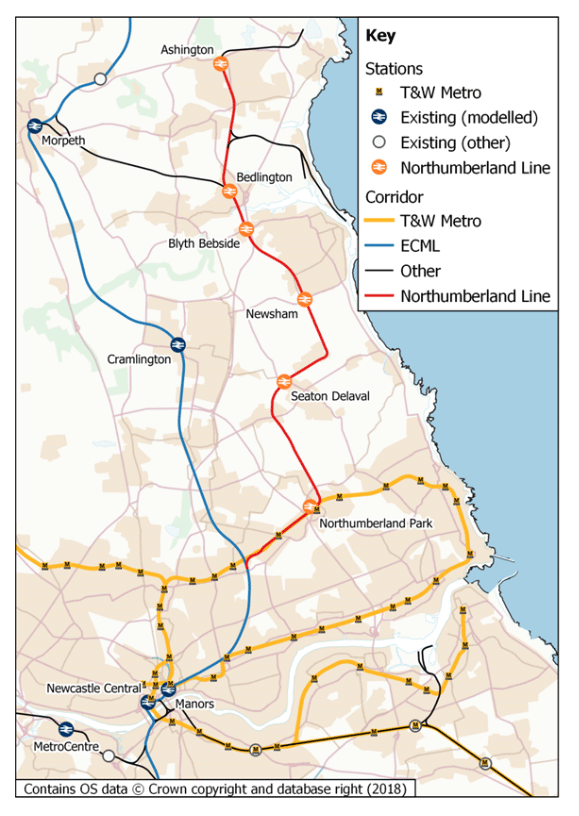
The reopened line stretches 12 miles, linking six newly constructed or refurbished stations, including Ashington, Bedlington, Blyth Bebside, and Seaton Delaval, with Newcastle Central Station. Modern amenities, such as accessible platforms, onboard Wi-Fi, and spaces for bicycles and wheelchairs, make it a 21st-century solution tailored to today’s commuters.

Trains, operated by Northern Rail, run every 30 minutes during weekdays and hourly on evenings and Sundays. Notably, travel is priced affordably, with fares from just £1 for under-21s and a maximum of £3 for peak journeys between Ashington and Newcastle.

Integrated into the Wider Network
The Northumberland Line is seamlessly integrated into the Tyne and Wear Metro via Newcastle Central Station, giving passengers direct access to destinations across Tyneside, Sunderland, and Newcastle International Airport. This connectivity makes it easier for commuters, students, and tourists to move between rural Northumberland and urban centers, reducing reliance on car travel and alleviating congestion on major roadways.

The historical Newcastle Central Station is a vital hub on the East Coast Main Line, linking Northumberland Line passengers to long-distance services to London, Edinburgh, and beyond. This integration with both regional and national networks transforms the reopened line into a bridge between local communities and broader economic opportunities.

A Catalyst for Regional Growth
The project’s goals extend beyond transport. By improving access to education, employment, and leisure, it aims to stimulate economic development in towns along the line. For example, easier commutes to Newcastle could attract new businesses to Ashington and Blyth, while better transport links are expected to boost tourism in the region. The line also supports the region’s climate goals by encouraging a shift from cars to public transport, reducing congestion and emissions.

A Model for the Future
The Northumberland Line reflects a growing recognition of the value of rail in reconnecting underserved communities. It is part of the UK government’s Restoring Your Railway initiative, which seeks to reverse decades of cuts and restore lines that once served as lifelines for rural and industrial areas.

First train of the new era

As the first passenger train in over six decades pulled into Ashington Station on opening day, it symbolized more than just the return of a rail service. It marked the renewal of hope, opportunity, and a commitment to sustainable transport. The Northumberland Line is not just a revival of a forgotten route—it is a promise of what thoughtful investment in public infrastructure can achieve..

Limitarianism – A Balanced Way Forward 

With the US oligarchy taking over the White House next year, it’s time to look at what we need to develop to counter the mess and the broken economy they will leave post-Trump’s presidency. Philosopher Ingrid Robeyns, a leading proponent of limitarianism, argues that beyond a certain threshold, wealth does not significantly improve individual well-being, and may cause harm to others by perpetuating inequality and reducing collective welfare. While not a new idea, with historical thinkers such as Plato and JP Morgan espousing similar concepts, perhaps it times to further explore limitarianism.

Limitarianism is a philosophical and political concept that advocates setting limits on individual/family wealth to promote social equality, reduce harm caused by extreme wealth accumulation, and ensure fair distribution of resources. It is rooted in ethical considerations about justice, sufficiency, human welfare, and a sustainable environment. 

The philosophy suggests that extreme wealth is morally problematic, especially in societies where poverty and inequality persist. Excess wealth could be better used to address social issues like hunger, education, or healthcare. The accumulation of excessive wealth can lead to an imbalance of power, undermining democratic institutions. Wealthy individuals may exert disproportionate influence over political systems, media, and public policies. How many times have we seen this in western-style G7 democracies in recent years, where the right do everything they can to protect their wealth and power, while working people can’t pay for the basics of housing, food and transportation? 

Supporters of limitarianism argue for changes in taxation on income, inheritance, and wealth to cap extreme fortunes, along with a redistribution of excess wealth to fund programs like Universal Basic Income (UBI), ensuring a safety net for all citizens. Critics argue that wealth limits could stifle innovation, entrepreneurship, and economic growth, while curtailing personal liberties, and especially the right to accumulate multi-generational wealth.

While enforcing wealth caps, and managing global disparities in wealth distribution can be challenging in practice, limitarianism is gaining traction in debates on wealth inequality, especially in light of growing disparities between the ultra-rich and the rest of society. Movements advocating for wealth taxes and income redistribution often draw from limitarian principles to challenge the concentration of wealth and power.

As a leading advocate for limitarianism, Robeyns argues that extreme wealth is both unethical and harmful to democracy. She proposes a wealth cap of approximately €10 million, emphasizing that any surplus beyond what is needed for a flourishing life could be redirected toward societal challenges like the climate crisis or inequality. Where do you stand on this issue? For me, it seems like one possible set of mechanisms to help rebalance the redistribution of resources, while still supporting a western-style capitalist growth economy.  

Is this the End Of Civilization as We Know It?

Within the Hitchhiker’s Guide to the Galaxy, a trilogy told in five parts, Douglas Adams postulates that a rapid increase in the number of high street shoe shops is a clear indicator of the impending collapse of a civilization. Today, I am suggesting that Adams got it wrong; and instead of shoe stores, it’s the never ending construction and use of indoor storage facilities that is the harbinger of our society’s inevitable doom. 

H2G2 Cover

Why are we so fixated upon storing possessions that will rarely see the light of day again? Boxes of paperwork, generations of photos, and great grandma’s old wooden chest are just some of the items our kids will be dealing with at the end of our days.  Current monthly rentals run in the order of $200 to $500 for storing all our knickknacks, and the cubic capacity for conserving our personal histories continues to rise. 

During the pandemic, an acquaintance actually bought a second house because his primary residence was full, and he had run out of room to store his constantly growing collection of furniture, art and books.  Last year, I filled a large dumpster with a small part of my life’s detritus, and it was difficult to see the difference. This year, I gifted hundreds of books and DVDs to a local charity, and I finally felt some weight lifted from my shoulders. My closets are next, and the hardest part will be the kilts. 

In Sweden, they have the gentle art of death cleaning, where seniors or those battling a terminal illness organize and declutter their homes so as to save their loved ones from the burden of this cumbersome chore while grieving their loss. A more sensible life activity I cannot name, and it is the anthesis of IKEA and its flat pack storage frenzy.   

Paperwork can be digitised, meta-tagged and stored safely in the cloud. Photos likewise, and both collections can be searched and retrieved instantly, if and when needed; whereas great grandma’s chest should either be offered to the kids, or if they don’t want it, (and we all know they don’t want it) sold or gifted to someone who really has a use for it.  

Adams describes civilisation’s collapse because, in the end, all that could be bought were shoes, and so eventually we took to the trees and evolved wings.  Perhaps if we all just dealt with this overflow of physical possessions, communities could use these multi-storey repositories to provide housing and other amenities to help combat the current homelessness and lack of social housing infrastructure. 

Let’s adopt Scandinavian ways, and modify the tradition, so that starting today, indoor storage buildings gain a more meaningful use while decluttering our lives, and lifting all that weight from our shoulders.  In the meantime, I may have found a good home for my kilts within the next generation, and surprisingly, my business suits are being eyed too!