U.S. Border Rules: Security Theater at the Expense of the Economy

The United States is poised to implement border-crossing rules that threaten to strangle tourism and business travel under the guise of national security. Under a proposal from U.S. Customs and Border Protection, travelers from Visa Waiver Program countries could soon be required to disclose five years of social media activity, all phone numbers and email addresses used in the past decade, family details, and an array of biometric data including fingerprints, facial scans, iris scans, and potentially DNA. The stated purpose is to prevent threats before travelers set foot on American soil. The practical effect, however, is more likely to be economic self-sabotage than enhanced security.

Officials argue that social media monitoring can identify links to extremist networks and that biometric verification prevents identity fraud. Yet in reality, these measures are deeply flawed. Social media is ambiguous, easily manipulated, and prone to false positives. Connections to flagged accounts are not proof of malicious intent, and online behavior is rarely a reliable predictor of future actions. Biometric data can confirm identity, but it cannot reveal intent, and DNA collection provides little actionable intelligence for border security. What is billed as a comprehensive safety net is, in practice, security theater: a show of vigilance with limited ability to prevent genuine threats.

The economic consequences are far more immediate and measurable. Tourism generates hundreds of billions of dollars annually in the United States, and even modest deterrence can ripple across hotels, restaurants, retail, and transportation. Business travel and conferences may shift overseas to avoid intrusive vetting, while students and skilled professionals may choose alternative destinations for study and employment. The timing is particularly ill-advised: the 2026 FIFA World Cup, expected to bring millions of international visitors, risks diminished attendance and reduced economic activity due to privacy-invading entry requirements.

Beyond lost revenue, the proposal risks damaging the U.S.’s international reputation. Heavy-handed border rules signal that openness and hospitality are subordinate to bureaucratic procedures, potentially discouraging cultural exchange, foreign investment, and global collaboration. In balancing national security and economic vitality, policymakers appear to have prioritized symbolism over substance.

Ultimately, the proposed rules expose a stark imbalance: symbolic security at the expense of tangible economic and diplomatic costs. Public commentary over the next 60 days is the last line of defense against a policy that could chill travel, weaken industries reliant on foreign visitors, and tarnish America’s global image. National security is crucial, but when it comes at the cost of economic self-harm, it ceases to be protection and becomes self-inflicted damage.

Enough Already: Greenland, American Strategy, and an Envoy That Makes No Sense

In December 2025, President Donald Trump announced that he would appoint Louisiana Governor Jeff Landry as the United States special envoy to Greenland. The announcement came with Trump’s customary social-media flourish, framing Greenland as “essential to our national security” and praising Landry’s willingness to advance U.S. interests in the Arctic. Landry himself declared that it was an “honor … to make Greenland a part of the U.S.” even as he would remain governor of Louisiana concurrently. Reuters

1. It’s a Diplomatic Stunt, Not Strategy

Appointing a U.S. special envoy to a territory that is not a U.S. partner or diplomatic interlocutor is, by definition, an odd choice. Greenland is a semi-autonomous territory of the Kingdom of Denmark, and sovereignty over Greenland rests with Copenhagen under international law. Even if Greenland exercises home rule over many internal matters, Denmark retains foreign-affairs authority. Euronews

Denmark reacted accordingly. Its foreign minister denounced the move and summoned the U.S. ambassador in protest, asserting that territorial integrity must be respected. Danish and Greenlandic leaders jointly declared that “you cannot annex another country,” and reinforced that “Greenland belongs to the Greenlanders.” Euronews

2. The People of Greenland Have Spoken—Loudly

Trump and his allies have repeatedly hinted that Greenlanders might welcome U.S. affiliation or even statehood. Yet public opinion data tell a different story: 85% of Greenlanders oppose becoming part of the United States, with only about 6% in favor. A News AMERICAS poll

Ignoring the expressed will of the local population while proclaiming sovereign ambitions isn’t strategic leadership. It’s symbolic posturing that weakens U.S. credibility with the very audiences that Washington claims to want on its side.

3. National Security Strategy vs. Tactical Execution

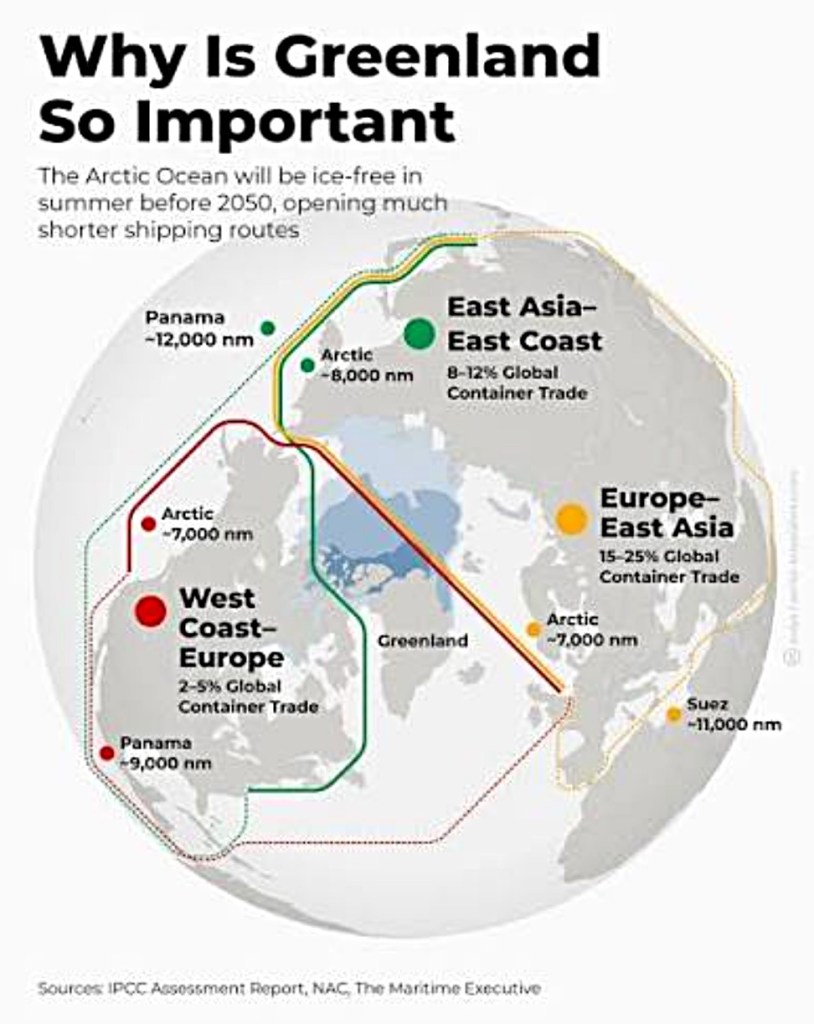
To be fair, Greenland does matter in the Arctic geostrategic environment. Its geographic position gives control over approaches to North America, and U.S. military assets like Pituffik Space Base have long been elements of continental defense. There is also growing global competition in the Arctic amid climate change and resource access. These realities are consistent with core themes in the U.S. National Security Strategy (NSS): maintaining technological edge, reinforcing alliance structures, and securing critical supply chains. Associated Press

But that strategic framework does not justify appointing a governor as envoy with public remarks about making another country part of the United States. That is a conflation of long-term objectives (strengthening U.S. strategic position in the Arctic) with short-term theatrics that have real diplomatic and legal consequences.

4. Why This Matters Beyond Headlines

A smart Arctic strategy might include genuine cooperative defense partnerships with Greenland and Denmark, investment in shared security infrastructure, climate resilience, and economic collaboration that respects sovereignty. Instead, the current approach:

  • Undermines alliance trust with a NATO member whose cooperation is critical in Europe and the Arctic.
  • Misreads local sentiment, dismissing Greenlanders’ clear preference to determine their own future.
  • Reduces U.S. policy to rhetorical brinkmanship, distracting from substantive cooperation where it matters.

If the NSS is a roadmap for how the U.S. secures its interests in an increasingly competitive world, this envoy appointment reads like a sideshow detour driven by personality rather than policy.

Sources

When Interview Styles Collide: Why Some Political Conversations Feel Like Car Crashes

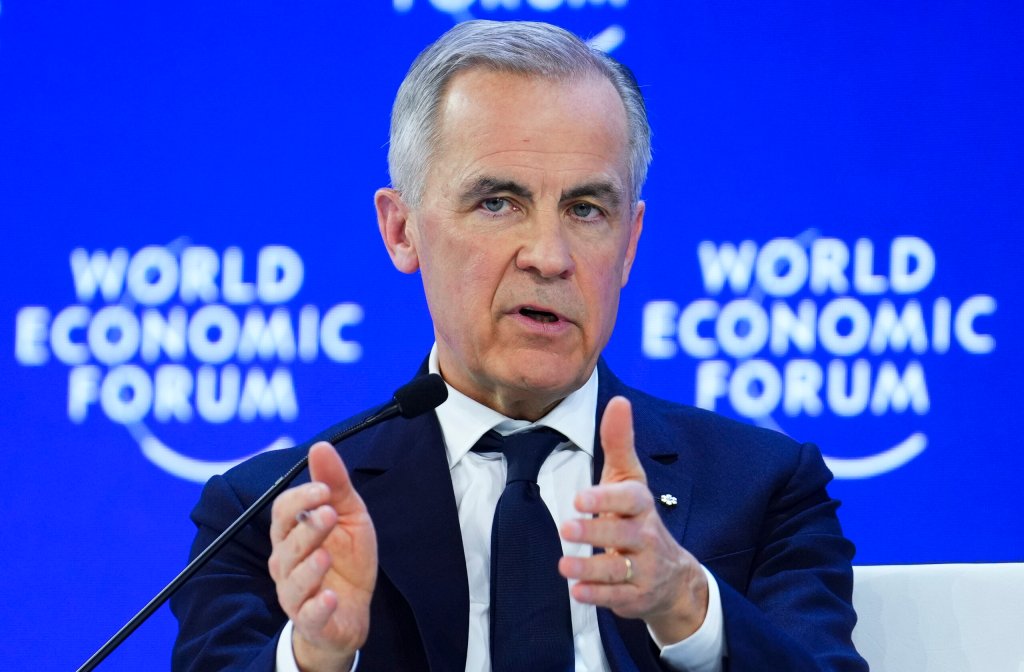
Every few years, Canadian audiences rediscover the same irritation: a high-profile interview that feels less like an exchange of ideas and more like a verbal wrestling match. The questions may be legitimate, even necessary, but the delivery leaves viewers tense, unsatisfied, and oddly unenlightened. The repeated clashes between Rosemary Barton and Mark Carney are a useful case study, not because either is acting in bad faith, but because they embody two very different traditions of public communication that were never designed to coexist comfortably.

The first tradition is the parliamentary press-gallery style that dominates Canadian political journalism. It is adversarial by design. It emerged in an era when access was limited, answers were evasive, and power was something to be pried open rather than invited to speak. In this model, interruption is not rudeness; it is a tool. The journalist asserts control of the frame, resists narrative-setting by the interviewee, and signals independence to both the audience and their peers. Toughness must be visible. Silence or patience can be misread as deference.

The second tradition is technocratic communication, exemplified by figures like Carney. This style evolved in central banks, international institutions, and policy forums where precision matters more than punch. Answers are layered, contextual, and carefully sequenced. The speaker often builds a framework before arriving at a conclusion, because conclusions without context are seen as irresponsible. This approach assumes the listener is willing to follow a longer arc in exchange for accuracy.

When these two traditions meet on live television, friction is inevitable. The journalist hears preamble and assumes evasion. The interviewee hears interruption and assumes misunderstanding. Each responds rationally within their own professional culture, and the conversation degrades anyway.

What makes this especially grating for audiences is that modern broadcast incentives amplify the worst aspects of the collision. Political interviews are no longer just about extracting information. They are performances of accountability. The interviewer must appear relentless, particularly when questioning elite figures who are widely discussed as potential leaders. Interruptions become proof of vigilance, even if they interrupt substance as much as spin.

At the same time, viewers are more sophisticated than broadcasters often assume. Many can tell the difference between a non-answer and a complex answer. When an interviewee remains calm and methodical while being repeatedly cut off, the aggression reads less like accountability and more like impatience. The audience senses that something useful is being lost, not exposed.

This is why these interviews linger unpleasantly after they end. It is not that hard questions are unwelcome. It is that hardness has been mistaken for haste. A genuinely rigorous interview would often benefit from letting a full answer land, then dissecting it carefully. Precision, not interruption, is what exposes weak arguments. Control of the conversation is not the same thing as control of the truth.

None of this requires villains. Barton is doing what her professional ecosystem rewards. Carney is speaking in the register his career trained him to use. The problem is structural, not personal.

If public broadcasting is meant to inform rather than merely provoke, it may be time to rethink whether visible combat is the best proxy for journalistic seriousness. Sometimes the most incisive move is not to interrupt, but to listen long enough to know exactly where to press next.

That, in the end, is why these moments grate. They remind us that we are watching two competent professionals speaking past one another, while the audience pays the price in lost clarity.

From Vision to Momentum: Alto Enters Its Defining Phase

For years, Canada’s ambitious dream of linking its greatest cities with true high-speed rail has hovered in the realm of feasibility studies and future pipe dreams. Now, in the closing weeks of 2025, that dream has shifted decidedly toward reality; not because steel is yet being laid, but because the Alto high-speed rail initiative has crossed a crucial threshold from concept to concerted preparation and public engagement.

At its core, Alto is a transformative infrastructure vision: a 1,000-kilometre electrified passenger rail network connecting Toronto to Québec City with trains capable of 300 km/h speeds, slicing travel times compared to what today’s intercity rail offers and binding half the nation’s population into a single, rapid mobility corridor. The design phase, backed by a multi-billion-dollar co-development agreement with the Cadence consortium, is well underway, and the federal government has signaled its intent to see this project delivered as one of the largest infrastructure investments in decades.  

The most noteworthy milestone in recent weeks has been a strategic decision about where Alto will begin to take physical shape. On December 12, officials announced that the Ottawa–Montreal segment – roughly 200 km – will be the first portion of the network to advance toward construction, with work slated to begin in 2029. This choice reflects a practical staging strategy: by starting with a shorter, clearly defined corridor that spans two provinces, engineering and construction teams can mobilize simultaneously in Ontario and Québec and begin delivering economic and skills-development benefits sooner rather than later.  

This announcement isn’t just about geography; it marks a shift in Alto’s progression from broad planning to community-level engagement. Beginning in January 2026, Alto will launch a comprehensive three-month consultation process that includes open houses, virtual sessions, and online feedback opportunities for Canadians along the corridor. These sessions will inform critical decisions about alignment, station locations, and mitigation of environmental and community impacts. Indigenous communities, municipalities, and public institutions will be active participants in these discussions as part of Alto’s ongoing commitment to consultation and reconciliation, a recognition that this project’s success hinges not only on engineering prowess, but on thoughtful, inclusive planning.  

Beyond route planning, Alto and Cadence are also turning to Canada’s industrial capacity, particularly the steel sector, to gauge the domestic supply chain’s readiness for what will undeniably be a massive procurement exercise. With thousands of kilometres of rail and related infrastructure components needed, early outreach to the steel industry is intended not just to assess production capacity, but to maximize Canadian content and economic benefit from the outset.  

Yet not every question has a definitive answer. Strategic discussions continue over the optimal location for Alto’s eventual Toronto station, with the CEO publicly acknowledging that a direct connection to Union Station may not be guaranteed; a decision that could shape ridership patterns and integration with existing transit networks across the Greater Toronto Area.  

As the calendar turns toward 2026, the Alto project sits at an inflection point: one foot firmly planted in detailed design and consultation, the other inching closer to the realm of shovels and steel rails. Political support appears robust, and fiscal planning, including major project acceleration initiatives and supportive legislation, has built momentum. Yet, as any transportation planner will tell you, the distance between planning and construction is long, often winding, and frequently subject to political, economic, and community pressures.

Still, for advocates and observers alike, the significance of the latest developments cannot be overstated. Alto has graduated from “what if?” to “when and how,” and that alone marks a major step forward in Canada’s transportation evolution.

When Negation Becomes the Message: The Conservative Leader’s Policy Vacuum

The second of a pair of posts to start the week off right.

Pierre Poilievre’s recent performances in the House of Commons and in front of microphones have taken on a strikingly reactive and unanchored quality, particularly when his focus turns to blaming Prime Minister Mark Carney for Canada’s economic and institutional pressures. Rather than advancing a coherent alternative policy framework, his interventions often circle around grievance, accusation, and rhetorical repetition. The result is a leader who appears to be responding to events rather than shaping them, leaving audiences with sound bites instead of a governing vision.

A central reason Poilievre sounds rudderless is that opposition by negation is doing the heavy lifting. Attacks on Carney’s competence, motives, or globalist credentials substitute for detailed Conservative proposals on inflation, productivity, climate transition, or industrial policy. Blame becomes the message. Without clear policy markers to return to, Poilievre’s speeches drift, anchored more in tone than substance. This creates the impression of motion without direction, agitation without destination.

The resemblance to MAGA-style messaging lies less in ideology than in method. Like many populist communicators, Poilievre relies on simplified villains, emotionally charged language, and a constant framing of institutions as captured or corrupt. This approach can energize a base, but it is poorly suited to a parliamentary system where credibility is built through policy seriousness and coalition-building. When every problem is reduced to the personal failure of the leader across the aisle, the speaker forfeits the opportunity to demonstrate readiness to govern.

There is also a structural problem at play. With the Liberals close to a majority and recent Conservative defections weakening caucus morale, Poilievre’s attacks land in a context where power dynamics have already shifted. Blaming Carney for parliamentary outcomes that Poilievre can no longer meaningfully influence only underscores the imbalance. The rhetoric begins to sound performative rather than strategic, aimed at maintaining outrage rather than altering outcomes.

Perhaps most damaging is that this style leaves policy silence where voters expect alternatives. On housing, productivity, health system reform, and climate resilience, Canadians hear far more about Liberal failure than Conservative plans. In a period of economic uncertainty, the absence of a clearly articulated program makes Poilievre’s leadership feel provisional, as though the party is still campaigning rather than preparing to govern.

In that sense, the MAGA comparison is less about American politics and more about political drift. When grievance replaces agenda, leaders risk sounding unmoored, defined by what they oppose rather than what they would build. For a Conservative leader seeking to convince Canadians he is a government-in-waiting, that is not merely a stylistic problem. It is a strategic one.

Pierre Poilievre and the Erosion of Conservative Cohesion

First of a pair of posts to start the week off right. 

The recent developments within the Conservative Party of Canada have marked a notable shift in the parliamentary landscape and exposed significant strains in Pierre Poilievre’s leadership. Over the past several weeks a sequence of defections and a resignation have transformed what might once have been viewed as isolated dissent into a pattern that raises questions about internal dissatisfaction and strategic direction. Conservative Members of Parliament crossing the floor to join Prime Minister Mark Carney’s Liberal government and an unexpected resignation from a sitting Conservative MP signal more than routine political realignment; they suggest deepening fractures in the Conservative caucus under Poilievre’s leadership.

The most visible manifestation of this trend was the decision by Michael Ma, Member of Parliament for Markham–Unionville, to formally leave the Conservative caucus and join the Liberals. Ma’s move, announced in early December 2025, came only weeks after Nova Scotia MP Chris d’Entremont made the same transition, citing dissatisfaction with the direction of Conservative politics and an attraction to the Liberals’ policy approach and governance agenda. These defections have materially advantaged the Liberal government, bringing it within one seat of a majority in the House of Commons and thereby altering the balance of power in Parliament.  

In conjunction with these floor crossings, Edmonton MP Matt Jeneroux’s announcement that he will resign from Parliament rather than continue under the current Conservative leadership has intensified speculation about internal party morale. The combination of defections and the resignation of a sitting MP so soon after a general election is highly unusual; Jeneroux’s departure, though not a floor crossing, underscores wider unease among Conservative ranks and reflects strategic choices by individual MPs about their political futures.  

Commentators and political observers have read these departures as symptomatic of a broader dissatisfaction with Poilievre’s leadership style and strategic posture. Floor crossers have explicitly referenced disagreements over tone and direction, framing their moves as a response to a negative or uncompromising political approach that they believe detracts from constructive governance. D’Entremont’s statements about feeling misaligned with his party’s leadership emphasize a preference for engagement with pragmatic policy solutions over relentless opposition.  

The reaction within Conservative circles has been mixed, but often defensive. Poilievre himself has publicly rejected the notion that his leadership style should change in response to these departures, framing the defections as electoral betrayal rather than internal critique and asserting that the party must remain focused on its core commitments. However, Liberal House Leader Steven MacKinnon has suggested that Ma’s decision is not unique but part of a small but growing contingent of Conservative MPs who are “extremely frustrated” with the party’s political direction.  

In practical terms, the departure of two MPs and the resignation of another in such close succession has a tangible impact on parliamentary arithmetic and strategic leverage. With the Liberals approaching a working majority, the Conservative opposition’s ability to influence legislative business is diminished, altering the dynamics of the minority Parliament. These shifts also have implications for the upcoming Conservative leadership review, where questions about unity, electoral viability, and direction will dominate discussion among delegates and members.  

The cumulative effect of these events is not merely numerical. It reflects a broader narrative of internal tension within the Conservative Party, tensions that revolve around how best to advance policy goals, maintain electoral appeal, and manage ideological diversity within a fractured caucus. Whether these departures precipitate further exits or merely represent short-term recalibration remains an open question. What is clear is that these developments have dealt a substantive blow to Poilievre’s efforts to project unity and discipline, instead highlighting the challenges of leadership in an era of fluid parliamentary allegiances and evolving political identities.

Two Views on the Seattle Pride – World Cup Controversy: You Decide

The 2026 FIFA World Cup is nearly upon us, and already one match has become the talk of the globe. Iran and Egypt are scheduled to play in Seattle on June 26, coinciding with the city’s Pride celebrations. Meanwhile, Belgium and New Zealand play at Vancouver at the same time. It’s a situation that could have been prevented, or at least mitigated, depending on how you look at it.

Below are two perspectives. Read both, then make up your mind: should FIFA swap the venues, or should Pride go ahead as planned and the teams have taken responsibility to negotiate in advance?

Option 1: Swap the Venues – A Simple, Fair Fix
The simplest solution to this controversy is also the fairest: swap the venues. Play Belgium – New Zealand in Seattle and Egypt – Iran in Vancouver. Both games are final group-stage matches, kicking off simultaneously, so competitive integrity is preserved. No team gains any advantage; the rules remain intact.

Geography favors this solution. Seattle and Vancouver are only about 200 km apart, a trivial distance for professional teams, officials, and even fans. Logistically, operations: from security to transportation are already prepared for both matches, so moving the venue is feasible.

This approach respects all parties involved. Pride celebrations continue in Seattle, where they belong, but the teams whose cultural norms clash with the event are placed in a context free of conflict. FIFA would be acting pragmatically and diplomatically, resolving an unnecessary international flashpoint while keeping the tournament fair and orderly.

Swapping the venues is a small adjustment with a big payoff: fairness, reduced tension, and the smooth running of a world-class event.

Option 2: Pride Has Every Right – Teams Should Plan Ahead
The other perspective focuses on cultural context and foresight. Pride is a legitimate, deeply rooted celebration in North America. Seattle has every right to organize its programming around local values and the communities it serves. Pride is not a provocation, it is inclusion in action.

Iran and Egypt, aware that they would play in North America, could have negotiated with FIFA long before the draw about the possibility of sensitive match locations. Waiting until the schedule is published to object is a choice; one that creates conflict that could have been avoided.

From this perspective, Pride remains non-negotiable. Host cities are entitled to celebrate their values, and visiting teams are expected to understand and adapt to the context in which they play. International competitions operate in a global arena; foresight, planning, and cultural diplomacy are just as important as on-field performance.

The lesson here: Pride doesn’t yield. Teams who find themselves in potential conflict have a responsibility to raise concerns in advance, not retroactively, after the headlines are already written.

Your Choice
A precedent for FIFA deferring to host-country cultural norms exists. In the 2022 World Cup in Qatar, players were prohibited from displaying Pride symbols or any politically or ideologically charged messaging, with yellow cards threatened for violations. 

FIFA justified this as respecting the legal and cultural framework of the host nation, even though it conflicted with broader global expectations of inclusion. This shows that FIFA has historically prioritized the host country’s cultural context when determining what is permissible on the field, a reality that frames the Seattle situation.

There it is: two options, two perspectives. Should FIFA make a practical swap to prevent conflict, or should Pride proceed as a cultural right and the teams accept responsibility for negotiating ahead of time?

The tournament, the culture, and the politics all converge in one match in one city. Now it’s up to you: which approach do you support?

Australia: The Prize No One Talks About

There’s a story playing out on the world stage that barely makes a ripple in most media cycles. While the headlines fixate on Ukraine, Gaza, or Taiwan, an unspoken contest is quietly unfolding for influence over a country that has, for too long, been treated as a polite and distant cousin in global affairs: Australia.

We’re used to thinking of the United States as having eyes on Canada, economically, culturally, and strategically. The integration is old news: NORAD, pipelines, the world’s longest undefended border, and the quiet assumptions of shared destiny. But if you really want to understand the next chapter of global power politics, don’t look north. Look west. Look south. Look to Australia.

What’s emerging now is not a scramble for land or flags, but for strategic intimacy, a deep intertwining of interests, logistics, defense capabilities, and ideological alignment. Australia is the prize not because it’s weak, but because it’s vital: geographically, economically, and politically.

The American Pivot
The United States is already entrenched. Through AUKUS, it has committed to helping Australia build nuclear-powered submarines and integrate into the U.S. military-industrial supply chain. But this is more than just a defense pact. It’s about locking Australia into a security and technology architecture that positions it as a forward base for U.S. naval and cyber operations, a southern anchor against Chinese ambitions in the Indo-Pacific.

What few people understand is this: Australia is becoming America’s new front line. Not in the sense of war, but in the grand strategy of containment, deterrence, and projection. The U.S. doesn’t want Australia as a vassal, it wants it as a platform, a co-pilot, a bulwark. In many ways, it’s happening already.

India Enters the Frame
But Washington isn’t the only capital watching Canberra. New Delhi is quietly but deliberately courting Australia too, not for bases, but for bonds.

India sees Australia through a different lens: not as a strategic outpost, but as an extension of its civilizational, economic, and diasporic reach. With a large and growing Indian community in Australia, rising trade links, and joint naval exercises in the Indian Ocean, India’s interest is long-term and layered.

What India understands, and what many in the West overlook, is that Australia is a natural expansion point for a rising democratic Asia. It’s a source of energy, food, space, and credibility. In a world where climate instability and resource scarcity are redefining security, having Australia in your corner isn’t optional. It’s essential.

Why It Matters
This isn’t a turf war. It’s not a return to Cold War blocs. It’s more fluid than that, a web of influence where infrastructure, education, culture, and soft power matter just as much as tanks and treaties.

The real story is this: Australia is shifting from the periphery to the center of global strategic thought. It’s no longer just “down under.” It’s at the crossroads of the world’s most dynamic (and dangerous) geopolitical contest: the one unfolding across the Indo-Pacific.

And here’s the kicker: Australians are waking up to this. The era of benign non-alignment is over. The decisions they make in the next decade, about alliances, sovereignty, and identity — will echo far beyond their shores.

So the next time someone tells you it’s all about Europe or the South China Sea, remind them: The most consequential strategic competition of the 21st century might just be quietly unfolding in the sunburnt country; and it’s not just China who’s watching. The U.S. and India are, too. And they both want Australia in their future.

The Fragile Independence of NGOs: Funding, Mission, and the Cost of Survival

After more than 25 years advising organizations across sectors, I’ve come to appreciate the vital role NGOs play in filling the gaps governments can’t, or won’t, address. From frontline social services to environmental stewardship to global health and education, their work is often visionary, community-led, and deeply human. But I’ve also seen behind the curtain. And one uncomfortable truth emerges time and again: far too many NGOs are built on a financial foundation so narrow that one funding shift, often from a single government department, can bring the entire structure down.

This doesn’t mean these organizations lack heart or competence. Quite the opposite, but when 60 to 80 percent of their time and energy is spent chasing the next tranche of funding just to pay rent or keep skeleton staff employed, something is clearly out of balance. I’ve worked with executive directors who are more skilled in crafting grant proposals than in delivering the programs they were trained to lead. I’ve seen staff burn out, not from the intensity of service delivery, but from the treadmill of fundraising cycles that reward persistence over purpose.

The tension is most pronounced when a single government agency becomes the main or only funder. In those cases, the NGO may retain its legal independence, but it quickly becomes functionally dependent, unable to challenge policy, adapt freely, or pivot when the community’s needs shift. I’ve often told boards in strategic planning sessions: “If your NGO would cease to exist tomorrow without that one government grant, then you don’t have a sustainable organization, you have an outsourced program.”

This is not a call for cynicism. It’s a call for structural realism. NGOs need funding. Governments have a legitimate role in supporting social initiatives. But the risk lies in overconcentration. With no diversified base of support, whether from individual donors, private philanthropy, earned income, or even modest membership models, NGOs are vulnerable not only to budget cuts, but to shifts in political ideology. A change in government should not spell the end of essential community services. And yet, it too often does.

What’s the solution? It starts with transparency and strategy. Boards must get serious about income diversity, even if that means reimagining their business model. Funders, including governments, should fund core operations, not just shiny new projects, and do so on multi-year terms to allow for proper planning. And NGO leaders need to communicate their value clearly, not just to funders, but to the communities they serve and the public at large. You can’t build resilience without buy-in.

Supporting NGOs doesn’t mean ignoring their structural weaknesses. In fact, the best way to support them is to help them confront those weaknesses head-on. Mission matters. But so does the means of sustaining it. And in today’s volatile funding landscape, the most mission-driven thing an NGO can do might just be to get smart about its money.

Etlaq Spaceport: Strategic Ambition on the Arabian Coast

For years the commercial launch landscape has been dominated by a handful of highly visible spaceports in the United States, Europe, and increasingly East Asia. Yet in the background, Oman has been assembling something unusual: a purpose-built, strategically positioned gateway for small- and medium-lift access to orbit. The Etlaq Spaceport, located on Oman’s Al Wusta coast, represents a calculated national investment in the emerging multipolar space economy. Far from being a showpiece, Etlaq is designed as a workhorse facility for rapid, repeatable commercial launch operations in a region previously absent from the global map of operational spaceports.

Etlaq’s development traces back to Oman’s broader attempt to diversify its science and technology sectors. The country recognised early that the Middle East had both the geography and the climate to host a modern launch complex: plentiful open coastline, low population density in potential downrange zones, and political stability that makes long-term planning feasible. The resulting site incorporates modular pads, integrated payload processing halls, and clean transport corridors between facilities to simplify vehicle flow. Unlike older spaceports retrofitted over decades, Etlaq was engineered from its inception around commercial cadence expectations. Operators can move a vehicle through processing, integration, and fueling with minimal pad occupancy time, aligning the port with the market’s shift toward higher launch frequencies.

A major strategic turning point came with the introduction of Oman’s October 2025 regulatory framework, CAD5-01, which modernised licensing, insurance, and environmental requirements for launch providers. While the update appeared technical to the public, it was transformative behind the scenes. CAD5-01 offers a predictable, internationally aligned pathway for operators to certify their missions, mirroring best practices from the United States and Europe while preserving Oman’s flexibility to respond rapidly to commercial timelines. This regulatory clarity is exactly what new space companies look for when selecting a launch site. Combined with Etlaq’s equatorial advantage, CAD5-01 signaled that Oman intends to compete seriously for global launch contracts, not merely serve regional demand.

Etlaq’s ambitions are further reinforced by Oman’s participation in the Global Spaceport Alliance. The Alliance has become the connective tissue of the commercial launch industry, ensuring that spaceports around the world share interoperable standards, safety philosophies, and operational frameworks. For a facility as young as Etlaq, this membership is more than symbolic. It links Oman into a network of regulators, insurers, launch operators, and policy specialists who collectively define the expectations of 21st-century spaceport operations. The effect is twofold: Etlaq gains credibility with international clients and accelerates its own organisational maturity by aligning with procedures used at more established ports. Rather than growing in isolation, it develops in dialogue with the global industry.

What distinguishes Etlaq, however, is not only its integration but its strategic forward posture. As the global launch market becomes increasingly congested, companies are searching for sites that offer reliability, proximity to equatorial orbits, and streamlined regulatory cycles. Oman’s location provides relatively clear trajectories for low-inclination missions while avoiding many of the flight-path restrictions faced by older spaceports. This matters for an industry where minor delays cascade into major scheduling and insurance consequences. Etlaq’s designers have built the facility with the expectation of rapidly expanding demand, planning for additional pads, dedicated line-of-sight telemetry corridors, and expanded infrastructure to support higher-frequency operations.

Taken together, Etlaq is positioning itself as a pragmatic, globally integrated commercial launch node. It benefits from modern regulatory architecture, membership in a coordinating international alliance, and a geographic setting that offers advantages too often overlooked in the Middle East. Oman is not attempting to dominate the launch sector but to host a dependable, commercially attractive platform for the next generation of small-satellite missions, Earth-observation constellations, and responsive launch services.

In an era where the world needs more launch capacity, not less, Etlaq stands out as a quietly strategic entrant. It is the kind of spaceport built not for headlines but for sustained operational relevance, and that may prove more valuable in the long run.

Sources: 
en.wikipedia.org
etlaq.om
muscatdaily.com
thenationalnews.com
copernical.com
rssfeeds.timesofoman.com